Dear Readers,
Welcome back to the latest installment of Capital Letter, where we have another barrage of advice on how to drink, eat, watch, think and live in London. The wonderful month of June is upon us, the city is at its most fresh.
As we continue to provide this buffet, please do let us know if there are any places your fellow readers should know about. Remember: gatekeeping is very much on the out. Please reach out to us at editorial@the-fence.com and we’ll take it from there. Equally, if you feel you have particular expertise in a given area of London life and want to get more fully involved – we are especially interested in shopping, fashion, and music lovers – do get in touch at the same address.
A reminder of this newsletter’s dedicated map that can orient your life at a moment's notice, and that this newsletter will soon become (very reasonably) paywalled.
We’ve got diversions and tips around London, but we start with a longish piece about the state of the theatre.
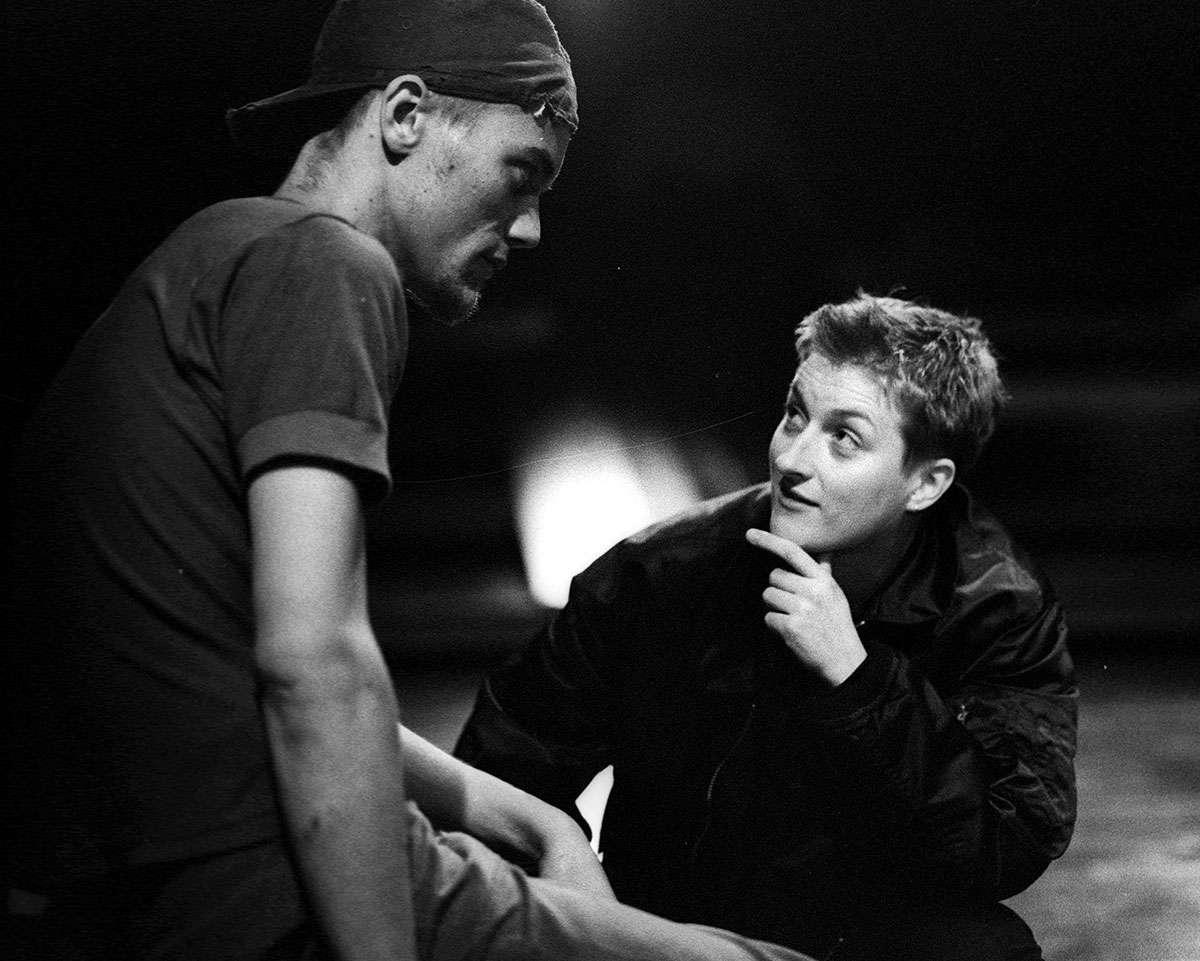
Are You Getting This?
Last week, Theatre 503 down in Battersea was holding one of its standard writers’ nights that accompany each of its main productions. These are fundamentally wonderful evenings, as they offer writers the chance to submit 10-minute scripts in response to what they’ve seen. Generally, we highly recommend them.
Unfortunately, their most recent show, Derry Boys, is a symptom of a problem that is blighting British theatre right now: TV writing on stage.
Derry Boys felt the need to let its audience know, in projected subtitles, exactly when and where each scene was taking place, and how long had passed between them, like title cards over establishing shots in an action film. What’s interesting is that the writer, Niall McCarthy has done this deliberately, saying the purpose was to write it ‘as if it were a film – no confusion, keep it simple’.
McCarthy is picking up on something real. Increasingly, audiences want their theatre to resemble what they stream at home.
The celebrated plays of James Graham are of this ilk. Both Dear England and Punch have been huge successes, but both are theatrically strange. Rather than containing a series of clearly structured acts and scenes, they favour telling big stories through the means of many mini scenes, often stitched together and overlapping one another. This produces clear, linear stories that clearly can be very impactful. But their all-details-included approach to storytelling is not the natural home of the play, which is usually more interested in picking a particular prism through which to view a story.
This change to bigger, more sprawling stories has been facilitated by advances in on-stage tech, which can now provide solutions to questions such as ‘how do we get from a small basement flat in Dalston to the top of Mount Everest’ in ways that would have astounded 19th-century set designers. Previously, playwrights either had to be realistic about what they wrote, or productions would have to engage in abstract non-naturalistic choices. Now, plays are able rely on projections and lighting. Even using mics on stage, not for theatrical effect but simply to amplify actors voices, has become such a standard practice that this aged Guardian article reads as if from another universe.
Pathways between screen and stage-writing are well-worn. Martin McDonagh was famously a stage writer before making it big with In Bruges, a film whose whole structure is distinctly theatrical – get some interesting characters stuck in one place, and watch the drama unfold. Likewise, Phoebe Waller-Bridge started out in theatre before Fleabag was filmed. The difficulty is going the other way. Increasingly, it seems that many burgeoning playwrights are taking their inspiration from these successful writers, watching their television shows and then penning their first play.
The result is a lot of structureless plays. These can be full of great ideas, but they can neglect key points of stagecraft. Where and when are we? What’s really going on in a character’s head? In television, there is a vast toolbox that can address these issues. Each little scene needn’t contain a key shift because you can cut quickly between things. Characters' internal worlds can be suggested with a quick voiceover. And of course, as with Derry Boys, text on screen clarifying a plot point is beyond standard for television audiences.
Now think about some of the most impactful plays you’ve seen. Pinter’s Betrayal, for example, tells the story of an affair by starting the story at its messy end, and leaving us with the moment of its instigation.
Lesser known is Louise Page’s Salonika. It begins to tell what looks like a simple story of a woman and her daughter visiting the beaches in France where her husband died during the Second World War. Suddenly, halfway through the play, a soldier bursts out of a sandbank that has stood on stage the whole time. The woman’s husband, a ghost of sorts, comes crashing into the action.
Playing with time and space is the fabric of the theatre. New writing inspired by TV may be scratching the itch for screen-addled audiences, but we are losing something special that only theatre can offer. Beckett simply never thought to write the stage direction, ‘BLACKOUT, sign appears reading “sometime later that week…”’
Caning It
Despite all that, the hotticket for dedicated theatre goers this summer is the return of Sarah Kane’s legendary piece 4.48Psychosisto the Royal Court, where it debuted 25 years earlier. One interesting feature is that it is being revived by its original cast and creative team. It is already sold out, but for any disappointed readers, we thought it a good time to remind you that the Royal Court does not do advanced bookings for their Monday shows – and this is one of the most exciting British plays of the last half-century.
The Almighty Claret Kings
Just over the Belgravia border, you’d expect a polished welcome at a place like this, and we are tempted to give Cornus bonus points for their service alone, which straddles the perfect balance between ‘send out a search party’ and ‘restraining order, please’.
But enough of niceties, what of the food? The menu’s first two dishes, the seabass tartare and Devon crab, are exceptional. The seabass ripping with summery freshness and accented by rich oyster cream; the crab both delicate and punchy, grounded from terminal airiness by hints of wasabi and lime. With their shiso and hass avocado, both owe as much to head chef Gary Foulkes’ travels in Asia as his stints under numerous UK food titans. His time with Gary Rhodes, Billy Drabble and Phil Howard was clearly more than an exercise in working under men with decreasingly odd hair, however, as our seven-course perambulation through classic combinations attests.
The standout was the perfectly cooked Orkney scallop, which comes with an abutting pond of asparagus, morels, wild garlic and hazelnuts. Even if it cannot quite live up to its forebear’s wow factor, the Maison Garat guinea fowl with sunchoke puree that follows is also excellent, the simple contrasts of the bird’s crispy skin and the luxurious umami hit of smeared artichoke are a triumph, and we are grief-stricken as it disappears, bite by bite.
Our party of two was only half-carnivore, and our abiding treat of the evening may well be Cornus’ stunningly well-considered vegetarian options. Our opening snacks – cep cracker with mushroom ketchup and malt tartlet with deep fried cauliflower mushroom, chive emulsion and aged parmesan – were case in point; utterly gorgeous on the plate, the cep cracker a Lovecraftian tentacle, bubbling with ancient intrigue, the tartlet a micro-sculpture of bundled joy, offering a wheelbarrow of flavour within its tiny dimensions. The main, too, was bespoke and delicious, a caramelised parmesan Gnocchi, with morels, white asparagus and hazelnuts; showcasing that, unlike other Michelin restaurants whose vegetarian menus bare the distinctive silhouette of an afterthought, care and attention had been placed on creating non-meat dishes with every bit as much wow factor as the alternative.
There isn’t, in the end, much to criticise at all. Cornus is simply serving stunning food with excellent service. Cornus is not cheap. A taster menu will set you back £165, rising to £265 if you opt for wine pairing, which we did.
As such, your trip to SW1 might be placed in the same indulgent treat bracket as, say, Taylor Swift tickets, a day’s zorbing or same-day train travel to any other city in the UK. This is, after all, fine dining, and it’s a fine we’ll be happy to pay again. Make your booking here.
I Just Don’t Get This Tracey Emin Art
London Gallery Weekend was first concocted in the wake of the pandemic as a way to bolster interest in our city’s commercial art landscape, mitigating the impact of what those in the trade call a soft market. Today, with lockdowns lifted but the market still quite flaccid, LGW remains a monolithic force with more than 130 participating galleries and sponsorship from the world’s first high-ABV sorbet brand. (What a concept.)
Next weekend will see dealers all over town open shows that put their best foot forward. Our recommendation: An afternoon wandering through Bloomsbury, London’s best-stocked neighborhood for young, sexy galleries run by proprietors draped in expensive knitwear. In the mile-long stretch between TCR and Farringdon, you’ll encounter many such spaces. Below are five of our hot tips, from west to east:
Union Pacific is showing the exquisite oil paintings of Oliver Osbourne, who borrows Old Master techniques to paint, among other subjects, his own angelic children.
The German conceptual prankster Nicole Wermers has littered Herald St with hose reels wound with elongated fluffy tails.
a. SQUIRE, a contender for London’s smallest gallery, is opening a group exhibition whose sole focus is artists who make box-shaped sculptures.
Brunette Coleman presents a narrative collection of paintings by Laurie Smith in an autobiographical show that unfolds across a single night.
Finally, South Parade, perhaps London’s finest new commercial gallery, is hung with the mind-bendingly prismatic yet impossibly tender paintings of Judith Dean. Replete with slippages in perspective and quickly painted, almost forgotten scenes, this might be the best exhibition happening in London this weekend.
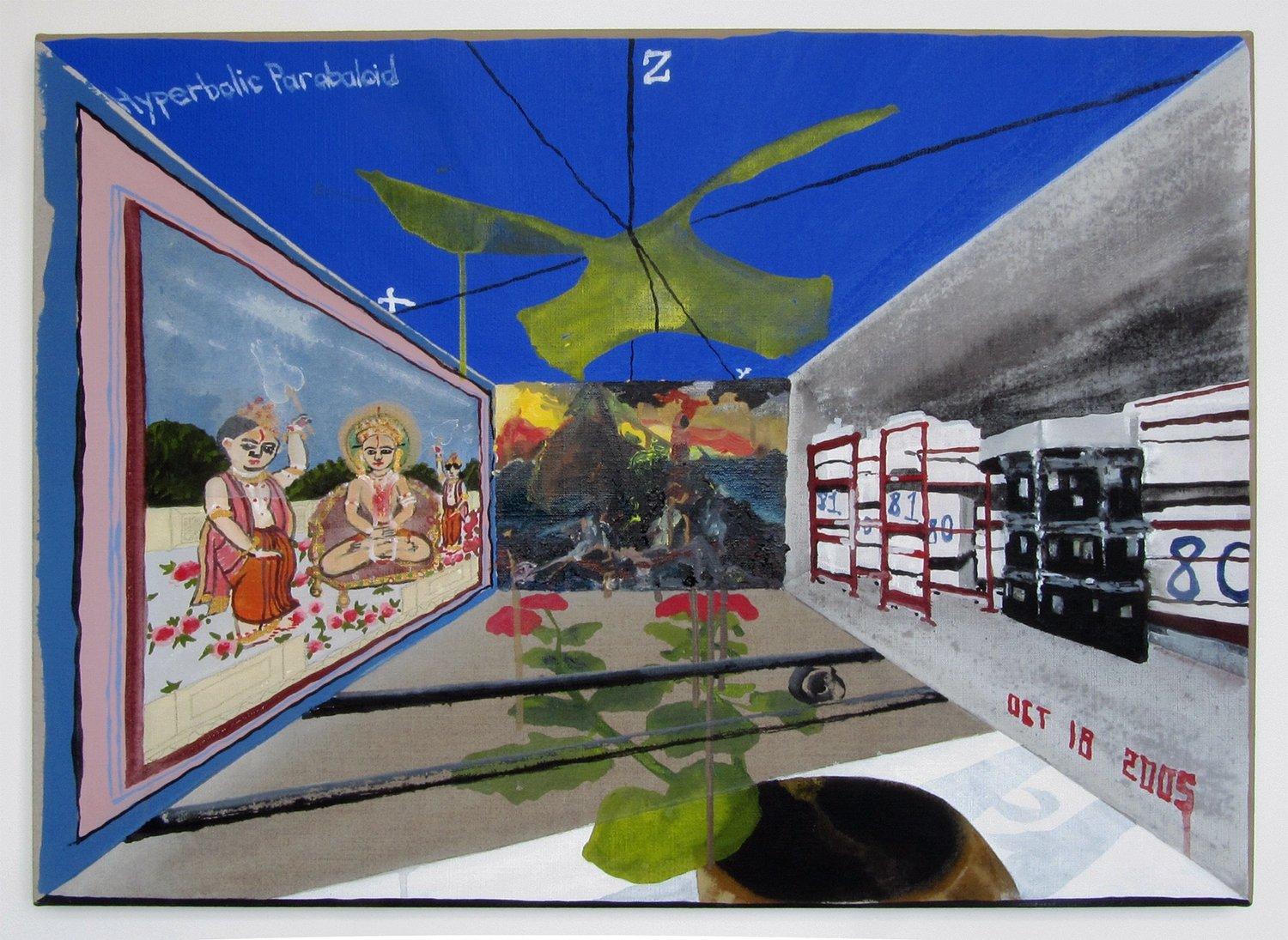
If some of these exhibitions seem silly, it’s because they are. Welcome to contemporary art. But all have the capacity to elicit a smile accompanied by a short-sharp nose exhale. Enjoy your post-gallery-hop Giselle(that’s the ‘bubbly, vibrant and sensuously full-bodied’ mezcal sorbet) satisfied with the knowledge that you did this year’s Gallery Weekend right.
Bagatelle
While we do sell a range of very elegant tote bags, it must be stated that paler versions can look limp and listless, a little bit pathetic, a signifier to broadcast cultural consumption rather than individual personal style. When going about town during the day, the optimal choice is a ladylike rucksack. The good people at Troubadour make comfortable items for carrying the business of life, whether that is a laptop, a pencil case or a mustard-splattered copy of The Fence magazine.
Their store on Beak Street is around the corner from us in Soho, and you can peruse their goods on their webstore here.
On the Horn
London has cycled through a few trends of different African cuisines. A few years ago, it was the Ethiopian/Eritrean boom. In fact, we recommended Mosob, a very fine Eritrean restaurant, in the very first edition of this newsletter, and there are a plethora of other great spots like Wolkite, which resides right next to the Emirates Stadium..
Last year, London’s interests switched across the continent to Nigeria, as everyone became enamoured with fufu and efo riro. This rise was precipitated by a general increase in the popularity of Nigerian culture, peaking perhaps with Burna Boy’s 2024 Glastonbury headline set. As Kemi-Olivia Alemoru has pointed out, this, along with an increase in Nigerian immigration since in 2019 and a strengthening in connection between the diaspora in the UK and Nigeria, made a restaurant boom inevitable.
But if you’re interested in Somalian cuisine, head down to Al Kahf down in Whitechapel. The first encouraging sign about Al-Kahf is that it's hard to find, frequently closed, and looks like a place you should walk past. Fittingly, Al-Kahf means ‘the cave’ in Arabic – it's in a basement, like another of everyone’s favourites, Roti King. But what it holds inside is some of the best slow-cooked meats you can find, and at very reasonable prices. There are some fun oddities on the menu, notably the option to get some very fine biryani.
You’ll need to avail yourself of a can of Shani, an Arabic berry-flavoured soft drink from the exotic manufacturers that are PepsiCo. It’s not the best, but for lamb this good, it is a complete irrelevance.
Fellini My Flow
There is Cinema Mentiré specialising in Latin American films who are bringing a retrospective on Argentinian filmmaker María Luisa Bemberg to Ciné Lumière at the end of this month.
Electric Blue cinema focuses on experimental films, usually based out of the Atlas Cinema in Brixton. Their current season, Transfigured Parables, has contained some real gems including two films from legendary Senegalese filmmaker Djibril Diop Mambéty and Tsai Ming-Liang’s The Hole. The season closes on June 8 with an evening of experimental female-led archive film.
Another good club to keep up with is Sine Screen, who program East and South Asian cinema, focusing on stories from Asia that usually fail to make the mainstream jump to western screens via the international weeaboo highway. Their current season has just ended, but we recommend signing up to hear what they have next.
Finally, and best named, is The Machine That Kills Bad People, a bi-monthly film club at the ICA, which programmes work inspired by the radical filmmaking of its namesake film. Tagliente!
The Final Stop Is Shenfield
This concluding section usually peels back the capital’s past, sliding through the centuries of London’s vaunted history to recommend a tour of an overlooked church. Today, we’re thrusting into the future, so far into the future, that we’re recommending visiting a museum that isn’t even open yet – the V&A Storehouse East, which opens its doors to the public on Saturday, and seemingly has something for everyone – there’s even a chunk of the Robin Hood Gardens estate for the Carhartt brutalist beanie boys.
Press down on the throttle of the Elizabeth Line, and live in the white hot heat of the moment as you shuttle to Stratford for a day out among the jutting steel and glass of the Olympic Park. This is one of the most exciting things to happen to the capital for years – and you want to be one of the first through the door.
That is that for this week, and if you’ve savoured every last crumb of this newsletter, then do think of becoming a paid subscriber, or at the very least, please do share it with some friends.
Our next outing comes in a fortnight, and we look forward to joining you then.
All the best,
TF