Dear Readers,
Good afternoon and welcome back to Capital Letter.
Two more weeks have passed but neither the temperature nor our zeal for the capital have really dropped. Indeed, you may notice that, more than a mere number, this issue has a title and a subheading in a new style. It’s all part of a grander plan for this ever-growing ‘vertical’, which is now fully readable on our website for those tired of Substack.
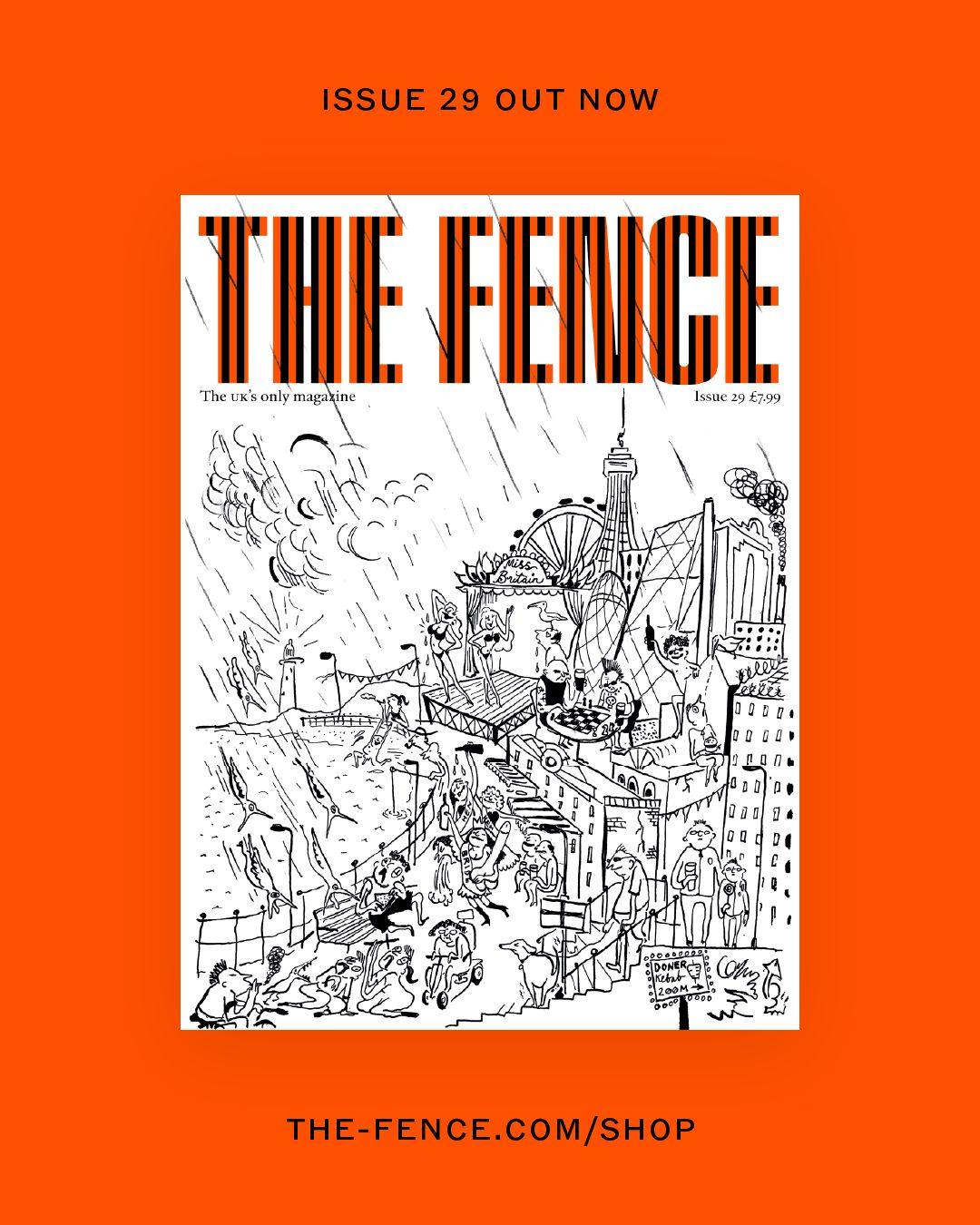
You may also have seen that the latest issue of the magazine has just been released. Now if you like what we call in our office ‘CL’, you’re unlikely to dislike The Fence. This one has some lovely London moments, with some great stuff from Alex Bilmes writing about an unlikely undertaker who once ran a nightlife empire. We’ve also got Bertie Brandes lampooning various metropolitan tribes and tales of chess beneath the Cheesegrater. And of course, there’s lots of lovely non-London content besides. You can get a copy with the button below.
But let’s return to the topic at hand. We have a seriously bumper issue for you this fortnight with important Chinatown updates and delicious doses of art, film and theatre. We begin, however, with something a little closer to home.
Beef’s on the Menu
There’s a curious post from London on the Inside, a digital platform that’s been around since 2010, which mainly focuses its energies on the capital’s restaurant scene. Saying they are ‘tired of copying’ and inspired by ‘Wagatha Christie herself’, they falsely (and deliberately) claimed a new destination had fish-and-chip noodles on its menu. That claim was then repeated by Time Out five days later, which cued a triumphant Instagram carousel.
While there is far too much IP theft in the UK media – we have been the victims ourselves – the whole debacle shows a misunderstanding of how journalism works. If you’re the first to report on things (falsely), then it is likely that other publications will report on them, creating a snowball effect, as the false claim is now accepted as fact. Which is why we have libel laws.
More broadly, the whole thing is emblematic of how food media remains dominant in the capital. 40 years ago, you had celebrity film critics – like Barry Norman – and every broadsheet had a top-tier name surveying the screenings. Multi-million-pound West End productions could be wrapped by a caustic Michael Billington review. Media and book PR was a real thing, and they had budget to spend, and did so. No one really cared about food. To do so was regarded as pompous.
These days eff-and-bee is supreme, with the boldface names enjoying mononym status in the industry. In a media industry denuded of status except for a select few, food writing remains a reliable escalator to celebrity, or at the very least a free lunch. Obviously, this is a reaction to the huge groundswell of interest across Britain in food and drink, and there are loads of brilliant writers and publications across the board. And at the risk of being wildly hypocritical, writing about London’s restaurant critics was one of the ways that The Fence first established itself.
But it all begs the question: have we reached the plateau of food writing? Or will the great gluttonous feast go on further?
A Real Man’s Man
Libby Elliott knows where to get a good read and a bad date.
Almost all my romantic endeavours have been with men who performatively read collections of poetry on the Tube, and I am the owner of a litany of exes’ self-published work, and have heard at least three pitches for the Brick Lane Bookshop Short Story Competition on a first date. The result is that I am exceptionally familiar with London’s bookshops.
BOOKS is one of the best. It lives on the side of a house on an unassuming residential road in Peckham. It’s almost too packed with theory and haphazardly organised not to have been built by set designers for a play about a leftist bookshop. But with time and determination, you can find some real gems. I was introduced to it by a second-hand bookseller I spent a little too long dating. He would often ask my female friends what they thought of Murakami, before quickly interrupting them to impart his feeling that he only writes ‘thinly veiled women’. It was among the literary mess of BOOKS that he once asked me, at a disproportionate volume, whether I had ‘ever even read Marx’.
The Photographer’s Gallery Bookshop on the edge of Soho was the chosen site of our reconciliation, brimming as it is with delightful small imprints.I picked up a niche little Italian second-wave feminist work. My date remarked he didn’t think it would be worth the price and chatted away to the bloke behind the till for 20 minutes.
Months later, I found out that my writing group host at Chener Books in East Dulwich – a charming independent bookshop – had stolen a book from that same gift shop after having a near-identical experience. This was when I began to realise the problem might not be mine alone.
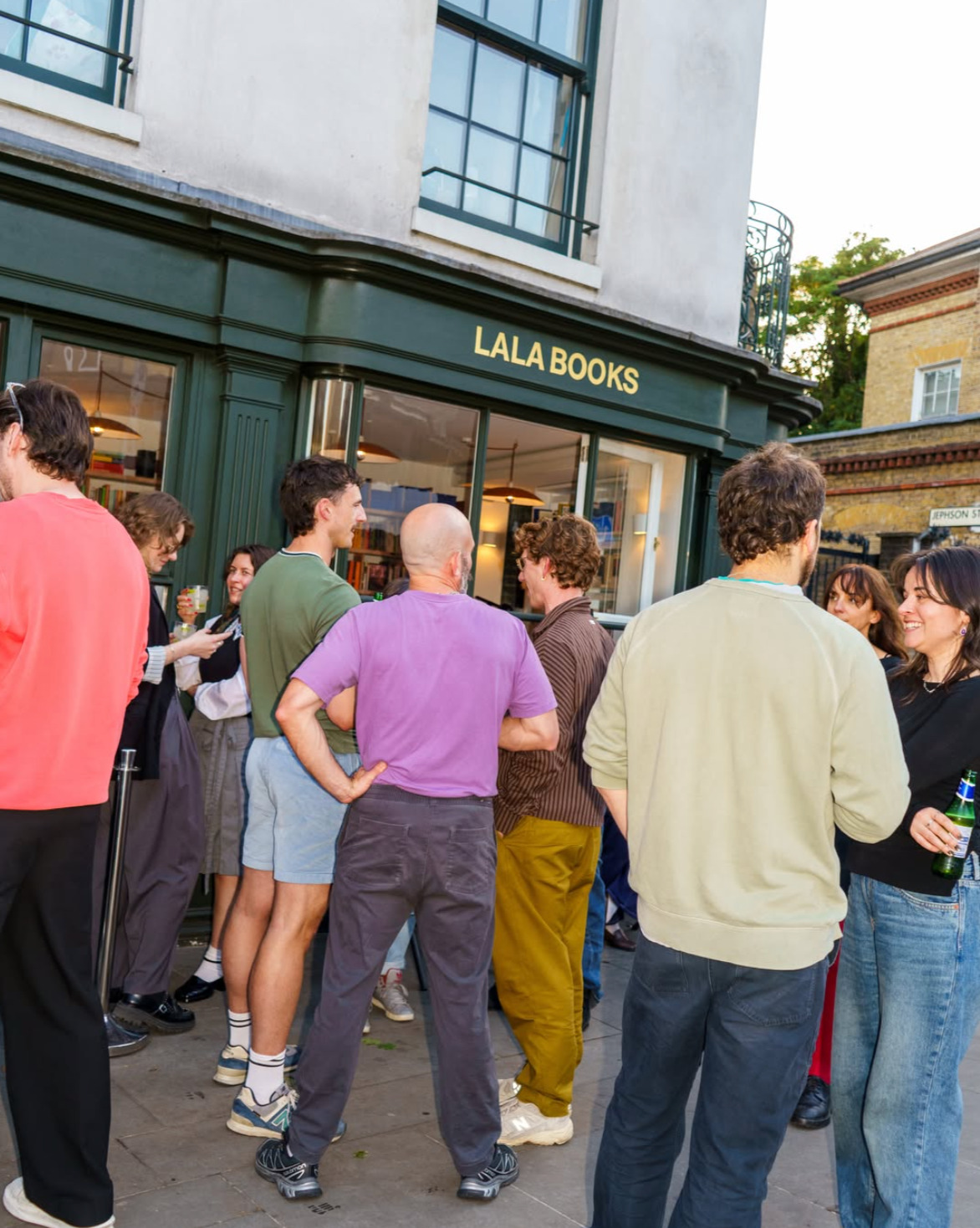
More recent experiences have been more positive. I accidentally ran into my evening company at Lala Books prior to our date in Camberwell. He was physically unable to stop saying how much he despised Perfection by Vincenzo Latronico after spotting it in my handbag, but he was at least very funny about it. He didn’t elaborate too clearly on why, but did reassure me that he was indeed writing his own novel.
Despite the chinks in my armour, I’ve had to march on. To Backstory in Balham, where the author talks make for one of the best solo date spots in the city. To Notting Hill’s Books for Cooks, which has taught me never to flirt with anybody who might sit in the centre of the chef/reader Venn diagram – dangerous people. To Pages of Hackney, with shelves organised beyond your wildest comprehension of niche interests. If you’re ever looking to find love in there, go for somebody who’s crouching down. The cinema, feminism and essays shelves are all right on the floor. Or, perhaps you should ignore my blind optimism altogether and stick with somebody standing upright.

Look at Him Sparkle, Look at Him Shine
JN Benjamin sees whether the screen’s golden boy can tread the boards.
In the opening scene of Golden Boy, showing at the Almeida Theatre till the end of the month, we meet the Italian-American Joe Bonaparte as a teenager, standing centre stage with only a spotlight and a violin for company. Watching him play the instrument, his love for it is clear. This young man was born to be a musician. That role alternates between child actors Oscar Prout and Anton Vehring. The next time Bonaparte appears, he’s a disillusioned 21-year-old (Josh O’Connor), ground down by the weight of poverty in 30s New York. There’s no money in his dream career, so he gives it all up to become a boxer and begins fighting under the watchful eye of his new manager Tom Moody (an absorbingly greasy Daniel Mays).
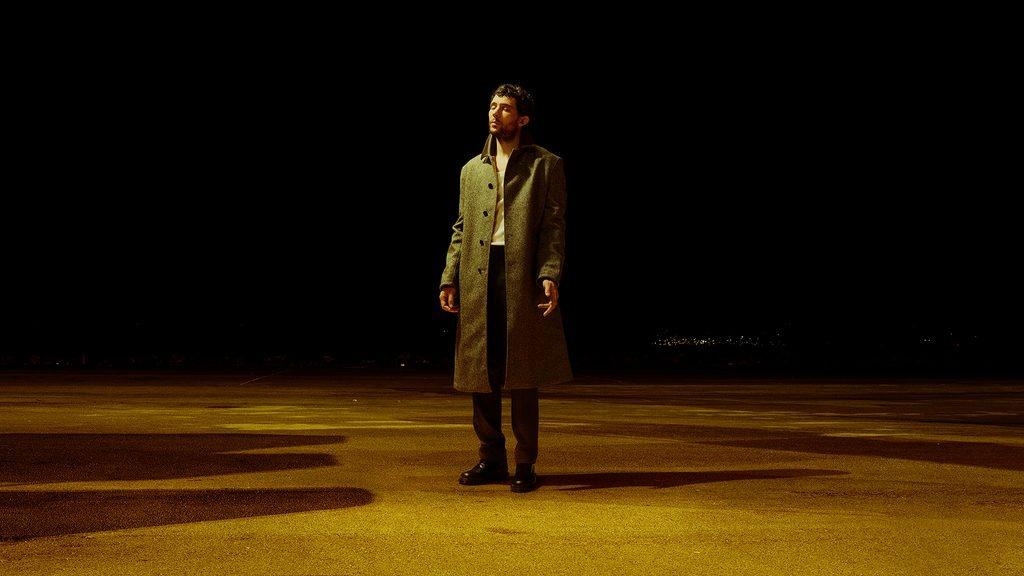
His father, in an attempt to entice him back into playing music, spends 12,000 dollars – money they definitely cannot afford – on a state-of-the-art violin. Joe appears to be momentarily seduced as he unwraps the gift, lightly caressing the strings with the tips of his fingers. Instead, he slams the case shut. ‘Return it Papa’, he says sternly. But for all his conviction in this moment, his internal conflict continues to play out. Much to Moody’s frustration, he won’t use his hands in his fights for fear of jeopardising any future musical career. At the heart of his struggle is the choice between staying true to his dreams, and the wealth and comfort promised by a glittering career as a boxer; between integrity and unscrupulousness.
The turning point comes after he confesses his love to his adulterous manager’s part-time lover Lorna (Hayley Squires is alluring here), who, sick of being a ‘tramp from Newark’ and seeing a chance for a real loving relationship, admits mutual feelings. But their sweet affair is interrupted when she refuses to leave Moody, and that sends Joe over the edge. He goes full pelt at his next opponent, breaking his hand in the process. His career as a musician is definitively over.
O’Connor deftly makes the transition from meek buttoned-up artist to blood-soaked brute. Director Sam Yates paces the change in such a way that the denouement still hits hard, despite the predictable storyline. This isn’t a criticism – tales of poverty typically tend to end one way and in any case Odets’ writing is much more about character than it is about plot. His performance is underscored with stirring compositions from Isobel Waller-Bridge – at first they’re an expression of his musical skill. But by the end the notes haunt the stage, a reminder of everything that was lost.
Odets gets perhaps not enough credit for being the original American working-class playwright. It is said that his work was a significant influence to the likes of Arthur Miller, Tennessee Williams and David Mamet, but professional productions of his plays are far more rare – this is the first outing for Golden Boy in almost ninety years. Though boxing is a central theme of the piece, it isn’t about boxing at all – it’s about the psychological damage of being poor. Odet’s writing – in particular that from the 1930s – focuses directly on the daily survival of ordinary people during the Great Depression. Yates’ Almeida Theatre production arrives in a parallel world, where the effects of that tumultuous period are mirrored in today’s cost of living crisis. It’s definitely worth seeing.
Get Higher, Baby
Frieze week is soon upon us, an exciting thought for several reasons. Chief among them is that London’s museums and galleries tend to time their strongest shows with the descent of the floatiest and finest art-worlders in the city. There are a few in particular that have piqued our interest.
Robert Ryman’s first major retrospective at a British institution in 30 years is opening next week at the Barbican. It seems like there’s something in the air for American conceptual artists of the second half of the 20th century: last year, Christine Kozlov took centre stage at Raven Row, while Mary Kelly had her moment at Pippy Houldsworth. Next year, Lynda Benglis will have a massive survey at Tate Modern. Out of the aforementioned list, Ryman’s work is probably most similar to Kozlov’s: both are overwhelmingly white and have a wry little streak of contrarianism. It’s set to be as marvelous – and divisive – as the Kozlov exhibition.
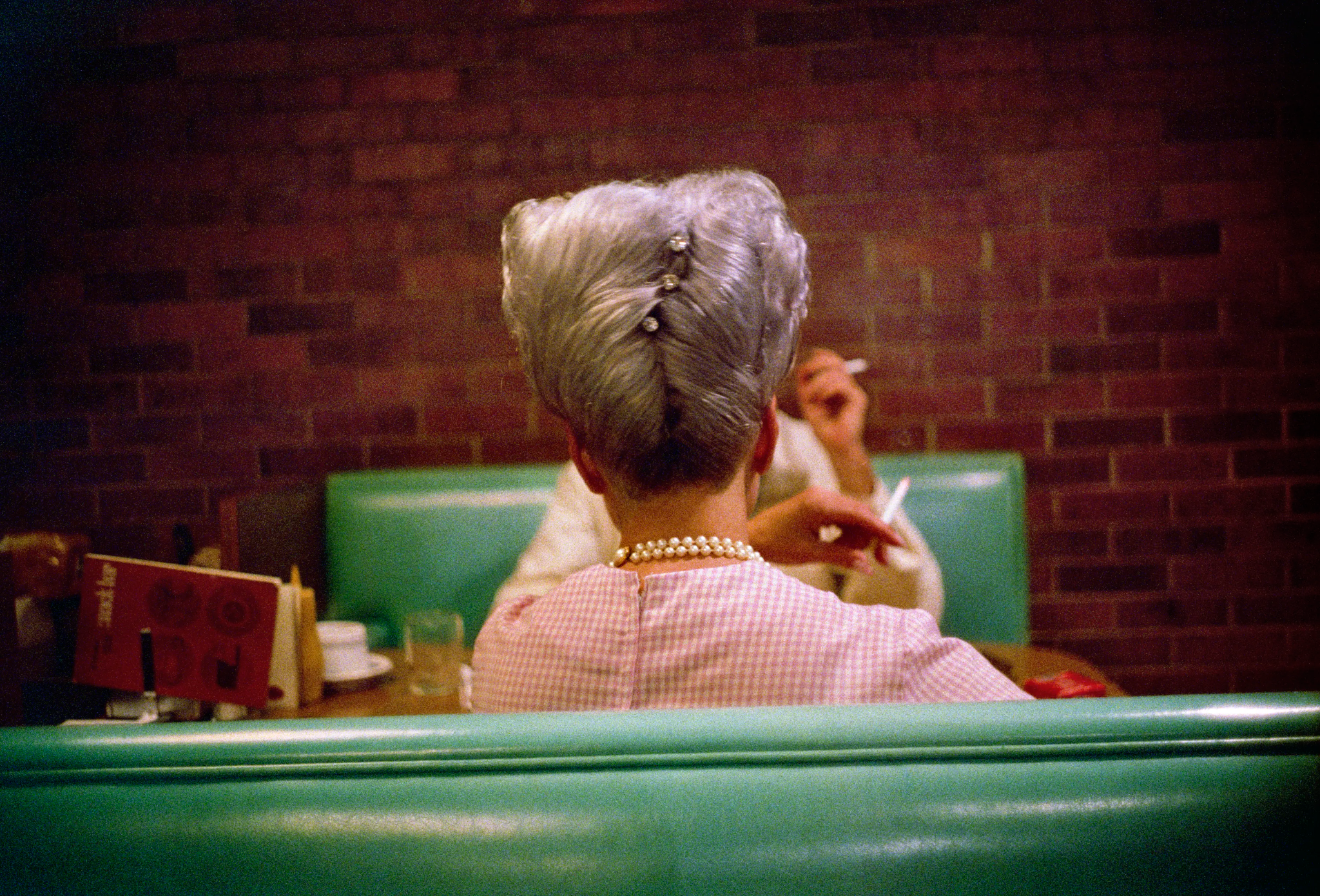
The quietly excellent Photographers’ Gallery is presenting not one but two shows: William Egleston and Sanlé Sory. The gallery very rarely disappoints, so a double-billing is very good news indeed. Egleston was one of the first American photographers to convince the public that art photography could actually use colour, and the results are spectacular. Working across the 60s through to now, Egleston is best known for his dye-transfer photographs, the laborious process of which he demonstrated on YouTube a few years ago: The Making of a Dye-Transfer | William Eggleston Think Technicolor-ish photos of bicycles, children, flashing signs and milk bottles. On a different floor will be Sory’s colour photographs which have never before been seen in the UK. The exhibition will focus on a period in the mid-80s when Sory was experimenting with studio photographs from his home in Burkina Faso, and the offerings look bright and lovely as anything.
There are other gems on the list of interest: Philip Ewe’s Hamlet-inspired show at TINA; Winnifred Gill at the Courtauld; Nicole Eisenman at Sadie Coles HQ; and the French Riviera show at the Royal Academy. All worthy candidates for a rainy afternoon spent avoiding a hot and thronging tent in the middle of Regent’s Park.
Shogun Stories
There is a particularlygood season of films coming to the ICA at the end of next month, full of so many gems that we strongly recommend you block out a week or two and get booking now. It’s called The Lower Depths and focuses on Shohei Imamura, a Japanese filmmaker who apprenticed under the legendary Yasujirō Ozu, whose film Tokyo Story is many a film buff’s first stumble into Japanese cinema. There’s a lot on offer but probably his biggest hitters are Black Rain, Ballad of Nayamara and Vengeance is Mine. If you know your Ozu well, Imamura’s The Pornographers might be a particularly good pick as it deliberately subverts many of the old master’s styles to great effect.
What makes this so exciting is that along with all of Imamura’s work, the ICA is including a number of films that inspired or were inspired by Imamura. This means Akira Kurosawa’s (slightly) undershown masterpiece Drunken Angel is on offer – an exceptional film with an unbelievable performance from Kurosawa’s main actor Toshiro Mifune.
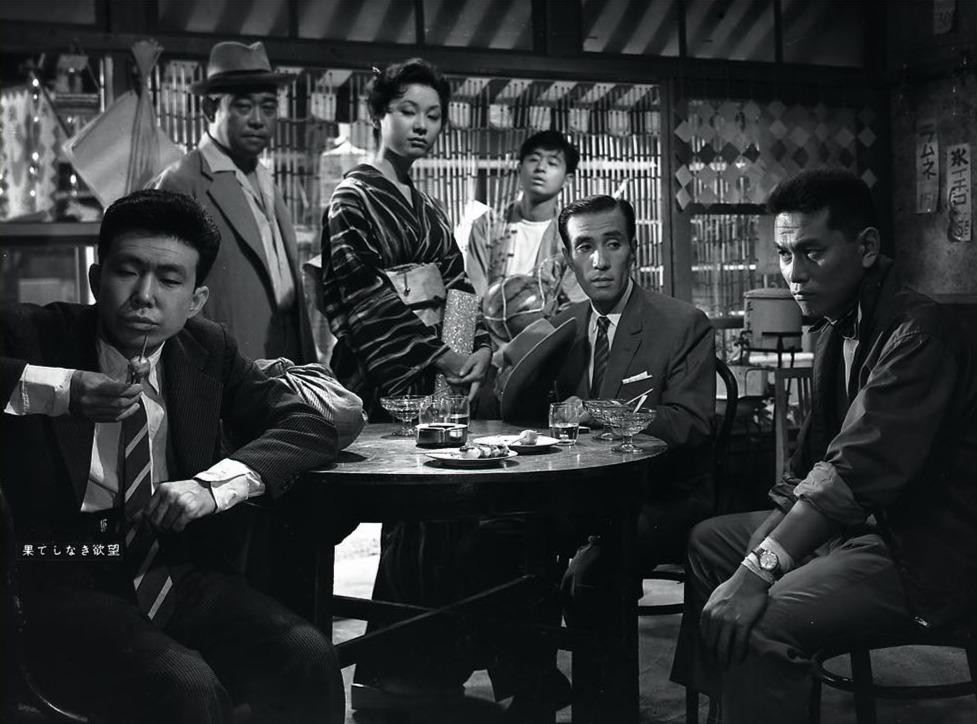
As the adage goes, best is for last, and if you can only see one film from this season it absolutely has to be The Emperor’s Naked Army Marches On. It’s a documentary by Kazuo Hara about an aging and confrontational Japanese veteran who Imamura introduced to Hara. It is a truly insane watch, as Hara follows this obsessive man on a one-man revenge mission. We advise rapid purchase of tickets.
An Update
A little while ago, we did the definitive final and total guide to eating in Chinatown, something that was met with total appreciation and not questioned once; such was the perfect nature of its design and execution.
All the same, we’re keen to update you with a piece of information we didn’t have but now do. This is the presence of an incredible tucked-away two-course £7.50 lunch of some quality. Tucked behind the Hippodrome casino is the Chinese Community Centre. If you head inside, up some spiral stairs, push through the feeling that you’re somewhere you aren’t supposed to be, and head down several corridors, you’ll get to their lunchtime canteen. It serves hot lunches from 12:30–2 PM on weekdays and is usually dead quiet. An excellent break from the surrounding noise and something the droving masses will miss.
Nipping at the Heels
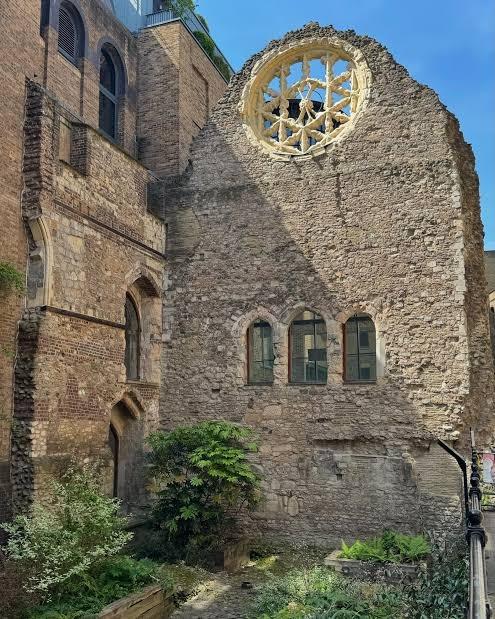
Until 1889, Southwark was not officially part of London. Now, stay with us. This may not sound that fascinating of itself, but the knock-on effect is really quite bizarre. For 762 years, the borough sat entirely outside the legal jurisdiction of the City of London and the county of Surrey, making it what used to be called a liberty, later known as the ‘Liberty of the Clink’. Forming part of the ancient, massive Diocese of Winchester, the Bishop of Winchester was granted the land by the Abbot of Bermondsey in 1127. This meant the church wielded authority over the area, building Winchester Palace as the Bishop’s grand London residence – remnants of the great hall can still be seen on Clink Street (the building was destroyed by a fire in 1814). This made the area uniquely exempt from the jurisdiction of the capital, and as a consequence created a kind of proto-red-light district that was incongruously regulated by the clergy.
Alongside bull-baiting, bear-baiting and theatre, sex work was legalised and brothels regulated and taxed by the church. The women involved by association became known as the ‘Winchester Geese’ – to be ‘bitten by a Winchester goose’ meant to contract an STD and ‘goose bumps’ was slang for the symptoms of the disease. The church even outlined rules that were mandated by the bishop, including a fine for women tugging on men’s coats as they walked past and a ban on operating on holy days and Sundays. Clients would come over by boat from a jetty at Stew Lane in the city across the river (brothels on the bank had to be painted white so they could be easily identified from the water) and were obliged to avoid being questioned if they went through the gates at London Bridge, earning brothels the name ‘stews’. Despite years of funding the clergy, when the women died they were banned from being buried in churchyards, and instead were dumped in an unconsecrated burial ground, now named Cross Bones Graveyard. Discovered on Redcross Way during the excavation of the Jubilee line in the 90s, the site has only since been memorialised with the efforts of local residents and the work of John Constable (not that one). Enthusiasts hold a vigil on the 23rd of every month to remember the women as well as all those that have been outcast ‘dead or alive’, which, if the commute feels a bit of a stretch, can also be attended via Zoom.
Another fortnight comes to a close. We’re always keen to hear what you think and our ear is described by the letters editorial@the-fence.com. Pitches, tips or just heartfelt praise and admiration can all be appended with the title Capital Letter so we can respond to you nice and rapidly. Do feel free to share this round and comment, the more of you there are, the more our hearts swell. Enough! We will busy ourselves back into the streets of London and report our findings here two weeks hence. Till soon.
All the best,
TF