Dear Readers,
Good afternoon and welcome back to Capital Letter.
This week’s offering focuses on London’s upcoming and quickly fading festivals, as well as the tribes who haunt them. With that in mind, we thought we’d add another tribe in the top here, courtesy of an Instagram-wielding cabbie who has noted the rise of a particular new London dialect he hears more and more these days.
We are delighted to see so many of you signing up for this newsletter, so we will quickly remind you that the latest print magazine is available to buy here. Many people have commented – both publicly and privately – that it’s one of the best ones we’ve ever done, and that is a lovely thing to hear.
Capital Letter is, however, our main focus in the coming months. We will be going weekly soon, and a design overhaul is in the works too. If you’d like to pitch us an idea, you can do so by emailing us (unsurprisingly) and we’ll take things from there. Let’s get it going with a guest spot from an increasingly frequent contributor.
Miles for Meatballs
Tien Albert investigates fowl play.
During the second lockdown, my Thai mother forced my French father to drive her two hours to Chingford so she could purchase fish balls out of someone’s car boot she’d found on Facebook Marketplace. ‘It feels a bit like a drug deal,’ she said. In a similar vein, one German-Jamaican friend drove from London to Leigh-on-Sea to a distant uncle’s house to recover a long-lost pork aspic recipe. Upon arrival, she was informed that said uncle had passed away some years ago, ‘but his wife was still around and very happy to share the recipe with us.’ Demir, another friend, describes catching a Lime from Battersea to Wood Green during Summer 2020 to pick Kayseri Manti dumplings from a known home cook in the Turkish community. He had hoped for a quick handoff, but when the door opened, his dumpling dealer was armed. ‘She came out holding a cup of tea, so I knew what was about to happen. She said someone might call the police if I stood out the door for so long for breaking COVID regulations so I had to go in for an hour.’
Today, food items like good jasmine rice, chilli paste, fish sauce, dried shrimp and more, which were hard to find in the 2000s, can be found at most supermarkets. And yet the practice of introducing carefully parcelled delicacies into the British gastrosystem has not vanished.
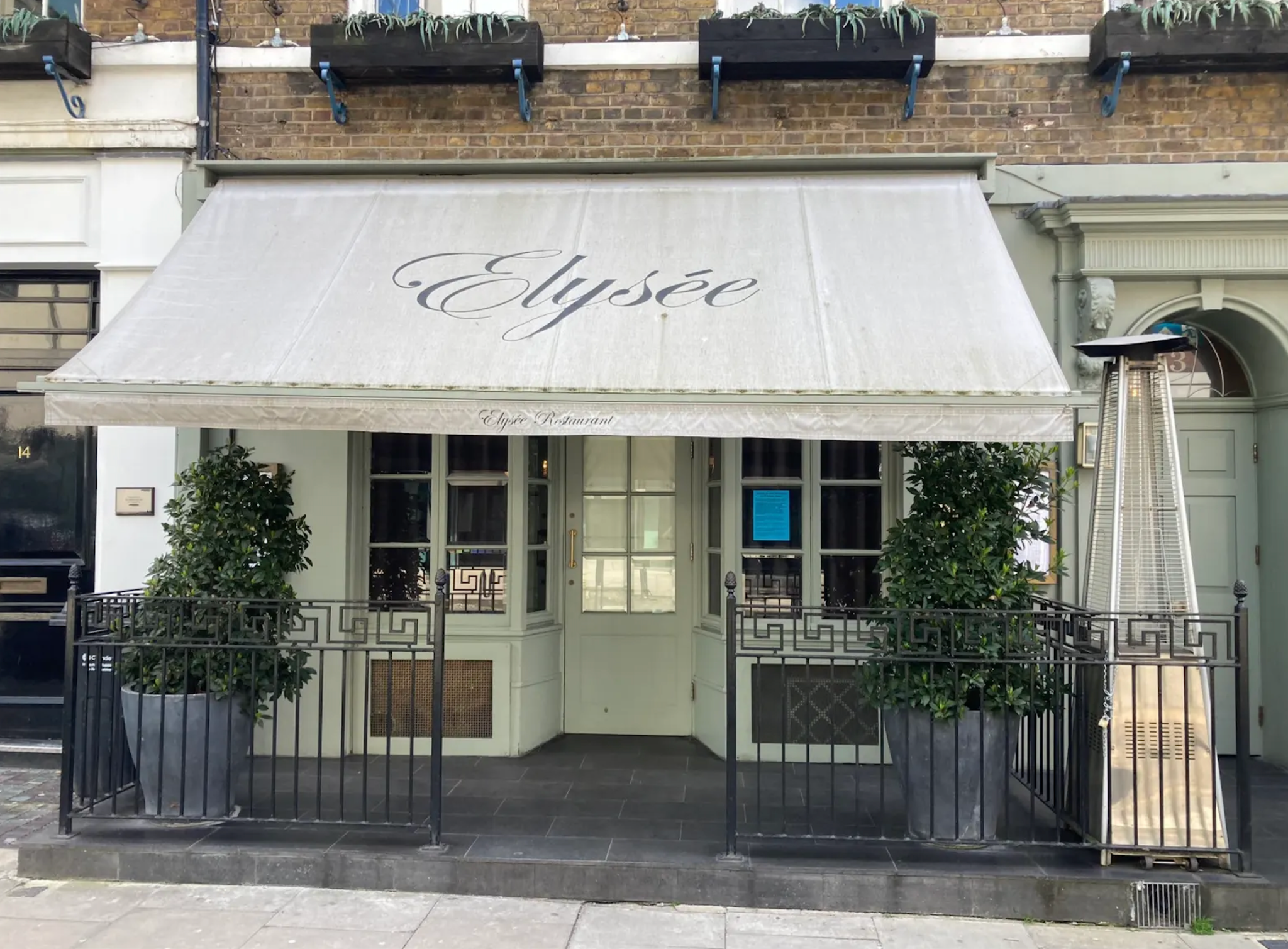
Since the European outbreak of foot-and-mouth disease in April 2025, the UK has banned imports of certain meats and cheeses. According to French-imported-food shop and restaurant provider Chanteroy in South Kensington, this is causing issues all the way down to plate level. ‘British cured meat substitutes are light-years behind’, the aptly-named CEO Christophe Grison told me. Elysée, a restaurant on Percy Street, preferred to cut sausages from its menu entirely rather than serve new British-made substitutes.
Grison says FMD cases are so low that there is no reason for the ban not to be reversed. He suspects foul play within Defra, the government Department for Environment, Food & Rural Affairs. ‘Anyone with a bit of bottle knows that this kind of decision made under the pretext of the people’s safety is being used for someone else’s profit behind the scenes.’ That, or ‘they’re taking their revenge on France for banning British meat after the mad cow epidemic [in 1996].’
With Defra keeping the iron curtain down, personal smuggling is presumably on the rise. Grison says British cheese is equally light-years behind, to the extent that he wouldn’t be surprised had a few reblochons accidentally found their way to the capital in the Eurostar recently. One Italian friend similarly describes slowly creating a composite wheel of Parmiggiano Reggiano in London by sneaking pieces in her hold luggage over a year of back-and-forths to Milan. Her partner was equally entrusted with a small wheel of Rosengarten raw milk cheese for his carry-on. ‘Just go past the agent you think looks the busiest,’ he says.
So, as long as frozen frogs are only available from Chinatown, and Finnish pastries can only be bought once a year at the Rotherhithe Lutheran Church’s Christmas fair, communities will continue to unite in the vital, piecemeal work of securing precious delicacies.
Forthcoming Festivities
London Contemporary Music Festival is back after a fallow year regrowing the adventurous music fields. This time around, the programme will open on 3 December with a staging of David Wojnarowicz’s opera In the Shadow of Forward Motion. It will be performed by Wojnarowicz’s original collaborators Ben O’Neill and Don Yallech, who staged the opera in New York shortly before Wojnarowicz’s death from HIV/AIDS-related illness in 1989. Expect a surreal and immersive musical onslaught. Act two will present a world premiere of a work by the saxophonist legend Anthony Braxton. The performance will involve musicians ‘dressed in dark boilersuits, hard hats and mining lamps. A dumpster offloads a heap of coal and they shovel, action and sound transmuted into an electronic hellscape.’ We’re sold.
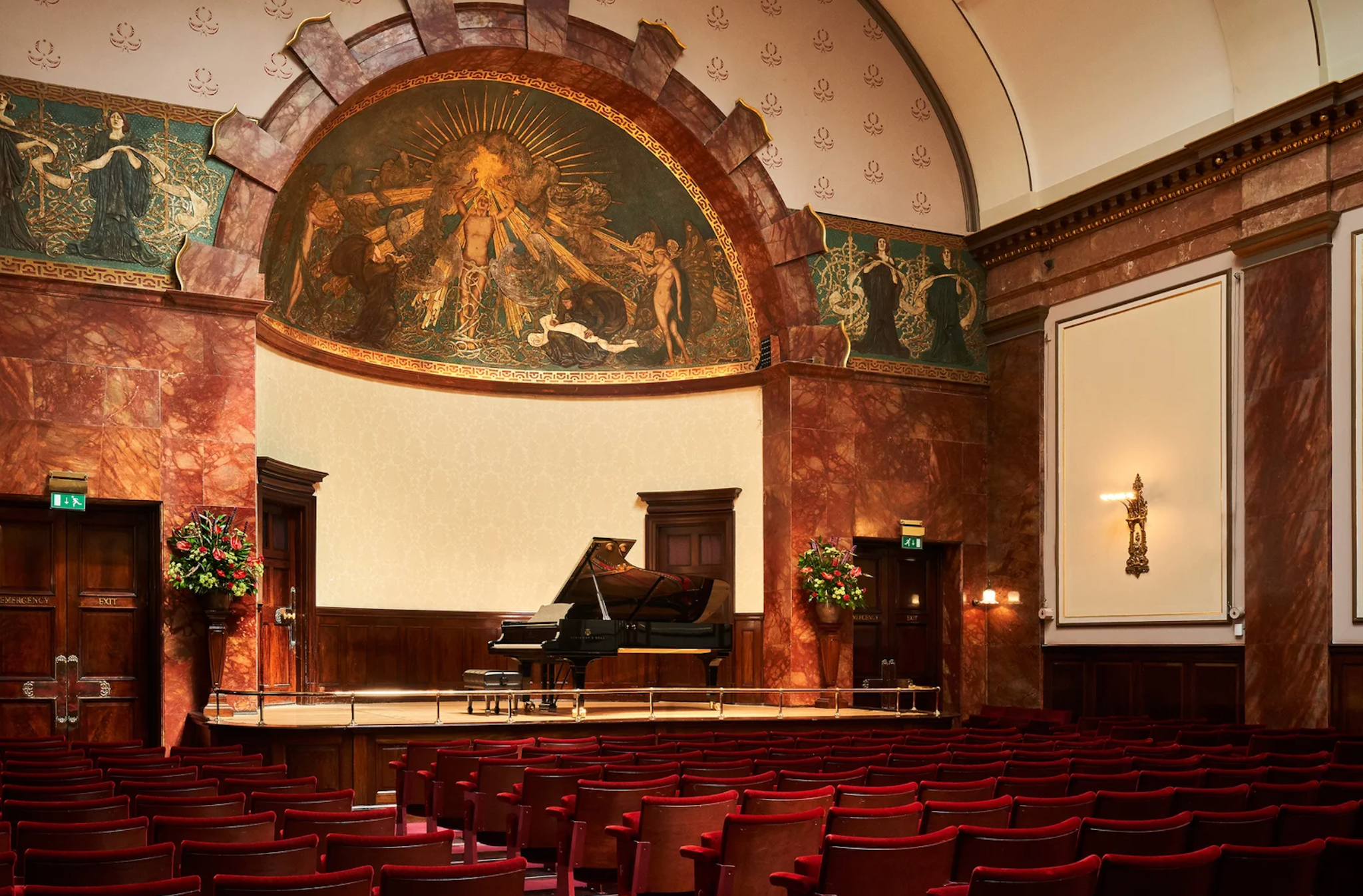
To tail the festival, on 22 December, LCMF will return to Wigmore Hall to present Morton Feldman’s epic, five-and-a-half-hour marathon, String Quartet No. 2. There will be no interval, but there you will be allowed to leave and re-enter the hall as you wish. Feldman was part of a group of composers including John Cage and Christina Wolff emerging from the 60s who left a lot to the chance of performance and arrangement. Duration – i.e. very long compositions – was a large part of the game. In any case, you can listen to the quartet on YouTube before you decide if you want to invest in the commitment. Incidentally, it’s a good deal. The tickets for under-35s are £5. That’s £1 per hour and six minutes. They’re going fast, so get in while you can.
Curia Julia
Have we reached ‘peak pub’? This publication may have a dedicated pints correspondent and we even authored a whole book on the subject, but the news that Daniel Craig and others have ‘rescued’ The Horseshoe in Farringdon did make us feel somewhat fatigued. There is so much breathless hype around some really rather boring food-focused pubs and it seems a new one is opening every week. This is largely because restaurateurs and their financiers know that the ‘pub model’ is resilient; that they can serve sub-par food at restaurant prices; keep the menu unchanged; take shortcuts on the service and the staff and rake in stonking profits.
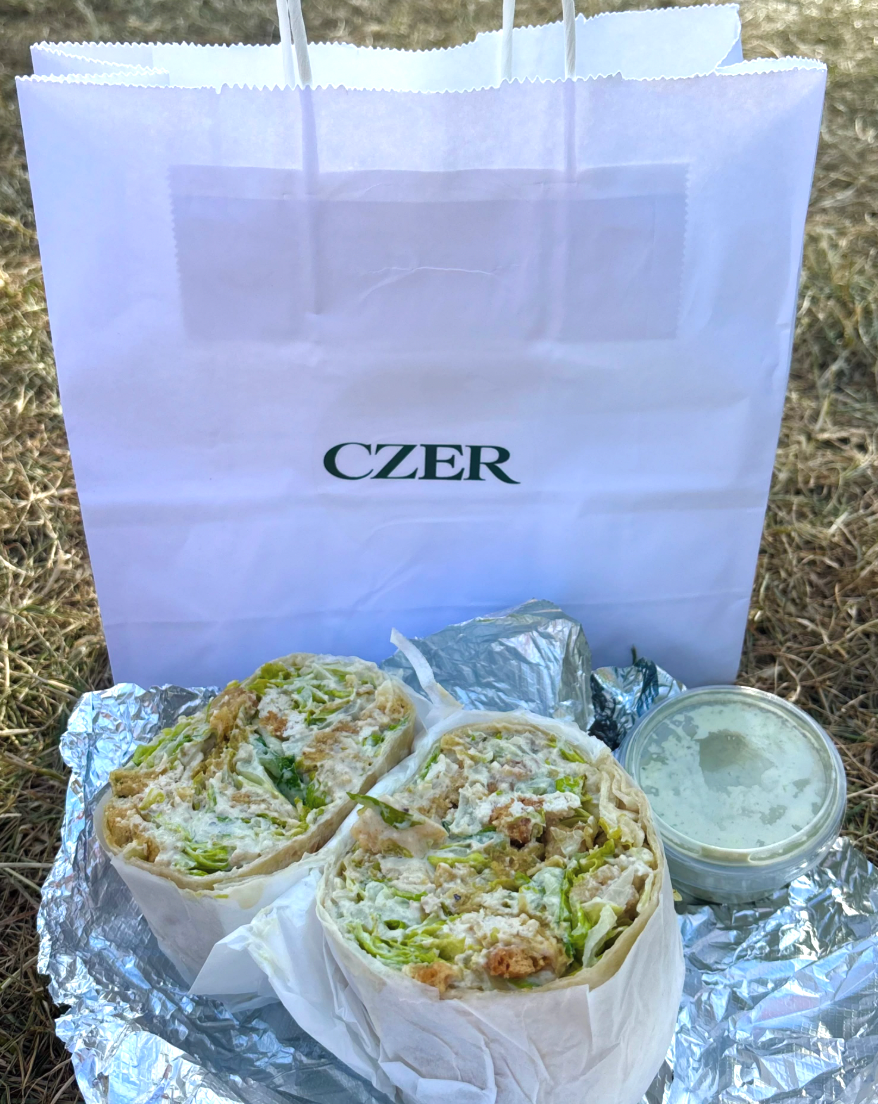
But we digress. A few newsletters back we designated Bleecker Burger on Old Compton Street as the most dystopian restaurant in the capital. But that crown must now pass on to CZER, which is a chicken Caesar sandwich spot which is now resident in Soho. The sandwich we had last week was, to be quite frank, absolutely disgusting, and cost £12. The queue was 40 minutes long and was largely made up of the gileted denizens of the private equity world. If you want a terrifying vision of the future, do make your way down to Brewer Street.
Last Days of Saigon
Another newsletter posting, another London festival. This time, it is the London Film Festival, which is quickly approaching its bitter end. There is no better time than now to scoop up its offerings – the final weekend calls!
The docket is varied, and there are a few shiners we think are particularly worth a look at. Revolutionaries Never Die, an archival chop up from Jocelyne Saab’s extraordinary catalogue. Between 1973 and 1983, Saab shot 16 films documenting struggles and conflict in Lebanon, including her renowned Beirut trilogy examining life in the city after the invasion of Israel in 1982, as well as earlier and later periods of greater calm. The film reimagines around a dozen boxes of celluloid kept in the Centre national du cinéma et de l’image animée in Paris.
Another option is Gentle Monster, which tells the story of a pianist, played by Léa Seydoux, who gives up her career to move to the countryside and look after her husband suffering from burnout. Seydoux is always excellent, and it got nominated for the Palme d’Or at Cannes. A third is My Wife Cries, directed by Angela Schanelec who won Un Certain Regard in 1998 for the incredibly arresting and memorable Places in Cities, which follows a schoolgirl on a trip to Paris from Berlin where she falls pregnant and gets caught between the two capitals. Schanelec returns with another eerily quiet film that opens with a man being called home by his wife who has just been in a road accident. Or, you could keep things light with Furies, a heist thriller between two sisters in Lebanon. There are rumours of revenge, too. So many possibilities and so little time.
Yew and non-Yew
Lauren Moss lives up to her name.
London is notoriously green as cities go. Around 21 per cent of Greater London is covered by trees, with an estimated 8.4 million trees spread across its parks, gardens, streets, commons and woodlands. The names of many London neighbourhoods preserve traces of the landscape that came before them: Wood Green, Forest Gate, Nine Elms, Forest Hill and Royal Oak. But sometimes we overlook just how ancient some of London’s trees really are.
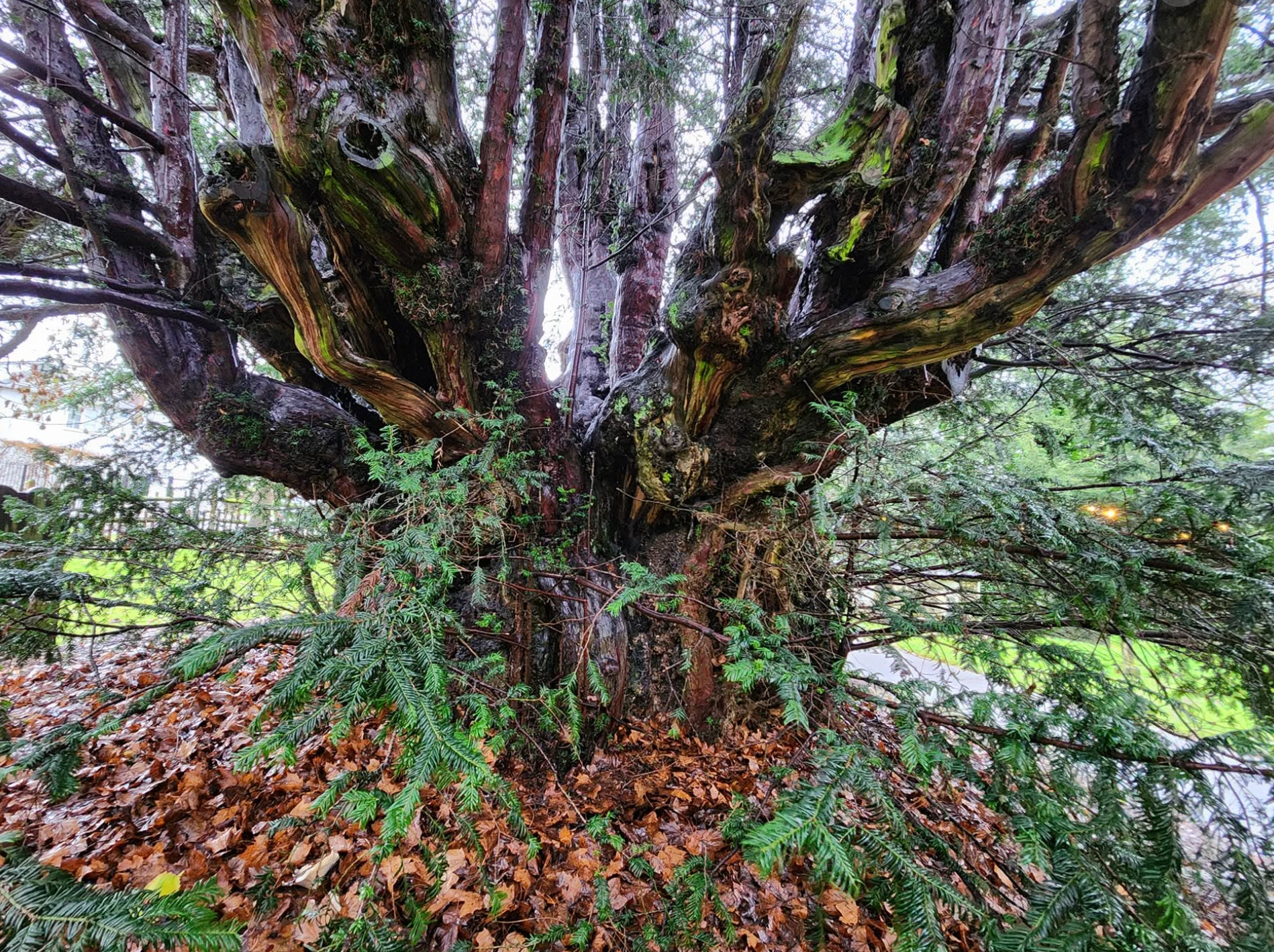
The oldest is now known as the Totteridge Yew, and stands in the churchyard of St Andrew’s in north London and is estimated to be between 1000 and 2000 years old. It may have already been growing when the Romans arrived and founded Londinium and could have been a thousand years old by the time William the Conqueror began building the Tower of London in 1078. It’s a fitting candidate for such longevity: the Yew’s toxins make it deadly, while its remarkable ability to regenerate gives it an almost eternal quality.
Another storied tree is resident in Greenwich Park. Queen Elizabeth’s Oak was dated to around the 12th century and survived until it fell in 1991. By then, it had become part of the park’s lore, and one story claimed that the young Elizabeth I had picnicked beneath its branches. Later, the hollow tree was supposedly used as a makeshift prison for misbehaving visitors.

The importance of these veteran trees isn’t just confined to the past. In Britain, ancient woodland generally refers to land that has been continuously wooded since at least 1600, and beneath such trees is an equally ancient world: undisturbed soils, fungi, mosses, insects and plants that are invaluable to our environment.
There is also something less measurable but equally important. An ancient yew does not care that a Tube line now runs nearby. An oak can continue growing while streets are renamed, buildings demolished, and generations of Londoners come and go. They are a living memory, reminding us that even when we feel most detached from the natural world, we are always part of the landscape around us.
We hope you enjoyed this outing. Do drop us a comment or a ‘like’ if you did so, and we look forward to joining you in a fortnight’s time. Our treasure trove of maps is available to enjoy here. Until the next time.
All the best,
TF