Dear Readers,
Good evening, and what a pleasantly sticky one it is – more of an extended tropical afternoon. We’ve got a sumptuous spread for you, extending out across theatre, art, food and more.
We are now up to 2,000 subscribers, which is a welcome milestone. Do keep spreading the word, and recommending this mail-out to your friends in real life, and if you are able, on social media.
If you’d like to see us cover something, please email editorial@the-fence.com and we’ll take it from there.
Thank you to everyone who has become a paid subscriber. If you like what you’re reading – and you need access to the whole back catalogue – do sign up. A reminder that we will be making Capital Letter weekly and then fully paywalled in time.
Our podcast, Money’s No Object, is now in full swing, and both outings are so imbued with London swagger that they could have been dredged from the River Thames. We kicked things off with Missy Flynn, co-founder of Soho hotspot Rita’s, and yesterday the host, Joe Bishop, spoke to Jimmy McIntosh, the country’s premier pintlord. He spoke about what he would do if he came into a fortune of uncountable millions and why, in his view, The Devonshire is a ‘good pub’. You can listen to it here.
Now, in many ways, St James’s is the most unchanged part of central London, its discreet pleasures available by invitation only. Alongside the bow windows of clubland, many of London’s ritziest galleries have made SW1 their base of operations, and we begin on Bury Street, at a basketball-court-sized space that’s straining to align itself with the zeitgeist.
What’s Wrong With Tote Bags?
Saatchi Yates is quickly making a name for itself as London’s most embarrassing gallery. Co-owned by the helpfully named Phoebe Saatchi Yates, the gallery announced a new membership programme last week. Online, the gallery lists exactly 34 things that it is and isn’t ‘about’. Newness, inclusivity and ‘the grass roots’ are in; while ‘nerds’, the past, and, bizarrely, LinkedIn are out. The invite-only ‘Big Kahuna’ tier will set you back £800 per month, but the free tier grants members entry to a WhatsApp group chat, which we imagine will be very exciting.
This is the second time this year that the gallery has resorted to list-making as a stand-in for substance. The February announcement of their Fellowship Prize neglected to set out any submission guidelines or deadline. Instead, it simply tallied things to avoid, including ‘follows trends Art,’ ‘adverse to taking risks Art’ and ‘sits in the middle of the road Art’. The winner of the Fellowship Prize has yet to be announced
Other recent schemes include styling a painting with a chameleon and selling human-scale tote bags at Dover Street Market. (But to avoid potential confusion, Saatchi Yates membership is expressly not about tote bags.)
This evening, it opens an exhibition titled Once Upon a Time in London. The stated goal is to reinstate or underscore our city’s artistic brilliance and creative resilience. Its expansive cast of artists ranges from Frank Auerbach and Francis Bacon, both of whose work defined the capital during the last century, to Olaolu Slawn and Joanna van Son, both born in 2000, who might hope to make a similar impact on this one. As such, it might be worth checking out.
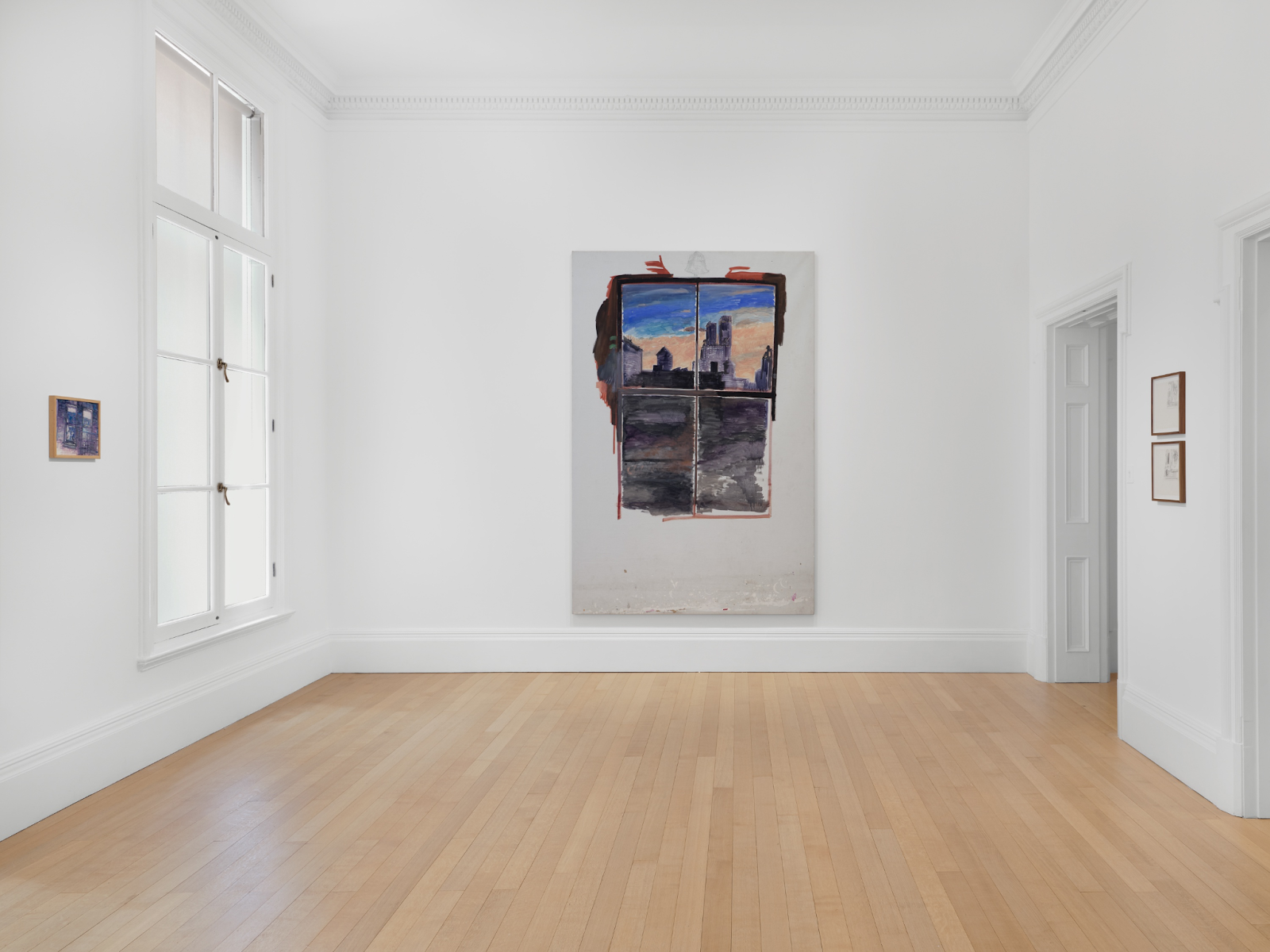
Around the corner, in the decidedly cooler and more understated Thomas Dane Gallery, is an unmissable exhibition of impossibly tender paintings by the late New York artist Paul Thek. Here, you’ll find oceans, skylines, hands and faces rendered with almost tearjerking delicacy. Kenny Shachter, the show’s frenetic and tetchy co-curator, put it best when he told Plasterthat ‘Thek was able to say more in one small sketch than any of those vacuous ten-metre tall canvases swirling around New York in the ‘70s.’ Its other curator is no less than Jonathan Anderson, an overpromoted stylist with excellent taste in art.
Far from Agitprop
The Reckoning is a great show that has come to The Arcola. Built on the testimonies of Ukrainians collected over three years by a team of journalists, researchers and lawyers, the play itself is anchored by one perfectly crafted central story – one man gives his testimony to a journalist as he prepares a Ukrainian summer salad. The simple kitchen is then transformed into vignettes from his ordeal.
This central story is complemented by two ‘echoes’ who take on the voices of others interviewed by The Reckoning Project, as well as sharing their own personal stories of the war. When the show ends, the summer salad being prepared earlier – which the actors point out to me afterwards is only ever known as just ‘salad’ in Ukraine – is handed out to everyone in the audience. It's an incredibly powerful piece, with a rare grounding in practical work so often missing from a lot of political theatre.
Diminishing funding and the demise of regional theatre have made fringe work like The Reckoning unprofitable and deeply unappealing to the bigger stages, increasingly afraid of anything that looks like a risk. And this means small theatre companies live on a thin line. Dash Arts, the company behind the play, was recently cut from the Arts Council's list of National Portfolios (NPOs), which give funding to cover running costs, and this is becoming increasingly skewed towards bigger, safer companies. The Royal Opera House, for example, is receiving £22,268,584 per annum from the Arts Council. Dash Arts had been receiving a mere £90,000 every year before being cut from the 2023-2026 funding list, a sum of money they quite rightly point out was ‘never a tremendous amount of core funding… in the context of the overall Arts Council budget, but it made a huge difference to us.’ While it's great to see such sums still being doled out to creative organisations, it's hard not to wonder if there might be a need to extend the largesse.
Speaking to those involved with the play after the show, it is unlikely The Reckoning will be able to make a transfer to a bigger London stage. So we urge you to go and catch this production at The Arcola while you can, and to remind you to keep an eye on the off-West End scene. You won’t see the fruits of its labour on a big stage any time soon. The Reckoning is running at the Arcola until 28 June.
Lashings of Boeuf Bourguignon
Highgate, Crouch End, and Muswell Hill have long existed as a Bermuda Triangle for decent restaurants. With the recent closing of the much-loved Banner’s, the situation has worsened considerably. There is, however, a helping hand on offer, stretching across the waters of La Manche: Les Associés. Burrowed into the front of a semi-detached townhouse, this hand extends the promise of some of the best French gastronomy in London. A handwritten menu states the current rotation of classics on offer: scallop a l’orange, guinea fowl aux prunes, and civet de lapin.
The only thing more classically French than the food is the restaurant’s sole maitre d’. He is not exactly rude, he just has little time on his hands. Do not book through online platforms – use a telephone and arrive on time. Indeed, the negative reviews say more about the writers than anything else. As the proprietor has reminded those dissatisfied with his service on Google, ‘don’t forget, I am French, from Paris’. The only frustration is that Les Associés is not so much a ‘hidden gem’, but a largely inaccessible one. It’s open for just three hours each evening, excluding Sundays, where it opens for just two at lunch, and Mondays, where it isn’t open at all.
For most of the week, its elegant cream-red interiors lie shuttered up with iron grates, its elaborately folded napkins standing to stiff conical attention like infantrymen in Napoleon’s Grande Armeé. Similarly, the plates come with a demure quantity of neatly arranged vegetables – three potatoes, a smattering of green beans, one singular carrot. These are paired, however, with a fair less dainty cut of meat or fish, usually covered in a rich sauce, the bone staring at you very clearly from its final resting place.
On our last visit, the chef came to the front to observe his clientele. He became fascinated with a small dog, a terrier of some kind, owned by an elderly American woman. He was soon feeding it some scraps of meat while simultaneously whispering, ‘I love you, I love you. ’ When he’d run out of scraps, he thanked the woman for coming and praised her for coming.
This is a spot for an excellent traditional French meal with a heavy dose of old-world charm. Just remember that your waiter is indeed French, and he is from Paris.
My Wardrobe Is My Armour
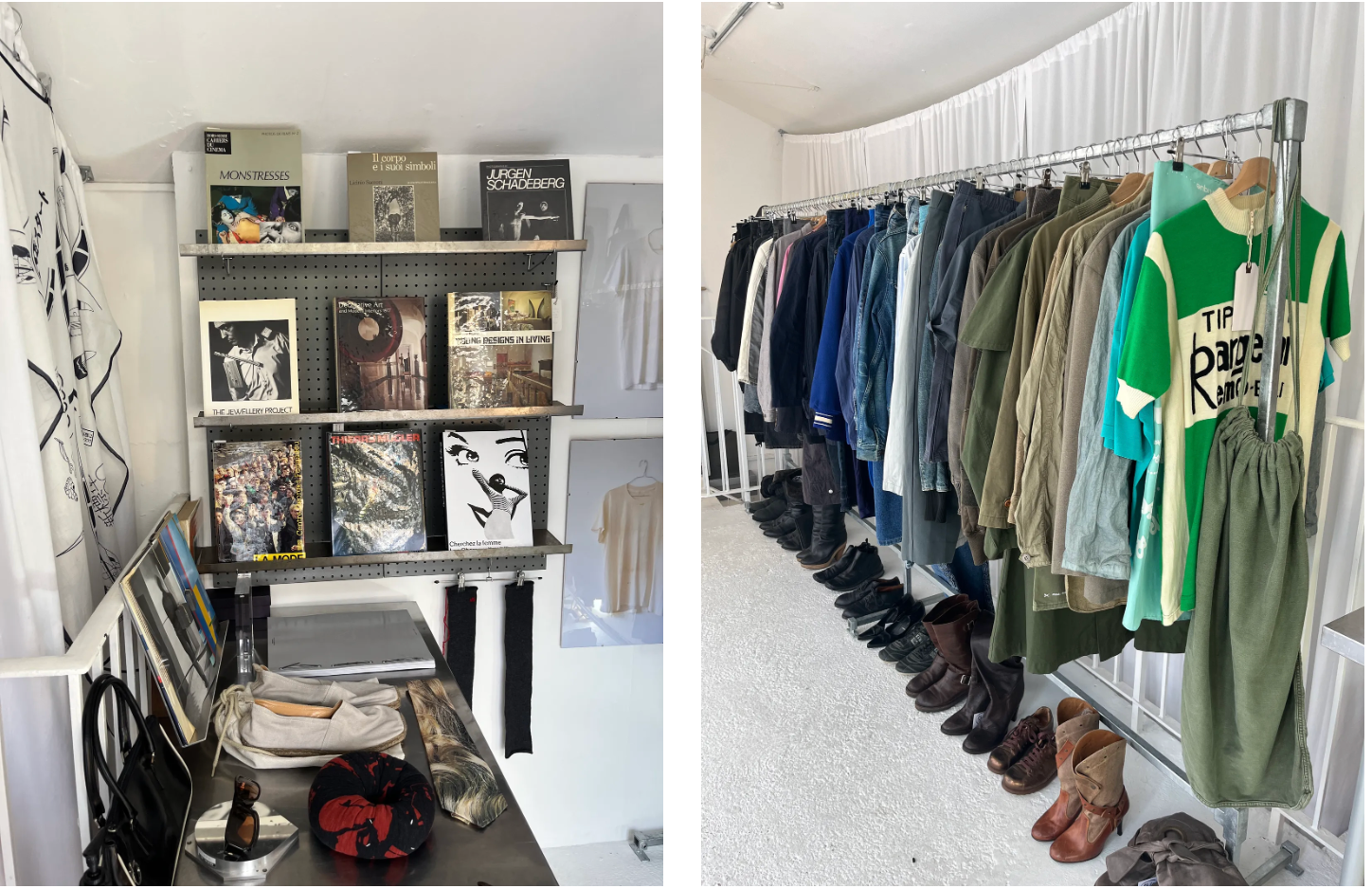
There are a few things in London that are disappointing, and vintage clothes shopping is one of them. All the same, we have found some places which remain useful touchpoints if you’re looking for some genuinely nice new articles or even just a gentle peruse (or a frenetic one, in which you make yourself anxious at the sheer vertiginous array of options before you).
Files is a chic but still very pleasant shop with a focus on designer pieces, often from around the early 2000s. They’ve stocked pieces from names such as CDG, Yohji Yamamoto, Prada, Balenciaga and Ann Demeulemeester. They’re also especially good for fans of Japanese cuts; recently, they have had some lovely pieces in from Japanese designer Issey Miyake, such as this worker jacket and these deep blue trousers. They’ve got a zen-like shop near London Fields open from 11am-6pm daily.
Finally, there is Twos, carrying on a trend for the oddly-named one-word shops. Again, they have a heavily curated selection which they aim to keep deliberately varied in style and price. A strong sign you’re in a good place is that it has become a cult following for many in the business, especially other designers, artists, and models. This is probably mostly due to the strong selection on offer, but also the goal of its founder Josh Cook, who has tried to make it a sociable place as well as a fashionable one. They often post updates across their two stores – one in Regent Studios, the other on Hackney Road – about new stock and various drinks and events, so they’re well worth an Instagram follow here.
Bring Me to the Cloth Fair
‘I’m a survivor’, so sang Destiny’s Child in 2001. It is a song you might well quietly hum if ever you find yourself hopping off the tube at Barbican and wandering westwards to Smithfield. The meat market there is in the process of shutting up shop, ending hundreds of years of fresh produce being sold in the City of London. The winding lanes around Grub Street which would be behind you now are also long gone. Even the public lavatories underneath the circular centrepiece of West Smithfield are now shut. One building, however, in this strange part of London, survives and indeed, always seems to. St Bartholomew the Great is really one of the most astonishing churches in London – the survivor of not only the 1960s and the Victorians but the Blitz and the Great Fire too. It is the only complete medieval church in London, retaining some of its original stonework from the 1130s when it was founded by Henry I’s jester, Rahere.
Rahere’s tomb is one of the highlights of the interior, which is reached by going under a medieval gateway in the southeastern corner of West Smithfield. It jostles for attention alongside Tudor memorials, Early English archways, the Lady Chapel (where Benjamin Franklin did an apprenticeship and where the Blessed Virgin is said to have appeared to tell off the monks) and a huge sculpture by Damian Hirst of the church’s patron saint, the skin which was flailed from him in his martyrdom round his ankles. The best thing about St Barts is to simply wander, to get lost in its cool and dank corners. It is the place in London where we would most challenge people to not believe in ghosts. Outside of service times, it is never very busy, hidden as it is.
Services themselves are a different matter. The church is packed every Sunday, and especially on the first Thursday in the month when it hosts its ‘Evensong in the City’, with free food and gallons of wine afterwards. It undoubtedly attracts a certain type, but that makes people watching all the more fun. The rector, the bombastic Marcus Walker, preaches often, when not furiously tweeting. If you’re there on a Sunday, the socially active congregation will probably carry you off to a local pub for an afternoon of inebriation. If you’re there for a quieter weekday visit, make sure to pop down Cloth Fair, another astonishing survivor that runs next to the church. The Rising Sun lurks there – a step back in time in more ways than one. There is something quite mystic about the whole area, and many of London’s best restaurants – Brutto, Luca, St. JOHN and more – are just around the corner, for when you want to heave yourself back into the present, and leave behind London’s murkier past.
That’s that, and there we are. Here we are. It’s Mrs Dalloway time. For it is the middle of June, and the city is at its best. Do let us know how you get on at editorial@the-fence.com and we’ll join you a fortnight hence.
Do drop a comment below or a ‘like’ if you’re feeling generous. That sort of thing really makes our hearts sing. Until the next time.
All the best,
TF