Dear Readers,
Good afternoon and welcome back to Capital Letter.
We greet you this week as the city slides slowly, begrudgingly, from the stranglehold of a summer that has beaten the green from the grass. We must admit, we’re keen for a bit of sweater weather.
We do like to keep this corner of our media empire free of too much promotional material, and fear not, that will remain the case. But as the printers begin to whirr up to create the brand new Issue 29, we do want to remind you that this means 28 will soon become a rare commodity.
It’s been the best issue yet, and for fans of London it contains much, including Cormac Kehoe’s investigation into the tat shops that have increasingly swelled our high streets, James Ramsden’s brilliant tour of his previous restaurants and a vision of a future English civil war that sees the Houses of Parliament temporarily turned into a ‘regenerative indoor forest for toddlers’. It’s really good.
We can turn then to matters at hand, including sightings of Tilda Swinton, ideal afternoons, Goldfinger and the Bayeux Tapestry. But why not begin with something a little more current?
LFW? LFG!
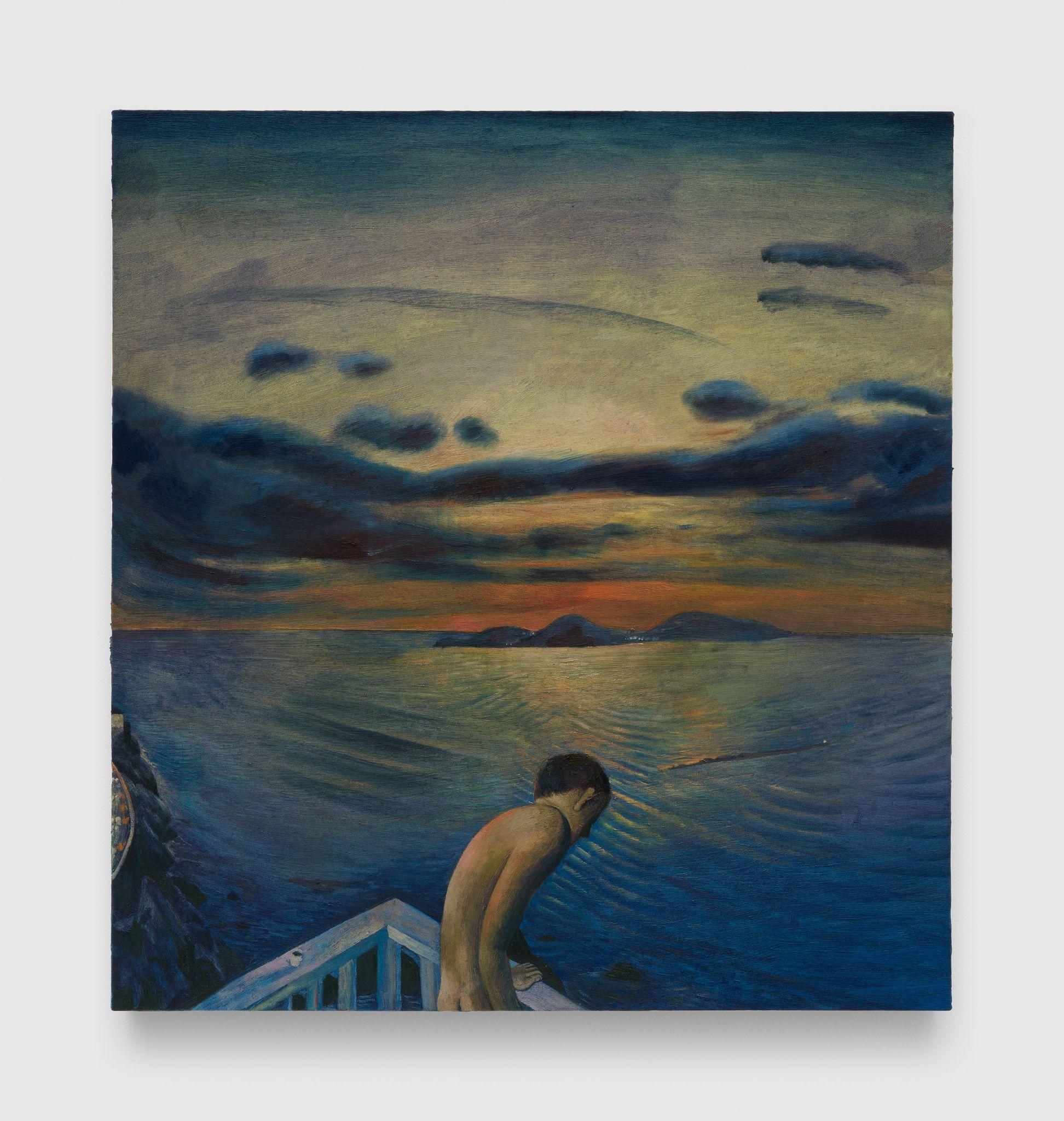
LFW opened yesterday, and it’s lovely to see a growing cabal of young designers establishing themselves as regulars on the schedule – especially considering the output of many of the capital’s major design houses has become rather lacklustre in recent years. Establishing a brand on the LFW scene is only becoming more impenetrable, as seen by the rise and fall of brands such as Nasir Mazhar’s buzzy streetwear label in the 2010s, or Henry Holland’s pivot into homeware (though his iconic slogan t-shirts were briefly revived yesterday for Charli XCX only).
So, who are the capital’s new collective? If you’ve been in the Fold smoking area recently, you probably asked a guy wearing Charlie Constantinou for a lighter – a designer with a penchant for outerwear. Constantinou’s innovative design process centers around creating modular pieces with multifunctional silhouettes that have ensured him a regular slot on the LFW line-up. Steve O Smith is presenting on Saturday – graduating from CSM’s Fashion Design MA in 2022. Smith has honed an idiosyncratic form of British couture with a series of beautiful trompe l’oeil pieces that give form to his caricature-inspired drawings. Pauline Dujancourt also receives well-deserved hype for her intricate approach to craft – specialising in knitwear, she will be showcasing her delicate textiles at the NEWGEN space, her ethereal designs injecting some romance into the streetwear-heavy line-up.
There is also a trend emerging particularly for brands that focus on synthesising the capital’s style – Aaron Esh’s singular designs merge British subculture references with classic Savile Row tailoring techniques.
White City native E.W. Usie takes inspiration from the city’s diaspora. A recent MA graduate, Usie’s leather laser-cut pieces last season were easily one of the standout designs from the SS26 line-up. The curation at Machine-A is a fantastic place to source these labels, as well as keeping an eye on their respective Instagrams for sample sales (Connor Ives, who now shows in New York, loves a sale on his stories).
Mio Fratino
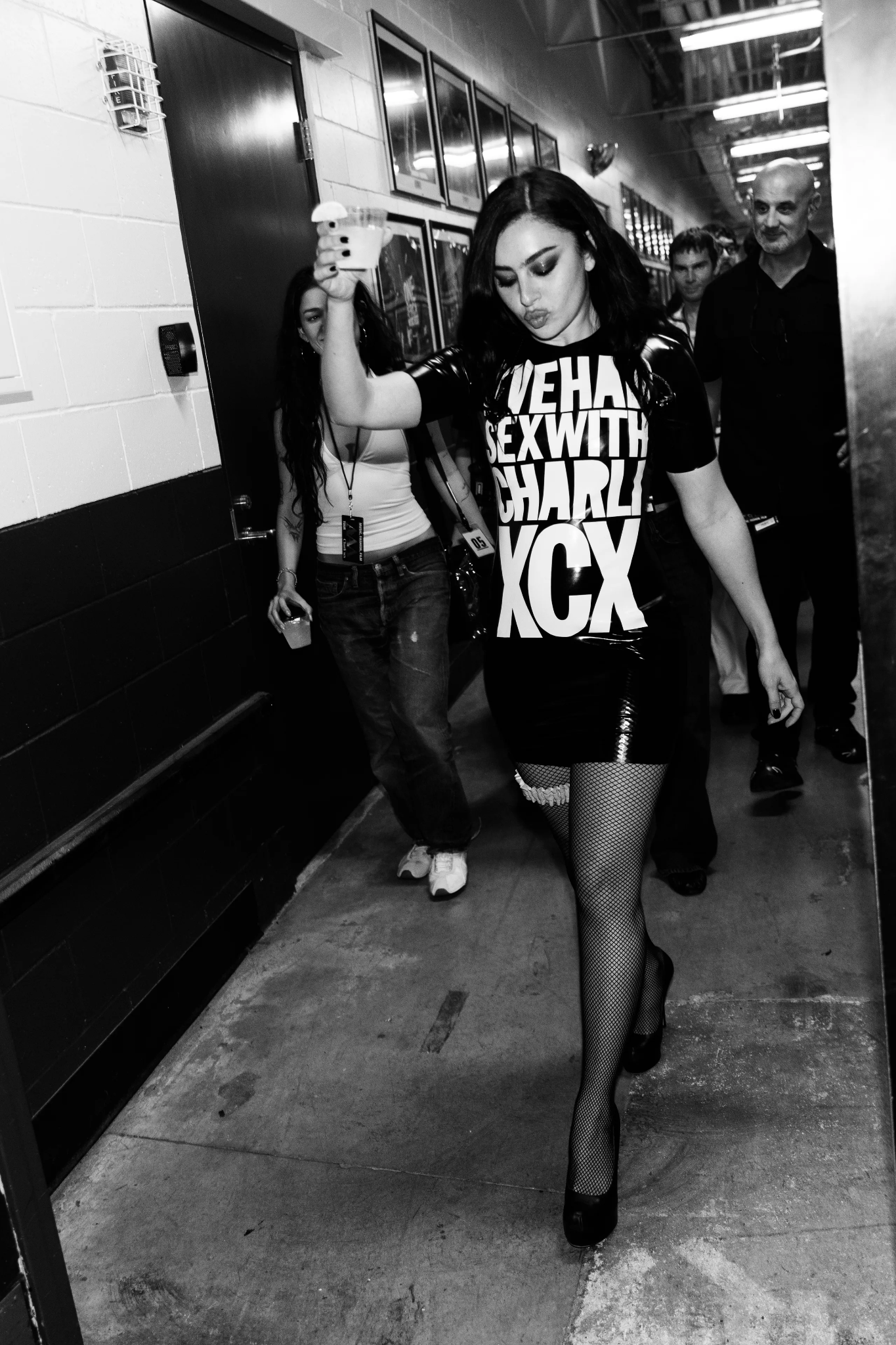
In an art world whose trend cycle tends to be vapid and hollow, driven by publicists paid to insist upon the deep cultural significance of whatever their clients are peddling, claims of newly-uncovered genius are to be approached with requisite cynicism. But we are different. We are your trusted galleryland sherpa, and you must believe us when we say that the American painter Louis Fratino – whose first UK solo exhibition, Prose, opens at David Zwirner tomorrow – is one to watch.
Fratino wasn’t yet a decade out of art school when, in 2024, his humane, dreamy, modernist-inflected paintings of scenes from his daily life caused a stir as part of the Venice Biennale’s central exhibition. Two years on, he has joined German megadealer Zwirner, where collectors vie for the privilege of getting onto the lengthy waiting list for a painting. Those who wish to skip the queue can do so by way of six-figure auction sales.
It’s no stretch to say that, in the first half of his 30s, Fratino has found recognition as a generational painter. What’s remarkable about him is something that will please the jaded, seen-it-all art world insiders and contemporary-art-cynical cultural philistines in equal measure: though he is certifiably hot shit, his work isn’t trying to do anything revolutionary or outlandish. There’s no gimmick. It’s just very, very good painting.
Writing for Frieze about his forthcoming show, Fratino names as references a gamut of 20th century artists including Edward Burra, Barbara Hepworth, Duncan Grant and Bhupen Khakhar. These are familiar names even to our aunts and uncles; ones that much of the newness-obsessed art world cognoscenti would deem fusty. Fratino’s genius is to reanimate such influences in paintings that are undeniably exciting and full of life.
This isn’t to say that Fratino is completely above the PR-ification of art. Much was made in Venice of the twisted horniness of I Keep My Treasure in My Ass, a painting of the artist being birthed from his own rectum. The press ran with this line as far as they could. ‘Louis Fratino would like to get intimate,’ read the headline of an interview in the Financial Times.
But Fratino is so much more than horny. In Frieze, he writes that the erotic ‘is merely one facet’ of that which he’s trying to paint: ‘A bigger, more mysterious thing called life.’ In his show at Zwirner, he renders a life that is by turns lonely, chaotic, tender and sublime. And, yes, occasionally, horny.
Oranges and Lemons
A few months ago, Giles Coren announced that Café Clement ‘will define the summer of 2026’, which, as predictions go, has proved to be a tad hubristic. Do you know anyone who has gone there? (PR freebies don’t count.)
The publicity drum beats ever louder for the greater St Clement project, acclaiming Nick Jones the hospitality seer, who has partnered with Marc Wadhwa to create the hotel on the river at the Strand, a part of London hitherto denuded of glitz, ‘heat’ and all the rest of it.
The views of the Thames really are magnificent, so it’ll be interesting to see if it ‘catches fire’ during LFW – Vogue’s offices are only just round the corner.
Mano e Mano
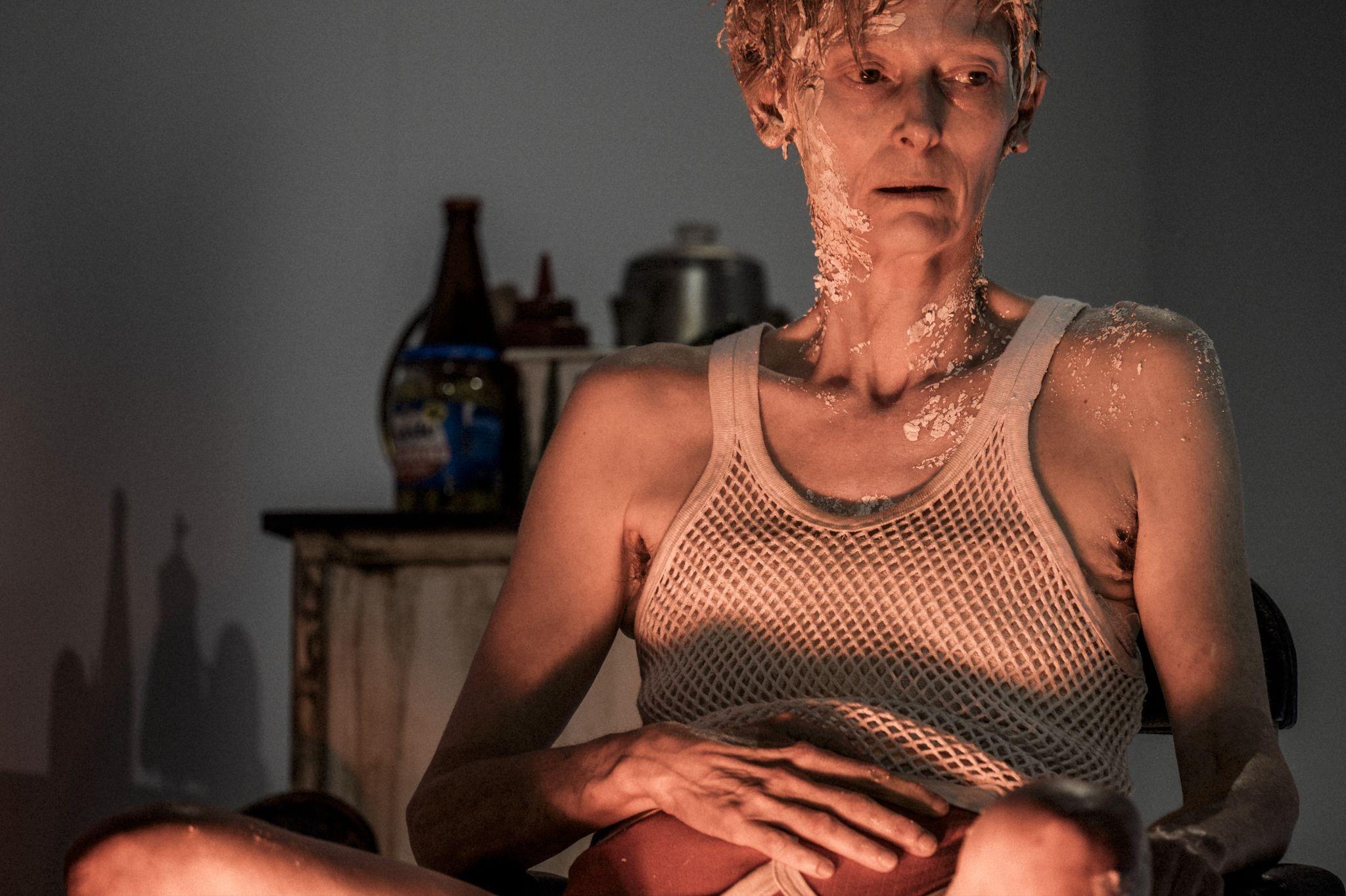
We caught the hot ticket this week as Tilda Swinton reprised her role in Man to Man at the Royal Court. Set in Germany, the ageless Swinton plays Ella, a woman who assumes the identity of her husband Max when he dies in order to earn money. What follows is an hour-and-a-half multi-character monologue, as Max/Ella tells their story of surviving through the turbulent times of Nazism and communist East Germany
And of course, the main attraction here is Swinton, something that was made abundantly clear at the play’s end, where there were just as many readied phones as there were clapping hands. Swinton is a commanding presence on the stage, and an exciting one too, given that she is a much rarer treader of boards these days. The combination of her performance and the unavoidable political resonances of Max/Ella’s story means the play has plenty of successful moments.
But as a whole, it is a slightly, dare we say it, dull affair. The sparse set is variously played with to illustrate the scenes of Max/Ella’s life but in ways that become demonstrative and stodgy. When a riot breaks out, a ketchup bottle is used to fling a streak of red over the back wall; as Max/Ella wrestles with their desire for a baby, the pillow from their chair becomes a bump; the fall of the Berlin Wall is depicted by Swinton slowly pulling up a piece of red tape that has divided the stage since the play’s opening – seriously. And even though Swinton gives us a knowing look and plays its silliness for a gag, it’s a kind of directorial style that keeps a potentially radical play within slightly twee guardrails.
This is not to say the production could not be beautiful. Ben Ormerod’s lighting design is excellent (see below), and the set has moments where it produces more exciting images – a lonely string of fairy lights pulled from Max/Ella’s beer fridge is a particularly good one. But it gets stuck in a slow, slightly didactic pacing, and though other critics feel differently, we feel Karge’s text was frankly a little weak. Take this scene where Max/Ella gives away her old passport to a communist woman who has fallen in love with them.
It’s hard to know how much to say
I’ve been on the run since yesterday.
They’re after me, you see I’m a red,
And if they find me, soon I will be dead.
I said: Under my mattress hidden from view
I’ve something I want to give to you—
A dead woman’s passport — there’s nothing more to say
We kissed, and Ella Gericke went on her way.
These couplets are indicative of a text that isn’t innately stunning and needed more support from the staging. So, an intriguing evening with plenty to be enjoyed, especially for regular theatregoers, who will extract nuggets of interest even if the overall play struggles to hit the audience with as much force as it should.
It’s Books Backwards You Idiot
London’s book emporia can be a hit and miss bunch; those that are well stocked often feel a little lifeless, those with a dishevelled charm are often full of Trollope and not much more. But for our bookish readers we must push you in the direction of Skoob, which is possibly the last place in central London where you can find rare and out-of-print books at affordable prices – a staff member once purchased Jane Bussman’s legendary Once in a Lifetime for a tenner. We can’t recommend it highly enough, and paired with a Lebanese flatbread from nearby Ta’mini there’s a truly ambrosial afternoon to be had.
The French Are Laughing at Us
There is certainly a lack of good critics in London these days, both in terms of offering valuable opinions and in being interesting characters in themselves. We have, however, come across something of a boon in the latter aspect, if not always the former.
We introduce Helen Prior. Helen describes herself as many things – art historian, actress, comedian, ‘the pussy from the USSR’. What is undoubtable is that she is everywhere, appearing at art galleries, operas and plays all across London, and indeed Europe. Her Instagram is electric: scathing reviews delivered while the actors are taking their bows, views of fellow audience members extracted at phone-point and, and this is the kicker, a constant slew of pro-Reform right-wing takes.
Many of you will be aware that the Bayeux Tapestry has made its way over to the British Museum lately. Well Helen Prior is having none of it. Reaching for a shaky grasp of English history and the desire to add a ‘we are being defeated by immigrants’ narrative to anything, she asks: ‘Why would you spend £36.50 to look at the total defeat of the English by the French?’
Do you get well-reasoned arguments from Helen? No – but you do get the spiciest takes going around. We mention her here partly because she’s fascinating but also because, should you be at a play or event and want to have or avoid a strange encounter, depending on your temperament.
Monsieur Goldfinger
This week the National Trust adopted a baby. Richard Rogers’ house in Wimbledon, built by the architect in 1968 and conceived as a prototype for the Centre Pompidou, is officially the youngest property in its repertoire. There are other callow homesteads on the list, however – and other callow homesteads that were once inhabited by the architect who designed them. Several will be on view as part of London’s Open House Festival over the next ten days. We are particularly interested to see Ernő Goldfinger’s pile.
Goldfinger was the Hungarian architect behind some of London’s social housing in the inter- and post-war period, and was famous for his bad temper, although this rumour was probably not strictly accurate. There were other rude remarks. For a long time, his work was derided as ugly and poorly built: his Alexander Fleming House in Elephant and Castle was once home to civil servants, who whingingly reported symptoms of sick-building syndrome. They were promptly shuttled to Whitehall, while residents were blithely dropped into the offending structure. But, that is by the by. Now, the love is back for Goldfinger. As his granddaughter Pippa wryly observed in the monograph of the architect by Elain Harwood and Alan Powers: ‘Young people in general have adopted his buildings as gritty icons of urban life, which I find quite amusing’.
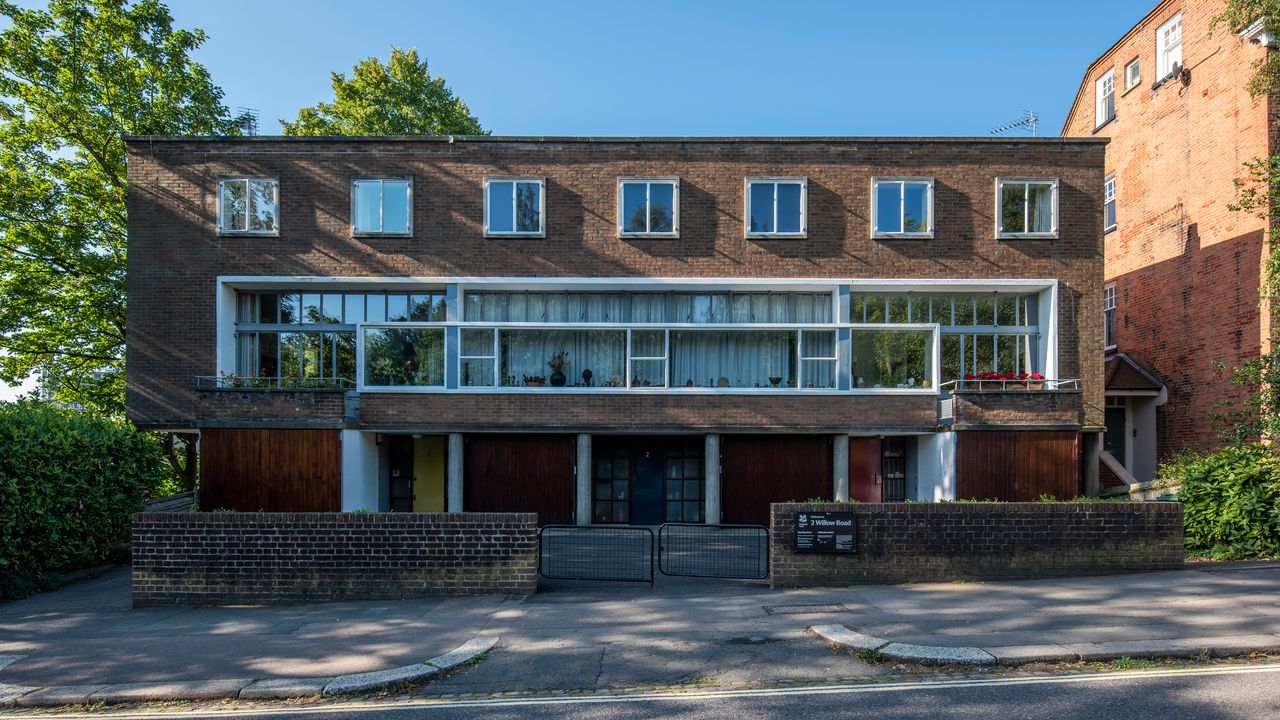
The architect’s own home, 2 Willow Road in Hampstead is free to visit today– and it’s a favourite of The Fence’s. Goldfinger is known in pop culture for his name’s adoption by Ian Fleming as James Bond’s most famous opponent. The old story goes that Fleming objected to Goldfinger’s building proposal and later erection of a neat terrace along Willow Road. The hot topic between the real life frenemies was that of quaint cottages (defended by Fleming) culled for the brutal vision (proposed by Goldfinger). Then, there was an argument on a golf course about it, and Goldfinger ended up in the novels. In reality, the story was more likely that Ian Fleming’s cousin was a teacher at a school of which Goldfinger’s wife, Ursula, was the headmistress. Fleming probably heard the name and liked it.
As part of the tour of Goldfinger’s greatest hits, we also recommend the place he lived in before he built Willow Road: the Highpoint building in Highgate, which is also open to the public and free this Saturday. The architect of that building also lived there – Berthold Lubetkin – although he took up the penthouse in contrast to flat number 3, where Ernő and Ursula lived between 1934 and 1939. Open House has good years and bad years – 2026 is lacking several past entries to the architects’ home list, including that of John Winter’s house in N6 – but it is nonetheless always worth seeing sniffing out the old Goldfinger. And top prizes for anyone who can guess which comedy legend is currently in residence at Highpoint…
This newsletter terminates here, we do hope you enjoyed it. As ever, the map will be nearly updated in due course for our paying subscribers. We remain keen as ever for your opinions, pitches and thoughts, so do please comment down below or contact us on editorial@the-fence.com, adding ‘Capital Letter’ to your title if you’re wanting to contribute to these fine digital pages. Until next fortnight we wish you luck, happiness and intrigue, certain that this city will always bring you at least the last of these.
All the best,
TF