Dear Readers,
Good afternoon, and welcome to Capital Letter, a guide on how to live in London right now. The weather may have dulled today, but the sunshine is blanching the streets again throughout the weekend, and we’ve got tips and treats for the fortnight ahead.

Thank you to everyone who has recommended this newsletter to their friends. It’s been a real pleasure to watch it grow – there are thousands of you now, and we’re delighted with these warm words from new subscribers George Pendle and Harriet Fitch Little. Please keep them coming.
We’ve also loved hearing from readers who have gone and visited our recommended spots. A reminder that you can find all of our Capital Letter tips on our lovingly compiled mappa Londi – save it, use it, and tell us where you end up.
We’re also expanding our shopping, fashion and music coverage, so if these are areas in which you have some degree of expertise – or know of someone who does – then please do get in touch with us at editorial@the-fence.com and we’ll take it from there.
On the tip-sheet this time: dance music, chamber music, a hike through the heath and a mosey through Marylebone – enough to fill a whole week with. But first, some thoughts about lunch.
Going For Sushi Back in a Sec
Is having a big lunch still a thing? If you’re a semi-retired barrister, a self-described ‘bohemian’ or you work in insurance, then sure. For the rest of us, it’s Nigel Farage-adjacent behaviour: a little too close to the scent of rain-soaked ermine for our liking. Better to get through the working day and clock off for home at a normal time, and not to wade through the afternoon’s emails half-cut. Most days, for us, lunch by screenlight is the right call, keeping one’s powder dry for the potential of an early departure and a gloriously transgressive 3pm pint.
But if you’re dining al desko, you ought to be sensible about it. In our neighbourhood – that is, Soho – a new sandwich shop on Dean Street by the name of Crunch has been making waves for using brioche as bread and charging up to £14 a piece for the privilege. Their website is inscrutable and their aesthetic insufferable; all of the sandwiches look like they’d reek of sour grease, and nobody wants to be the workaday luncher stinking out the office with a patty melt. Work is hard enough as it is, eat burgers in your own time. (And don’t get us started on Supernova.)
A far better lunch awaits you on Brewer Street, in the indomitable Rice Wine Shop: the newsagent-sized Japanese supermarket and small corner of paradise, trading in everything the Japan Centre has to offer, but cheaper, broader and better. Their takeaway options are sensational: lesser-spotted snacks like inari zushi (fried tofu skins filled with vinegared rice and pickles), a chicken karaage that ought to be classified as a narcotic, and London’s best use of £2.20 – the bacon mayo onigiri. You might not beat the weeaboo allegations back in the office, but you’ll lunch better, for less, and spare your colleagues the indignity of watching you clean dill allioli off yourself.
Play-o Technology
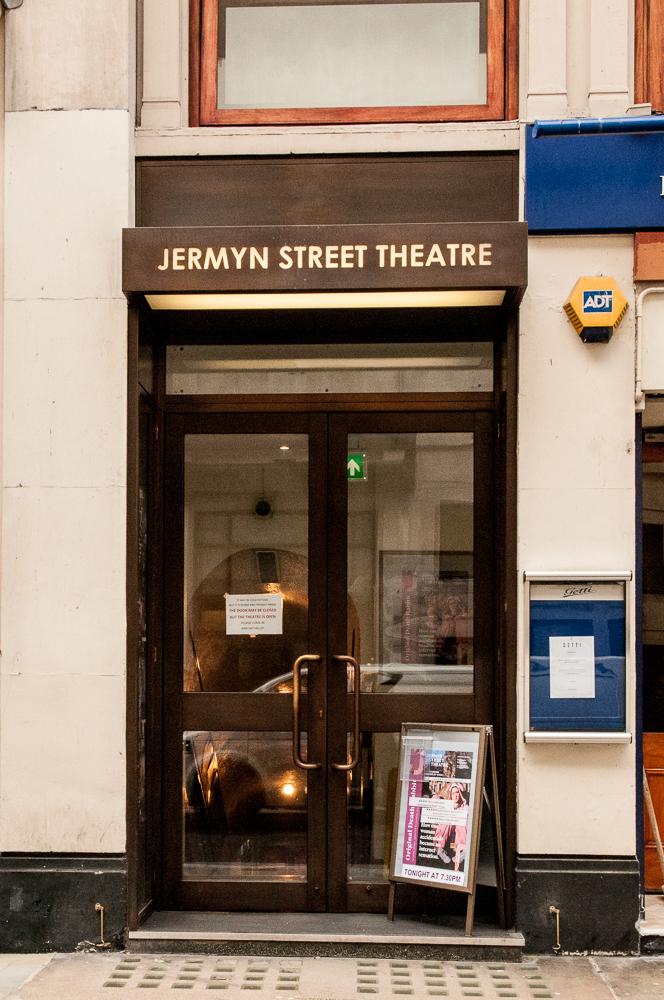
Little Brother was a celebrated testimonial that came out a few years ago, detailing the story of Ibrahima Balde, an immigrant from Guinea, as he made his journey to Europe. The book itself was translated from the Basque by the excellent (and floridly named) playwright Timberlake Wertenbaker, who now brings an adaptation to the stage of Jermyn Street. If the quality of the book is anything to go by, this is a deeply promising production. It runs from 15 May to 21 June, with tickets at £26 (or £10 if you’re under 30).
Shavian Mirror
Truth be told, you’re probably more in the market for a few laughs and a bigger stage, so our pick for the next week is Mrs Warren’s Profession. Hardly an underground selection, but a great chance to see a classic play which hasn’t been on a big stage in the capital for a little while – when it was last in London, it was at the 50-seat Jack Studio Theatre.
Ever since it was banned by the Lord Chamberlain, this play has caused ruptures, with Germaine Greer labelling it a ‘wrong-headed trifle’, so it will be interesting to see how the production handles the task of bringing the work into the current moment.
The cast too offers a reason to make a trip down to the Garrick Theatre. Imelda Staunton is starring as Mrs Kitty Warren, and, interestingly, her real-life daughter, Bessie Carter, is playing Kitty’s daughter, Vivie. On this we can all agree: Imelda Staunton is truly wonderful, far too interesting and dedicated an artist to be seen as a ‘national treasure’. There are still some non-extortionate tickets available, and our advice is to get them while they last.
Heath Ledger
It’s best not to think about why, but summer has come one month early, and Hampstead Heath is jiving with activity, it’s just teeming with life. There’s the erotic voyeurship of ‘the beach’ around the Men’s Pond, the teenage weed smokers blasting 90s hip-hop from tinny speakers around the Fishing Pond and barking dogs everywhere.
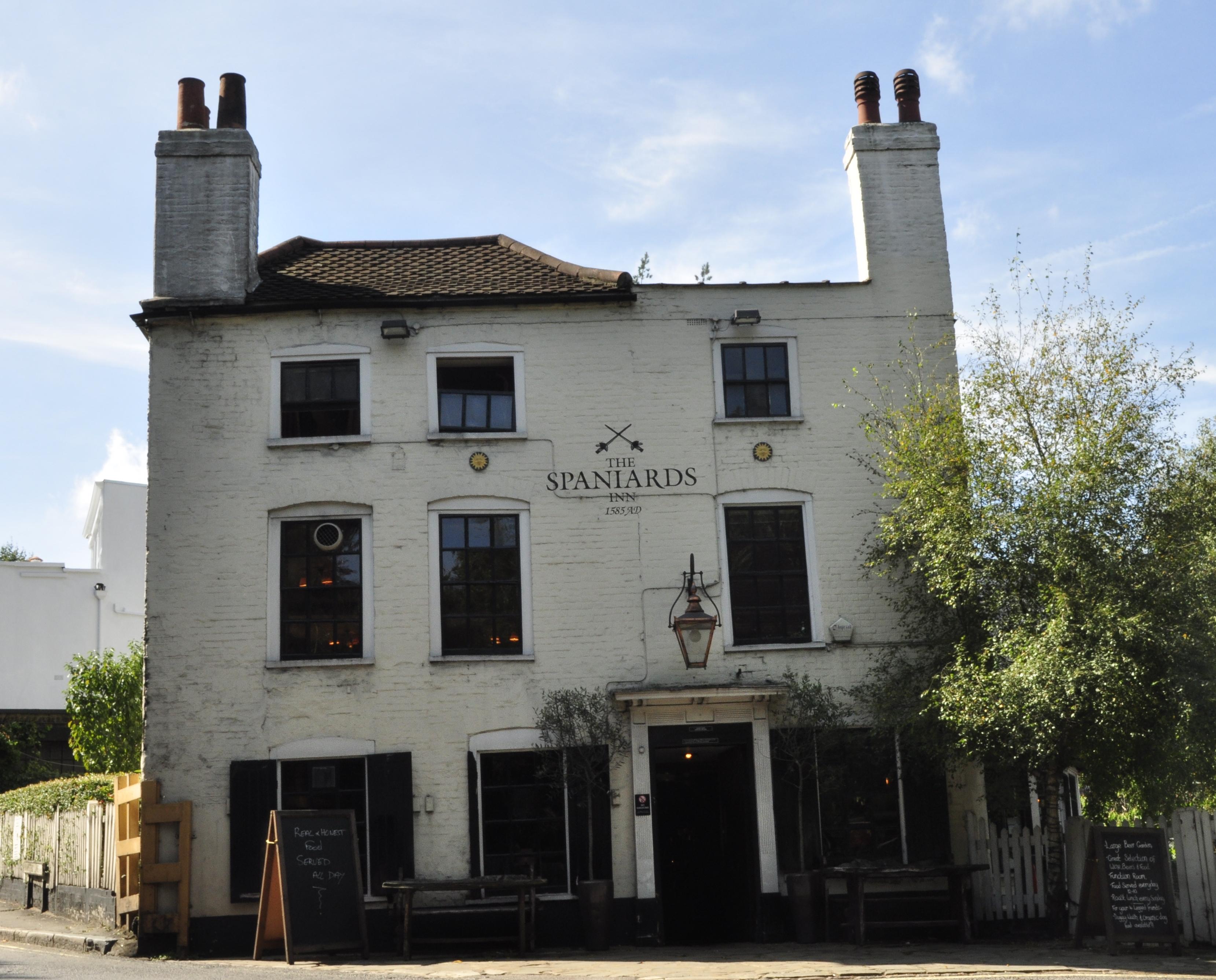
If, like us, you want to retreat into privacy, then there is one place guaranteed to provide blessed solitude and fine views even at the height of July. Head north to Kenwood, skipping past the dawdling tourists in the flower garden, and head to the dairy, a Swiss chalet-style survival from the estate’s pomp days in the Regency era. Go past the dairy and high onto the banks, and you’ll soon find yourself alone beneath oak trees, with fine views of the meadows below with Highgate’s church peering in the distance. You are on the banks of Mount Tyndal, and no one is doing London better than you right now. It’s a 25-minute slog to any Tube station and there aren’t any shops nearby – so if this is all sounding a bit too idyllic for you, The Spaniards Inn is just behind you off the main road. It’s one of the most amazing buildings in the capital but also one of its worst pubs – it’s worth a visit afterwards to see how they achieve it, and to also try and catch a glimpse of Harry Styles.
Dr Buzzard’s Original Savannah Band
Beauty & the Beat – an eye-roller of a name but a cracker of a time – is a dance party that happens on the last Saturday of each month, now rolling back around to the Bath House in Hackney on 31 May. Geared very much towards dancing and vibes in equal measure – its creators lean into making it feel ‘like a really great house party’ - it boasts a fully analogue sound system, which is a genuine rarity in London’s clubbing scene today.
All tickets are available at the door only, and there's a reduced price of £11 for those entering in the first hour. For those who like a late arrival, the situation is still good – doors don’t close until 2:30am. Have a listen to some of the mixes from previous nights to get a sense of what they’re about. If you can’t make it this month, 21 June is the 20th anniversary for BATB, so if there was ever a time to have a look, it's then. The longest day of the year, too.
Henry Purcell’s Baroque Steez
A useful programme to check in with is Through The Noise. Billing themselves as ‘the future of live classical music,’ they operate on an exciting principle: all the gigs are directly crowdfunded by ticket sales and the concerts all take place in independent gig venues, meaning classical music moves out of the rather lovely but occasionally rigid locations that are more standard for the medium.
And the programming is equally exciting. Upcoming offerings for the end of May and the start of June include a new programme of chamber music from award-winning violinist Nicola Benedetti, a semi-improvised mix of shanties, Purcell, and Scandinavian folk tunes designed to ‘recreate the sounds and the atmosphere of an English 17th century tavern’, and an ensemble performing ancient and medieval choral pieces from Corsican, Roman, and Greek traditions, many of which have never been recorded. You simply do not get this sort of thing elsewhere.
My Song Is Mine Alone
In a four-storey Marylebone mews house, the painter Glenn Brown dares to publicly answer a question that likely occurs to every artist: what if the canon of art history revolved around me? The Brown Collection is a private museum that houses his personal collection and archive, hosting a programme of far-reaching exhibitions that places his own work in dialogue with pieces by long-dead masters and some contemporary works..
The collection operates apart from the clinical aesthetics of London’s commercial galleries. With its leather armchairs, soft-hued walls and year-long exhibitions, it has more in common with its westward neighbour, the Wallace Collection, than the Mayfair dealers who lurk on the other side of Oxford Street.
The oldest piece on display, Oceanus (Neptune), a 16th-century woodcut by Dutch printmaker Hendrick Goltzius, forms an anachronistic yet pleasing pairing with Brown’s precisely rendered ink and oil paintings. Across a five-hundred-year gulf, the two artists find common ground in their lightness of touch and animated linework. Elsewhere, Brown’s World Without End (1994) echoes the impasto technique of Floating Head (1970–72), a painting by the later Dutch artist Karel Appel. While Appel’s paint is thick and unpredictable, applied with his signature brilliant brutishness, Brown’s is completely flat: a painstaking trompe l'oeil reimagining of the former’s gestural technique.
The four-floor gallery is loaded with pairings like these. It turns the history of art into a small quirky town where Brown is mayor in perpetuity. Crucially, it’s also one of London’s quieter and more inviting art galleries. With a sticky-hot London summer on the horizon, here is somewhere to languish in a well-stocked subterranean reading room or pull up a pew in front of a masterpiece from a century of your choosing, undisturbed by staring invigilators and cloying salespeople.
Next Thursday evening, the art historian and lecturer Dr Ben Street will be delivering a lecture on mannerism. Our advice? Book your place and get stuck in. It’s Glenn Brown’s world – we’re just living in it.
Ordo Sovieticus
It’s a trip south of the river and back in time for this week’s London church. Of course, all churches are places where communion with the past is offered. Be it medieval memorials which survived the Great Fire or this more recent offering to Barbara Windsor, London’s churches are filled with reminders of the past. This week’s church, Christ Church in Southwark, however, is something special. It is a glimpse into the mindset of a past era.
Ironically, this is because it isn’t actually a very old church at all. There was a modest 17th century chapel here, expanded by subsequent generations. A general tip here: most London churches with non-saintly dedications like ‘Christ Church’ or Holy Trinity can generally be traced to post-Reformation origins, while the weirder the saint – St Pancras, St Vedast, St Ethelburga, etc., the more likely it is that it’s an ancient foundation. Anyway, this modest church was utterly obliterated during the Blitz. What replaced it is a fascinating insight into 20th-century Britain.
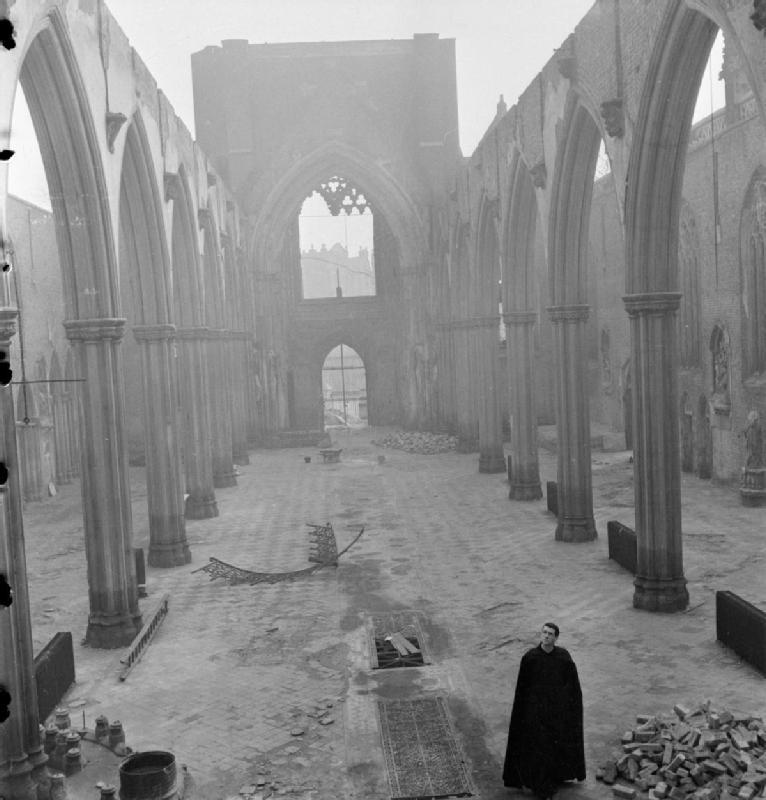
The church was rebuilt in 1958, with its first sequence of stained glass following a year later. As befitted the brave new world, the glass is a mix of Biblical scenes and modern ones. The baptism of Christ is alongside a depiction of a modern office. Cement mixers, electricity pylons and London buses all feature. It is probably the closest thing anywhere in Britain to high Soviet realism. A second sequence of glass followed in the 1980s, with a decidedly more Thatcherite theme – here we see a Sainsbury’s supermarket and the logo of Lloyds Bank, although with the odd subversive hint to the Trade Unions too. The church itself is small and friendly, seemingly unaware of its status as a mini iconography of British modern social history.
If you fancy some refreshment after this, then either try the Rose & Crown, whose Paris Garden site literally abuts the churchyard and has one of the best hidden beer gardens in the centre of the city. Or, if you’re in the mid-20th-century mood, why not go up to the south side of Blackfriars Bridge and visit Doggett’s Coat and Badge, a mad, multi-storey modernist pub which looks like it should be the centrepiece of a South Shields housing estate. If you like grey roast beef and the faintest hint that rationing might never have ended, then you’re especially in luck.
That’s it for this week, and we look forward to joining you a fortnight hence. As ever, we’re very keen to hear from our readers, so drop us a line at editorial@the-fence.com if you’re so inclined, and if you’re having a particularly good time with this mail-out, then please do consider becoming a paid subscriber. Capital Letter will go weekly, and paywalled, soon. Have a wonderful weekend in the meantime.
All the best,
TF