Dear Readers,
Good Afternoon and welcome back to Capital Letter. A smattering of rain has arrived at very long last, which means that an appetite to go out and about should be suitably wetted, if not well and truly doused! Luckily, we have a few tipples to offer you. This week we present our findings from a shack in Epping Forest, the facades of several office buildings, the gods of the Royal Albert Hall and what might be one of the last meadows in London.
As ever, we are always sniffing out the best of the best of what to do in the city, so please do submit your thoughts to all the usual places, not least editorial@the-fence.com. And now, onto the show.
Shacked Up
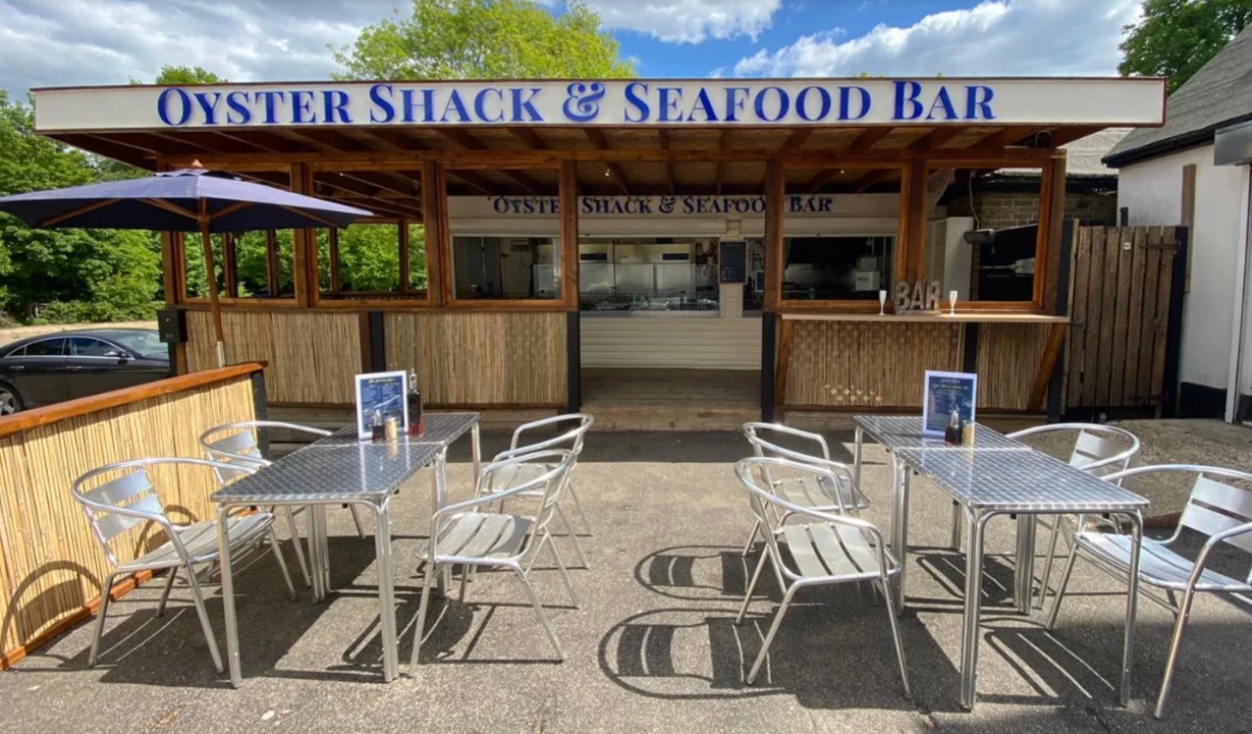
As the weather starts to reach a reasonable temperature, it’s a fantastic time to venture to Epping Forest for some of the best seafood in the city. Growing in popularity since being taken over by chef Steve Cook pre-Covid, in high summer queue times at The Oyster Shack can stretch to an hour but as the weather cools you would be hard pressed to wait more than 30 mins (ideally you want to arrive just before opening), and can sit it out with a pint from the King’s Oak next door. Sitting atop High Beech with autumnal views of the lower Essex countryside, an order of a dozen Maldon Oysters (£12), a scallop & bacon butty (£7.50), curried mango prawns (£7.50) or a plate of grilled sardines (£9) are easy wins, as is the seafood platter (£37.50) between two if you’re feeling decadent. We recommend getting the train to Leytonstone or Walthamstow and walking there through the forest’s heathlands and meadows (a just over three hour trek), but there is also a car park right next door should you choose to drive.
Promposal
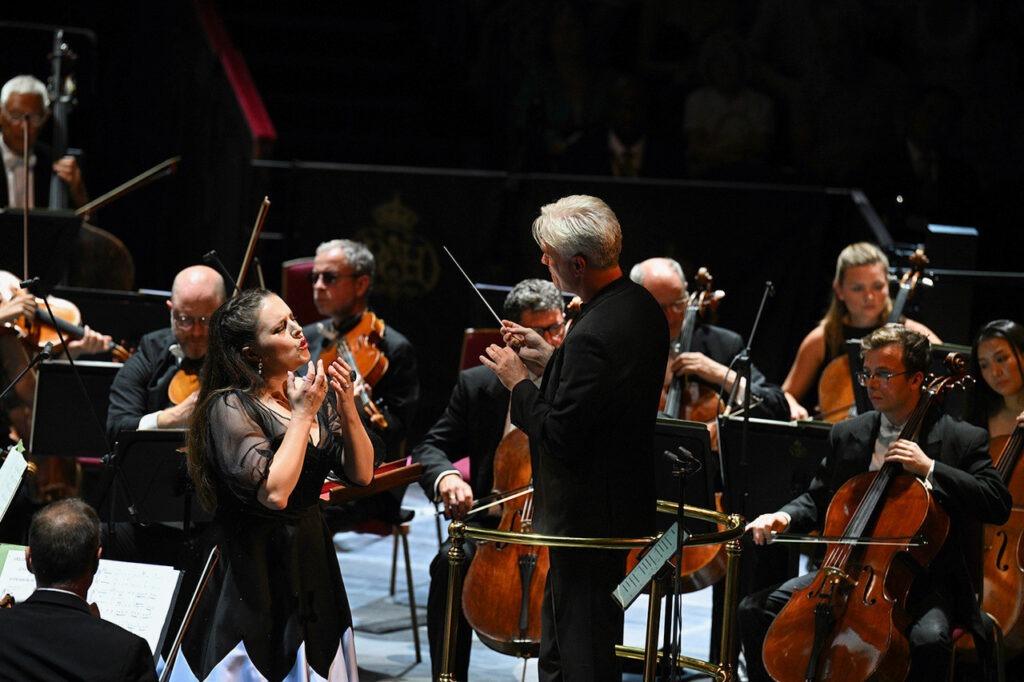
Are we going to recommend Proms? Yes, yes we are, and one night coming up in particular. Somewhat unbelievably the Metropolitan Opera’s Met Orchestra is making its Proms debut next Wednesday – and there are still some pretty cheap tickets left. It is an all-Strauss programme, and we are particularly excited for the middle section, the final scene of Salome (1905), Strauss’ one-act opera that caused a stir on its first staging for its depiction of categorically the best and most beguiling Biblical story (in our humble opinion): that of the 13-year-old Salome’s dance of the seven veils for Herrod at his birthday banquet. Make of that story what you will, but no one can deny the ultimate drama of those handkerchiefs.
The opera is based on the Oscar Wilde play, which was also the inspo for Ken Russell’s absolutely astonishingversion, Salome’s Last Dance, a rarely shown and later-Russell film that was recently nonetheless screened at the Rio cinema in Dalston to a packed audience who all gasped at that very same scene that shocked opera-fiends a century ago. In Russell fashion, the film has got Glenda Jackson with black-kohl schmeared eyes and a scantily clad John the Baptist who prophesies from a dumb waiter that a slippery Salome cranks up every so often.
London’s imagination has clearly been captured by Salome this summer, and it seems only right to follow along at the Royal Albert Hall. The last time the orchestra toed its way into the capital was in March when the Barbican screened a livestream of their iteration of Wagner’s Tristan und Isolde, which everyone seemed to go crazy for. The same director – Yannick Nézet-Séguin – is back, and we are very excited indeed. We are also excited to put a past CL tip to use and visit the Gloucester Arms after in the hopes of catching a pint with the relevant orchestra. See you there.
Dry Spell
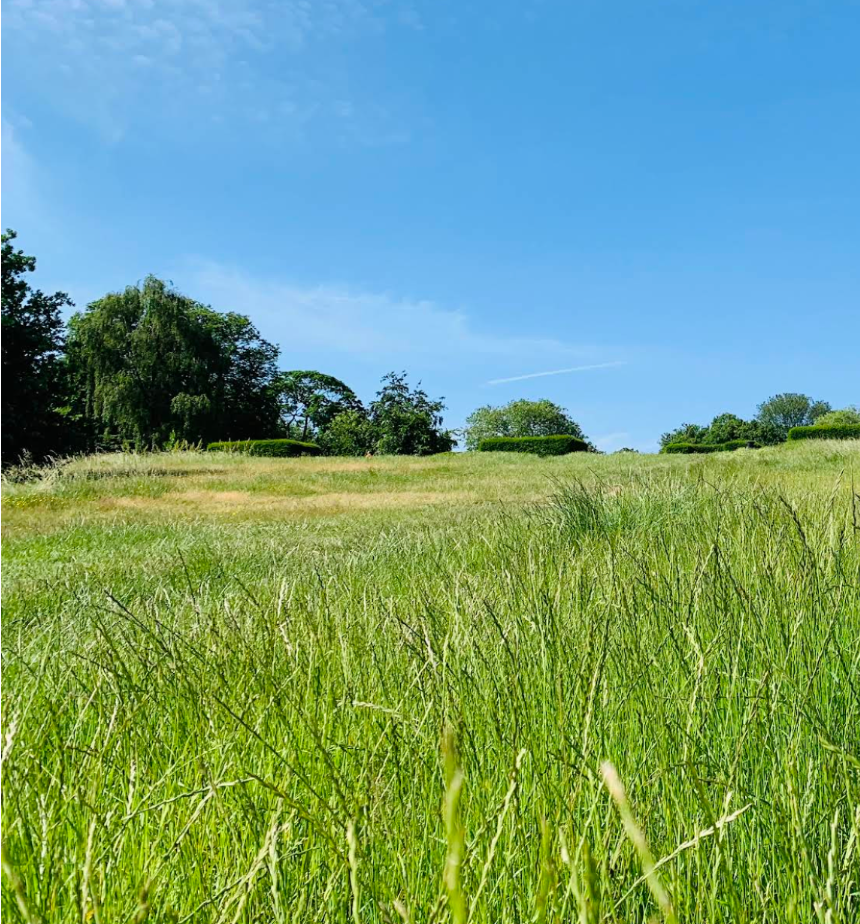
There remain very few lawns in London that count as extant. The punishing onslaught of drought, which is slowly and hopefully lifting (!?), has led to a series of green spaces that would be better described as scorched earth. But, amid the dearth, there are a few corners that remain somewhat alive. Our favourite lies in Stamford Hill in the much under-appreciated Springfield Park. Springfield Park has been under-loved for many reasons over the years. For one, it is somewhat overshadowed by its adjoining Walthamstow Marshes.
But, in a period characterised by much slander over east London’s lack of grass, we encourage you to push just over the threshold (into admittedly basically north London) to enjoy a downy meadow looking over a set of pylons and a once-swampy view. Take the long route up from Hackney Downs along a shady and majestic Fountayne Road, and then stop and marvel at the steep and silent hill of great grasses down towards the canal. A tempting thought for a forthcoming bank-holiday weekend.
Never Would I Ever
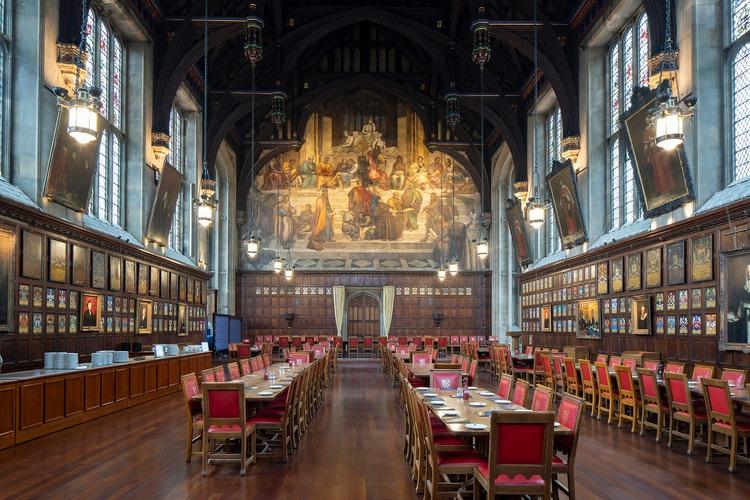
Angus Colwell has done a fabulous job of compiling a list of 50 places he wants to live the most in London. There are some on the pile that seem more obvious than others. Two of his suggestions are planted squarely on a multi-lane motorway, and one of them is literally a hill. Yet the list is pretty damn strong, especially the Marriott hotel in Swiss Cottage shout. We’d also hazard Ironmonger’s baths in Old Street, the Museum of the Home in Hoxton and Lincoln’s Inn in Holborn, which has an enormous Hogarth in its hall that’s not open to the public, and which rivals the great mural that was restored last year in St Bart’s north stairwell. We invite you to peruse the list and cherry pick the best of the options. Please write to editorial@the-fence.com with your votes.
Am I Clean Now?
The controversial ticket going at the moment is for Cleansed at the Almeida. It’s written by one of our favs (Sarah Kane) and directed by one of our least favs (Rebecca Frecknall). It’s certainly a bold choice for Frecker’s last show as Associate Director – as with most of Kane’s plays there is extreme brutality and violence on stage – and marks another big change for a theatre who has just changed Artistic Director from Rupert Goold to Dominic Cooke. The production has been hailed by some and hated by others, so is the famously brutal play worth watching?
Welllllll, yes and no. For our money the play is still a great one. The point of the violence is that it should take us to the heart of the relationships on stage. Kane is an expert at this, yet in this production, only some of her strengths shine through. Mostly, this is thanks to the text and the performances. Luke Cinque-White and Parth Thakerar are an excellent pair at Carl and Rod, and Stuart Thompson shines as Robin. Leo Bill’s deeply unsettling Tinker is also a phenomenal performance.
Sadly, Frecknall’s production just keeps getting in the way of them. This is not to say taking on Cleansed is an easy task. A director must work out how to stage rape, several physical assaults, the quadruple amputation of Carl and the brutal operations that turn Grace into some kind of version of her dead brother Graham. Stylisation and creative approaches have to be found for such events. But where she succeeds in making many striking images (with the assistance of Chris Fisher on ‘Illusions’), overall they lack any kind of coherent meaning. In doing so, they get in the way of the point of staging this violence – it should be elucidating, not obscuring. Not always, but too often, one ends up watching the on stage brutality and thinking ‘oh that’s a cool way of making that blood splatter out over there’, which is decidedly not what one should be thinking.
This is only sometimes the case in a production that gets a little lost in its own visuals, obscuring the text and the excellent performers on stage. We look forward to a new era of direction at the Islington theatre.

Buried Alive
London is a brick city. Sitting on a thick layer of clay and gravel, unlike Bath, Bradford or Oxford, our capital had to import most of its stone for its hefty buildings and grand facades, with our only local resource mostly consisting of London Stock Brick, yellow-tinged rectangles made from brickearth (a silty Ice Age sediment that can be used for building once baked). The fringe benefit of this is that after the Great Fire of London large amounts of stone had to be imported, and Sir Christopher Wren, doing much of the significant rebuilding, had a great fondness for Portland stone. This derives from the Britain’s Jurassic Coast – a 95-mile stretch from east Devon to Dorset which features rock formations from the Triassic, Jurassic and Cretaceous periods – and therefore is dense with fossils, which, as a consequence, are scattered among innocuous office buildings and routinely stepped on by backpacked tourists ticking off St Pauls. The world of urban geology is largely populated by retired archaeologists and enthusiastic amateurs who have meticulously mapped sightings across the city, with highlights including: tactile marine gastropods, brachiopods and bivalves adorning the V&A, the aforementioned Ordovician Nautiloids appearing on the flagstone steps of St Pauls, and so many ancient shells (‘Portland screws’) embedded in the New London Stock Exchange onlookers frequently assume the stone is fake. You can also spot remnants of chaotic marine destruction taking the form of gnarled markings on Waterloo bridge, a vertebrae bone (thought to be a Pterosaur) embedded into a wine bar near St Pauls and a swirling 150-million-year-old ammonite embedded into a ‘Jura Marble’ limestone wall on Plantation Lane. Specific locations can be found on London Pavement Geology’s fantastically detailed map, which now tracks sightings spanning the whole of the UK.

Hidden gems
London’s many restaurants, taken in the whole, are great. But sometimes it’s easy to lose one’s lustre for dining out. So, we want to come up with a list of the best non-restaurant restaurants.
We’ll kick things off with a nod to Londis N16, which serves outstanding canteen-style south Asian food. It’s a classic. They’re best known for their Gujarati curries, but their recent puds have knocked us all home and away. They’re taking a well-deserved summer break, and will be back in business in September. A highly anticipated return.
Next up is Centre 151. Formerly a church, the building was repurposed as a community centre to help refugees from Vietnam, Cambodia and Laos. With funding from the GLC in 1986, they were able to rebuild the location which now features a rather sweet garden at the rear. But it is all about the pho they do, every Wednesday and Saturday at 1 PM. The prep always begins the evening before and results in a beautiful, unpretentious bowl for just £8. And on a hot day, you should follow your meal up with a walk through the park to Dadash, for an iced hibiscus drink that will have you feeling very merry indeed.
Likewise, the ESEACC community centre in N1 – a converted bath house now used to host local events including a mahjong club – is just up the road and runs a fantastic lunch club on Mondays, Wednesdays and Fridays. To book, you’ve got to send them a Whatsapp (07955 834 748), a sure sign that you are in for something wonderful. Alternatively, you can just turn up and plop down on one of their long tables. This week they have pork belly bossam and wonton kolo mee. Swoon!
Please assist our offerings by writing to editorial@the-fence.com with your best recommendations for non-restaurant restaurants.
It is with two bids for your time and expertise that we parcel up and send off this newsletter for your consideration. As ever, we want your best tips and tricks, so please do write to us in all the usual places. When we come back, we will be squarely planted in autumn, the most beautiful of the London seasons. Till then, sit tight for the next 14 days.
All the best,
TF