Dear Readers,
Good evening and welcome back to Capital Letter. It’s the peak of summer, which means that there are certain places you’d be mad to visit, but other bits of the city open up for your leisure. The latest issue of the print magazine is looking magnificent, and is about to sell out, so do make sure to bag your copy here.
This week we take you all over the shop. We start with a trip to Ridley Road, before a stop in Limehouse, a dive into Mayfair and then right out into the wild west of Kempton. Much to get done and far too little time to do it in, so we won’t keep you waiting. Let’s kick things off with a lesson on hygiene.
Shopping by Candlelight
Asha Birdi went down the markets.
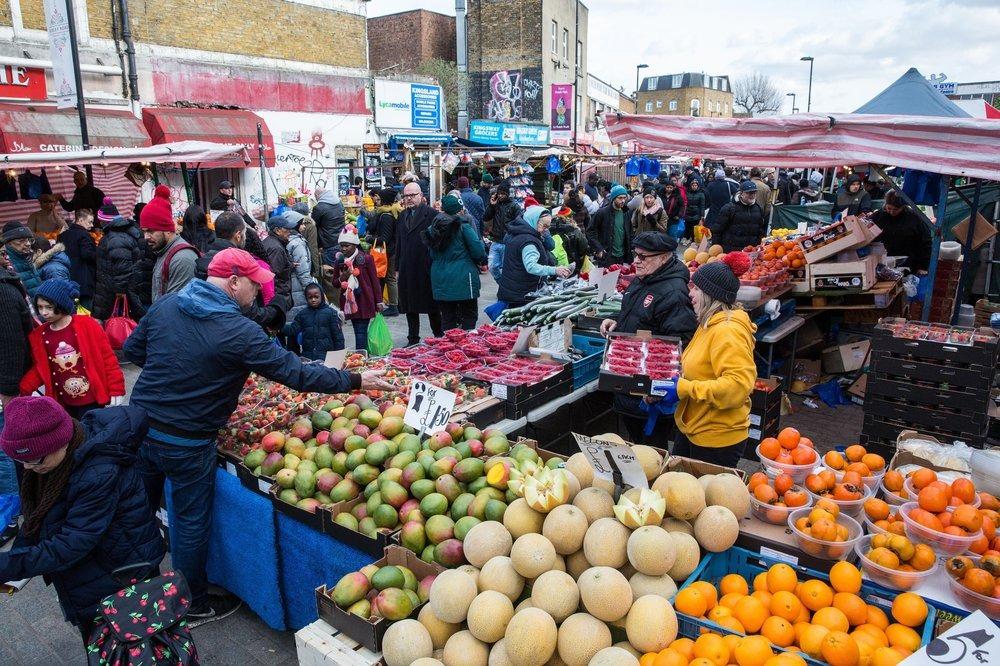
‘Cleanliness is godliness’. This is how J, a trader facing the looming threat of eviction from Dalston’s Ridley Road market, justifies the thick scent of incense permeating his plant shop. Portraits of Haile Selassie and Marcus Garvey decorate the shelves, alongside homemade shea butters and various potted greenery. The sound of reggae can be heard faintly, echoing through the building’s dimly lit halls.
The century-old market has been forced to operate in complete darkness. Since its landlord Larochette – a company registered in the British Virgin Islands – failed to evict all traders on 31 March, and the building was subsequently occupied by activists, all electricity has been shut off. Because of this, J talks to me with a torch strapped to his headwrap. A personal light source has become a business necessity. Only some traders have continued selling to customers.
‘People have passed away, lost their lives, because of the stress of the bigger heads’, J says. He worries about the impact of the proposed eviction on regulars, who come in more often for a conversation than a purchase, and the other traders, many of whose livelihoods have been built around Ridley Road. Larochette claims that the eviction is necessary due to police reports of ‘ongoing anti-social behaviour’, although the Met themselves deny that they have ever called for the closure of the space.
Elsewhere, the faint buzz of Michael Jackson draws me to another trader, Tony, and the small selection of records he’s chosen to keep out of storage. I spot everything from African Head Charge to Lana Del Rey. Tony has been in music for over a decade, and speaks fondly of a visit from DJ David ‘Ram Jam’ Rodigan. ‘Music is spiritual’, he says. ‘It’s the only place you can go where no one is institutionalising you’.
As closing time approaches, the remaining traders lower the shutters on their ghost stalls and join the occupation outside. Games of yahtzee are being played, with the occasional joint and bottle of Supermalt passed around.
Beneath a blue bedsheet roof, brown crates covered in brightly patterned bandanas constitute makeshift seating. Behind me lies a bookshelf holding donated titles by the likes of Sally Rooney and Jhumpa Lahiri. A patterned DIY sign on the wall reads ‘it takes a village’. By the looks of my visit, it surely does. I met a young organiser from Cornwall, a Hackney resident hailing from Sweden, and many Caribbean elders – all involved in the various activities of the campaign to Save Ridley Road. Later that evening, they would be hosting a letter-writing session for political prisoners.
Hope, as far as the eviction goes, is not at all lost.
The same is true for tenants of Gabriel’s Wharf, across the river, on the South Bank. Many of them have formed an association to preserve what they see as an irreplaceable cultural asset, after having been notified by the site’s owner Coin Street Community Builders that their leases would expire this September, and the current traders would not be involved in any vision of ‘regeneration’ for the site.
When I head down to the riverside on a Friday afternoon, I pass by two specialty chocolate shops, neatly populated by the area’s overwhelmingly international crowd, a microcelebrity-owned outlet selling reworked vintage sportswear and a food spot selling damn good cheese toasties. Outside, a pink Union Jack carries an old adage through the summer breeze: ‘Peace, Love, Pie, Mash’.
I am greeted by Liz and Francis, partners in life and work, who own Potters’ Yard Arts and first joined the wharf in 1995. Their shop holds an eclectic mix of pottery, written word and miniature clay sculptures of iconic London houses. A spectacular model of Sigmund Freud’s Hampstead home is on display for any psychoanalysis freaks. Their presence here is emblematic of the Wharf’s initial ethos of supporting independent artists. Just a few shops down, a gallery collective operates on an unusually egalitarian basis, with the artists whose work is displayed rotating responsibilities over manning the shop every 21 days.
Liz and Francis speak tenderly about a recent visit from a couple who had celebrated their engagement on the wharf decades ago, and returned last week for their son’s 21st birthday. ‘The wharf represents something – there is a slightly old-fashioned, innocent feeling about it. People have cried when we’ve told them it will close’. Just opposite their shop sits Jo, a knitwear designer who has been selling on the wharf for 24 years and cites Helen Mirren as one of her most decorated guests. Dressed in a pristine red polka dot dress and matching hair bow – she is known for her outfits – Jo speaks about the potential loss of her shop: ‘I’m going through grief. It’s like a death.’
Coin Street says that the wharf was formed as a temporary space in 1988, and that it is working with ‘commercial partners’ to decide a new ‘meanwhile use’ for the site. The traders here question why they cannot stay. For now, just as in Ridley Road, those communities whose livelihoods rest on these shops will continue to campaign. Perhaps, in the capital, there are more than a few things that money can’t buy.
A Great Hampstead Spirit
We were deeply saddened to hear of the passing of one Godfrey Old recently, a legend of Pentameters Theatre, which featured back in the 10th edition of this newsletter nearly a year ago now. A positively Beckettian character and a surprisingly good harmonica player, Godfrey was part of what made the small upstairs theatre at Pentameters special. At weekly open mics, he was the star attraction, and he was also the main person in charge of all things to do with props and tech in the theatre. A friend of The Fence who put a show on there noted how, despite his slow pace, Godfrey was the one who changed all the lights and moved all the scenery. He also apparently had an uncanny knack for teleportation. Leonie, his wife and the main proprietor of Pentameters, would instruct him on some change and he would begin to move, slowly, to that effect. ‘You thought to yourself, it’s going to take him an age to do that’, our friend remembered, ‘and then you’d turn your back for half a second and it would be done’. Capital Letter stands for a true hero, whose passing comes alongside the end of Pentameters Theatre. After fighting many a battle, it was finally evicted from its home above The Horseshoe and replaced by a new theatre, The Circle and Star.
The new build involves ‘A 100″ immersive stage screen’, ‘Calm, professional front-of-house’ and declares itself ‘Climate-controlled throughout’ – a remarkably pompous description of air conditioning. In short, everything that made this a rare bird fluttering in London’s theatreland has been winged and clipped. A home for the beautiful freaks of the area has been lost. And guess which NW3 local is now helping out at The Circle and Star? David bloody Walliams. What more needs to be said?

A Peter Ackroyd Special Edition
As is increasingly well-known, the original Chinatown in London was in Limehouse. The original settlement was in Causeway, and by the 1930s, at its maximum size, there were 5,000 people of East Asian descent living and working there. Most were sailors; Lascar, Chinese and Japanese seamen who had arrived and worked at the Port of London. They came to Limehouse for several reasons, including opium dens and the availability of brothels and, later, the concentration of speciality Chinese markets and restaurants. As new establishments sprang up, so did new street names: Ming Street, Pekin Street and Canton Street, all of which remain and are dotted around Poplar and Limehouse.
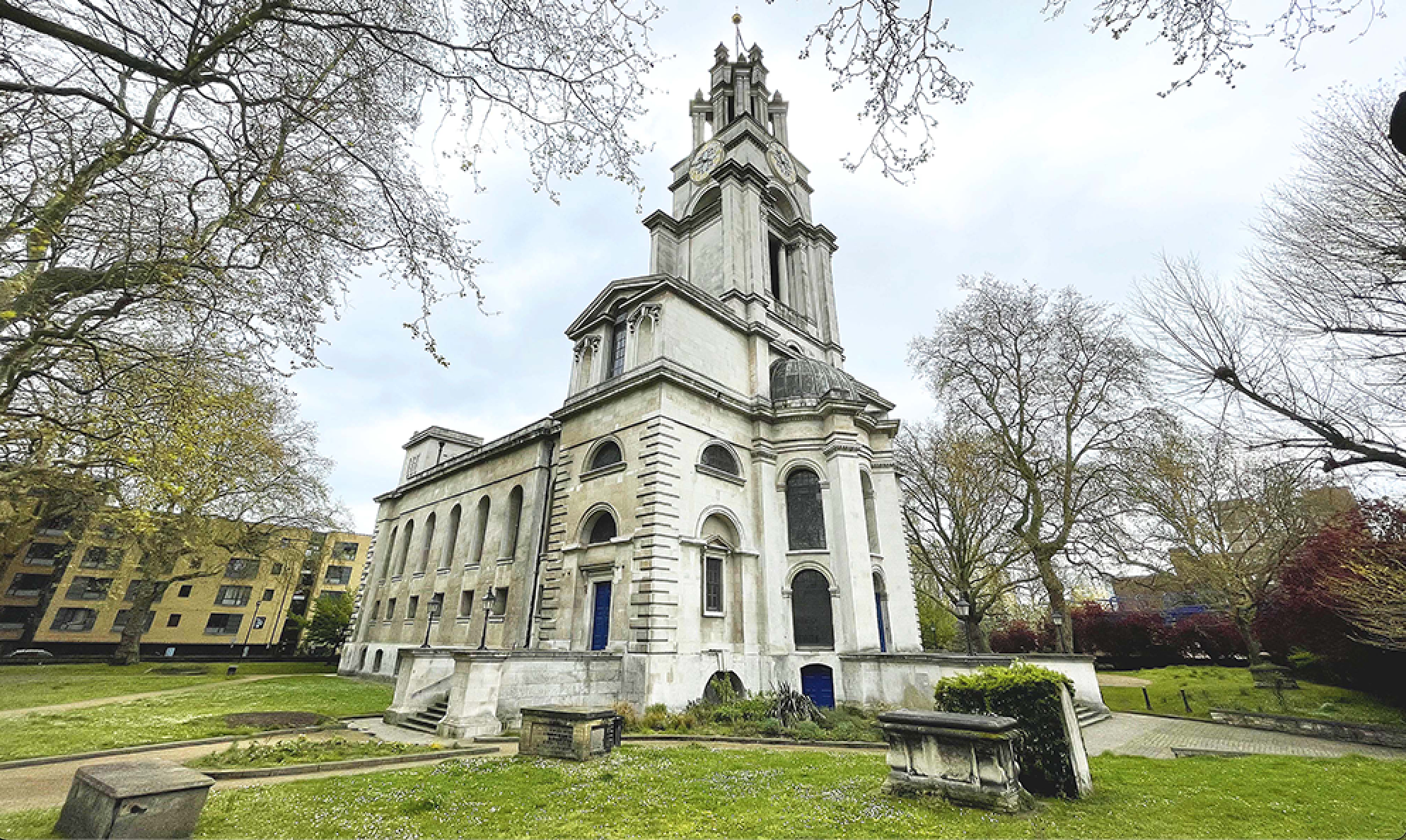
But the real crux of our fascination is actually a building in the old Chinatown: St Anne’s Church. St Anne’s Church was built as part of a fleet designed in the 1710s and 20s. Queen Anne’s Tory Government established a wide-ranging commission to get more churches into the city. Lots of architects were brought in for the job – James Gibbs and Thomas Archer, for example. But St Anne’s was done by Hawksmoor, and under the recommendation of Sir Christopher Wren and Sir John Vanbrugh. Hawksmoor was selected for his workmanlike and efficient precision, ideal qualities in an architect there to service the capital’s growing population, and quickly. He wasn’t yet so grand as Wren, but he was just as good. The scheme was funded by a tax on coal entering London’s ports – including through the Port of London in Limehouse. St Anne’s was funded by the port it sat on, and even has a maritime clock on its tower face as a nod to its naval links. There are other appealing aspects. It has a pyramid in its churchyard, which some people think is linked to the stone masons. They also host genuinely fantastic music – in June was the experimental choir Musarc’s summer recital, which included a piece in which performers wandered the nave and gently knocked small rocks together. Plus, a reimagining of Brahms.
Slice by Slice
Everyone knows about the ‘American Candy’ stores that litter central London, but what of the extraordinary proliferation of restaurants hawking American junk food? Well, glorified junk food at bistro prices. Spring Street Pizza in Southwark offers a margherita pizza for £28 only. Now Johnny Boys in Stoke Newington arrives, threatening a menu of cobb salads and patty melts. Is this some form of cosmic payback for the bastardised versions of ‘the pub’ currently taking the States?
Door Furniture
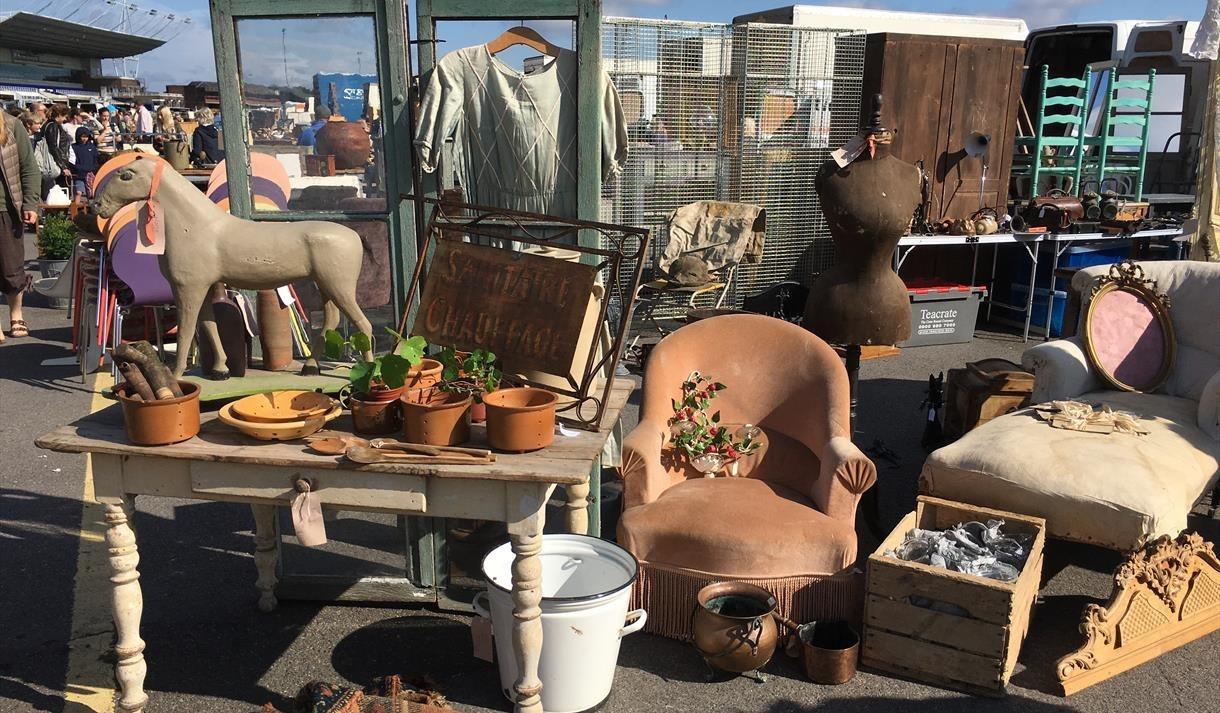
For any brave readers attempting a house move in this absurd summer and needing furniture that doesn’t come flat-packed or upsold at Hackney flea, it’s time to muscle up the courage for Sunbury Antiques Market at Kempton Racecourse. It’s a legendary sourcing spot but most people get it completely wrong.
The only way to do it – we’re afraid – is to drive there for the 6:30am opening time (everything good will be gone two hours later) and go straight in. Walk straight past the smattering of jewellery and clothes stalls on your right and towards the large furniture in the far left corner and then make your way round the circumference to the right, circling until you reach the beginning. Many stalls change weekly, but be sure to seek out Rusty for some vintage stoneware, and the sellers in the far-right corner are always rather good, especially for some Italian ceramics. Take cash (more than you think you need), a few large totes, and if you’re planning a big haul, leave items with sellers as you go and take photographs to identify where they are for later – it’s a maze so it will be impossible to remember if you don’t. If you buy anything really big they have a (fairly) reasonably priced delivery service onsite, but you have to be ready to receive it as (especially if it’s in London) they will probably deliver the same day. The early wake-up and sunny weather (none of the furniture is covered so it’s a rather miserable activity in the rain) make August the perfect time to take it on and you can end up back in central London by 9 AM. The next fair is next Tuesday: 11 August. Grab a motor, take your friends and get on down.
Sweetie Darling
With the depressing news that Harvey Nichols is being sold to potential buyers including Poundland’s owner Gordon Brothers and Mike Ashley, it joins the ranks of diminishing or disappearing boutique department stores in the capital – with Fenwick shuttering in 2024 and Browns moving from its iconic Moulton Street location in 2021. These curated, cult multistorey meccas used to be behemoths of the capital’s fashion scene, with the potential to launch careers (John Galliano famously sold out his graduate collections at Browns) as well as cementing London as a major player alongside glossy shopping destinations like New York, Paris and Milan. However now Net-a-Porter, Mytheresa and Farfetch have duly taken over, we fear this may be it for the bougie department store. Liberty is still quite buzzy, albeit with a smaller selection that caters more to trends than taste; Browns’ new location offers its classic array of zeitgeisty brands at a hefty price tag (also see Dover Street Market), and Selfridges and Harrods are too large to bear thinking about. At least it is immortalised in the Ab Fab annals. Still – is there a future for the department store in the age of internet shopping? Let us know your thoughts via the usual channels.
Rus in Urbe
As we’ve detailed here before, there is loads of countryside in London – great rolling fields of the stuff, not just parks and heaths and what have you. There are working farms and great barns of ancestral peace, totally inaccessible to the cagouled masses.
There are villages too, most famously Harmondsworth, right next to Heathrow Airport, but we’ll recommend a visit to somewhere considerably more bucolic. Walton-on-the-Hill is tucked just within the M25, which means that’s in the capital, not in Surrey as the spods claim.
If you get the train to Tadworth from London Bridge, you’ll find yourself in the North Downs in about 45 minutes; then you can yomp over to Walton, and take a visit to one of the most special pubs in the south of England. Known as ‘The Rat’ to locals, The Bell has got a perfectly preserved pre-war interior and can be found at the end of the lane. Will you go this weekend? We would if we were you.
And so we call things quits for this week’s edition of Capital Letter. As always, you can continue the good times by signing up for our sister newsletter, Off the Fence, or even our figurehead: the magazine itself. In any case, remember to keep in touch with us at editorial@the-fence.com and do tell your friends about this newsletter, and spread the good word on social media.
All the best,
TF