Dear Readers,
Good afternoon and welcome to Capital Letter, our guide to all that is notable about life in London. We are back in Soho after a summer of intermittent visits to the office on Archer Street, and everything seems to have got swisher, which is exciting for those of you who like chi-chi Scandinavian fashion brands, concept restaurants and having opinions about concept restaurants – which we do, at least some of the time.
We are welcoming pitches for this newsletter, so do make yourself known to editorial@the-fence.com if you’ve got something sweet for us.
If you want to read the latest print magazine – which really is very good – you should know that we are down to our last box at the depot in East Sussex. You can buy one here.
Jimmy McIntosh, the Pintlord himself, is one of our most beloved contributors. We asked him to write no more than 500 words on Kensington. He replied, ‘I am simply unable to describe the beauty of Kensington at such a word count.’ So he’s gone quite a bit longer, and we’ve printed that below, in full.
In Lucian’s Footsteps
In December of 2022 I started a new job, writing copy for a women’s handbag company. Not counting a demoralising and depressing part-time stint as a clerk for a gas and heating company in Motspur Park, it was the first time I had worked in an office, and I was looking forward to indulging in all the things that a Proper Job entailed: having sparkling water on tap; coming in hungover and spending the day hiding in the toilet; making off-colour remarks at the work Christmas party. But what I was perhaps most looking forward to was the fact that my new job was located in the enigmatic bosom of central Kensington.
It’s an area that has always fascinated me; at once both magnificent and beautiful, but also utterly uninhabitable for someone of my means and tax bracket. Kensington as a borough wears many hats, depending on who you are. It’s as much a byword for bougie boredom or gaudy Arab wealth as it is for London noir or old-school eccentricity. There are stately Georgian squares, there are council houses, there are kebab shops that nod to the minimalist Berlin techno scene. My own connection to it has been long and varied. When I was a child, it was all hi-vis and hand-holding on school trips up to one of the borough’s many museums. As a teenager I’d hop the District line from south-west London to Notting Hill: to Carnival, to the overpriced vintage shops, to get hooned underage in the weird sand-filled tiki bar that’s now a Foxtons. In my 20s, I dated a woman who lived on the Warwick Road estate; the great municipal garden residence in the sky and maybe the closest thing we have in the capital to the perspectival nuttiness of Chongqing. And then, at the age of 31, with an hour’s lunch break each day to myself I started to do what any self-respecting Sinclairophile would do, and aimlessly pounded the pavement in every direction after my midday meal, to see what there was to see.
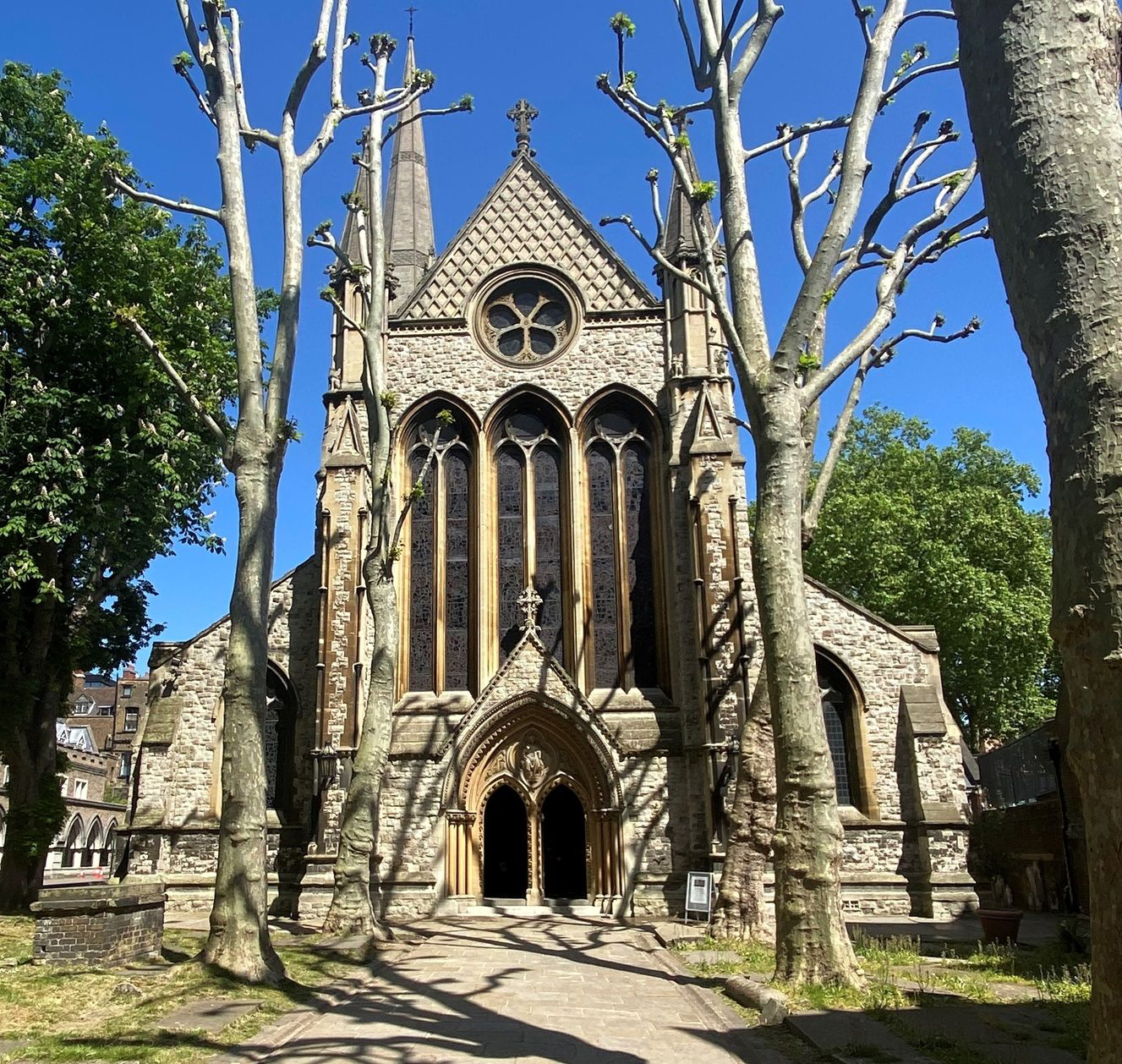
The route I’d often drift into would take me down from the southern end of Kensington Church Street, once home to Biba, Bus Stop, and a myriad other groovy boutiques in the 60s, back when it was as cool as the King’s Road. Today it’s a rather more bland mélange of tea rooms and antique shops, but there’s still a few sites of interest: Rino’s little Italian café, Maggie Jones’s restaurant, a blue plaque for – of all people – Emile Ford, the former Civet Cat pub on the corner (spy the little black feline statuette where the hanging sign would have been) and then, of course, the neo-gothic splendour of St Mary Abbots, tallest spire in London and the great guardian of Kensington High Street.
Here is a list of all the celebrities I’ve ever seen on Kensington High Street: Nick Cave, Emily Maitlis, Sienna Miller, Peter Hitchens, that Irish guy from TikTok who stands next to people and delivers droning Hibernian monologues. But beyond the heavy hitters, Kensington is the perfect place to people-watch in general, and there are few places better than Montparnasse Café on Thackeray Street, where the next section of my stroll would normally take me past. It’s also here where you can first spot what, for me, is the defining feature of this part of the borough, the negative space at the backs of mansion blocks. There’s something almost Parisian – and definitely voyeuristic – about the usually hidden fire escapes and sash windows in full view of the road, the result of angular and haphazard planning as competing moody developers in the 1800s refused to let their streets connect up with each other.
Turn down Ansdell Street – up until recently the incongruous site of the SET artists’ studios – into St Alban’s Grove, and down Stanford Road, which surely must be one of the most architecturally alluring roads in all of London. Then, at the end of the street lies one of my favourite runs in London: a hidden, mewsy wonderland that takes you through the imposing Cornwall Gardens, under the arch at by the Dial House, down an untouched cobbled street, through a verdant alley, and into Lexham Gardens – a massive, Italianate strip of hotels where you can also find the fantastic 70s-built Bosnian embassy.
Once you hit the borough bisector of Cromwell Road, I like to head east to the Gloucester Road area, a glorious slice of Old London with its launderettes and luggage shops and Asian restaurants in hotel basements. If – as was often the case if I was getting the Piccadilly line home – I was doing this walk after work, I’d then head south and sink a few at The Anglesea Arms, a surprisingly decent pub beloved by wealthy Euros and Hooray Henrys alike. Contrary to popular belief, Kensington as a borough has some wonderful and varied establishments – from proper boozers like The Rose & Crown, The Crown, The Pig & Whistle or The Stewart Arms, to genuinely delicious and welcoming gastropubs like The Latimer, The Blue Stoops and The Churchill Arms.
As I’m writing this the leaves are starting to fall and the nights are drawing in. Kensington persists through all seasons; a place to invigorate the soul, to inspire the same sorts of misty-eyed prose that Wordsworth felt compelled to write on Westminster Bridge. Yes, I will never be able to afford to live here but, at least for an hour a couple of times a week, Kensington feels mine.
All the Fun of the Fair
‘You name ’em, they were an Academician’; ‘You’d expect the South London Gallery to know its art onions – and you’d be right’; ‘Hoooo, mama, the National Gallery is full of huge names.’
No, this isn’t our list of back-to-school conversation starters, crafted to ensure our ejection from London’s art world in time for Frieze week. These are verbatim quotes from a new list of the purported 35 best art galleries in London, published by Time Out last week.
There is plenty to unpack here, and unpack it we will, but the top line is clear: by reading our humble yet plucky fortnightly dispatch, you are in the absolute right place for intel on what’s worth seeing in London’s complex and often closed-off galleryland.
As for the guide’s content, we demand a recount. Writing a definitive gallery guide for London is an impossible task – but Time Out’s mingling of esoteric and physically tiny commercial galleries, megadealers and monolithic institutions makes for a confusing read. To recommend the hyper-conceptual, fashion-adjacent gallery Rose Easton – failing to mention its handful of neighbours that, taken together, make Bethnal Green a recommendable art locale – above Tate Britain feels disingenuous. Notable snubs include Auto Italia, Sir John Soane’s Museum and the V&A East Storehouse.
In the last year, all of the galleries listed – and hundreds of others in London – have hosted some shows worth seeing and some better avoided.
Our recommendations? Two banging video-based presentations in east London, both of which finish this Sunday. Start at the Chisenhale for Jasper Marsalis’ Still Life, an eerie audiovisual exhibition in which live streams from IP cameras installed in areas of natural beauty give pause for reflection on the show’s titular artistic tradition. At the other end of the Mile End Road (along which you’ll find endless samosa opportunities), a selection of films by John Smith – the septuagenarian artist whose 2024 work Being John Smith gained him legendary status among a younger generation of artists – will be showing at the Whitechapel Gallery. Bon appetit!

Singing Lager Lager Lager Lager
It feels almost illicit to write something about beer when we have our pints correspondent writing about his west London wanderings, but we simply cannot help ourselves. Everyone has an opinion about the best pubs in the capital, and this newsletter has certainly shared a few, but we think we might have identified the best pint in the city, and in a somewhat unlikely locale.
Superette is on Swain’s Lane, just off the western exit to the Heath. It is an overpriced grocery store of the type you might be able to picture in your mind with your eyes shut: it sells decent sandwiches for a tenner, stacks cans of Perelló olives and carries the St. JOHN range of wines at a steep mark-up. Outside there are a number of stools and benches where Carhartt beanie boys and clipped Highgate housewives meet for coffees and chats.
This is not a promising place for ambrosial cheer, yet for reasons we are yet to fully establish, they offer pints of Pils for £6 only, and serve them in specially frozen glasses. With the sun set to shine in September, you might perch uneasily on one of the stools, taking in the foot traffic of the Swain’s Lane croisette, and gulp the last of the summer. And we should add that the staff are absolutely lovely too.
In Vino Veritas
If you’re the sort of person who harbours an inadvisable wine habit, everyone knows that Andrew Edmunds has long been the lodestar for the capital’s oenophiles. But we have to say that there is competition from another place in town, at Tufnell Park’s Authentique. The bottle shop is well-stocked, but the real gems can only be drunk with food, and have a gander at the groupings of Trevallon. The cuisine is really pretty good – especially the set lunch from Thursday to Saturday – but the music is quite loud. Still, this French-run establishment is a reliable throwback to London in the early 2010s, back before the word with the big ‘B’, when the city was the spielraum for the continent’s young thrusters, and wine from the best bits of France was affordable to those of us of inconsistent means (or without an oligarch friend). Excellent if you’re in the neighbourhood, but worth a detour if you’re not, as Mr Michelin himself puts it.
If You Can’t Take a Date, Take a Mate
Many of you will have read the excellent long-read on the rise and the fall of the food influencer in the latest Vittles, which we commend to you here. It’s a must-read, but might someone write something on the rise and fall of the viral takeaway joints, in which people stand for an hour for hamburgers, pizza, sandwiches and the like?
Around where we are, All’Antico Viano had queues all the way around to Wardour Street for the pillow-sized sandwiches that first became famous in Florence. When they opened this year, we had one first thing in the morning, and it was, at best, okay: certainly not worth £15 or the full extent of a lunch break in a long, unbending line. Six months later, and the crowds have moved on: now you can skip in there any old time. Elsewhere, Spud Bros – the baked potato emporium from the north of England – have shut up shop on Archer Street. Yet a new chicken Caesar wrap joint nattily titled ‘Czer’ has the gilet crowd enraptured on Brewer Street. By our calculations, there are now four smash burger establishments in a 150-metre radius.
Might someone dive into this contemporary craze and explain the economics behind it? Our good friends in the private equity industry have quite a lot to do with it. There certainly seems to be a lot of money being made.
Sparkling, English
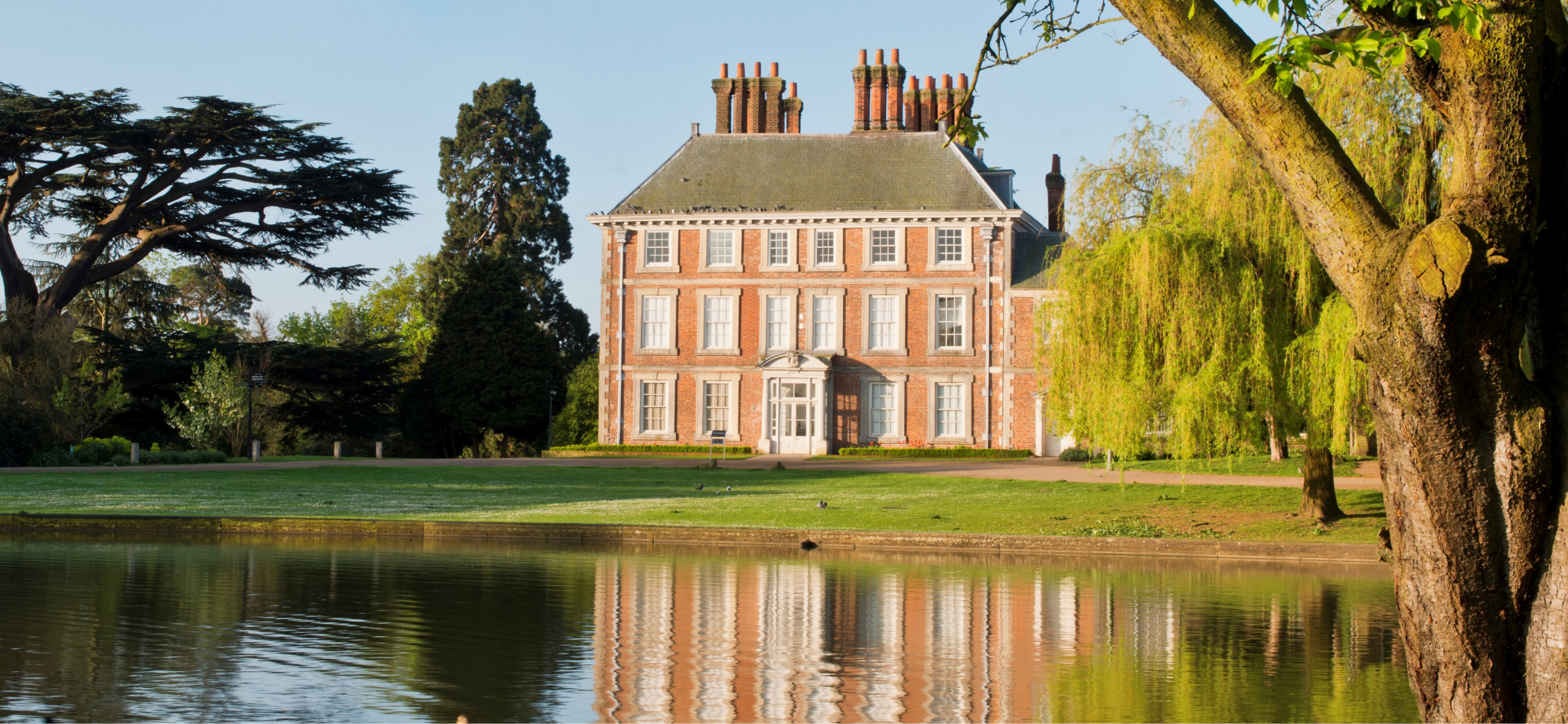
One thing that people don’t fully appreciate about London is that owning or at least having access to a car unlocks some of the more interesting curios in the capital. One such example is Forty Hall, a Jacobean stately home nestling under the M25. It’s a bleak 20-minute walk from Turkey Street station to the car park, but when you arrive, there is much to see: a beautiful manor house now run sensitively by the Borough of Enfield, lovely grounds with a great Cedar of Lebanon tree, and best of all, the first commercial-scale vineyard in London since the Middle Ages. It’s all volunteer-run, and it’s a delight to see some of England’s old fabric updated for the present age, and in such a charming manner. Do make the weekend visit and crush a cup of wine before the chill winds blow.
That’s all – please do recommend this newsletter to friends and even foes, in person or on social media, and do let us know if you’ve enjoyed it in the comments below. We look forward to joining you a fortnight from now.
All the best,
TF