Dear Readers,
Good afternoon and welcome back to Capital Letter. You may have noticed that it’s been a bit warm over the last couple of days, but that didn’t spare London from being viciously speared with lightning storms three nights ago due to what we believe is called a ‘supercell’.
We’ve been hard at work with Issue 28, which is very almost nearly ready, but this hasn’t stopped us zipping up and down the capital. And it hasn’t stopped you, dear readers, from pitching us and tipping us off, which always makes us happy.
This week we have a dispatch from somewhere recommended to us by one Bori M (many thanks) as well as a trip down the Kingsland Road and some deep Clerkenwell lore. So, shall we brave the storm?
Cheeky Bastards
Asha Birdi investigates a reader’s tip.
When The Fence asked if I would head to a buzzy no-phones club in Brixton, I had high expectations. Not least because of the £16 (first release!) tickets or the rave reviews from a Capital Letter reader. After braving the ungodly temperatures of the Victoria Line on a Saturday night and dishing out £20 on two doubles, I wanted a return on my investment. And Club Cheek might just have delivered.
The night, curated by dance music puritans Club Collective, unfurled in a single room with a single dancefloor. People moved freely across a smoky, sweaty abyss of red lasers, unencumbered by the self-imposed panopticon of the modern-day dancefloor. Stickers had been placed over our cameras, after all.
The music matched the setting, especially the ever-changing disco electronic of the headlining DJ, Man Power. To his credit, never was there a moment where people stopped dancing.
Outside the exposed brick walls of ‘Studio One’, the uniform of the day became apparent. Every smoking area dweller was armed with some variation of patchwork tattoos a bum bag and a packet of Vogues (myself included).
But people chatted freely and openly – it was hardly a pretentious affair. Sliding down onto the pavement for a smoke, while the dance floor inside was still buzzing at 3am, two young women told me how the night had liberated them.
Going back inside for our final dance, the music was expansive and ambient, backed by heavy bass, always. As Jaye Ward, a veteran of the capital’s club scene, ended off the soundtrack for the night, there was a sense that Club Cheek had managed to bottle up something special in a place so small.
You only need one night at Club Cheek to know that – despite what the pundits might say – Londoners are definitely still dancing. If you’re on the hunt for a night that feels immersive and intimate, grab your nearest black tank top and get down to SW9 ASAP.
It’s a Family Affair
If it’s live music you’d prefer, we’ve got you covered again, as the lovely folks whose gig supporting the charity Deptford Reach we recommended back in #25, are back at Hill Station Cafe on the 1st of July with a mix of live music ending with LA Family Experience – ‘a dynamic Caribbean fusion band blending vibrant rhythms of reggae, soca, dancehall and calypso with jazz…expect a high energy, genre-defining performance’. Sounds good to us.
Bring the Heat
Interesting little list put together by the National Restaurant Awards, numbered here from 1-100. We’re a little puzzled to see Kiln at 21. The food is pretty unexciting, and all the fire and spice and tattooed public-school-boy chefs playing Biggie albums from start to finish (at ear-splitting volume) feel a little bit last decade. But Mountain (paradoxically by the same restaurant group) is very well-placed at number seven. The best restaurant in Soho, in our view.
Welcome to the Haus of Fun
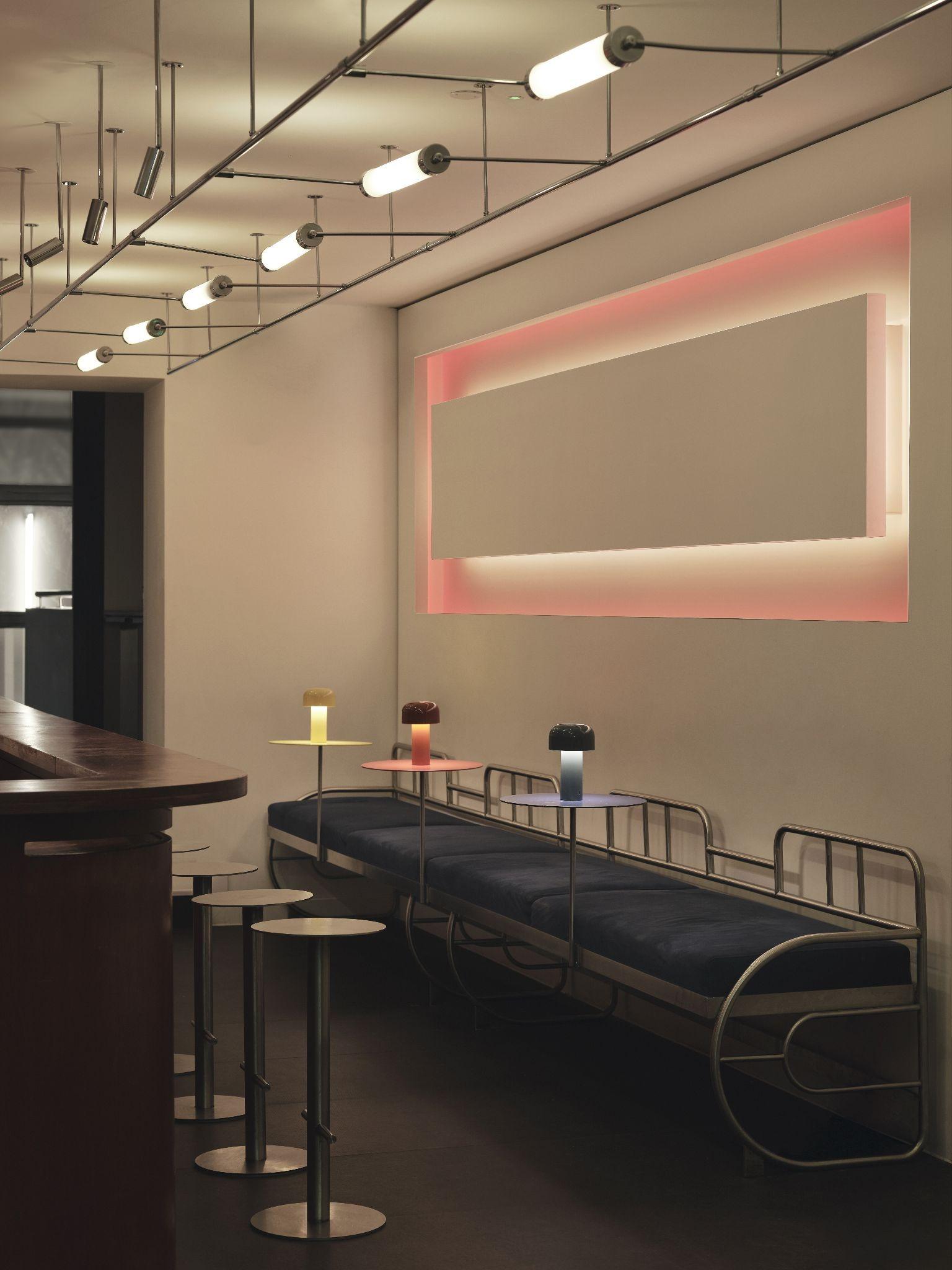
Is the Kingsland Road the most cocktail-bar-laden place in London? Wandering along its bolt-straight length from Dalston down to Haggerston it was almost terrifying to see the quantity of them, well, over 20 by a rough count. So why choose one from any other? Well, by visuals at least. A Bar With Shapes For A Name makes a bid for your attention with its wordless shop frontage – is it any good inside?
We started with two cocktails, which were top-notch – their version of the classic Boulevardier and their Toreador, a margarita-adjacent affair with tequila, apricot, agave and recomposed lime. The snacks kept up the good vibes – Padron peppers with labneh were a highlight, as were the anchovies and some nice saucisson.
The cracks only appeared in our second round of drinks, particularly with their バター割り (batā-wari), which is a lightly slightly sweet beverage infused with carbonated butter. Yeah, no, it doesn’t work. Their Pastel which we got with it was better, though not a stunner, despite being given cocktail of the year at 2026’s CLASS Bar Awards.
But does any of this make it truly worth the visit? For our money, the best thing about the bar is that it is open very late (till 4am every night) and has some exceptionally nice staff. It also won’t demolish your bank account with most cocktails hovering around the mid-teens in price point (perhaps due to their ‘Bauhaus-inspired’ practice of making the cocktails pre-bottled).
Overall, it’s worth a visit, although we do prefer Latino Hits for liveliness and raw cheapness and The Roses of Elagabalus for quality – presuming you are a welcome customer there. All the same, do head along, just make sure not to sit on their sofa seats whose high, circular tables are far from comfortable.
Private Punkahs
We are troubled by the tendency we’ve noticed this week for young commercial galleries to close up shop when the mercury reaches 30 degrees. On warm days, dealers should be all the more willing to invite the sweating masses into their temperature-controlled, artificially lit spaces.
At the time of writing, veteran dealer Sadie Coles has not made an event of the temperature and, in her cavernous Kingly Street gallery, Yu Nishimura’s exhibition Dislocationprovides visions of a hallucinatory outside world that many of us feel too hot to fully inhabit. Climbing the stairs to the warehouse-sized first floor gallery, you hear the low whirring of industrial air conditioning before seeing Nishimura’s paintings.
The Japanese artist, known for his reductive, motion-blurred renderings of blank faces, has become a market star in recent years. This exhibition is sparsely populated with his more ambitious large-scale canvases, which rather than immersing the viewer, tend to hold us at arm’s length.
Nishimura layers multiple images on top of each other to bring about a feeling of peaceful dissociation. In two paintings, rudimentary giant figures sprawl just visible in front of dusky landscapes. In another, an impassive-looking man in a high-collared shirt is painted, in just a few black lines, over an image of a boy playing with a slingshot on a patch of dirt. Both sport neatly-cropped hairstyles, parted in the middle. Alone, it might be read as a man remembering boyhood, but within this exhibition, it collapses into a more generalised, slightly melancholic reverie.
Nishimura makes life look unfamiliar and beautiful. Many recent tributes to David Hockney pointed out the gusto with which he executed his work: he painted a world that he felt lucky to be seeing. There are glimpses of a similar joy in some of Nishimura’s paintings: a tangled bouquet of flowers, a flash of a bird on branch. His world is not a morose one, but it is steeped in confusion and slippage.
Exiting the gallery to join the heatstruck crowds of Carnaby Street, you’ll find yourself acutely aware of the visual strangeness of daily life; the world as a confounding but ultimately pleasing curio.
Blood From a Stone
We write a good deal about theatre here because it is something that London beats every other major world city at. But people are understandably reticent about getting their joy from the stage; unsure of how to be in London at the theatre right now. So, here are our thoughts.
First, select a good show to go to. You are never guaranteed a great show, but you can give yourself the best possible chance with a few rules. If you see a classic play that’s being done in a ‘new version’, avoid it at all costs. Likewise with one-person shows, anything describing itself as ‘timely’ and anything written by or starring someone who’s only famous in TV or film.
Be careful on what reviewers you trust to help you decide this question. Ignore all reviews in the Guardian, The Times, and small-scale online blogs. Instead, read Andrzej Lukowski in Time Out, The Stage, Susannah Clapp at the Observer and, most importantly, Capital Letter.
It’s also good to know which theatres are in a good run. Currently, our safest bets are made at the Royal Court, The Coronet, Wilton’s Music Hall, theSam Wanamaker, the Young Vic and The Yard. Conversely, you should avoid The Globe’s main house, Marylebone Theatre, Riverside Studios, @sohoplace and everything in the West End. If you’re going to the National, make sure it’s the Dorfman, rather than the Olivier or the Lyttleton.
Let’s turn to the evening itself. Arrive early, 20 minutes or so and, when possible with one or two other people. Head straight to the bar. Unless you are seeing a fun campy show including lots of audience interaction, drinks are not to be brought into the show. Drink before, at the interval and afterwards. It’s also a no to snacks. You do not need a bag of sweeties.
Across the world, theatre etiquette can vary quite a bit. Given London’s diversity, this is true here too. But no matter the form, the key thing about being in any theatre audience is that it is participatory. It’s on the actors to sell the show, but if you’re not bothering to play the game, it’s never going to work.
So, to that end, do please shut up. There is much chat about the young and going on phones in the stalls, but for our money, this is advice for the oldies who seem to think they are the only people in the room, happy to loudly (they are deaf) discuss the play mid-scene. They are also the most likely to leave their phone on which will inevitably ring and which they will be incapable of turning off.
You have watched a show. If you liked it, clap. If you really liked it, clap loudly. Only if what you have seen has gripped you and moved you beyond belief should you stand and applaud. A standing ovation is the biggest reward you can give the actors. Do not sell it cheaply, you’ll make crap actors think they’re good and then we all suffer in turn.
Top Brew
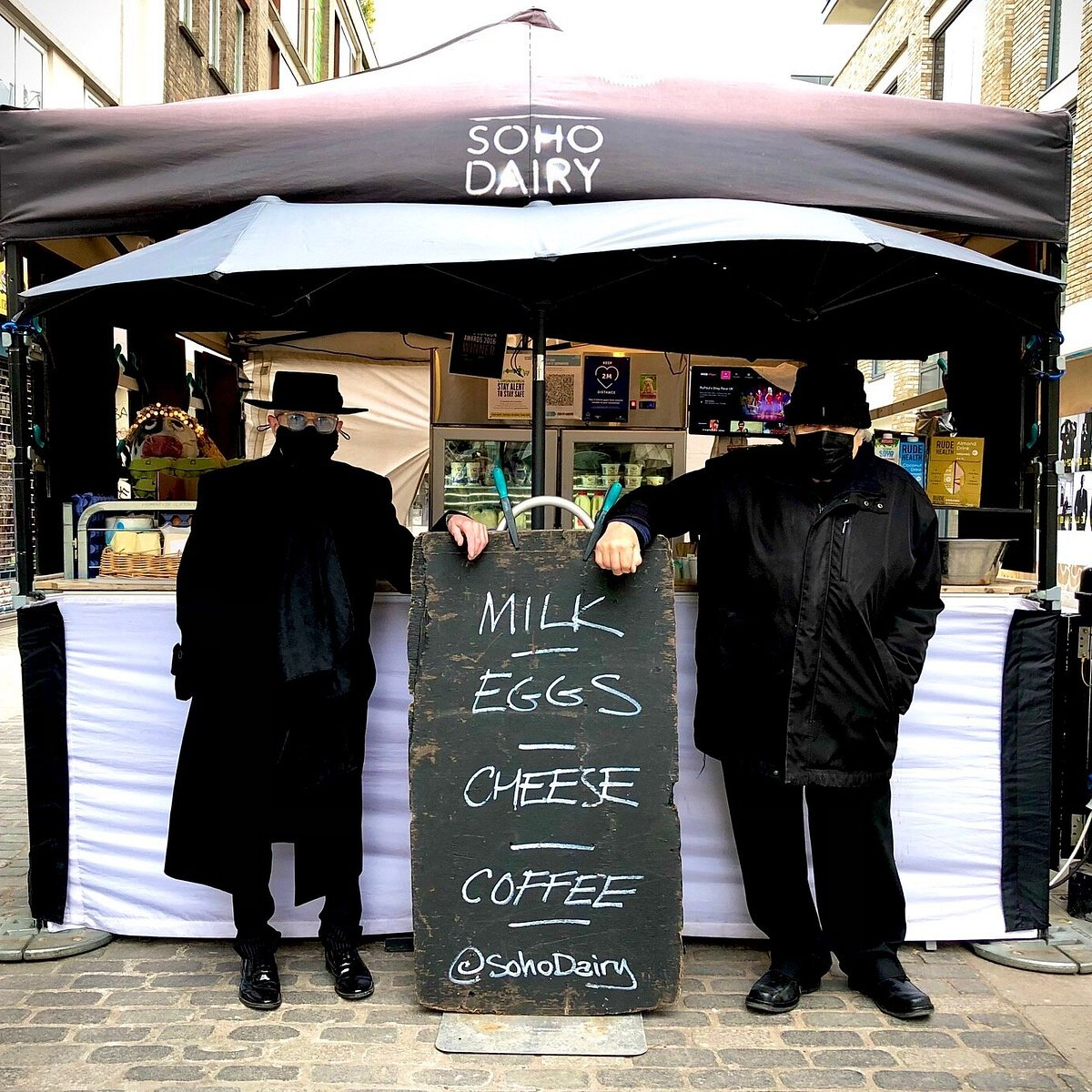
London is a highly caffeinated city, a fact which has been routinely exploited by coffee shop owners to drive up prices like mad. So it is always a pleasure to find a really good coffee at a genuinely good price point. We love Soho Dairy – run by Berwick Street market legend Robin – and also the Cafe Noir stall outside Highgate Tube, which still offers a £2.80 flat white in this day and age. Bonus mention to any cafe operating out of a church. They usually don’t need to pay rent, so the prices are unreal, as long as you don’t mind the company. Still, we’re always on the hunt for the next cup – do please let us know your best ones on editorial@the-fence.com so we can get that map chokka pronto or drop into the comments below.
Radical Greens
Alice Lindsell celebrates one of our piazzas.
Clerkenwell Green, the leafy and scenery trapezium between the Farringdon and Clerkenwell roads, in its 21st century iteration is populated by self-styled creatives, relocated Aussies, two pubs and London’s oldest Italian delicatessen. Old Sessions House footnotes the space, currently housing a member’s club and a lofty-ceilinged restaurant complete with a stamp-sized rooftop pool. This markedly serene corner of the neighbourhood, moments away from the manifest business of Farringdon station and Smithfield Market, spent a respectable chunk of its history being a thriving hub of political dissent – the evidence still visible if you know where to look.
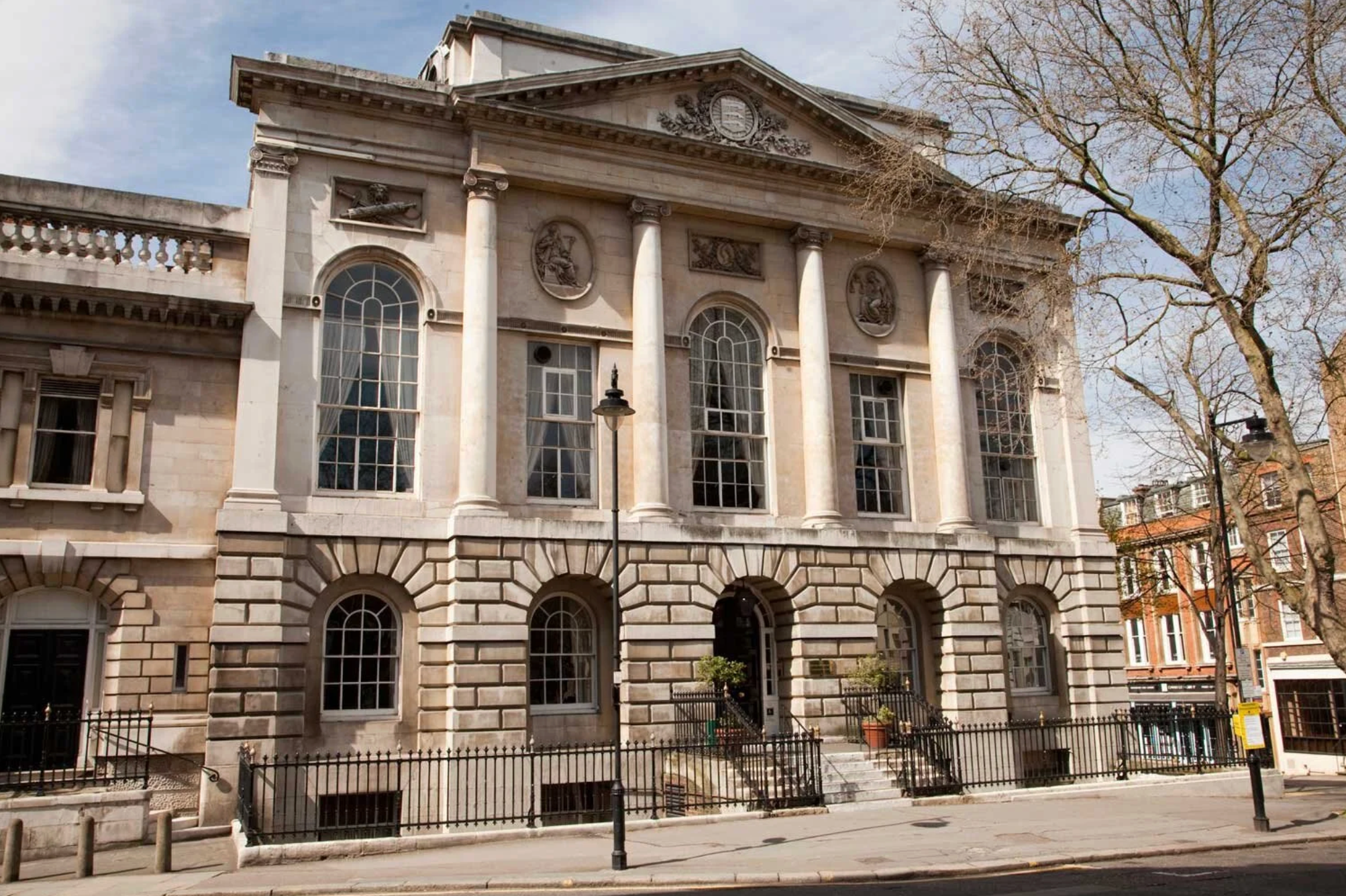
Built in 1779, Old Sessions House was once one of the largest courthouses in the country, its Parthenon-inspired structure rumoured to be complete with snaking subterranean tunnels connecting to prisons and pubs underneath. Guilty offenders sentenced to ‘Transportation’ – of crimes as minor as stealing sheep or felling trees – would allegedly be marched in chains through the catacombs to Newgate prison where they would be put on boats headed to Australia, their feet not touching solid ground until up to eight months later. One of the tiny holding cells situated in the basement still exists – now used as a linen cupboard – retaining its original reinforced door. The building operated as a court up until 1920, and so eminent was its reputation it is immortalised in Oliver Twist, with Dickens (whose first job was working there as a court reporter) setting the pickpocketing hearing at what was then called Middlesex Sessions House.
Just across the way sits the Crown Tavern where, as lore relates, Lenin, who produced Iskra in a small office at 37a Clerkenwell Green (now the Marx Memorial Library) met Stalin for the first time in 1905. They are rumoured to have sat in a corner table which can be found today under a large, ornate 17th-century clock – helpfully indicated by a framed printout underneath.
The domineering presence of the court factored in the Green’s proclivity to picketing, especially in the Victorian era – the overarching cause being workers’ rights, or the lack of them. These were mostly non-violent, save for a ‘physical force’ Chartist demonstration in 1848, where participants ended up hiding in houses around the Green and chucking things at the police as they were chased from room to room. By the 20th century, activity on the Green died down as the growth of the Labour party provided an alternative space for activism, but the area nevertheless remains a symbolic rallying point – May Day protests this year started outside the Marx Memorial Library before making their way to Trafalgar Square.
Clerkenwell is not the only one of the capital’s Greens to brew political dissidence, a 15-minute cycle north will take you to Newington Green where, opposite the playground, an amorphous bronze sculpture stands as a memorial to Mary Wollstonecraft – one of a few scattered signposts pointing to the area’s rich radical history. A longtime haunt for Dissenters – James Burgh opened his Dissenting Academy here in 1750 – it was Dr Richard Price, the minister of the New Unity Church and eminent libertarian, who put the Green on the map as an epicentre for radical thinking and reform. He lived in no. 54 on the west row of brick terraced houses, the oldest still standing in London, built in 1658. A consummate host, guests to no. 54 included William Pitt, David Hume and Adam Smith – as well as founding fathers John Adams and Benjamin Franklin.
It was Burgh’s widow in 1784 who facilitated early feminist Mary Wollstonecraft’s (mother of Mary Shelley) move to the Green, helping her relocate her fledgling girls’ school and find twenty students to attend it. The NGUC sermons spurred Wollstonecraft’s political awakening, which ultimately led her to write the seminal feminist text, A Vindication of the Rights of Women, in 1792. The activist’s unsurprisingly controversial statue may be on the lower end of our recommendations for the Green, but, with Wollstonecraft’s pew intact, the New Unity Church still stands as well as Price’s house, and perhaps destined to be a more popular tribute to the ‘mother of feminism’, is Nick Bailey’s new venture up the road on Stoke Newington Church Street. The Mary Wollstonecraft Freehouse promises real ales, a sprawling beer garden and, as written on the pub’s newly minted Instagram, that by ‘invoking her name perhaps some of the strange and quaint ideas from the enlightenment age such as truth and reason might become great again’.
Well, that’s all for now, we do hope you enjoyed it, and are managing to schlep around the city without too much discomfort. If you’re finding it difficult, consider the Guardian’s (genuine) piece of recent advice: ‘Stick to the shade – or a tree, if you can’. Do please keep pitching us on editorial@the-fence.com, even if it’s just to let us know about something you’d like us to cover. And please do tell your friends about this newsletter, or better still, celebrate us on social media. Nothing makes us happier.
All the best,
TF
Do remember that the map here is open to paid subscribers only.