Dear Readers,
Good afternoon and welcome back to Capital Letter.
We continue to swelter in this heat but have begun to find some good means of dealing with the issue which, of course, we shall share with you forthwith. But it’s hard to get too down on the weather at the moment, because this London summer is just feeling so good right now.
Maybe it’s a successful (for now) World Cup run, maybe it’s the onset of the July sale season, maybe it’s because several boxes of new issues of a certain magazine just came through our doors, who knows? But whatever it is, we have been absolutely gliding through the concrete jungle of late. As ever, we remain dedicated to the city, attempting to make sure your London looks as little like this and as much like this as possible.
So, to that end we’ve got a defence of something that’s horrible, some deep history and plenty of drinking, dancing and merriment. We begin, however, with the obvious.
Beat the Heat
Everyone’s been doing it and they’ve been doing it badly. Just take some of the Guardian’s recent advice on staying cool, which has included ‘Get a fan and shut curtains’ and even ‘stick to the shade – of a tree if you can’ which is both a horrible piece of syntax and the most obvious advice you could conceive of. And there are plenty of such obvious things we know you already do as you navigate the capital in the heat. Now is the time to weave in and out of shops with good air conditioning and avoid the Tube, but you knew that.
All the same, the relentless UVs and rising temperatures insist on themselves, and there are, in fact, some genuinely great places to know about as we move into summers of perma-heat.
Crucial for a good drinking experience in this heat is a lack of others, outdoor spaces and clean pissers: Quinns, for example, is a phenomenal drinking establishment but in this weather those toilets are to be avoided. It’s the kind of weather that almost makes you lament the closure of Mayfair’s Below Zero Icebar, a terrible place to be sure, but a drinkery with a temperature set at -5C sounds ideal at the moment. So, where to go?
North Nineteen (unsurprisingly located in N19) has a quite wonderful new terrazza, elevated above the pub and exposed to the cooling airs of Finsbury Park so you can drink and smoke without the glare of the sun roasting you. They have iced margaritas and palomas available for £11 only and a panoply of screens, so it’s best avoided on game day, but it’s for our money the best summer pub in London.
You’ll also be needing good eats that are cold. Any idiot can chill a drink, but if you eat cool too, you’re laughing. And probably your best move is to find your nearest set of cold noodles. We know that may sound a bit odd, but if the Spanish are allowed to get away with gazpacho, why shouldn’t our Asian brethren do the same? Xi’an Impression is a serious winner for us on this front. If you’re in a noodle mood, it’s always wise to stop at Master Wei’s – although it might be one to book given their popularity. They have, in our humble submission, the best smacked cucumber in the capital.
What, once fed and quenched, does one then do with oneself? The ponds in Hampstead have become truly overcrowded, the queues entering meme-levels of absurdity. So if you are wanting to swim, instead make your way to Stokey’s West Reservoir. For those of you east, take advantage of the newly opened Arvo Sauna in Walthamstow offering a heatwave sale of £5 ice baths. And heading back centrally, the British Library has brilliant air con, whether you’re frequenting the reading rooms or visiting the well-curated Welcome Collection – the first dedicated exhibition to artist and campaigner Audrey Amiss opens tomorrow. The ICA is another locale which is a/c approved. Their series of heady classics from ‘Chronicler of Summer’ Jacques Rozier, a staple figure of French New Wave, looks a good ‘un.
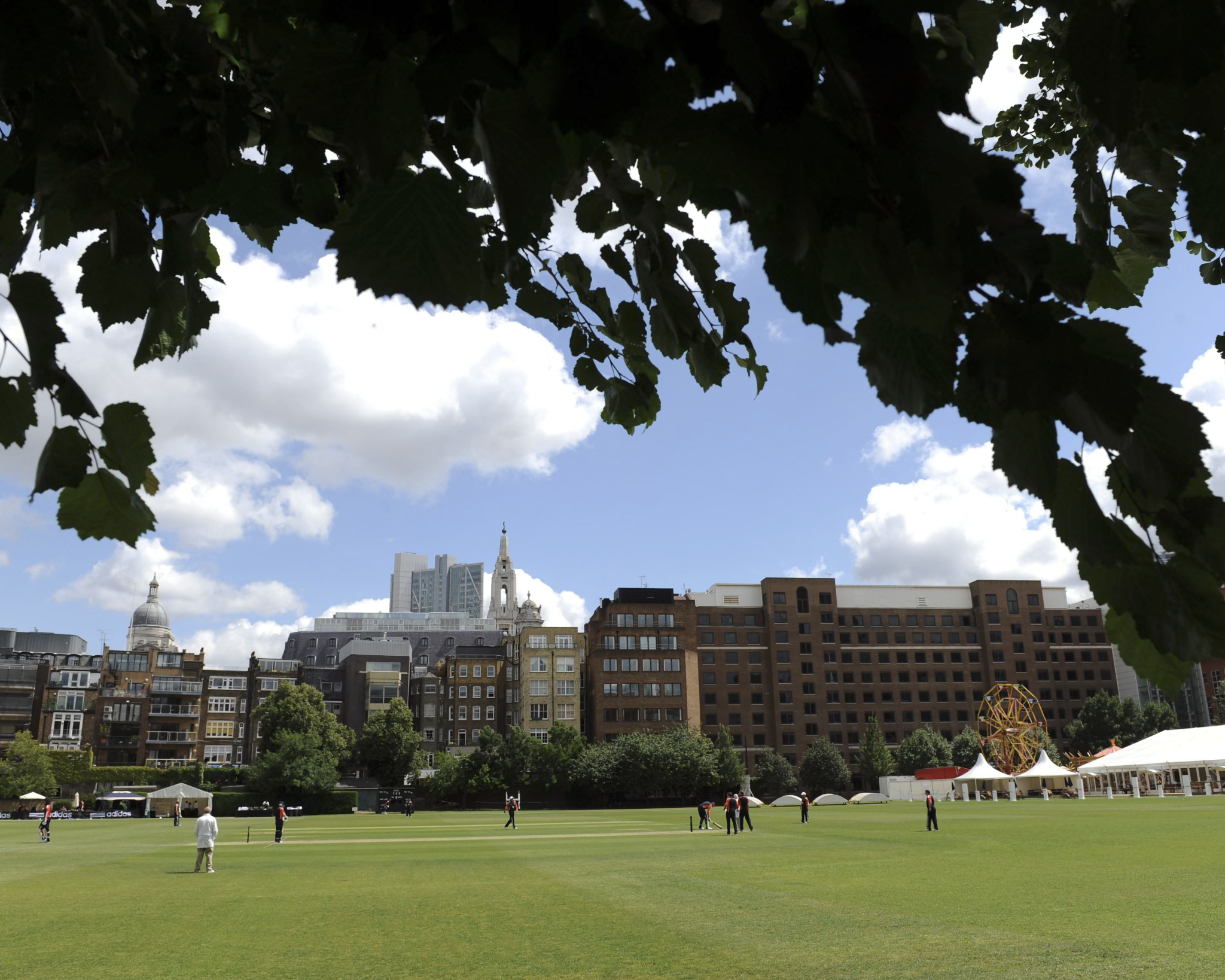
A walk or a lounge in a leafy area is always good, and we are fortunately blessed to be in one of the greenest cities in the world. So where’s particularly nice to head to? If you’re quite central, you can do worse than the classic St Dunstan in the East. Its Instagram fame seems to have died down a little of late, restoring it as a nice place to sit and rest. If you can get inside it, the Honourable Artillery Company is a must-see, sunny or no sunny. A true green oasis right in the middle of the City of London that is both an active sports ground and army base. Getting in is indeed the hard part, so now is the time to foster those smart connections, or begin subtly suggesting to your boss that it would be a great place for a corporate venue sometime soon.
Spreading out from the centre, Abney Park Cemetery, one of London’s earliest non-sectarian burial grounds (as well as one of the ‘Magnificent Seven’ Victorian necropolises), is a lovely place for a wander. Particularly dense woodland makes for plenty of shade, and the surrounding overgrown tombs belong to a characterful array of 19th-century BNOCs, including storied dissenters, a lion tamer (complete with a marble lion), and the founders of the Salvation Army.
Outernet, Overnet, Wombling Free
It’s hard to think of a more comically hateable thing in London than Outernet London, whose vast digital screens dominate our vision and subconscious as we exit Tottenham Court Road station and come here to write this fine newsletter (among other things). This morning we waded past hordes of BTS fans, excited by the return of their pop idols from their compulsory military service in South Korea. They wore t-shirts that read ‘what is your arirang?’ and felt the crushing lonely gap of human distance as we looked at them and knew we could not give them their answer.
But all that aside, what you might not know is that far beneath this surface installation, there is a massive, 2,000-capacity music venue which, we hate to say, is sort of quite good. To be frank, it’s a weird place – you have to descend far down into the underbelly of TCR, and its own vibes are not exactly beautiful. But this is not a place to come for a nice friendly dance atmosphere (see G’s two sets of selections for those). No, this is like climbing into the music equivalent of an F1 car, everything non-essential stripped out, the main goals being an immense audio-visual capacity, corners taken at max speed. We had the pleasure of seeing the great Jazz-trained DJ/musician Squarepusher there, and it was unreal. Like being mauled to death by a jaguar whose claws are made of revelation, or some other such nonsense metaphor we heard in the zonked-out smoking area afterwards.
So the next time you recoil in disgust at its surface protrusions, consider checking what’s going on down below. If you see something good, and really preferably something loud, a trip down into the belly of the beast might not be all that misguided.
Dr Bonewave’s Started WW1 Again
Well, it had to happen eventually, our first serious miss at the Royal Court. We weren’t expecting it, Archduke is written by Rajiv Joseph, whose Bengal Tiger At The Baghdad Zoo we have already raved to you about, so we were hopeful. The play is theoretically based on the three men most involved in the assassination of Archduke Franz Ferdinand – Gavrilo Princip (Stanley Morgan), Trifko Grabež (Abraham Popoola), Nedeljko Čabrinović (Chris Walley) – but in truth it has nothing whatsoever to do with the history of this matter. The three boys are not as they were, poor but not uneducated, idealistic activists but rather gullible idiots easily controlled with the promise of food and simplistic ideas about glory and meaning. So if it’s not about the assassination of the archduke, what is it about?
The answer, for some reason, is incels. These versions of the assassins are all virgins, variously confused, amazed and then turned against women. There might well be more interesting ground to cover in terms of understanding modern masculinity on the stage but doing so through the lens of turn of the century Austro-Hungarian politics obscures, rather than elucidates the problem. Joseph at his best excels at mixing dark humour, politics and human struggle, but here we don’t feel he’s succeeded – the result is mostly a farce, and with none of the characters feeling particularly real, it’s hard for the play’s more serious messages to find purchase. As ever, this opinion pits us against most of the broadsheets, and we will admit the audience we spent the evening with did seem to enjoy themselves. But try as we might, we could not see what it was our fellow critics found so funny, ‘timely’ and interesting in this one.
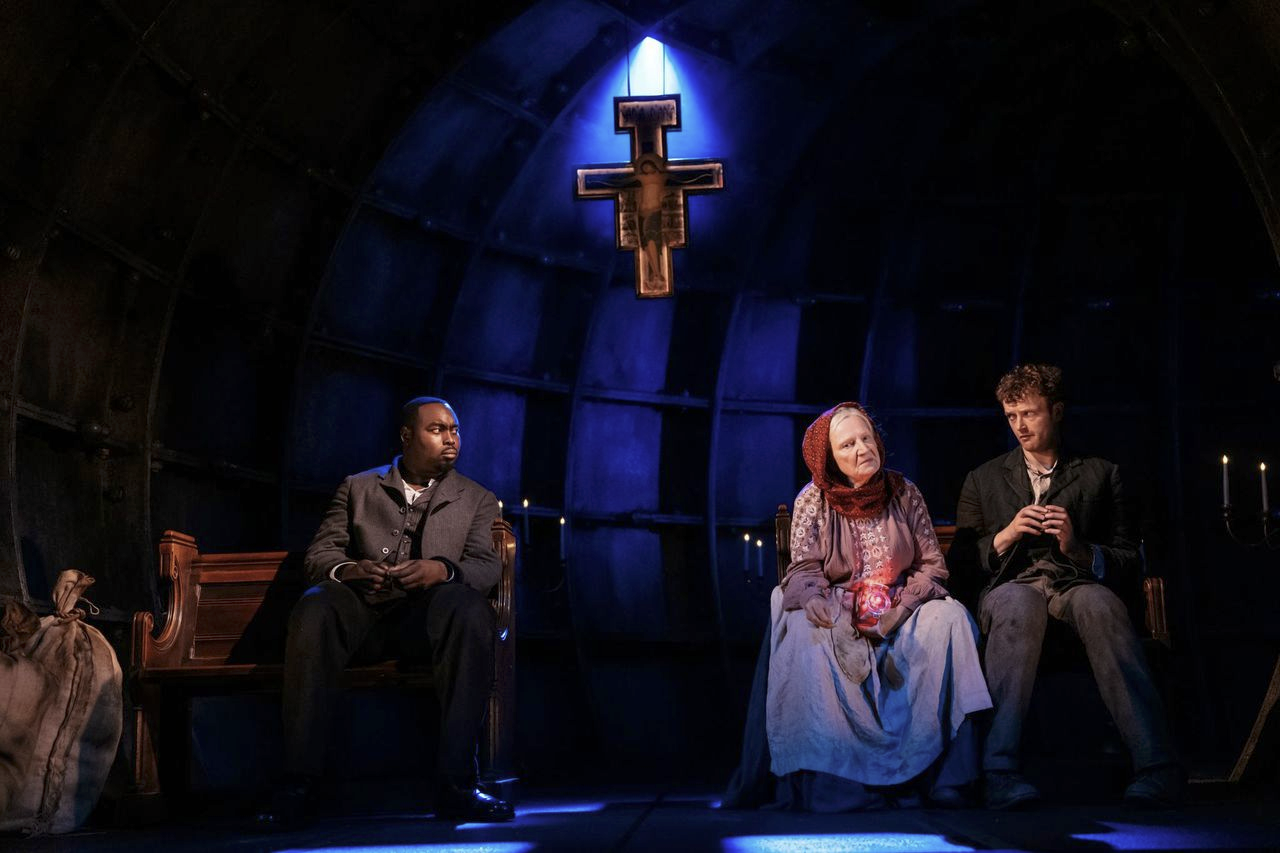
Much better is something that is on for just two more days so move now, now, now. This is a piece of total madness that has flown in from Japan to Sadler’s Wells. It’s directed by Hideki Noda and has a plot that is completely unsummarisable and bonkers: it involves three time periods, angel bones and Big Pharma. It is very far from straightforward, but we found it a genuine change of pace from the sometimes stodgy world of English Drama. Its characters include: Dr Bonewave, Faust, Assistant Turncoat, Mephisto and President Oolong Deathmask. What else do you people want?
Avoid it if you’re a fan of kitchen sink dramas and pre-chewed food; go if you enjoy sadism, Neon Genesis Evangelion or if you are made of something real. More earnestly, it may not be everyone’s cup of tea, but it is genuinely totally unique, and certainly looks better than Matthew Bourne’s upcoming show at the same theatre: a version of Carmen that is genuinely called The Car Man. Dear lord…
https://www.youtube.com/watch?v=3tafF22BQ5g
Martha Graham in London
Let’s stay at Sadler’s for a moment, or rather, let’s go back in time and then stay there. The most iconic dance school in London, The Place, was founded in 1969 after its director Robin Fox went – supposedly every night – to see Martha Graham and her company perform at Saville Theatre on Shaftsbury Avenue in a critically panned run in 1954. But he liked it anyway and, beset with ‘shock, and then marvel and wonder’, set up a dance school specialising in the Graham-technique-inspired contemporary dance.
By then, she was already 30 years into the extraordinary world of the Martha Graham Center of Contemporary Dance, which had established a break with classical ballet that, along with George Balanchine and later William Forsythe, completely reimagined dance for the 20th century through contraction-and-release breathing. It’s a bit hard to explain without seeing a video (happily there are lots of examples online). Anyway, it is surprising that Martha Graham rarely performed in London in her lifetime: once in 1999 at the Barbican and a few times in the 1970s. However, she is coming back to England, and at Sadler’s Wells no less. The two-part programme is set over four days in January, and it is time to buy tickets.
Perhaps most exciting is Programme A, which seems as if it will act as a chronicle of the events of 20th-century America. The opening dance will be Appalachian Spring, the set of which was originally by Isamu Noguchi, a long-time collaborator – which is, incidentally, kind of dazzling even to imagine. Because Graham had sort of cult leader energy (her father was an ‘alienist’ and she withdrew in later years, racked by despair at the sight of younger dancers and choreographers taking up the mantle of her legacy), much of her work was filmed and systematically recorded throughout the devising and performance process. You can watch most of the dances that will be performed on YouTube, including a version of Appalachian Spring where Graham plays the protagonist.
What’s most interesting is how narrative, almost musical-theatre-y they are, which is a kind of dance that is very popular now. It makes us think of what the LA(HORDE) at the Marseille National Ballet are up to, as well as BULLYACHE, whose performance at Sadler’s Wells in May included a game-show sequence where dancers playing financiers who had committed crimes in the 2008 crash were ritually tortured – a cheerful thought. Martha Graham might be slightly floatier, but there’s always that bitter edge of despair.
Coffey, Like The Drink
We were very pleased to see all of your great coffee recommendations come flooding into our inbox over the last two weeks. We couldn’t fit them all in, but some of our favourites were Colonna & Smalls, recommended by Norman E, Sonia S’s tip to Maida Hill Cafe Gallery (which also carries the fabled sub £3 flat white) and the nod to the outdoor coffee stall EspressoBase at St George’s in Bloomsbury (Adam C). Solid recs all and thanks to everyone who sent some in, our ears are always keen for pitches and tips, coffee or otherwise. Do let us know on editorial@the-fence.com.
Curiouser and Curiouser
What connects a Kwik Fit tyre centre on the Finchley Road and a housing estate fencing in Bermondsey? They’re both historical curios, of course, but there’s something else we’ll get to.
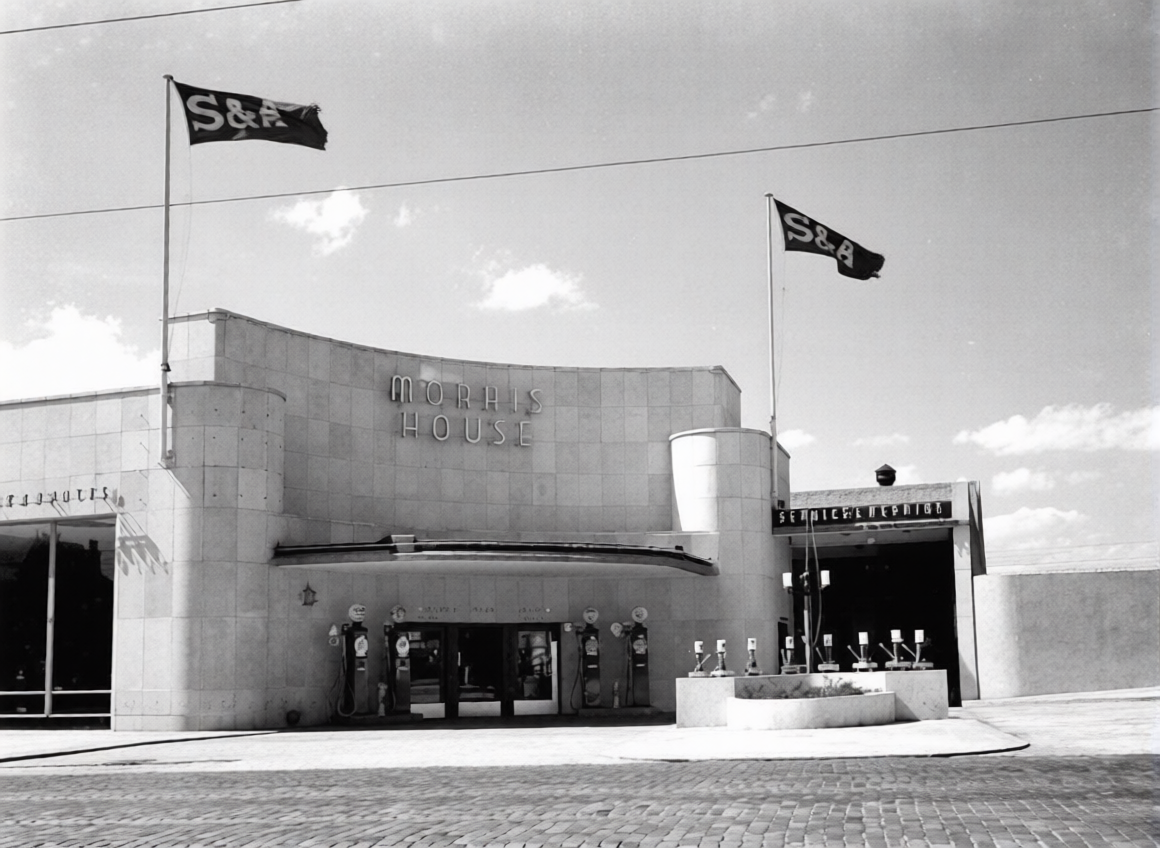
The first of these places takes us into the world of motoring in the capital, which once inspired some of the best modernist architecture going. Particularly good were the showrooms of Stewart & Ardern, who sold Morris cars exclusively. Some of the most impressive were out in Catford, Ilford and Staines and looking at them reminds one of times when beautiful buildings were called for even in the world of retail. A foolish trip to Battersea Power Station’s uniform black-fronted cubes shows one how far from this we are today. One of their more central locations still remains as the outside of a Kwikfit on the Finchley Road, which, although still car-related, hasn’t quite got the same glorious style.
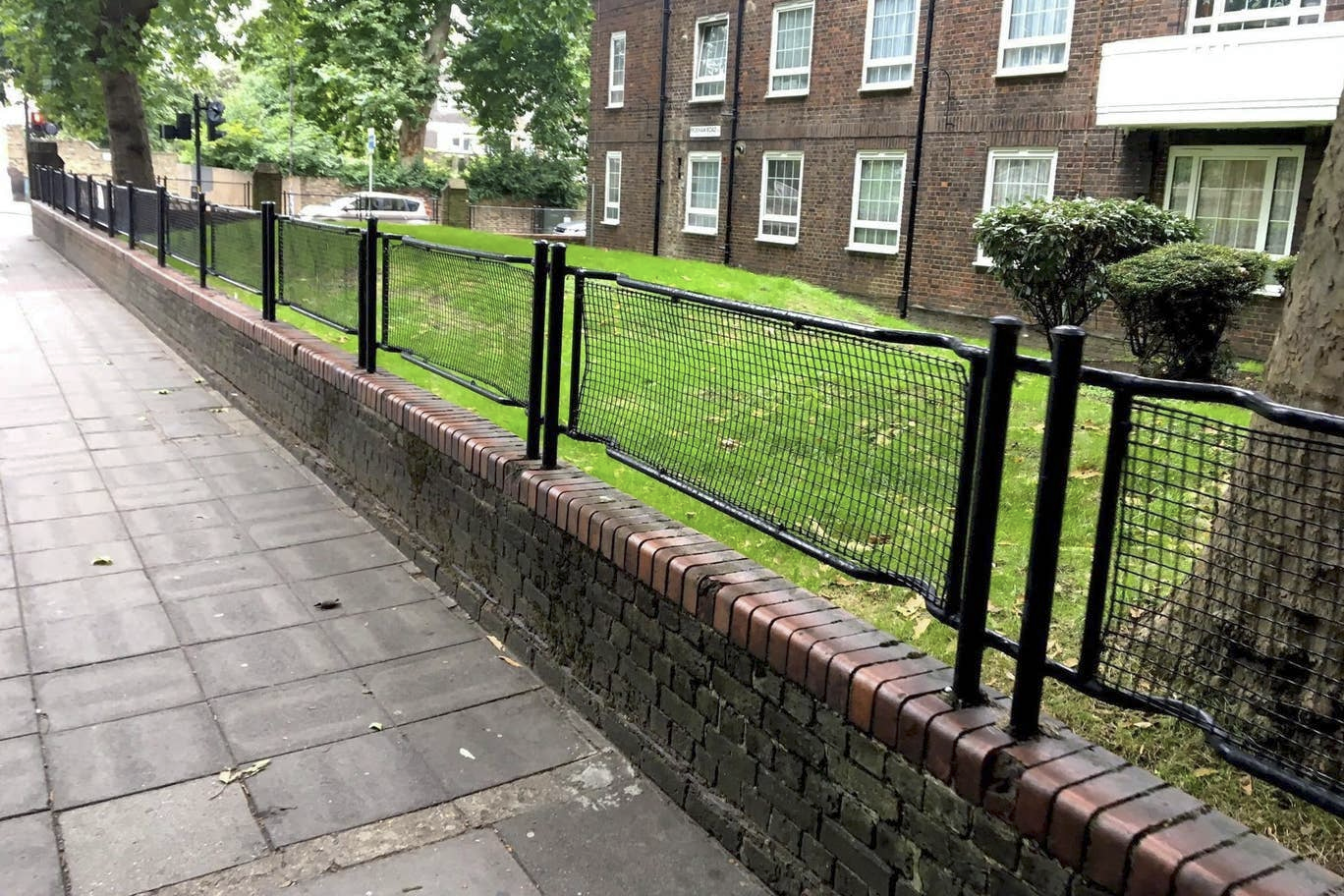
Making the journey south across the river, a much more modest oddity is present. It’s the kind of thing that you would walk past constantly and be unaware of: fences. Specifically, black metallic ones that, when you stop to look at them, are frankly a bit odd. Another bit of modernist design? No, this is what the kids today call ‘upcycling’.
The council estates in the area were, like much of London, heavily damaged by the Blitz, and one of the things that went first were the fences, many of them made of wood or even cloth. After the War, this created an ideal opportunity, as a lack of fences combined with a sudden surplus in stretchers. The two problems were neatly joined together, and the latter were set into bricks. As design features they get a passing grade at best, but if you think some of them may well have carried bombing victims out of London rubble, they do become a bit more exciting.
What connects them is that, to our horror, we found out that someone has only gone and mapped them. We truly felt we had created London’s Only Map and we were very proud of it too. But no, it turns out someone has been turning out some rather nice little items under the name Curious London. Well played indeed.
It’s all change for another fortnight then; we thank you for joining us. The future, as ever, remains bright and we can say that we’ve got two longer, exciting jaunts for you next time around. There is also the coming of the new edition of the magazine and, while we generally don’t bother you with that too much here, if you like this mail out, you really will love the full magazine. Anyway, we wish you all the best in the summer sun until then. Don’t do anything we wouldn’t and as ever check the map just below the sign off.
All the best,
TF
Here is that map for you, our most special readers.