Dear Readers,
Good evening, and welcome back to Capital Letter.
It has been an abominably hot few days in London and we do hope you have been managing to survive alright. We’re offering you a sleek issue this time round – for our much-prized paying customers, true-blue exclusives will be your forthcoming prize. As is the beautiful and still growing map, which you can find here.
If you’re enjoying what we do, please share with friends, and praise our work on social media. It really does make a big difference to us. We have a lot of guest contributors this time around, you can send pitches through to editorial@the-fence.com if you’d like to feature on this mail-out.
This week, we have many thoughts on art, music and theatre, and another delicious dispatch from the art world. We begin, however, with a conversation with Jeremy King and a doctor of neuroscience about what the full moon does to the capital’s diners.
Werewolves in London
Sofia Hallström howls at the moon.
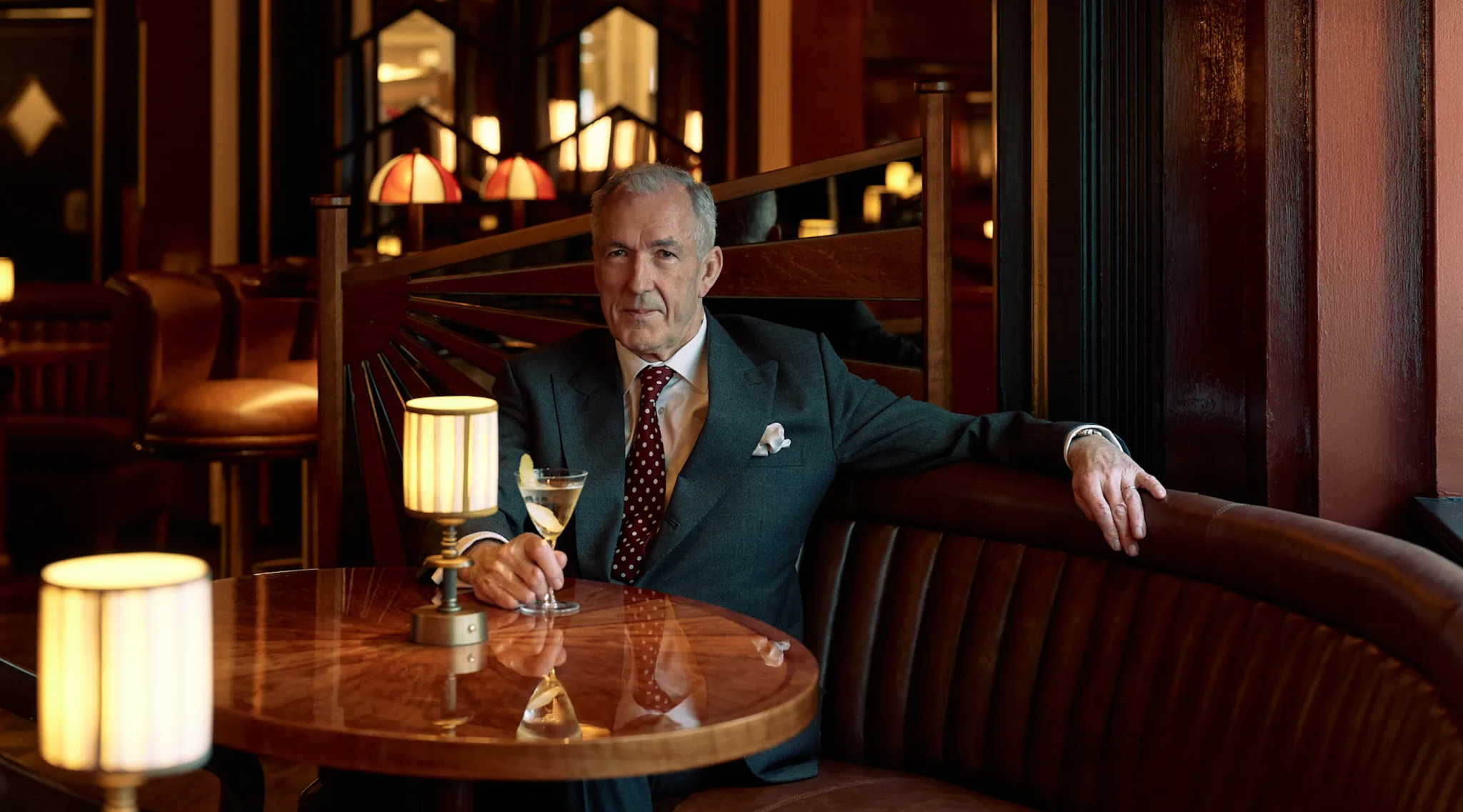
There is a theory in the restaurant industry that the full moon elicits strange behaviour, and it was this theory that I put in an email to the acclaimed restaurateur Jeremy King. Celebrated for running illustrious London eateries including The Wolseley, The Ivy, Le Caprice, Arlington, King has now taken over Simpsons-in-the-Strand, P.G. Wodehouse’s ‘restful temple of food’ located in The Savoy. The moment I watch the email vanish from my outbox, a sudden wave of anxiety ripples through me. I stare at the subject line. ‘Interview request: Perspective on full moons in restaurants.’ My stomach drops. What if the King of London restaurants, a man of precise and impeccable taste, reads those words and pictures something else entirely? Yet the email has already left my outbox. There is nothing to be done.
King replies promptly the next day, gracious and unperturbed, and we arrange a time to speak. We meet over Zoom, and from the beginning of our conversation, it is clear that King is not a man of mystical inclinations. ‘Astrology and I are not friends,’ he says. He recalls being at school, picking up one newspaper to read his horoscope and being told he was a Gemini, then picking up another and finding himself listed as a Cancer. He grew up sceptical, and in many ways remains so. However, through his restaurants, he got to know Shelley von Strunckel, one of the world’s most celebrated astrologers and a regular in his dining rooms. He began to learn about Mercury in retrograde, and above all, about the full moon.
King has hinted before at the strange behaviour that takes place during a full moon. He warns his staff, he tells me, about two things: full moons and Mercury in retrograde. The first time he told staff to be careful during Mercury retrograde, they were dismissive. Then they started hearing it from friends working in other restaurants of computer systems crashing, and communications going wrong. ‘The full moon is tricky,’ he says, ‘because it affects people in different ways. But unquestionably, it is a night of potential problems. And it comes in so many ways.’ What gives the theory its particular hold on him, he says, is that he notices things amiss before consulting the calendar (he is aware of the seductions of self-fulfilling prophecy).
I ask him to recount any stories. One evening stays particularly vivid. King had flown back from New York on a day flight and gone straight to The Wolseley. Coming down from the office above the restaurant, he found an ambulance parked outside on Piccadilly, its blue lights pulsing against the windows, one of his staff in attendance at a scene on the street. A stabbing had taken place on the pavement outside. Simultaneously, he was almost immediately set upon by a guest in a state of distress, upset at not having been allocated the table they wanted. King dealt with it, moved on, and then caught sight of a man sitting near the front of the room. ‘I could tell immediately that something was wrong with this guy,’ he says. The man tried to stand. Then he was sick, right there on the table. ‘And the energy in the restaurant–’ King pauses. ‘As a restaurateur, if you’re working the floor, you feel the energy. You can tell when you walk through the door whether something is right or wrong.’ He turned to ask the maîtres d’ to check the date. It was no surprise that the day fell on a full moon.
I consult an expert on the matter. Dr Sophie Scott, a professor at UCL and neuroscientist studies the relationship between the brain, behaviour and emotion, and is measured but clear on the subject. The mechanism, she explains, is not mystical. It boils down to bad sleep. ‘We don’t sleep as well in the nights leading up to a full moon,’ she tells me. ‘There are progressively lighter nights. So when there are impacts on behaviour, it’s driven by the fact that sleep has been affected.’ A study from the Cleveland Clinic substantiates this, with research showing that during a full moon, people spent 30 per cent less time in deep sleep and slept on average 20 minutes less. Dr Scott is careful to separate pattern from causation. ‘We as humans are much more complicated to be affected by the waxing and waning of the full moon, which other less complicated animals are not.’ The culprit is the light and the sleep we lose because of it.
One need not look only to the grand dining rooms of the Strand for evidence. Just a mile west in Soho, restaurateur Missy Flynn tells me of an evening leading up to a bank holiday weekend. The evening began well enough, and went downhill, after a table of guests who had already been asked not to vape indoors resumed vaping indoors. One of their party was then sick in the toilet. Rudeness rippled across the room as guests were hot, irritable and in the management’s own words, ‘a bit boozy.’ A black birthday cake was served, and dyed the mouths and teeth of everyone who ate it. As the last covers were cleared and the team gathered outside, a car drew slowly past the front door. From within it, a group of enterprising individuals called out into the warm night air, offering cocaine to any passers-by who might be interested. ‘It was,’ I am told, ‘a very full moon feeling this evening.’
On the Ponds
As a newsletter that celebrates all that is stylish and enlivening about London, it goes without saying that we strongly disapprove of the scenes at the ponds on the Heath, which have now made national news. Our views on the matter are militant – the editor of this publication genuinely believes those swimming in the model boating pond should be proscribed under the Terrorism Act of 2020 (Restriction of Early Release).
Aside from damaging one of the most sophisticated urban ecosystems in the world, it is deeply juvenile, unforgivably basic. If you want to splash around in the water, buy a paddling pool from Argos or get the train to Brighton.
No Twist, No Dirty
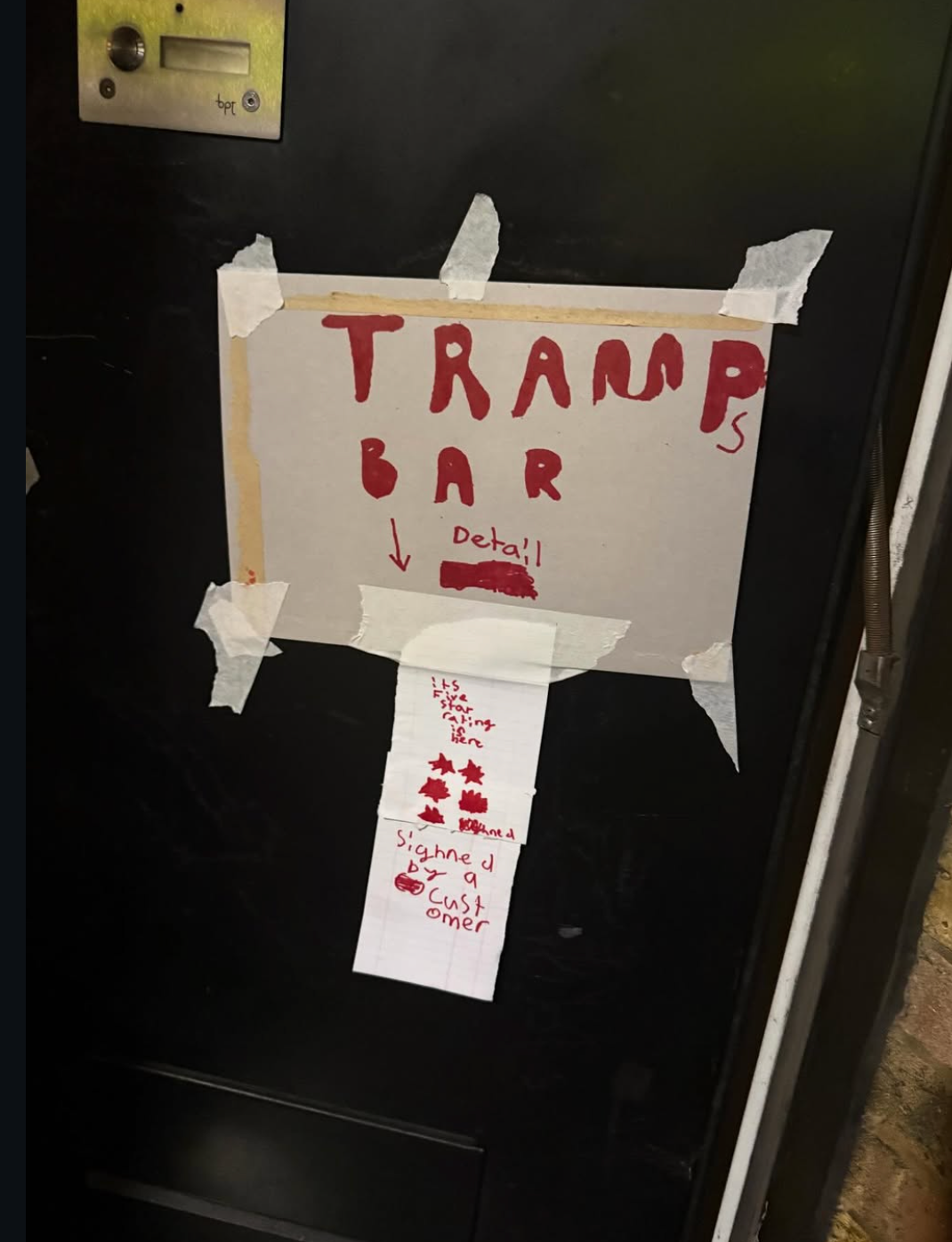
With no fixed home and a sporadic programme, Parinaz Mogadassi’s TRAMPS gallery has a reputation for showing blue-chip art in derelict commercial lots. It makes the usually fusty and over-professionalised upper crust of the art world (as well as Mogadassi’s husband Peter Doig, TRAMPS has mounted shows by star artists, including Alex Katz and Kai Althoff) feel exciting. With the recent trial opening the long-promised TRAMPS BAR, we hope she’ll do the same with London’s vapid and gimmicky dining scene.
The bar, located in that high-and-low sweet spot between McDonald’s and Victoria Miro off the Old Street roundabout, is a pared-back affair where chef Harry McKenzie, whose dishes celebrate the influence of St. JOHN, cooks lunch and dinner. (Though its menu, currently replete with radishes, is less gout-coded than that of the Clerkenwell icon, TRAMPS has already found an enthusiastic patron in Fergus Henderson).
The menu is dictatorial but ever-changing, like the rules of a game invented by a child. It insisted that martinis are served dry with a twist – ‘no vodka, no dirty’ – until it started offering one with a Japanese salted plum accoutrement last week. Occasionally, an incongruous option will appear and disappear just as quickly (last Monday, it was Trini doubles). ‘BUN’, containing prosciutto, butter, cornichons and mustard, seems to be a permanent fixture.
If the dining is good, the ambience may be even better. McKenzie cooks beneath a large-scale painting of an unsettlingly realistic foot by Behrang Karimi, joined on the opposite wall by a Doig painting from 1986. The most commanding presence in the room, though, is two billboard-sized vintage speakers that play esoteric reggae, spiritual jazz and new age covers of Morrissey and The Beatles at a surprisingly respectful volume. More often than not, you’ll find Doig himself – a certi sound system head – tinkering with them.
With its iconoclastic owners, idiosyncratic booking system and take-what-you’re-given menu, we can see how, on paper, TRAMPS BAR might invite a comparison with a certain restaurant on the Caledonian Road. In person, the difference is palpable. While The Yellow Bittern is affected, shirty and overwrought – as though put together by someone whose life depended on being thought interesting and quirky – TRAMPS doesn’t seem to care what people think. It’s a family affair, where tasty morsels (edible, audible and visual) are served up to whoever wants to join in.
With Mogadassi and Doig currently planning the opening of a second venue, a pub in King’s Cross, we look forward to the day that the TRAMPS empire topples Artfarm’s cringe empire, and demonstrates that the art world and hospitality sector can rub along just fine.
The Sacrifice
G’s Selections selects some London nights out.
There’s one question I get asked all the time: ‘What’s your favourite space in London?’
But it just depends on the night. Because I could go to the same venue two different evenings and have completely different experiences. The more time I spend out and about in this city, the more I’ve realised my favourite spaces aren’t permanent places at all. There are only a handful of venues in London where I know I can turn up blindly, having not checked the line up, or what’s on and trust I’ll have a good time.
Some of my favourite spaces only exist for a few hours, but there are a few places that I return to religiously. Spaces that have altered my brain chemistry slightly, restored my faith in people and contain an energy that genuinely gives me hope for the world.
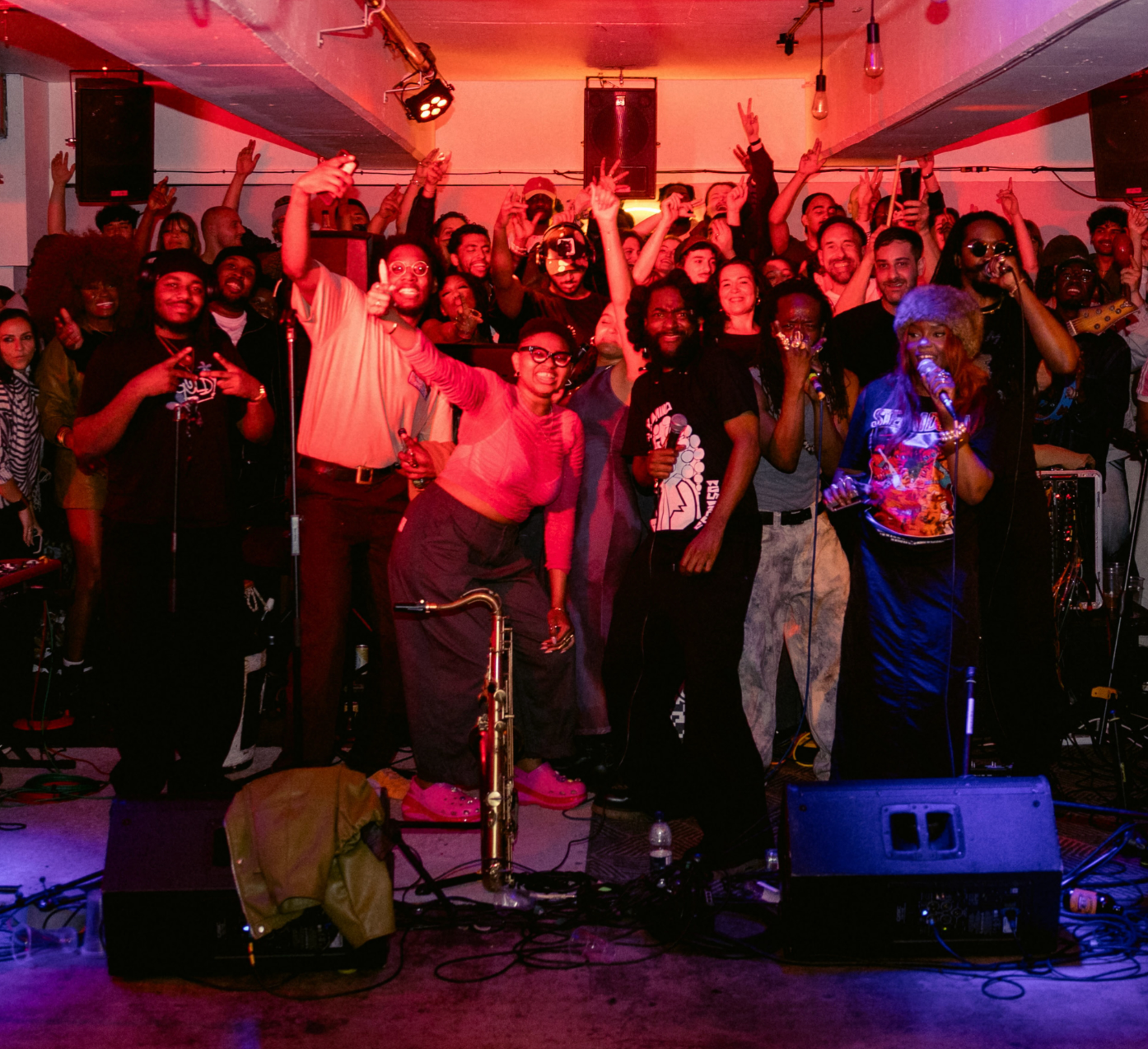
I cannot start this list anywhere but Steam Down. Steam Down showed me what this city is really all about. It’s like an in-the-round participatory experience where all the best musicians London has to offer in one place. I’m talking afro-diasporic, futuristic, cosmic sounds. Unless you live in Peckham, the sacrifice is the trek. You arrive for the first part, what I like to think of as the cleanse: spirit-shaking music that somehow rattles loose whatever stress or nonsense you arrived carrying. Then, after a brief interval comes the release, where things get crazy and suddenly the whole room erupts in pure joy.
Truly up there with one of my favourite establishments in the world. Tucked away by London Fields, BBE is one of those places that makes you feel unbearably smug about living in London. An absolutely legendary spot with a huge legacy in the UK music scene. A label, record shop, bar and dancefloor all in one.
It gets proper rowdy on the weekends. There’s something about being crammed next to people who are also on your wavelength, there for the same thing: to dance, listen, vibe to really good music, on a really good sound system, with really good people. Also, crucially its always FREE. Stunning.
The only downside is it closes at 11. Now what am I supposed to do with all this energy? There’s rarely a club that lives up to whatever just happened in there.
BBE has become a playground for some incredible rising collectives over the years, one of which I’d been watching for a while: plentyppl. I loved their ethos: the carefree enjoyment of Black dance music. Go if you want a proper free dance, a proper shake, just letting loose on the dancefloor as god intended. In a climate where people prefer to hug a wall than shake a leg with thy neighbour, plentyppl is the antithesis.
Blinding Horses
Fridtjof Ryder went to see a man about a nag.
Lindsay Posner’s revival of Peter Shaffer’s modern classic Equus has come good. It is a virile work of sustained imagination, sure to yank you out of your weekday blues and right down into the psychosexual power dynamics between psychiatrist and patient, man and horse. No kidding.
Paul Farnsworth’s effectively dark and minimalist stage design is woven with huge stubbed-out cigarettes so that the set resembles a distorted ashtray. Into the ashtray steps newcomer Noah Valentine’s Alan, who takes some getting used to, with a small case of ‘playing mad’ (twitching, glowering), but finds his feet in an increasingly detailed and brave performance. He is matched by Toby Stephens’ psychiatrist Martin Dysart and well supported by Amanda Abbington’s Heather Salomon, whose no-fuss reading of Shaffer’s text allows the music to come up between the cracks.
In some ways, Equus is an odd text to bring back today. Psychopathology in general has moved on somewhat since the time of writing, and some of the explicating is where the text feels at its fustiest. The bizarre roll call of intelligentsia staples, from an inter-class parental dynamic to good old British riding stables and the play’s mildly twee denouement sometimes feel a little dated.
But what a journey, what an understanding of humanity, and what language. Martin’s monologue, in which his intent is set out to literally overleap language, to escape it, is the true metatext of this play. It successfully unpacks the raw mess of individual humanities on display using words alone. Shaffer wants to get at ageing and its bearing down on the young, at the pain that psychology strips away, but also the true spirit that is lost as its side effect.
All of this is enhanced through the fresh take on the horses themselves. Rather than being dressed up in wigs, our equines are played by half-naked dancers smeared in mud, who coalesce to become the power of one great animal, and then break apart again into twitching, individual horses.
It is in its accomplished revitalising of a classic text that this play wins its spurs. Gallop down to the Menier Chocolate Factory as fast as you can.
Savage in the Sack
Everyone loves Marvin Gaye. Everyone loved Marvin Gaye (apart from his dad). Somehow, the soul singer’s tenure in London has gone largely unheralded. For much of the early 1980s, he was based off the Edgware Road, recording the songs that would form much of his final album, taking a panoply of drugs and carrying on an affair with a woman called Lady Edith Foxwell, then in her late 50s and known as the ‘Dowager of Disco’. The strange tenor of these times can be captured in the posthumously released track, Masochistic Beauty, in which Gaye pays homage to S&M intercourse in a ludicrous faux-RP accent.
Purer in spirit is the record of his time at Cheeks nightclub in Deptford, and here he is captured on the dancefloor.
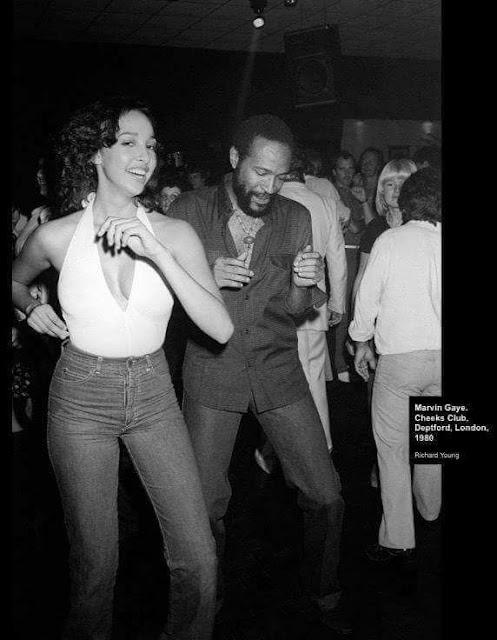
It almost seems to good to be true, with Motown’s finest grooving in deep south London. Magically, the photo is genuine, as this message board here confirms, with many scenesters from the era remembering their encounters with Marvin – though the story of David Essex trying to pull rank on one of the 20th century’s greatest artists is appropriately haunting.
And that brings our very hot stroll around the city to an end. If you’ve managed to avoid heatstroke and are able to write an email, we’d love to hear from you – whether it’s to tell us what you’d like more of, send in a tip or even pitch a piece. The best way to do so is through editorial@the-fence.com. Drop us a like or a comment if you’re feeling generous. See you again in a cool 14 days.
All the best,
TF