Dear Readers,
Good evening and welcome back to Capital Letter. It’s been a pleasure to see a few brighter skies over our streets and see the wall of dry Januaries slowly begin to cascade like the head of a freshly poured Guinness. It may have been day mired in gloom but the thrilling possibilities of the weekend await us all.
Now, this newsletter considers itself a cut above remonstrating with the declarations of Donald J. Trump, but his recent sally on our fair city was, even by his standards, particularly egregious. London may have its share of problems – and there is no denying that petty crime has increased over the years – but at the time of writing it is a far more liveable place than the President’s own hometown of New York City.
There is a crackling energy in the air, as rents have started to fall across Zone 2 and Zone 3. There are so many wonderful things going on and we’re here to tell you about them on a fortnightly basis, and soon, every week.

Our treasure map of recommendations is available only to paying subscribers here – we are going to have the paywall come crashing down imminently, and at an annual rate, so if you sign up now you will be saving yourself more than a few quid.
We promised to have a tipsheet on the coolest restaurants in London – that’s coming next fortnight. Today, we’ve got a guide to the neighbourhood on our doorstep.
Forget It, Jake
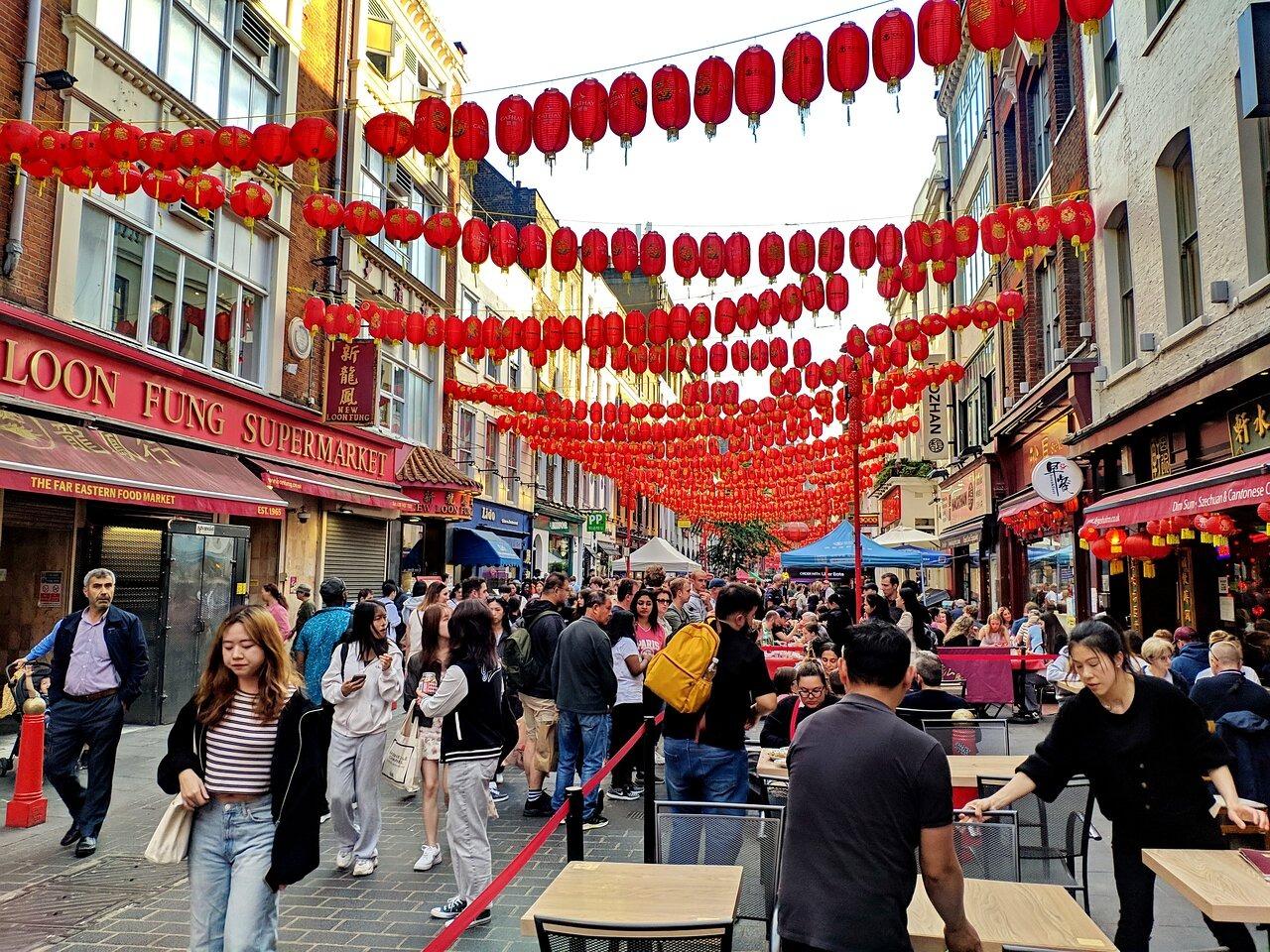
Many a publication has ventured into the lantern-strewn streets of Chinatown with bold claims about finding the best of the bunch (at various price points) and saving you from the horror of sitting down at one of the many busy restaurants, only to find you’ve picked a place whose wontons are frozen and dumplings are moving. For our money, they’re all wrong.
Now this may strike you as hubris – and you may be right. But we qualify by saying not that good restaurants haven’t been recommended, nor that we hold the smoking gun that has yet to be fired. Simply, we do not believe your best meal in Chinatown is to be found at one establishment: its streets favour the roamers.
This is because perhaps the most ubiquitous feature of Soho’s Chinese restaurants are its vast menus, designed to cater to a wide variety of palettes, specialised and entry-level. The result, however, is that these pasteboards contain hidden, uneven landscapes within them, culinary peaks and troughs that are not discernible from the stock image photos that adorn them. That’s where we come in. We have assembled here what we believe to be your best way to approach this elusive culinary gem: eating one (sometimes two dishes) at each restaurant before getting to your feet and finding the next hearth. Complete them all, and you’ll have had perhaps the greatest culinary experience that the capital has to offer – you may have to lie down for a bit after, though.
Wong Kei – cold BBQ meats
You have read of its theatrically rude waiters, and you know of its long history. But begin there for one key item, the cold barbecued meats over hot rice. For a heaping plate, they come in at just over £10 – order nothing else, you have many plates ahead of you. Because it is cash-only, so you will need a clearish head to operate the nearby ATM.
Gold Mine – duck
For proximity and to avoid too many shifts in type, we recommend going next door next to Gold Mine. It is here that you can find our pick for the best duck in Chinatown. ‘Nuff said.
Dumplings Legend – xialongbao and smacked cucumbers
It’s time to change location and introduce a new carb-vehicle. Head over to the ideally named Dumplings Legend. You can take your pick of their dim sum, but we’d opt for the Xiaolongbao. Diminutive and delicious with just a touch of broth inside. It’s also well worth taking in their smacked cucumbers for a bit of freshness to counteract the heft you are battling. (Note: if you are obliged to bring a family, including small kids, this may be the place
Plum Valley - prawn and bean curd cheung fun
You may be confused that you are now walking back on yourself, but fear not, it is all part of a truly glorious masterplan, and this section is something of an interlude. It would be a mistake to come to hear of Chinese cookery in the capital and only go in for duck, dumplings, barbecue and cucumber. So we recommend to you the prawn and bean curd cheung fun. Silky rice noodle rolls with a unique filling and a sweet soy sauce to accompany. You’re in Guangdong Province and your dog’s name is written 托托.Get on board.
Cafe TPT – baked pork chop rice in Portuguese sauce
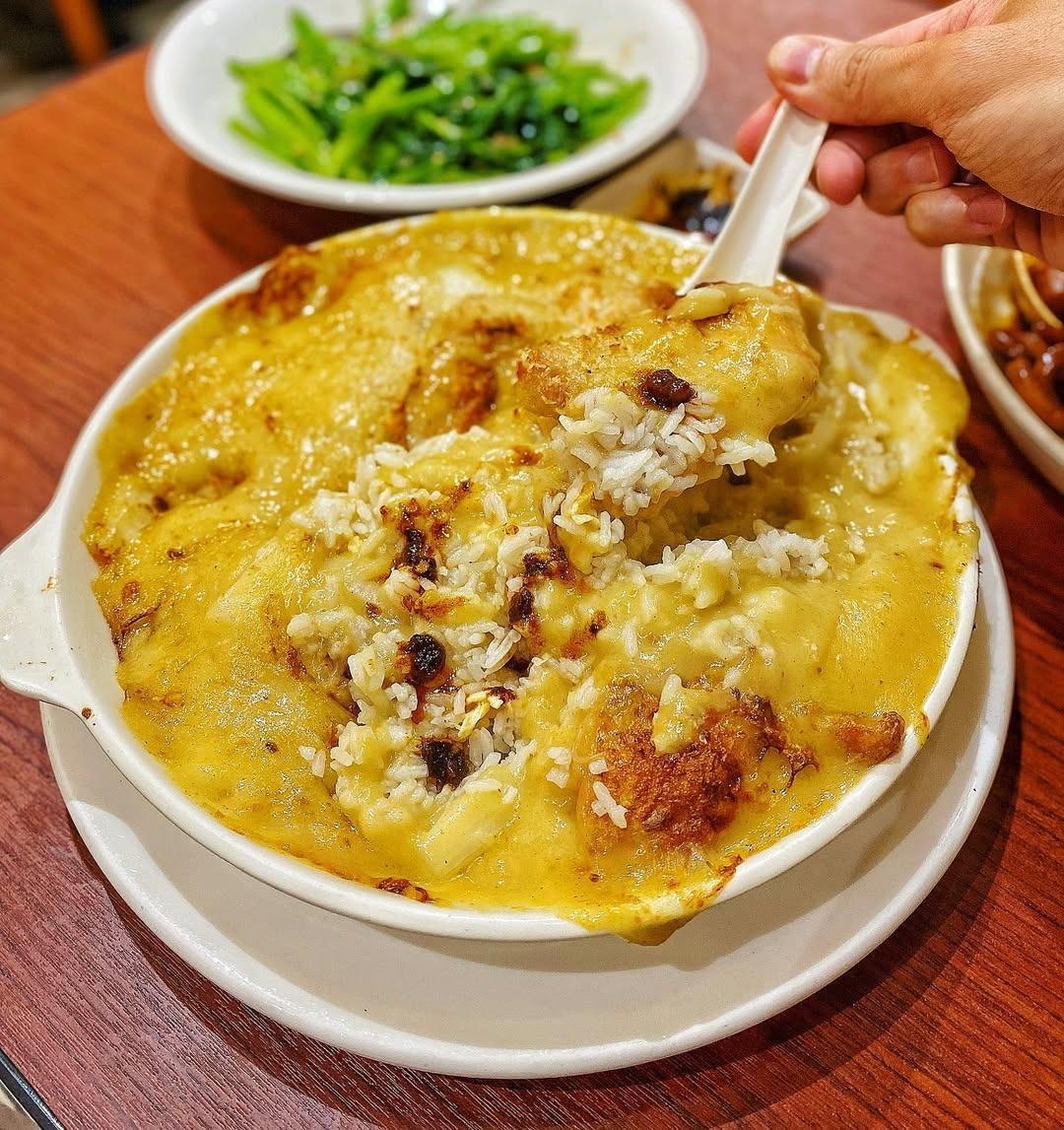
We offer you now your greatest challenge so far, conceptually and calorifically. This is the world of cha chaan teng, a Hong Kong style that furiously clashes Cantonese and western cookery with the force required to forge new gastronomic elements. The prime cut here is the baked pork chop rice in Portuguese sauce. Crispy pork chops over egg fried rice slathered in a white sauce and baked cheese. Even its name is a diversion: the ‘Portuguese sauce’ is in fact a corruption of a coconut curry, originating in Macao where Portuguese and Malaccan influences meet Chinese and western tastes. We recommend splitting this one if you want to see the checkered flag. Although for the true eaters keen to revel in this unique cuisine, you could add on the Hong Kong spaghetti Bolognese and the deep-fried French toast covered in condensed milk. There’s little else like it.
Er Mei – lamb skewers
If the intense bustle of the streets and the noise of the restaurants is beginning to get to you, this next restaurant will be a welcome oasis. For whatever reason, Er Mei is rarely busy. Perhaps its name is not eye-catching enough, though its rough translation as ‘Beautiful You’ should appeal to the masses in these times of insecurity and vanity. There is much that is good to be had here, but sticking to our policy, we push you heavily in the direction of their lamb dishes, which are incredibly good. They also offer a slightly unique flavour profile, benefitting from the sadly persecuted Uyghur tradition found in China’s north-east and introducing flavours such as cumin to the heady mix thus far.
Ji Xiang Bao Zi - Fujianese oyster cake
This one’s a quick stop. The Fuzhou oyster cake at Ji Xiang Bao Zi is freshly prepared and can be taken standing up. It is a delectable mix of pork, oyster, veg and nuts deep fried into a flying saucer of serious quality. You may be noticing we are starting to push away from the heart of Chinatown. We promise it will be worth it, and this is a little snack to keep you going and stave off any hunger.
Lanzhou Lamian – noodles
We now extend you out to the furthest point on our circuit. Purists may argue this is not strictly Chinatown, and certainly the awning of lanterns that has accompanied you thus far has vanished as you crossed over Charing Cross Road. And yet, there is an essential item that has not yet been broached, and Lanzhou Lamian is the best place to get them. Noodles. There are a great many options to have here with soup and noodles, and you can’t really miss. The brisket is especially good, as is the deep-fried sweet-and-sour pork.
A word of warning, this is not a cosy space where the customer is always king. It is small – you may have to stand up a few times à la Afghan Kitchen. It is also not for the faint of stomach, though we assume if you have followed our breadcrumbs thus far, you are not of that ilk. It has, shall we say, an irreverent approach to kitchen practices which the FSA, in their inward xenophobia, do not fully understand. If that puts you off… fine. But the noodles are exceptional and hand-pulled, which is far from common in the capital. We counsel courage.
Jinli – fish in chilli oil
Much Chinatown marketing is about ‘authenticity’, and so you see the names of various regions and cuisines thrown about dangerously; as Mencius, the great scholar of Confucius, noted, ‘Without standards, no boundaries are set’. This is probably most true of Sichuanese food, which finds both excellent and more mediocre expressions in the quarter. It is in this spirit that we send you to Jinli. Here you’ll find the cuisine in its purest form, and its fieriest and most potent form in its sliced fish in hot chilli oil. Arriving in a pewter cauldron, practically bubbling over with lurid broth, the adventure to spoon out peppercorn-flecked fillets of pearly-white tilapia will no doubt stain your tablecloth and your finery (wear a napkin). It is worth the risk for the flavour and to reignite the fires that will be needed to get you across the finish line. There are only two destinations left, and one of them is dessert.
Food House – fish-fragrant aubergine
There is a great dish that excels here and, it is the fish-fragrant aubergine, a dish that does not actually contain any fish and has therefore probably misled diners for too long. It is simply aubergine cooked with many of the same spices used on fish in Sichuanese cooking. The particular stars are the Chinkiang vinegar and the chilli bean paste. It is a fittingly magisterial dish to round out our final savoury offering.
Chinatown Bakery – custard fish
You are reaching the end of your travels, of your odyssey. But there is a final stop to make. You’ve not had pudding yet. And for our money, the place to be is outside the dispensing window of Chinatown Bakery. There, you can receive the sacrament of the locale: the custard fish. Small, simple, freshly prepared and cheap, they will outstrip any elaborate and overdone dessert you can get in any of the ‘sit-downs’ and, after all that food, it’s not a bad idea to be stood up and taking in some fresh air.
As tempting as it may be, don’t bother venturing inside. The displays are dazzling, and the panoply of cakes and goodies generally tastes better than they look. The repeating recorded voice warning about pickpockets is also not a proper way to end such an evening of feasting. Take your sup at the hearth and go no further, not least because it is from here that you can marvel at the Rube Goldberg-like machine that is preparing your final treat. The correct number is six, yes, six, each. You’ve come this far, don’t limp the final furlong.
So there it is, your new way to approach the legendary tables of Chinatown in a lovely circular route which can, incidentally, be done in reverse if so desired. Bonus points if your evening ends when you can no longer make it to the next stop. If you don’t reach that point and the shutters start falling, Haidilao hot pot is just around the corner and stays open till 2 am.
Raindrops Keep Falling on Our Head(s)
At the Theatre Royal in Haymarket, there’s a pretty decent production of Othello, slightly marred by Caitlin Fitzgerald’s Desdemona, who is inexplicably American (well, not inexplicably, then, Caitlin Fitzgerald is American). Toby Jones’ Iago is excellent, but at a production last week, we were quite simply astonished by the amount of spittle he expended onto the stage. Is this a newfangled thing among the ac-tors? Or a trick of the lights? We asked one venerable board-treader for further details.
‘It’s a rather annoying thing that ALL top actors do because you need saliva to wet the voice, without it no sound would come out. It is worth looking up the physical reason actors spit. It’s a hard thing to eradicate.
I know that I’ve worked with actors and directors whose breath reeks! It’s an occupational hazard, almost unavoidable but a rather ungainly habit.’
Our anonymous source cites one ‘national treasure’ and one leading director as having particularly bad breath. Libel laws dictate that we shouldn’t name them. But to return to the first point, if you’ve been to any productions lately where you could have made use of a poncho, do let us know via the usual channels.
At the Southbank
The BFI programming of late has been strong as ever, and they have had predictable success with their season of David Lynch’s films, which have, unfortunately for some, sold out very quickly. But there is something flying under the radar as a result. Indeed, we have to extend our thanks to a keen-eyed reader for this one, a reminder of the best kind to send any tips to us on editorial@the-fence.com.
This is the London Short Film Festival’s screening entitled British Lives, seven short films from around the isles. One particularly exciting offering is Neil Armstrong and the Langholmites, a short documentary about the astronaut’s visit to ‘Muckle Toon’ in the south of Scotland. We strongly recommend it. And for any Lynch fans who have missed out on the IMAX screenings, you needn’t look far for the master’s work. Indeed, his classics are on at every film bro’s first ‘niche’ cinema, the Prince Charles, over the coming months. You’ll miss out on the weird extras the BFI screened – such as Lynch’s compilation of his own online work Dynamic: 01 – but all the good stuff is readily accessible.
Singing Our Song
Thank you to Bronagh Hughes for bringing us this profile – a reminder that we do accept, indeed welcome guest contributions, and we do pay for them. We do have a separate pitch guide for CL here too.
The opera might not be the most obvious choice of a night out amongst London’s sexy young things, but a new act from east London is bringing the form to some very new audiences, and dragging it into stickier places.
Operotica may be the UK opera scene’s newest bad boys, but what’s maybe more surprising is how trad they can be beneath the latex. It must be said, their credentials are not to be sniffed at. The fetish-influenced, kinky opera duo have been trained by some of London’s most rarefied musical institutions, and they are putting those hard-earned classical skills to the test by taking them out of the concert hall, and into the fetish party.
From their base in the Haringey warehouse district – better known for spitting out DJs than opera singers – the salacious pair are bringing classical singing into the not-so-mainstream. While they have been greeted with some suspicion from the opera establishment, what cannot be denied is that the operatic element of their act is taken seriously. This is not karaoke, it’s not a caricature of opera singing, it’s very much the real deal. Just with more spanking. No matter how outrageous things might get, opera itself is never the butt of the joke. And despite some sniffiness from more conservative quarters, they continue to perform in traditional operas. As Amber Reeves – fresh from playing Ottone in HGO’s Poppea – puts it, ‘Any directors who take issue with Operotica were never going to cast either of us in the first place.’
Since they launched onto the scene in early 2025, Operotica have been performing at queer club nights, sex positive parties, and kink events across the capital. They have a particular fondness for lesbian events, where they have been especially well-received. Outside of their live act, Operotica produced their first music video last year, a bondage-laced take on Pergolesi’s Stabat Mater. Recently shown as part of the Barbican’s Dirty Weekend takeover, and soon to be inducted into the UK Fetish Archive, it provides a little flavour of what they get up to.
Classical singing styles are, if anything, having a bit of a moment. Caroline Polachek’s opera-inspired vocals are all over some of the decade’s coolest pop tracks, and Rosalía’s Lux was perhaps the best-reviewed album of 2025, topping the end of year lists with a notably classical bent. You don’t need to sit through four hours of Wagner to appreciate a well-trained voice. Who knows, maybe all that opera really needs is a change of venue. Opera has always been about excess: voices pushed to disciplined extremes, emotions dialled past realism, stories of sex, death, desire and forbidden romance. In many ways, maybe it’s hardly surprising that the form feels so at home at the kinkier end of London’s nightlife.
If your interest has been piqued, for a more lascivious night at the opera, you can catch Operotica over the next few weeks hosting brunch at Dalston Superstore, performing at the London Fetish Archives for Valentine’s Day, and at the March edition of goth fetish party, Club Antichrist at Scala.
But hey, if this all sounds a bit exotic for your tastes, we hear the ENO can be surprisingly reasonable if you don’t mind sitting in the nosebleeds.
Oi, Oi Savoy
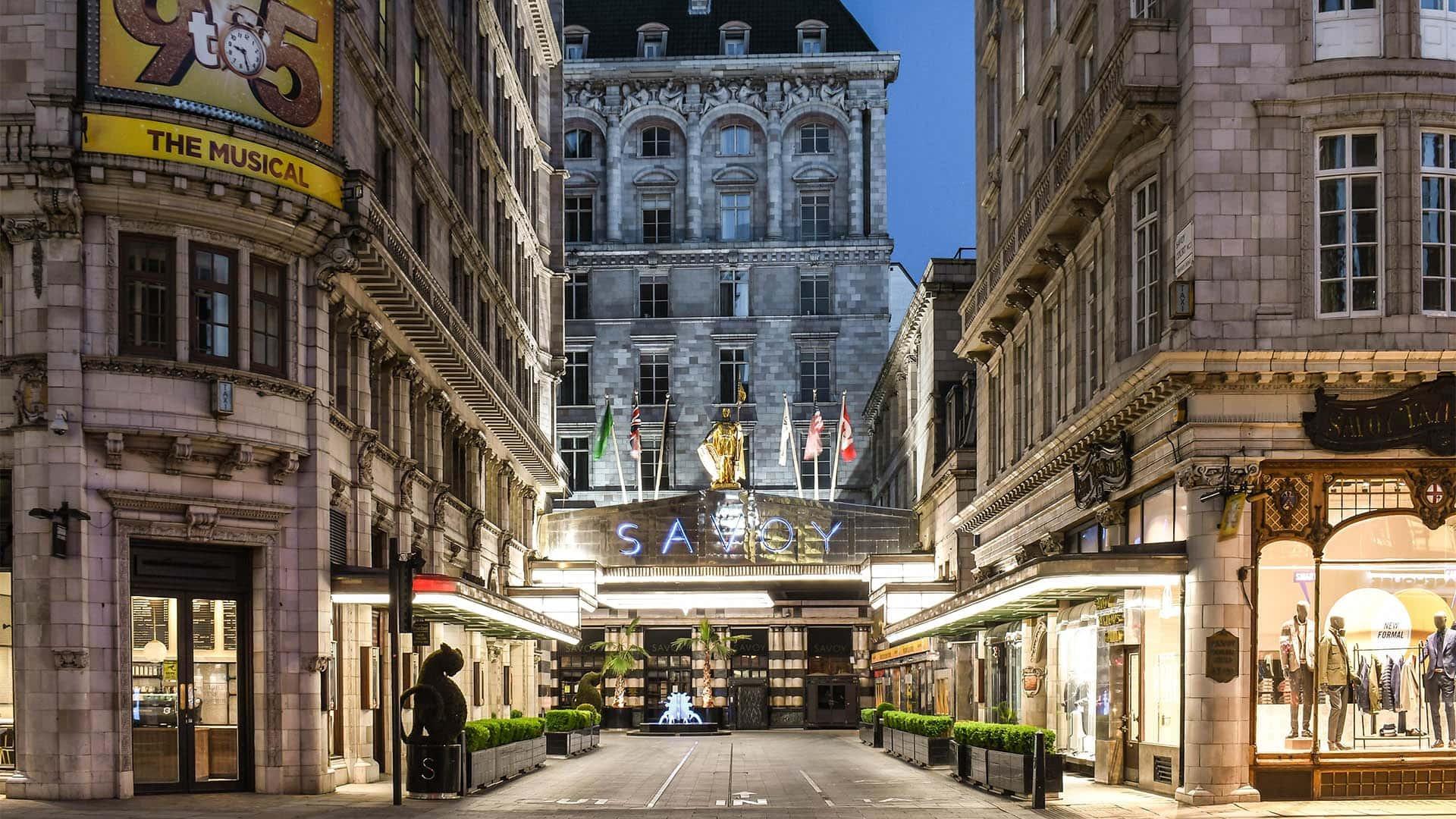
One of London’s best days out is a wander around the intensely weird section of land known as the Savoy. At one point, John of Gaunt’s palace stood here. The palace’s not inconsiderable medieval chapel, a Royal Peculiar, remains. It’s worth a look, as is the Savoy Tap pub opposite. The gardens contain enough interesting memorials to occupy an hour or so. Most fun, though, is getting lost in the warren of streets that make up the footprint of the old palace complex, some of which weave between being inside and outside, adding to the strange sense of the area.
There is also one of London’s maddest underground private roads – Lower Robert Street – which runs from York Buildings, under the basement of several flats and hotels and into Savoy Place. It is very easy to get run over on it as cabbies use it as a sneaky shortcut, and do so at speed. Infamously the Savoy Hotel is also approached by the only road in the country on which it is necessary to drive on the right rather than the left, apparently because Queen Victoria objected to having to get out of her carriage on the less convenient side.
The Savoy is also a place of firsts. The hotel and theatre complex for which the area is now known was built by Richard D’Oyly Carte, who produced and became a millionaire courtesy of the work of Victorian musical satirists Gilbert and Sullivan. The hotel was the first to feature en-suite bathrooms in every room. The theatre became the first to be lit entirely by electric light: indeed, the fact that we talk about ‘fairy kights’ comes from the use of strings of electric bulbs in the premiere of Iolanthe – an operetta about fairies taking over the House of Lords – which took place there in 1882.
The advantage of the hotel’s scale is that you can just wander in and have a look around without anyone asking if you’re a guest. The American Bar is worth a look and, it has to be admitted, does excellent cocktails which do, regrettably, cost north of £25 a pop. The bar staff at the Savoy are actually still contractually obliged to know about Gilbert and Sullivan, as we discovered when asking a 20-something American bartender if he had ever heard of the pair’s lamentable final effort, The Grand Duke. ‘Unfortunately I have, yes’ came the reply, along with an explanation that staff are expected to be able to answer at least basic questions from thirsty fans of HMS Pinafore et al. It is, by some distance, the most interesting hotel in London for Londoners.
There we have it, our biggest outing ever, and by some distance too. Do let us know how you get on in the comments, and do please broadcast this newsletter if it pleases you. We’ll join you a fortnight hence.
All the best,
TF