Dear Readers,
Good evening, happy new year, and welcome back to Capital Letter. 100 years ago, London looked both the same and very different, and was witness to the General Strike of 1926. Down on the London Docks, trucks and unarmed soldiers (Churchill wanted them armed, Baldwin didn’t) were used to break the workers’ picket lines. Around 50 years later, the capital remembered these events in the presence of a chain restaurant called ‘Strikes 1926’, where diners could eat among images of a struggle in vain.
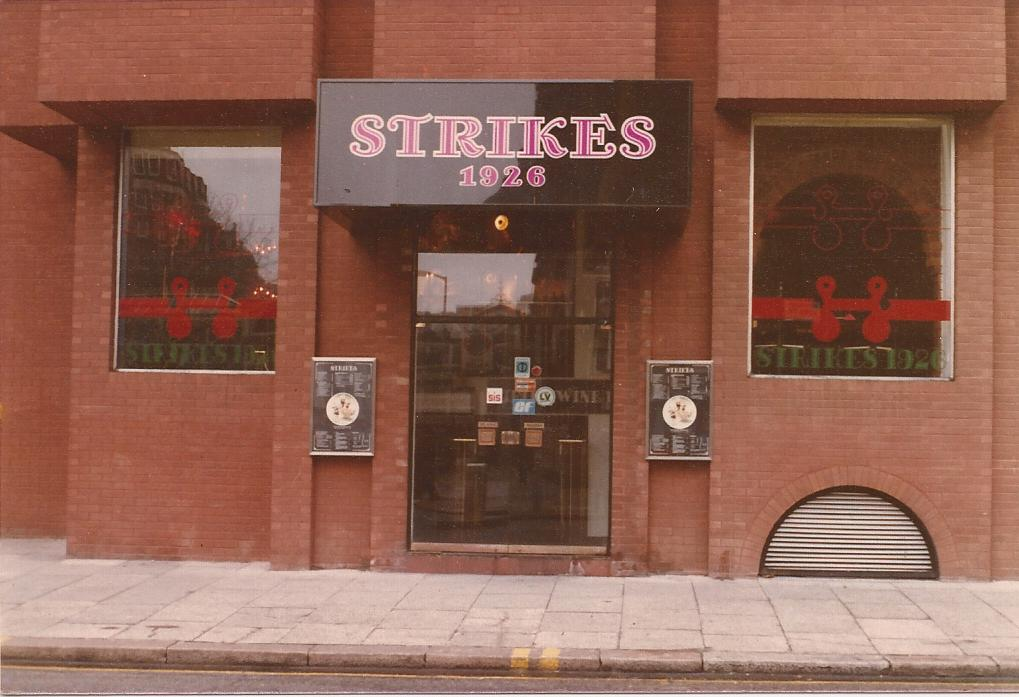
Without being smug, we feel that Capital Letter has a longer shelf life than Strikes, an unlikely mish-mash comprising lukewarm cheeseburgers and historic labour disputes. In all seriousness, it’s been such a pleasure to see how this mail-out – based on the highly original idea of providing recommendations about life in London – has chimed with so many of you. Thank you to all of you who have joined as paid subscribers, and also spread the word on social media. It means a lot to us.
There is exciting news: a brand new pitch guide for Capital Letter has landed, which has already had some of you emailing in. As we have said before, we love to hear any tip-offs and receive pitches for this newsletter.
If you’d like to write something for this fine publication, drop us a line on editorial@the-fence.com.
This week, we look to the year ahead, and start, of course, with the stage.
Step into the Limelight
The Royal Court has already sold out much of its ‘26 season, so there’s some value in getting ahead of the game. It’s also the time of the year when other publications have laid down their visions for the shows to catch this year, and well… we’re not entirely convinced.
Starting big, there’s some interesting programming at ‘The Nash’. There’s an adaptation of some Gorky in Summerfolk, and Winsome Pinnock has a new play there in The Authenticator. Terence Rattigan continues to enjoy some serious posthumous hangtime as, after The Orange Tree’s production of The Rivals finishes, his abstemiously titled Man and Boywill grace the nation’s stage.
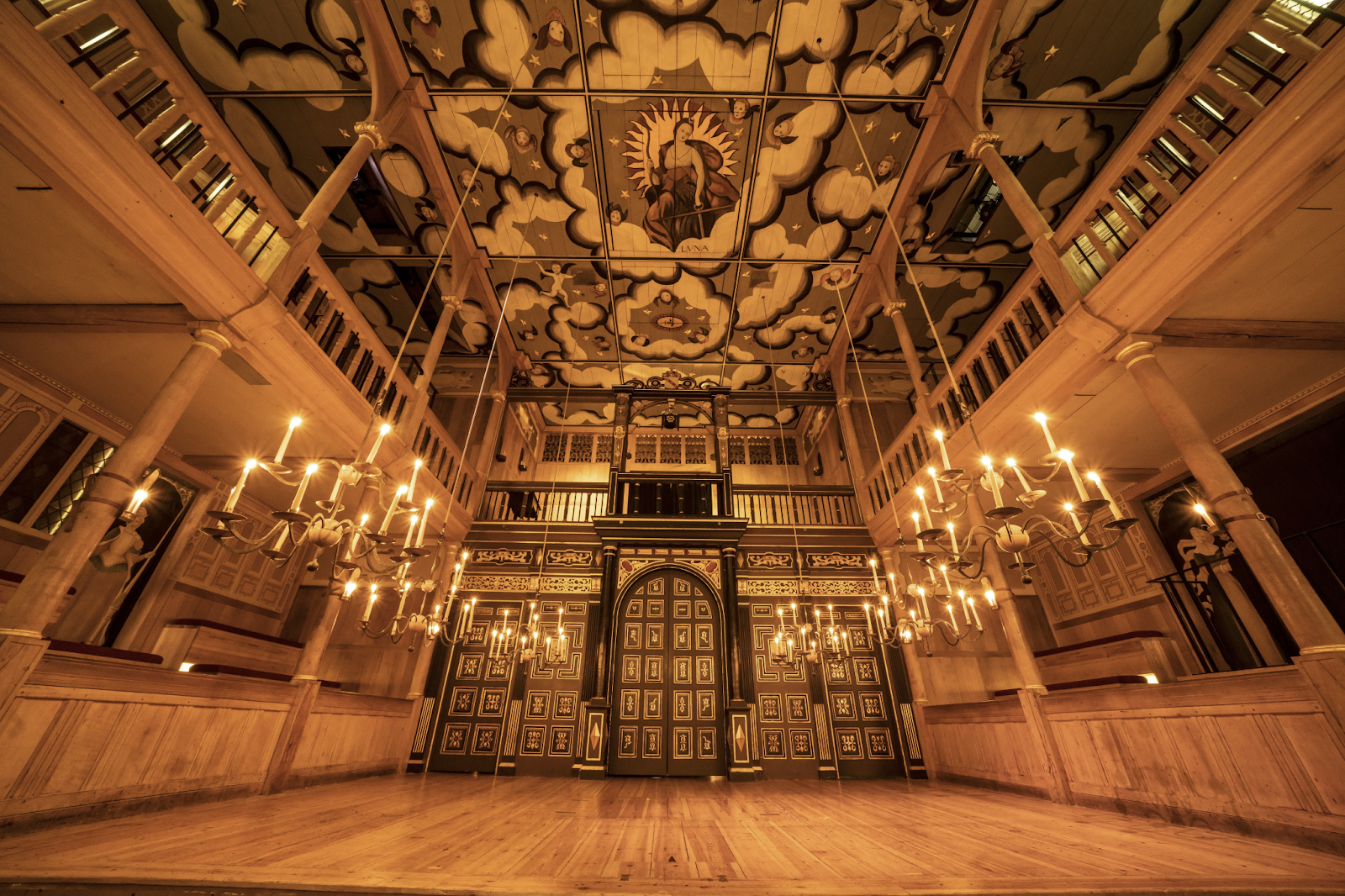
We are perhaps most excited for The Globe’s imminent production of The Tempest. First of all, it’s in the Sam Wanamaker Theatre, The Globe’s smaller, candle-lit and infinitely superior stage. If you have never been, or haven’t been in a while, the journey there is worthwhile, whatever the show. But the production itself looks promising. It is being directed by Tim Crouch, who is also playing Prospero. A veteran of more experimental, Brechtian styles of theatre, they appear to be focusing on the themes of storytelling in Shakespeare’s text. If you can’t make that, a play written by the late actor Chadwick Boseman called Deep Azureis also on the docket.
Elsewhere, both of the Vics are looking good. Alexander Zeldin (whose The Other Place was at The Nash at the end of ‘24) is bringing his play Care to The Cut, with their artistic director Nadia Fall choosing to stage a rarely performed Arthur Miller play titled Broken Glass. At the end of the month, there’s a staging of Stoppard’s Arcadia to honour the great man.
Go to the West End if you must, but you make your own overpriced bed there. Pushed to choose, we’d put you in the direction of Mr David Hare, a stalwart and a proper playwright, who is doing very well this year. His new play Grace Pervadeswith Ralph Fiennes comes to London following a well-reviewed run in Theatre Royal Bath, and his musical-play (different from a musical) about Maggie Frisby is being revived at the Duke of York’s. If you have kids, a recommendation from a few newsletters ago is still good. My Neighbour Totorois not getting his eviction notice from the Gillian Lynne Theatre until August.
As ever, we implore you to cast an eye towards the middling and the small stages too. The Almeida is putting on some good-looking stuff. A bit of Ibsen, our beloved Sarah Kane and an interesting adaptation of a horror film set in the Iraq War. All looks good, although worryingly the Ibsen is a ‘new version’. Hopefully, all will be well, but why people keep looking at some of the best works of drama (especially Ibsen) and deciding they need to rewrite them will always confuse us. They’re also doing a musical version of American Psycho.
Finally, to some spaces that may be less firmly on your radar. Wilton’s Music Hall – another stunner of a venue – is putting on a fascinating play that reimagines the infamous debate between James Baldwin and William F Buckley. It first appeared at The Cockpit to much praise and is selling fast. The Finborough is also offering an interesting and serious-looking play (as is their wont) in the form of Darkie Armo Girl. Finally, keep an eye on The Yard. A theatre that popped up in a temporary space in Hackney, it has, in recent years, produced quite literally some of the most inventive theatre. They are temporarily closed as they rebuild a new and bigger space, which is set to open in 2026 – in theory at least.
That Time of the Year
The freezing weather means that London is agreeably empty for the next fortnight at least, with the deep chill providing the perfect opportunity for the appropriately attired visitor to revel in the capital’s most popular sites. Now, there would be few things more humiliating than slipping on the icy battlements of the Tower of London, so we do direct you inside, to that other chief glory of our city: Westminster Abbey. Tickets are £30, but should be more – and if, for some reason, you’ve never been, do read this timeless essay about Albion’s Mecca to get you in the mood.
Omar Coddle
We are slightly bamboozled by the growing popularity of the pub in the regional cities of the United States. Just look at this new place in Baltimore, The Wren, looking very much like our own Yellow Bittern, if it weren’t operated by a lunchtime legend with a hair-trigger temper.
Might the Americans elevate the humble gastropub to new possibilities? Think of the journey of Dishoom, in which the Irani cafés of Bombay were sleeked up for a London audience, and, after deserved success, led to the emergence of a global brand. It’s the sort of thing that some academic will write some deeply uninspiring book about, but for now, it’s just very exciting to observe.
Kotlet Schabowy
There are a handful restaurants in London that have operated in the same site for longer than 60 years, and South Kensington’s Daquise is one of them. Serving Polish cuisine since 1947, it might be closing this year, so do make your booking ASAP. Among the staff, there is a tangible sense that priests are to be feared – so do put on a dog collar if you want some free refills of plum vodka.
Kicking it up the Kingsland Road
There are few feelings better in life than unceremoniously breaking ‘Dry January’ – a concept we heartily disapprove of. Do you ever feel more alive than when you launch yourself into the dusk of the city for no particular reason? No, you do not.
Fast becoming something of a dying art form in this painfully scheduled society we live in, the impromptu night out can be more easily realised in January when plummeting temperatures and pledges of sobriety lead to shorter queues outside clubs and bars, many of which still offer a brilliant programme of events.
If you’re the bad apple secretly hoping to sway your group back towards the dancefloor, situating yourself somewhere with a number of fail-safe options is key. Dalston is a great option for such a manoeuvre, as it’s become, once again, the epicentre of the capital’s nightlife, jammed with venues that you can rock up to without a tediously expensive ticket.
Chief among these is Dalston Superstore. One of the city’s most enduring spaces, Superstore evokes the feeling of an era of late-night London that felt like it was slipping away, but might be poised to return. It remains one of the few places you can still rock up to relatively last minute and stand a decent chance of slipping in for a late-night shuffle across the dancefloor. This Saturday sees the return of one of its regular parties, Cruise Control, which offers a blend of pop-adjacent floor-fillers upstairs, and for those seeking something a little heavier, ‘muscle-pumping techno’ upon descending its treacherous spiral staircase. Open until 4am and usually populated by a hip crowd and handful of eye-catching go-go dancers, it will only set you back a tenner (though £8 advance tickets can be purchased online for those who already know they’ll be sacking off any pretence of abstinence this weekend).
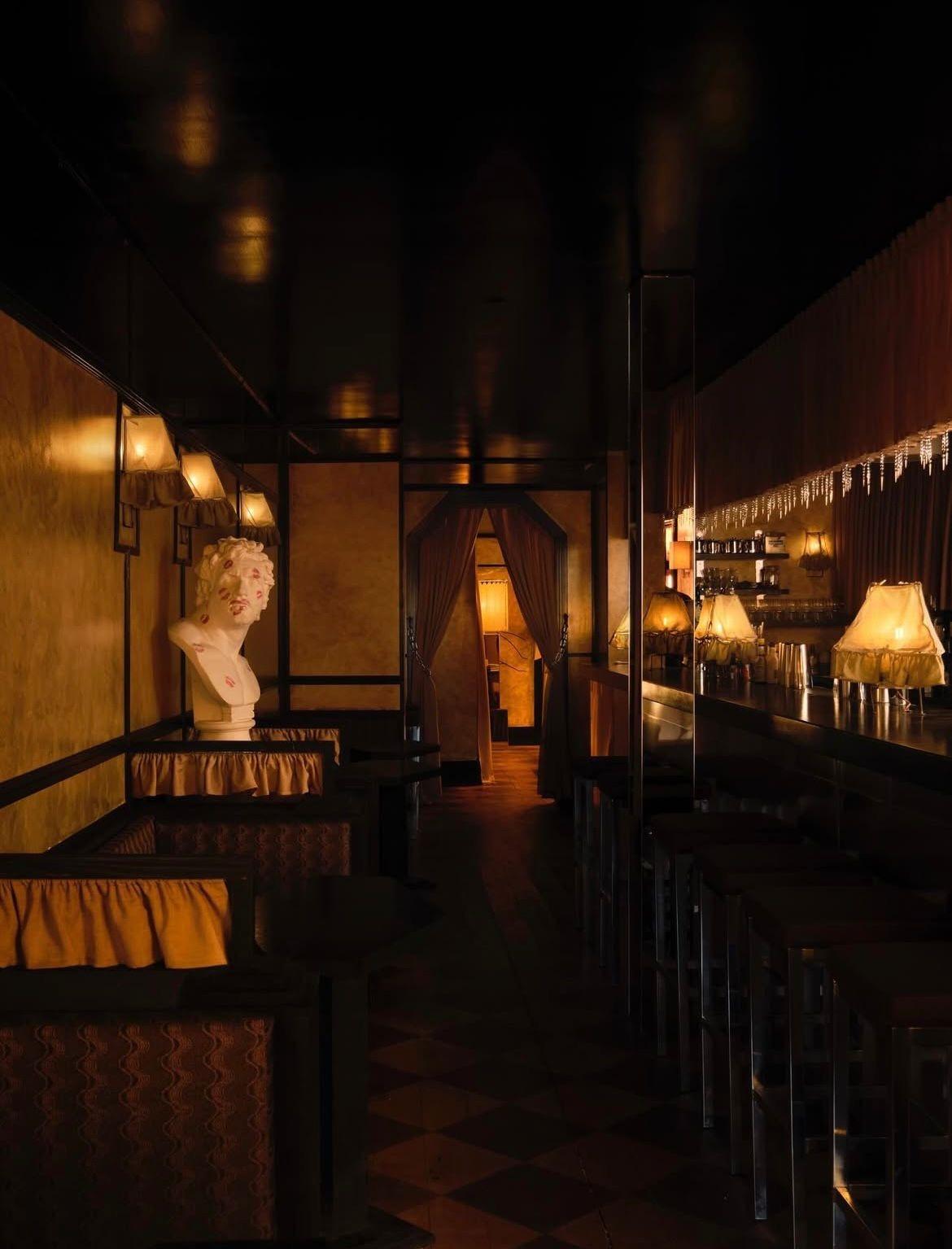
Nearby is Ridley Road Market Bar, another staple of the area, which this Saturday is hosting its monthly nostalgia party 90s Baby. Think frozen cocktails, a blend of 90s house bangers and pop classics and the most unpretentious of crowds. This one goes on until 3am and comes with no cover charge, making it a very easy sell to easily influenced pals. Or if you’re seeking something that feels a touch classier, why not step through the curtained doorway of The Roses of Elagabalus, a stupendously designed cabaret club and cocktail bar on Kingsland Road which reopens its doors this evening after taking a winter break in late December.
And if you’re really pushing the limits of your promise to ‘just go for one, and see where the night takes us,’ you could finish up by heading down to Om, a new, even later night bar from the people behind Brilliant Corners. Located in what used to be Village 512, Om stays open until 6am on the weekend, making it ideal for a night which just keeps escalating. The music tends to vary, and so what unifies the crowd is often a shared determination to go the distance. We hope to see you there on the dancefloor.
Drinking off the Grid
There is much concern, understandably, regarding the closure of pubs around the country, with more pubs shuttering in 2025 than there are days in the year. But for one area in south-west London, a lone pub constitutes a heyday, after spending most of the previous century bereft of a single drinking establishment.
Prior to the 1880s, there were no pubs in Southfields Grid. This was because the Grid itself – a group of intersecting streets abutting Wimbledon Park – didn’t exist. Southfields, as its name would suggest, was largely green expanses, developing gradually as the District Railway sloped its way towards Wimbledon.
In 1886, Augusta Beaumont inherited the Wimbledon Estate – a parcel of land including the park and the Grid – from her father, the insurance magnate John Augustus Beaumont. Local historians say that Augusta set about selling her land as quickly and expensively as possible; she lived in Suffolk, and harboured no particular fondness for the area aside from its potential profit. A persistent urban legend claims that Augusta influenced the following hundred years of the area’s development, during the big sell-off. The deeds contained a restrictive covenant on all future development imposed by Augusta: no pubs.
The cause of this madness was the temperance movement, which spread from Ireland to Britain in the 1860s, and of which Augusta was a proud member. As an alternative to pubs, they started opening ‘coffee taverns’, which looked like pubs outside and in, but refused to serve alcohol (presumably spawning some kind of horrible 19th-century matcha bro). In the 1890s, there were more than 60 coffee taverns in south London. Augusta’s approach was a little more direct and a little less common.
Is there any truth to the legend? Neil Robson, a historian who lives on Southfields Grid, told us that he has ‘never been able to find any firm evidence that such a covenant was actually created.’ However, he refuses to rule it out, and belief in the myth is well documented among history buffs and residents alike. It features in books on the area – including Robson’s own – but, while the deeds which prove Augusta’s ownership of the area have survived, certain crucial documents have gone astray.
Whether or not the covenant existed, it is certainly true that, a hundred years after the land was sold, there were still no pubs in the Southfields Grid. This only changed in 1994, when Sir Tim Martin bucked the rumoured restrictions to open The Grid Inn, a Wetherspoons on Replingham Road. Three years later, it was joined by The Old Garage, now The Old Fields, an unassuming Greene King with occasional live music.
Today, the legend of the covenant has outlived not only its effects, but also the first pub to break it, after The Grid Inn was converted to a Tesco Express in 2012 – a development which saddened locals but no doubt would have delighted Augusta Beaumont. If you can dispel the legend one way or the other, do let us know. Don’t, however, head down to Southfields Grid for a drink, if that needed saying. You won’t find a lot of options.
That’s all for now, and we do hope you savoured our first offering of the year. We’re looking forward to a great year of Capital Letter, and we hope you are too. Do send us your tips and pitches, and feedback in comment and ‘like’ form. A reminder that our recommendations appear on our Google Treasure Map for paid subscribers, and that we will join you a fortnight hence.
All the best,
TF