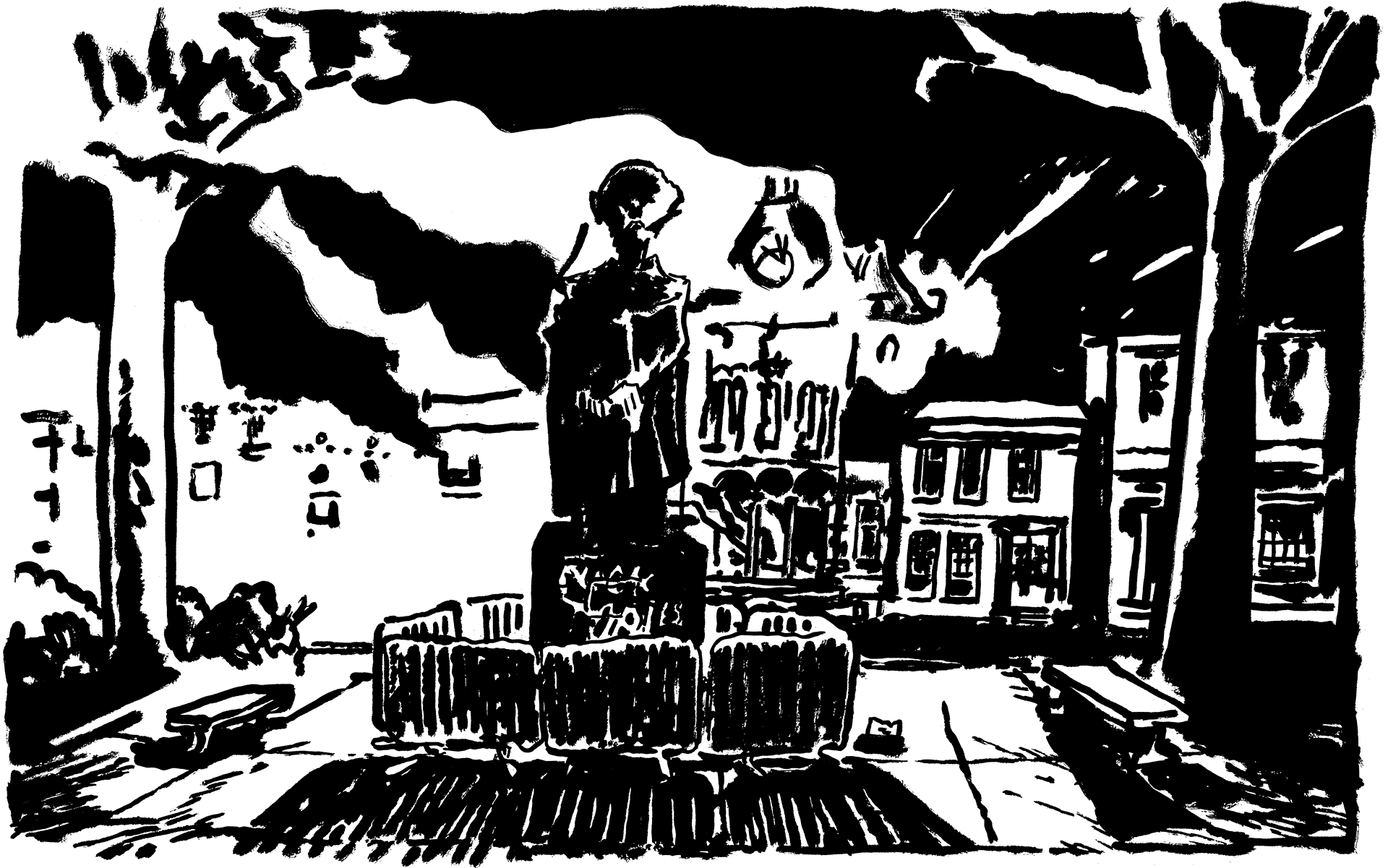
The brass Thatcher stares determinedly at a bookies across the road. Next to her is an elaborately crafted iron bench in the form of the face of Captain Tom Moore, underscored, bizarrely enough, by Liverpool Football Club’s motto of ‘You’ll Never Walk Alone’. The statue, installed in May 2022 after nearly a decade of wrangling, stands just outside the Grantham Museum, an organisation which was critical in breaking the political deadlock and getting the project to go ahead.
Despite its role in the installation of the statue, there is a narrative in the press and among some local figures that the museum is suspicious of Margaret Thatcher, or even ashamed. There’s a suggestion that bubbles through the online comment sections of local newspapers, in pubs after several pints and on the front page of the Daily Mail, that in this very ordinary Lincolnshire town, there is a conspiracy to hide the legacy of their most famous daughter. There have been multiple battlegrounds before, but the museum has now become the centre of a row about the role of Thatcher in modern Grantham.
When the statue of Thatcher was first unveiled, it took hours for it to be egged, days before it was daubed in red paint, and it took only a matter of weeks before somebody glued a dildo to its head. Earlier this year, a pensioner was caught on CCTV spray-painting the word ‘BASTARD’ on the pedestal. Clear as the footage was – the Daily Mail described her in condemnatory tones as ‘sporting a white patterned scarf [with] short grey hair’ – Lincolnshire Police, clearly overrun by the errant elderly, were still moved to appeal for the doddery vandal to come forward voluntarily.
This sort of blatant disrespect has wound up the pro-Thatcher group. Alongside the explicit traducement of the head-dildoing, the museum was at the heart of a more insidious snub earlier this year when it rejected the demands by the leader of South Kesteven District Council, Ashley Baxter, to rename itself ‘The Margaret Thatcher Museum’.
Baxter is exactly the sort of quixotic figure who is found across English local government. Despite voting in favour of the installation of the statue and leading the renaming push, he claims to ‘not be a fan’ of Thatcher. He publishes each of his grandiose council interventions on a personal blog and his personal account on ‘X’ is an eclectic mix of replies to nostalgia accounts and tweets implying that Tommy Robinson is gay. Arguing, as Thatcher doubtless would have thought proper, that her name is good for local business, Baxter has long pushed for more Thatcher visibility and publicity in the town, with the museum becoming the latest target of his campaign.
Opposing Baxter is Councillor Charmaine Morgan. Now a member of the council’s Democratic Independent Group, Morgan was originally elected as part of the Labour Party but, between the two affiliations, she was a colleague of Baxter’s in the town’s other independent group, Alliance SK. Baxter characterised her most recent departure as ‘an issue of personality’. Morgan is the town’s ‘Civic Ambassador’; endless infighting meant that the council suspended the role of ‘mayor’ when it proved impossible to agree on who it would be. Morgan is persistent in her opposition to the Thatcher-Grantham association: she first protested the statue’s installation in 2013, fiercely opposed the naming of the Margaret Thatcher bypass in 2015, and has battled the council tooth-and-nail – we assume privately, and have seen so publicly – over the continual costs of keeping Maggie clean. The museum is the latest battleground in more than ten years of back and forth between the two. Morgan summed up her stance succinctly: ‘There is far more to Grantham than Margaret Thatcher.’
We hadn’t arrived with designs to glimpse the Grantham beyond. No, we were both very much here for Maggie. We are both, for our sins, amateur and active Thatcherologists. With the possible exception of her party predecessor, Ted Heath, she is without a doubt the strangest individual to cross the threshold of Number 10. Awkward, stiff and banterless to the point of neurodivergence, the woman herself is more interesting than her myth – indeed, she was more comfortable being the latter over the former. Where better to find out where it all went weird than in the town that forged her?
Margaret Thatcher’s bed is hidden behind a selection of Pokémon cards. Gastly, Staryu and Poliwag. The place where a young Thatcher hit the hay during her childhood years is the centrepiece of the exhibit dedicated to her in the Grantham Museum. Around the Tracey Emin-esque installation of the bedroom are other relics of her childhood: a black and claret dress spread out on the bed, physics textbooks on the shelves, a hockey stick carved along the flank with ‘M. ROBERTS’. Next to it stands a mounted panel that stressed her childhood of voluntary austerity, led by her proudly skinflint grocer father: ‘Duty and public service, rather than personal pleasure, was the rule.’