‘If it were up to me,’ announced the old man, Doom Bar spraying between his teeth like a broken shower head, ‘I’d put a bleddy great Gatling gun up on the Tamar Bridge. That’d bleddy show ‘em.’
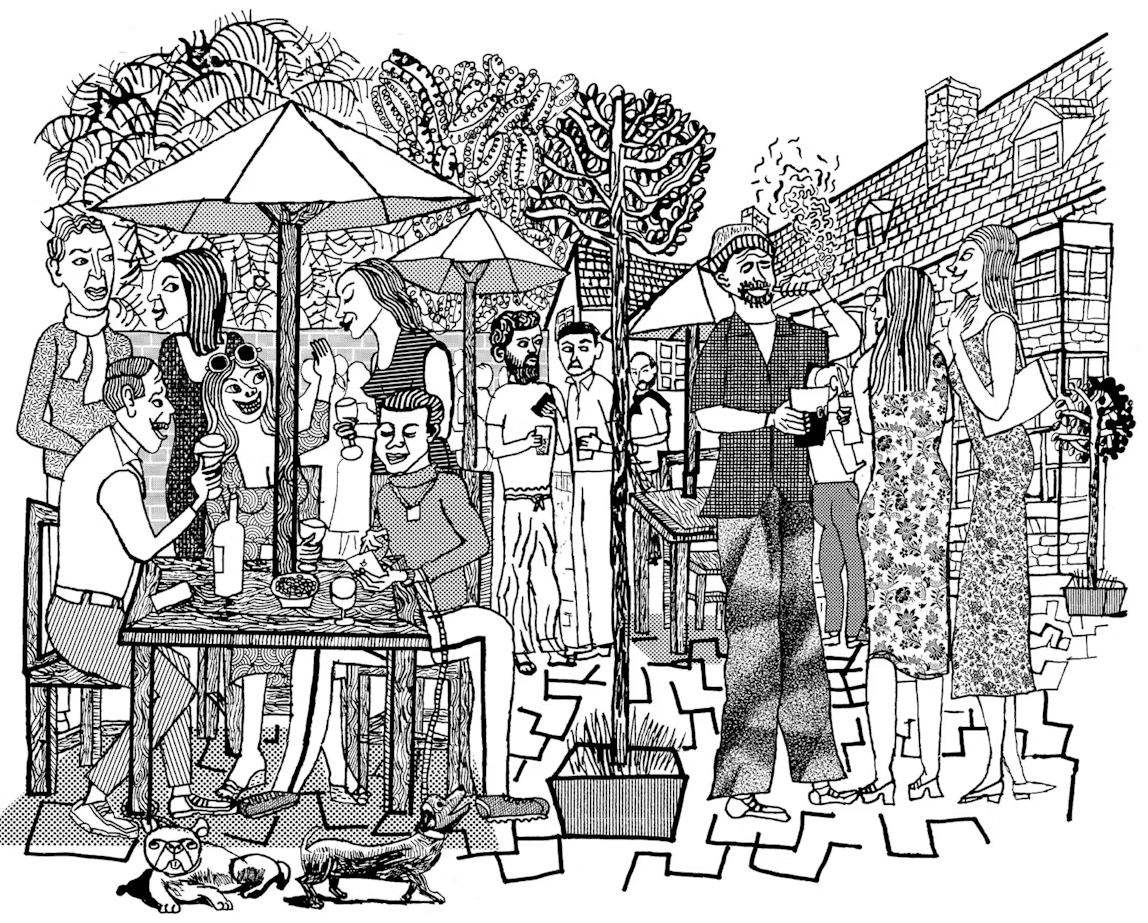
It was the first day after lockdown, and the pubs had reopened – either inside or outside; I forget which. The country was breaking from months of solitude, but this man had obviously enjoyed all the splendid isolation. And because this was Cornwall, the ‘em’ he wanted to obliterate with a 19th-century artillery weapon wasn’t limited to Londoners, gentrifiers or migrants or students – it was everyone. Anyone who wasn’t Cornish; the emmets, ‘em’, blood and sand.
I was used to this kind of rhetoric by now. I’d been in the county for over two years and hadn’t made a single friend beyond a few pissheads at my local and some of my then-girlfriend’s coworkers. We’d moved to Cornwall because of a work opportunity that came out of the furthest reaches of nowhere, and assumed this would make us less annoying than those who came here to enact some pastoral fantasy – the grow-your-own, ‘no logos please’, dungarees-and-child-named-after-a-beach crowd. We were better than them, right?
Wrong. There is no slack in the Cornish identity. Much like rural France or the Metropolitan Police, it’s a place where you can live and die entirely unaccepted, where ‘up country’ blood can mark a family as outsiders for generations.
Today, nearly two years after I left and five-and-a-half since I first moved to Kernow, I still can’t make head nor tail of the place. I look back on it now, and parts of it feel like a dream: running along deserted beaches, then swimming in the frothing sea with abandoned Russian cargo ships floating in the distance. Becoming acquainted with places like Goon Gumpas and Indian Queens, feuding with my trustafarian neighbours and watching helicopters scour the bay for missing fishermen.
Cornwall passed through me without ever fully revealing itself. It slipped through my fingers and changed shape on the other side. Sometimes it kicks up in my thoughts, presenting new questions and theories about my time there. I go back there every so often, bathing in the light, humid, silky air, eavesdropping in damp old boozers and trying to make sense of that strange chapter of my life.
Siloed away at the far corner of England, Cornwall is one of the few locales that makes this small country feel rather vast. Like a lot of Londoners, I grew up thinking it was just past Exeter, but Truro is further from Charing Cross than Bruges and Rouen are.
The current cliché goes that there are two Cornwalls: one that is Poldark postcards and beach barbecues with Rick Stein’s son, and another that is broken, forgotten – on the edge of the British economy. Parts of Cornwall are among the poorest in the UK, and if it were an independent state (as many would wish), it would be worse off than Lithuania.