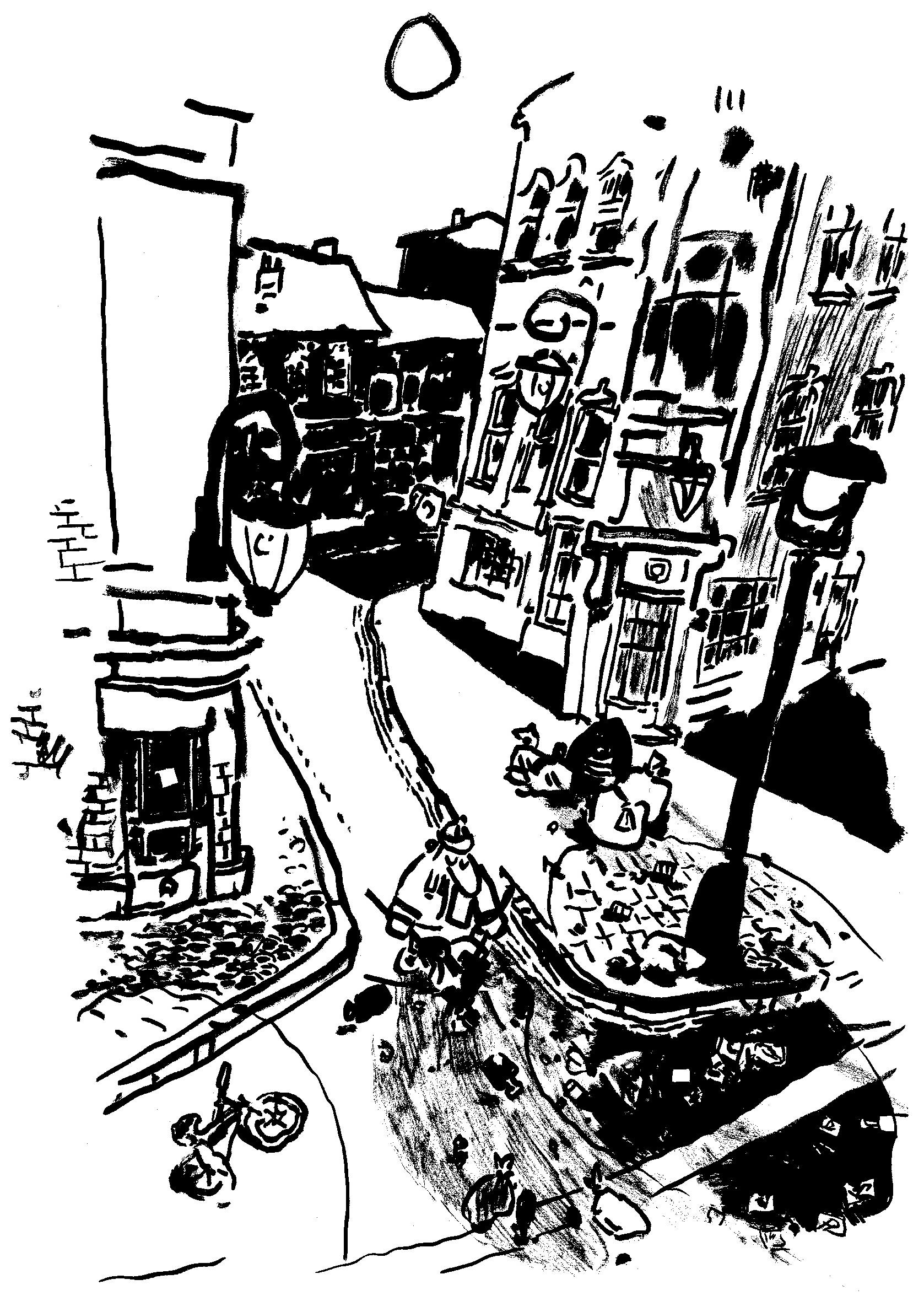

Soho is poised at a critical juncture. The issue lies in the rancorous disagreements between its various constituents about the kind of future that should be pursued in this square mile of prime real estate. In October, the Mayor of London’s Office overruled the recommendations of local councillors and are now entertaining the idea of pedestrianising the whole neighbourhood, a suggestion that has outraged the dwindling number of people living there.
Soho’s more recent history is often told in terms of steady gentrification, with its sleazy edges smoothed off by the remorseless march of time and capital. Its dense warren of interlocking streets have long carried a reputation for cosmopolitanism, glamour and seediness. And, for centuries, the area has served as the epicentre of London’s sex trade, even in its dwindling contemporary form. As the millennium drew closer, Soho drifted toward respectability, with property prices and commercial rents beginning their steady climb upwards. The transgressive, countercultural neighbourhood of old began morphing into a mainstream tourist destination and hospitality mecca, for good and ill. The sex trade gradually receded – in visibility, at least – to be replaced, the cliché goes, by a neater, more homogenised reality, a process spearheaded by major developers and landowners, like Soho Estates, run by the ebullient John James, and Shaftesbury Capital, founded by the considerably more understated Levy family.
I’d become interested in this increasingly bitter debate around Soho’s future at the start of the year. Having long covered all manner of complicated squabbles across the capital, something in the story felt fresh. If the apparent three-way stand-off between ‘business’, local authority and residents was familiar, the prospect of reporting on it in this part of town was not. Like most Londoners, I have my own private Soho myth kitty, a 15-year-plus patchwork of nights on the tiles, after-work pints, weekend rambles and random, piecemeal weirdness to contend with. And, in trying to unpick the various claims and counterclaims regarding the enrichment or desecration of Soho, I realised that the concerns of the area’s small, centuries-old residential community had never really been factored into them.
Beverly Elie doesn’t have too much time for nostalgia. A lot has changed since the 59-year-old first moved to Soho in the summer of 1989. Elie, who was born with arthrogryposis, a rare disorder with severe impact on everyday movement, did not experience the easiest of upbringings. Her Dominican birth mother was physically abusive, when she was present at all. Elie spent several years boomeranging in and out of the care system, before securing a two-bed local authority flat with a friend in a quiet block of flats just off Dean Street. ‘It was sheer bliss. Like life was really starting up, you know.’
Elie has been in the same block ever since. For the past 28 years, in the same one-bedroom flat we are sitting in on an overcast Tuesday afternoon in late September. It’s where many of the major events of her adulthood have played out, good, bad and indifferent. It’s where her son was raised and where she continues to cultivate a small potted garden by the front door. Neighbours have come and gone, some longer mourned than others. Being the heart of central London, noise – from revellers, residents and car traffic – has always been a fact of life. But she tells me the last few years have seen things escalate to a previously unknown intensity. ‘Oh it’s worse. The glass smashing on the street in the early hours. The pissed people getting into fights… it feels like things are declining in front of our eyes.’
Soho’s residential population has long been drifting into apparently terminal decline. In 1881, it stood at 16,608. The most recent census has it down at around 2,600. It’s easy to assume that anyone who would complain about the area’s noise while choosing to live in the neighbourhood must be an entitled blow-in. This does not bear scrutiny. Of those who remain, a substantial number are, like Beverly Elie, long-term social housing tenants, rather than recalcitrant millionaires. Okay, runs the counterargument I heard from landlords and several business owners, but surely it came down to individual agency. Bluntly, if they didn’t like it, couldn’t they just leave? ‘They must be off their rocker’, was one of the politer rejoiners Elie offered. ‘Where do they think I’m likely to be sent, Inverness?’
Over this year, I spoke with a wide selection of Soho residents, past and present, a diverse constituency of council and private tenants and middle-class, occasionally very wealthy homeowners, young, old and middle-aged. One lifelong resident, who didn’t want to be named on account of tiresome potential blowback, told me that the talk of the neighbourhood being sustained as a ‘world-class destination’ was all well and good, but it didn’t quite speak to the reality of rising crime and the ‘maximised churn’ of the hospitality industry. ‘World-class what?’, they’d asked me rhetorically. ‘World class shit?’
Others were more circumspect. Lucy Haine bought her flat in 1998. The civil servant concurs on crime and noise pollution. She did not take a particularly kind view of John James or Soho Estates. ‘It’s not about [caring] for the area. It’s about [their] rent.’ At least with Shaftesbury – which has hundreds of holdings across the West End – some constructive dialogue has been possible. ‘I probably sound like a real moaner. But people are going to ask what we’ve lost [the identity] for. So Soho Estates can make another billion pounds profit? Meanwhile Soho becomes another faceless, soulless place.’