Dear Readers,
Good afternoon and welcome back to Capital Letter.
We can feel it, the weather is getting better. Last week’s hot weather has us positively sweating through our galoshes. It has not, however, stopped us from getting around the city and getting to grips with life in London now.
We hope you’re excited for another installment, we certainly are, not least because we followed our own advice from last fortnight and had a phenomenal time at the opening night of the Open City Documentary Festival, seeing the incredible archive-drawn films of Artavazd Pelechian – real screening rarities given the director’s notorious temper. It was also a pleasure to see John Smith in the audience, the legendary avant-garde filmmaker whose film The Girl Chewing Gum (1976) is a perfect way to kick off this newsletter.
https://www.youtube.com/watch?v=KCZTqrsYN6A
It probably hasn’t escaped your attention that there is a new issue of the print magazine of which this humble newsletter is but an offshoot. We won’t overflog it here, don’t worry, but if, as we suspect, you are keen fans of all things London, this is a particularly good issue to consider getting if you’re not subscribed. It has a full feature about all the ins and outs of the Groucho’s ongoing decline, a beautiful mappa mundi of London’s Endangered Species drawn by the legendary illustrator Davey Jones and stories from cuckooed flats in Tottenham, pint dens near Lime Street and a so-called ‘Legends Gala’ held at the Natural History Museum. If you’d like, you can buy a copy or subscribe here.
Of course, we have lots of interesting stuff about London here and now, so let’s start. We’ve got some advice on getting sloshed in NW5 and a dispatch from clubland. Our opening move takes us on a tour of the capital’s best pool tables and remembers one of the workshops that used to make them.
A Going Concern
Ralph Jeffreys searches for slate and felt.
The capital was once a haven of all varieties of cue sports. Homes, halls and pubs used to carry billiards, bar billiards and pool tables with reliability. Indeed, these games were so prevalent that one can glimpse the history of the city at the end of a cue.
Learning billiards, for example, became a focal point for a number of suffragettes/gists who realised that, even as they managed to gain access to some of the important dinners of the day, they were still being excluded from the real political conversation, which always took place when the gentlemen left the women at the table to play billiards. Likewise, the growth of pool halls across the capital had a brief intersection with the ultimately doomed temperance movement, as anti-drinking groups tried to use the attraction of the game as a means to draw in customers despite the lack of grog on offer. Such was their success that in 1958, the Temperance Billiard Hall company was operating no fewer than 24 halls across the city. You can still see one of them in Fulham today – inevitably, it is a Grade II-listed pub called The Temperance.
But the pool table as a standard pub fixture has been in steady decline for a very long time. In recent years, many pubs have opted to go food-first, ditching their felt and slate for more covers. Before that, there was the slow decline of ‘Bar Billiards’, a peculiar game designed to be played from one end. The only online resource listing their presence is alarmingly short, and was last updated five years ago.
A lot of friends have to travel far to try and get a game. One recently recalled a time he tried to get a nice game in at the Olde Apple Tree and was beaten by a bloke who cleared the entire table off the break. The victor turned round to him and said, ‘Welcome to Peckham’, and walked off. He’d been living there three years at the time. Likewise, my uncle remembers heading with a friend to his favoured snooker club – down by St Paul’s – only to turn up to a literal pile of rubble. Both him and his friend had still been having their membership dues subtracted from them just a week prior.
For years, I’ve persevered at some of the capital’s oversubscribed tables, like at The Cock Tavern, or at The Good Mixer in Camden. But a game at the latter put an end to that. Their waiting list system means you’re usually paired off against a random fellow drinker. I met face to face with a Germanic man called ‘Jesus’ and proceeded into a fascinating match where his far greater skill was briefly matched by the single luckiest streak I’ve ever had on a table. We both had shots at the black, he won it in the end, it could have been a fun experience. Sadly, Jesus’ repeated response to my good fortune was not a sigh or to roll his eyes, but to violently jerk his groin over, and even into, whichever pocket had just favoured me, making a loud pissing sound as he did so.
It proved a last straw, not just because I wanted a good game of pool, but because the decline of the cue sport in the capital is a somewhat personal one for me. Though the business was wound up long before I was born, my father spent much of his youth in and out of Jeffreys Brothers Ltd. – the billiards table manufacturer that was my family’s business for many years. Located on the City Road, it is a central wellspring for some of my family’s favoured lore.
My father’s ‘uncles’ had two competing crafting styles. Gilbert was something of a perfectionist, being very careful with the slate and the tacks, ensuring a top-quality surface. Dennis, however, was not so careful. Frequently, he wouldn’t even bother to bring the frame inside the shop, and would bang it all together in the alley outside. When Gilbert would reprimand him, he would simply retort, ‘Why bother? It’s only for drunks to fight on.’
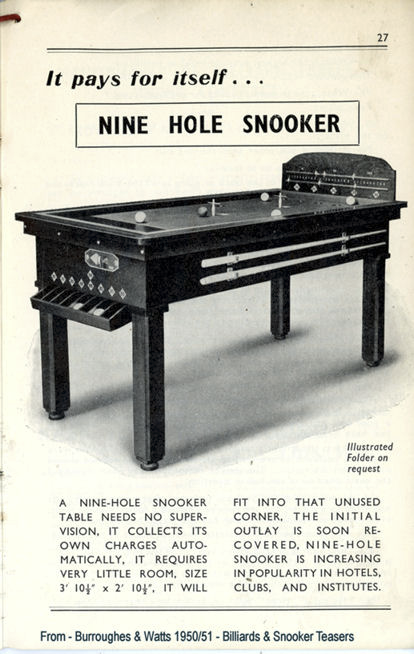
It was also a shop staffed by a coterie of firemen, who took work at Jeffreys Bros because it was still within earshot of their station’s bells. They could, therefore, nicely supplement their wages (they were not the hardest of workers) while still being able to nip off and put out a quick fire as the occasion demanded. Indeed, they may not have been the best firemen either. When my aunt asked one of them what might be done in the event of a fire in a workshop rammed full of timber, he simply told her the only thing to do was ‘put a chair through the nearest window and follow it.’ But such was London then: it was kinder to the everyday blagger, a skill in which the family firm was well trained. Indeed, my aunt was fond of steering boring dates into pubs which had a family table in them, so as to gently funnel his money into the coffers of her kin.
It’s perhaps unsurprising that the shop isn’t there anymore, but if you’re interested, you can still locate where it once stood by standing outside The Eagle on the City Road and looking to your right. The large, unusually rotund tree that will meet your eye stands on the very expanse of empty pavement where the tables were once made. The proximity of the two institutions – pub and workshop – made the old standard ‘Pop Goes the Weasel’ a common refrain in the household.
Up and down the City Road
In and out The Eagle
That’s the way the money goes
Pop goes the Weasel!
So where to find a decent game on a decent table? If you’re serious about your game, the only real option is to join a snooker club. We’d recommend Cousins, which has locations in Holloway and Edmonton. For only £50 quid, you get lifetime access to some seriously good tables and can bring five guests in at a time. Or there’s the trendier option of SET Social, down in Peckham. Their tables can be a bit busier, but given the clientele is largely down-and-out artists, the quality and atmosphere of the cueing is a little friendlier than your average boozer’s.
If you’re really desperate, there’s also Rowans. Not exactly the place you want to be, but they have a dedicated pool room, and because most people are there for the bowling, you always get a free run in. You can also get a decent game in at The Marquis of Cornwallis, the former local of the Kray family, to the sound of the weekly bingo game (Tuesdays at 7). Our top pick at the moment however, is the Charlotte Despard in Archway, a quiet locals’ pub that operates an excellent system: a fiver (by card) buys you an hour at the table, allowing you to enjoy a number of games at your own leisurely pace. It’s a small table, but a cheery one, with a lovely homemade table light.
I am certain that this is not the sum total of all the good tables in the capital and they inevitably reflect a slight north London bias in my explorations. So we have an appeal to you. If you have a good table do please let us know about it in the comments or on editorial@the-fence.com. The criteria for a good table – as we see it – is the presence of at least two functioning cues, no tears in the felt, a flat surface, no problems of oversubscription and an adjacent bar. If there’s a table light, you’re laughing.
All the information sent in will be added to the beautiful and growing Capital Letter map, which is being updated for paid subscribers. We can also point you in the direction of Pubs With Pool Tables, although we have found one or two of their listings wanting. The Glasshouse Stores is on the list but the table in there would barely meet Dennis’ standards. We’ll see you at the felt’s edge.
Full Marx
While many people – not least the Quo Vadis marketing department – make much of Karl Marx’s tenure in Soho, the ‘Great Man’ only spent six years in W1, in cramped lodgings on Dean Street, where three of his children died. From 1856 to the patriarch’s death in 1883, the Marx family were resident in NW5, first in Grafton Terrace, in a house that is still standing, and then in more humble accommodation on Maitland Park Terrace, in a building long since demolished to make way for social housing.
While the choleric splutterings of 1850s Soho can barely be heard these days, the general tone and timbre of the streets that Marx called home for almost three decades still feels somewhat Victorian, with the street markets of Queen’s Crescent, lumber yards, railway depots and scurrying children. Despite having a panoply of Tube stations on its borders, the area feels cut off from the rest of the pomp of inner north London.
If Dartmouth Park – no more than a few blocks at best – can be seen as a definitive neighbourhood, then it is odd that the swathe of streets south of the Heath and north of Prince of Wales Road doesn’t have a set name. Kentish Town West? Gospel Oak? Primrose Hill East?
This is an area that has resisted trendification, and so there are some decent pubs – The Lord Southampton, the Old Oak but best of all, The Robert Peel, a boozer that fizzes with unpredictability and still serves pints around the £5 mark. Take in a few scoops, before heading over the vast complex that marks St Dominic Priory’s Church, one of the largest Catholic churches in London, before paying tribute to a godless icon around the corner: the cool, clean lines of the Isokon Building, perhaps the capital’s greatest modernist construction, and an object of lust, we imagine, for a fair few readers of this newsletter.
Cracking the Safe
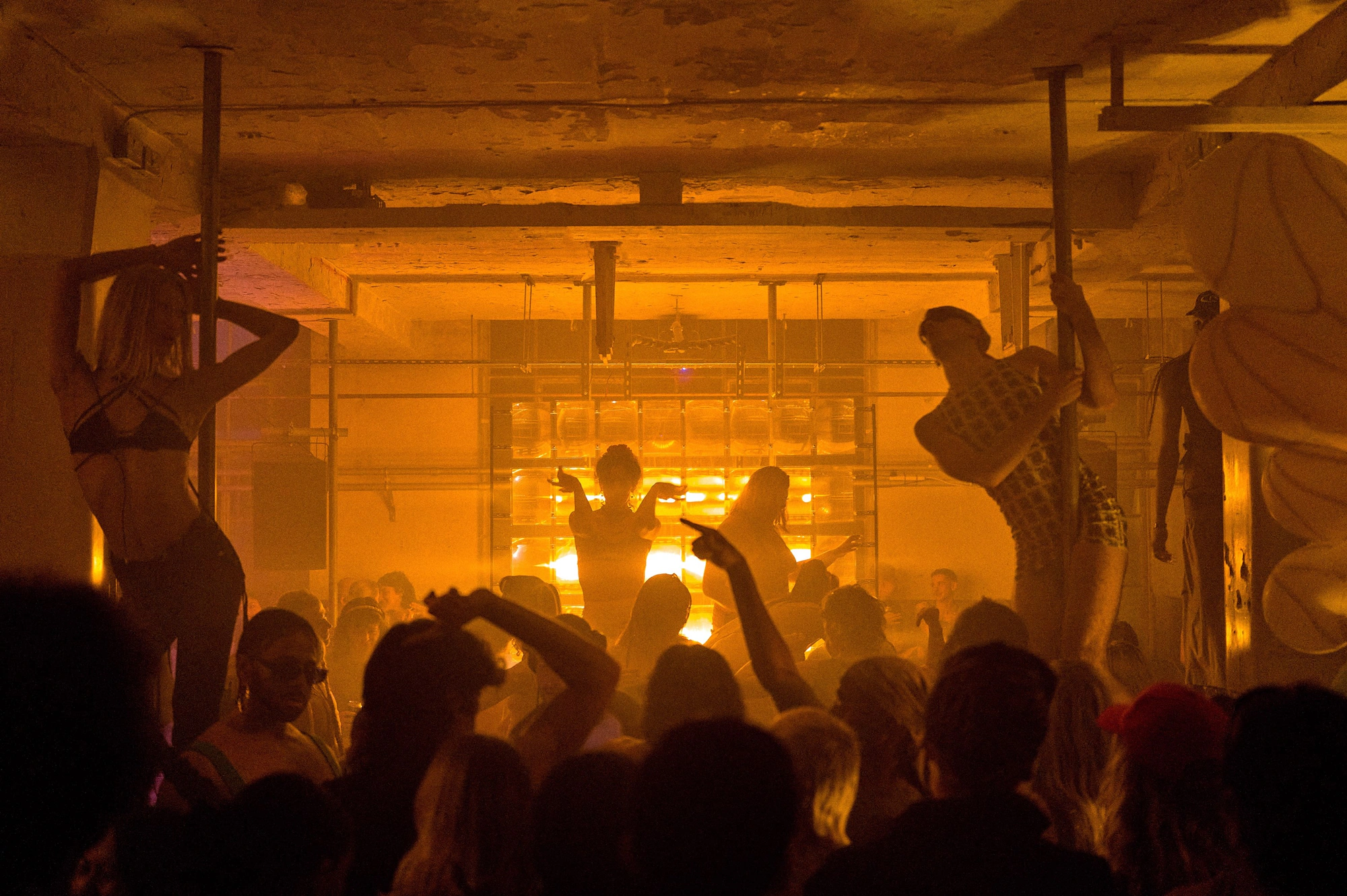
If you happened to be strolling through Hackney Wick on the Saturday of Easter weekend and noticed a steady stream of decidedly glum-looking gay men traipsing past, you may well have been in the vicinity of Playbody, one of the hottest and most exclusive parties on London’s queer scene. The reason for the pouts upon their defeated faces? A stringent door policy employed by the organisers which left hundreds of ticket holders shut out of what was tipped to be a highlight of the long weekend’s nightlife calendar.
On the morning of the party, the organisers took to their Instagram story to share a warning with hopefuls (who at that point presumed themselves to be attendees, given the £30 they parted with to acquire a password-protected advance ticket). ‘We’re going to be extra strict on the door today,’ the post began. ‘A ticket does not guarantee entry and we will prioritise our community.’ It was not yet clear precisely what was meant by ‘our community,’ though for a legion of black-vest-donning gay boys, the answer would soon become clear.
Shortly after doors opened at 2pm, a queue began to snake around the stairwell leading to the second floor of Algha’s Plantroom, the former spectacle factory space the club inhabits. In a bid to speed up the entry process, the party’s friendly but firm door staff began to communicate that priority would be given to ticketholders who fall under the FLINTA umbrella (Female, Lesbian, Intersex, Non-binary, Trans and Agender individuals). In practice, this meant that the more femme-presenting you were, the better chance you stood at asserting your right to party.
As more time passed, an increasingly awkward-looking trail of gay men stood largely in bashful silence. Some could be observed trying to make last minute adjustments to their presentation – a cinching of the waistband of sport shorts, a popping of the hip or an emphatic clutching of a tiny handbag – anything which might distract from the fact that they were, ultimately, men. And that’s if they were even afforded the opportunity to get in line, as many boys-next-door were promptly told not to even bother trying as they merely approached the premises.
In the name of efficiency, staff did their best to parse their feminine comrades away to the front of the line, though some gals were seen valiantly linking arms with their gays, vowing no party boy or girl be left behind, others trying to making the case for why their BFF was not like the other boys (in fact this very writer was the beneficiary of such tactics). Other ladies, having accepted their fate, could be heard bidding an emotional farewell to their respective crop-topped hunks and making empty promises to help them from the inside.
In the midst of the hysteria, one resourceful gay appealed to his community on Instagram, sharing a story post which read: ‘Update: looking for a girl to walk into Playbody with me.’ Although he did go on to be one of the elite gays to pass through the proverbial velvet rope, his strategy was met with criticism when he found his post reshared on the popular queer London meme page @dalstonsupperstoned, with the caption: ‘A whole new level of exploitation unlocked girls.’
Whilst most rejected partygoers begrudgingly accepted their status on the wrong side of the patriarchy, others levelled accusations of hypocrisy at the event. As is typical at many parties, particularly those which cater to queer, sex-forward crowds, a customary quizzing of the party’s rules occurred at the front of the line. One of the party’s key rules, as stipulated on the information email sent to ticket holders, reads: ‘Don’t assume individuals’ gender or sexuality. We encourage attendees to ask new friends’ pronouns.’
Of course, this was not a rule the party itself strictly followed when it assumed the gender of swathes of ticket holders based solely on their appearance. Many members of the queer intelligentsia, both inside and outside the club, pointed out that the door policy in fact reduced people to the most basic and stereotypical markers of gender, while others pondered why the party did not simply sell tickets on the door if they intended to be so selective. Those rejected were assured they could seek a refund for their ticket, though these were not administered upon refusal, and many disappointed gays report that despite reaching out multiple times in the subsequent weeks, they have still not been able to get their money back.
Ironically, for those lucky enough to make it inside, what took place around the sound system was something of a free-for-all. Like so many parties leading the pack these days, Playbody prides itself on being Not Just A Club Night – it defines itself also as a design studio that aims to ‘explore human connection through architecture and design.’ As you navigate the intimate smoke-filled club space, you’ll see a smattering of bespoke contraptions which partygoers are strongly encouraged to interact with, from cage-like podiums to revolving platforms and structures designed for sweaty bodies to hang or swing from. Security was wonderfully liberal when it came to acts of hedonism that would have you reefed out of clubs like Fold at lightning speed.
By virtue of the bottleneck situation at the door, the scene inside felt like it was gradually building towards a raucous, joyful crescendo around the last entry at 8pm. As friends and lovers were slowly reunited, they could be seen gleefully throwing their arms around each other, with cries of ‘You got in!’. The drama of the day’s start created a heightened sense of gratitude among those with the golden tickets. By the end of the day (the party wrapped up around 11pm), there was a near-unanimous consensus that it had been something truly special, a party that goes practically unrivalled for its expert recipe of pulsating electronic music, a warm atmosphere and a most beguiling setting. And, as it happens, in spite of some earlier gripes, few would argue that Playbody’s carefully curated crowd enhanced the experience tenfold, perhaps justifying its Fort Knox-esque entry process. One for the record books.
Down by the Riverside
In the 70s, one of the more interesting theatre locations in the capital was Riverside Studios. The former BBC studio was put under the charge of Peter Gill in 1974 and exciting productions followed: Brian Cox and Robert Lindsey in The Changeling, Helen Mirren in Measure for Measure and in 1980 and 1984, productions of Endgame and Waiting For Godot which received direction from Mr Beckett himself.
But since its 2014 re-development, some of the spirit does seem to have left the Thameside location. The new design brought a bevvy of flats, the introduction of two cinema screens and a new cafe/bar and restaurant. Much of the programming has, unfortunately, followed in this commercial suit: The Hitchhiker’s Guide to the Galaxy, Eddie Izzard’s one-man Hamlet and The Empire Strips Back, a burlesque parody of Star Wars. A show that looks a little more in the old spirit of the place has, however, opened this week, and is running until the 25th.
Managed Approach is a play about the UK’s first legalised red-light district, which was set up in Holbeck, Leeds in 2014. Predictably, it divided opinion pretty heavily. Where the play is successful in approaching its topic is by using a semi-verbatim style, interspersing interviews with some of the sex workers involved with a fictionalised story of a mother and daughter from Holbeck. The effect is that the work is never preachy, and remains highly observed. We caught it during its run at last year’s Edinburgh Fringe and would recommend giving its London transfer a look.
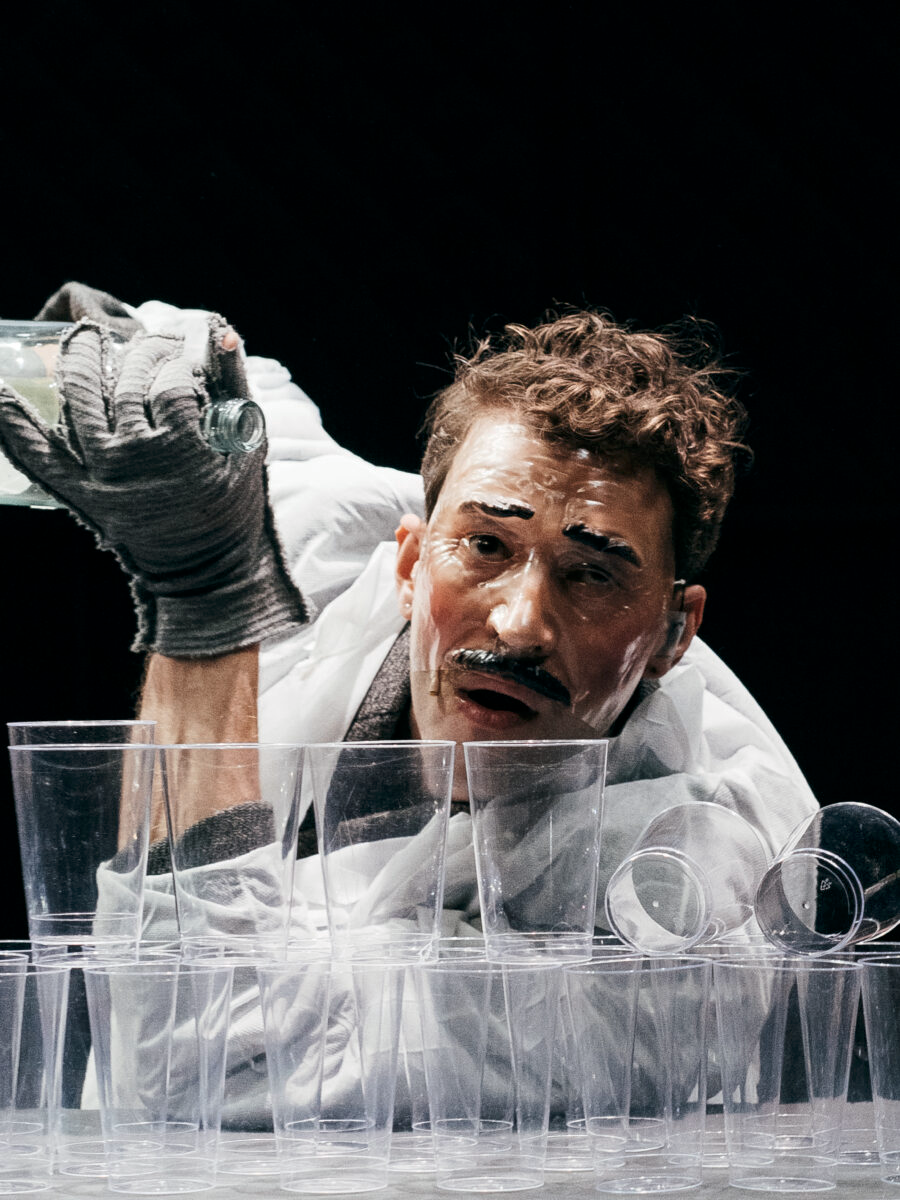
And if you fancy something with even more of avant-garde bite to it, the legendary New York theatre company The Wooster Group is coming to The Coronet Theatre, which continues to programme very exciting international work. It’s a company that famously boasts Willem Dafoe as one of its founding members and has been making some seriously, deliciously weird theatre and dance for decades. The current show is called Nayatt School Redux, a reworking of one of the group’s most famous productions featuring one of its original founding members, Kate Valk. Tickets are going fast on that one, so book soon if you’re keen.
Bound for the Bound Bound for the Reload
Many of you will be familiar with the rather charming bandstand in the middle of the Boundary Estate in Shoreditch. It’s a lovely spot to enjoy a sit and admire your overpriced vintage clothing or a damn good beigel from the 24-hour bakery (white front, not yellow, get it right).
You may not, however, know the history of where you’re sitting. The entire bandstand is, in fact, built on the amalgamated rubble and ruins of the slum housing that used to make up the area, known then as the Friar’s Mount rookery.
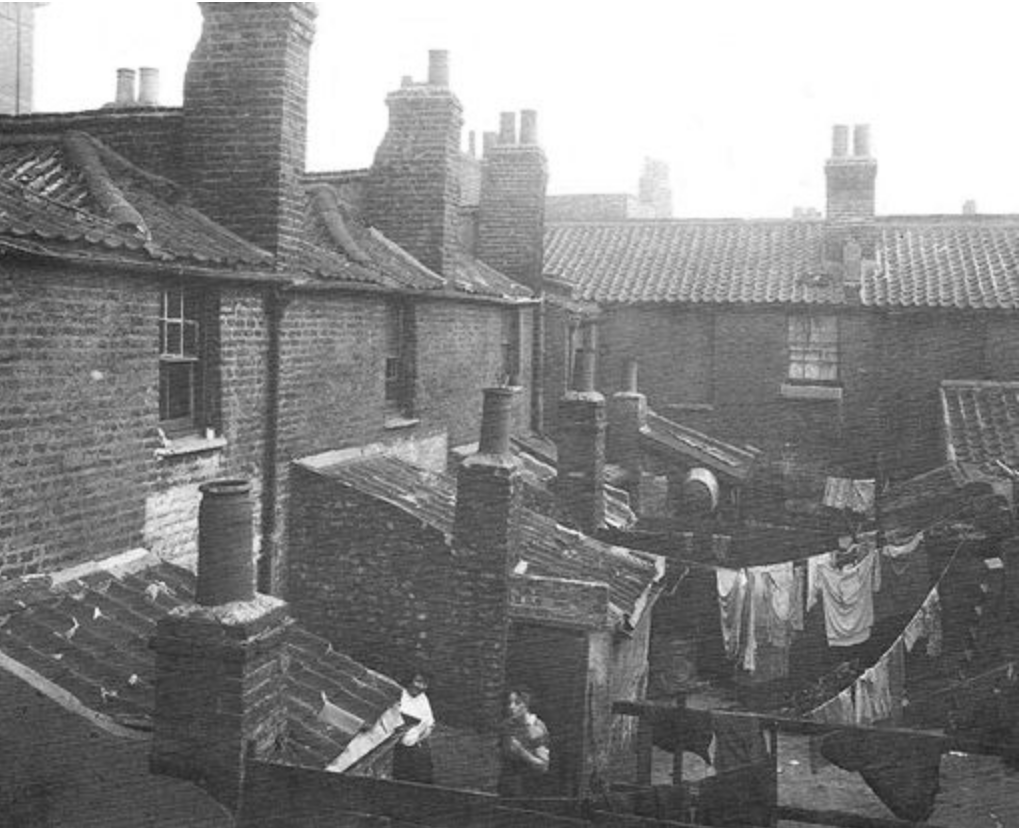
The state of things became an increasing concern for progressives and social engineers in the second half of the nineteenth century, including Henry Mayhew, who noted the poor conditions of the area which included ‘lakes of putrefying night soil’ in his description. Growing pressure and, classically for the period, a novel about the hardships of life there (Arthur Morrison’s A Child of the Jago) ensued.
This coincided with the creation of the brand new London County Council, who made the redevelopment of Boundary Street in 1893 one of their first projects. New flats were built and deliberately stocked with new, soberer tenants. The original occupants were inevitably pushed out and the bandstand made.
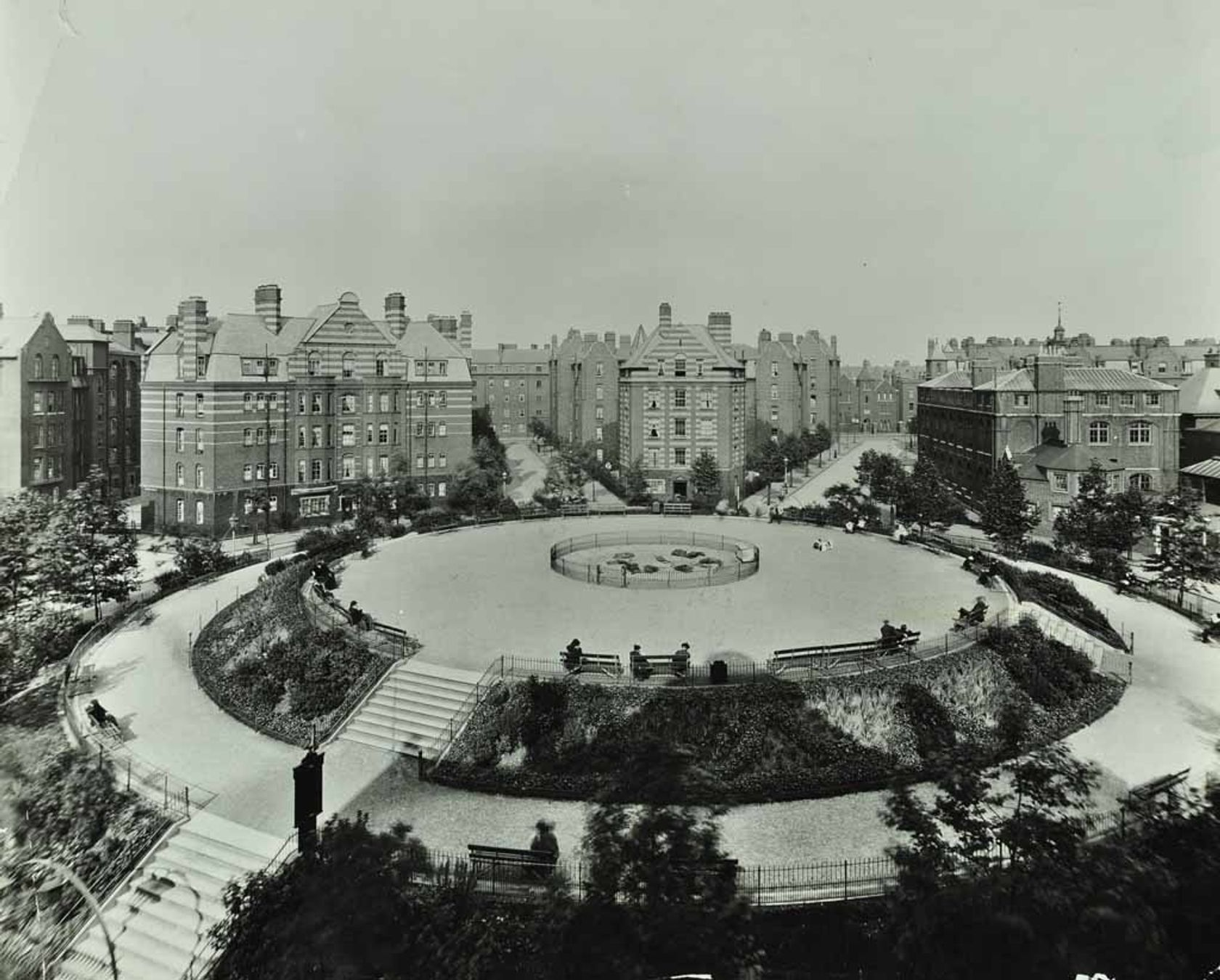
Ironically enough, the building work that pushed the residents of the rookery out would find itself under a similar threat just over 100 years later. Tower Hamlets council were inclined to bring in a housing association, and a redesign of Ifley House was produced. Unlike in the Victorian era, however, locals – the Friends of Arnold Circus – intervened and swiftly had many of the buildings made into Grade-II listed ones. So it is with most truly beautiful areas of the capital, where a few committed – and often quite powerful – local NIMBYs (non-derogatory) have kept their environs free of dull modern builds. It’s true of Soho, it’s true of Hampstead and, in a perverse way, it’s true of the estate built on the rookery.
So, do ponder this the next time you stand atop Arnold Circus’ lofty dias. And after you do, make sure to find your way to Lithuanian Dishes, a stall serving up ridiculously good food in the otherwise barren desert of eating that is Brick Lane’s food court, Upmarket.
A pretty sterling effort, we think you’ll admit. Do drop a like or a comment or even send us a more official line of communication to editorial@the-fence.com, and we look forward to joining you a fortnight hence.
All the best,
TF