Dear Readers,
Good evening, and welcome to Capital Letter, your guide to everything that is currently exciting in London. A special welcome to everyone who has joined in the last fortnight – our map has been primed and updated, and is available for paid subscribers to peruse here.
If you’d like to get in touch with a tip, or you’d like to write for this newsletter, then please do get in touch at editorial@the-fence.com. A special thank you to everyone who has been promoting, or ‘shouting out’ this mail-out lately – please keep doing so.
Now, London’s nightlife has been in a state of decline for some years, but rumours of its death have been greatly exaggerated by self-serving journalists and politicians, not least those on the right, who are perpetually outraged by the city having a Muslim mayor. But we can taste something exciting in the air (and read reports of the new clubs opening on the internet). It feels like there’s a growing energy in the capital’s nightlife, so we’re delighted to have dedicated coverage going forward. We’ll be reporting on tunes, fashion and gossip from the midnight world. Our first vibe sketch comes from a night known as the ‘KGB’, but first, we have a guide to Jewish London.
Beyond the Beigel
We’ve told you much about the wonderful churches dotted around the capital, with plenty more to come, we assure you. But we thought this week we’d take an inter-Abrahamic leap to the East End, to tell you of some of London’s rich Jewish history; some of the capital’s most interesting synagogues, and one particular seating-based method for understanding them.
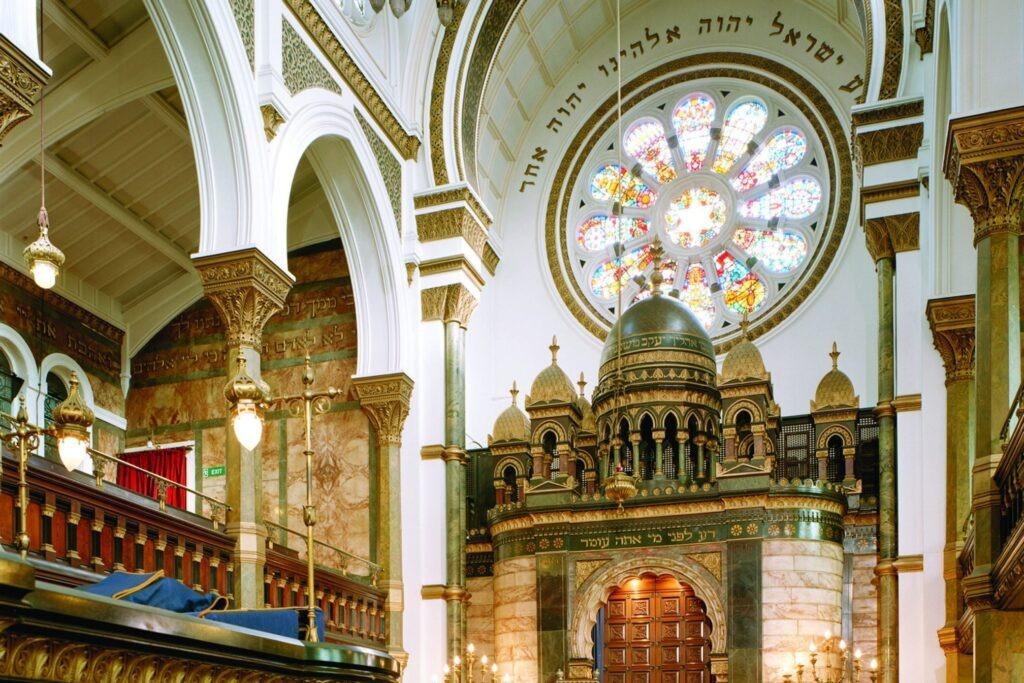
Bevis Marks is, of course, a classic place to visit and for good reason. It’s a gloriously beautiful building with a rich and storied history – read about it in detail here. What you might not know, however, is that it was not so beloved by much of the Jewish community in old London. It opened in 1701 and therefore belonged to the very early group of Jews who returned to Britain and lived by a distinctly assimilationist code. This is why, if you stand in the prayer hall of Bevis Marks, you will notice that there are rows of rather church-like pews, a very deliberate design choice intended to aid in the process of anglicising the Jewish faith for its new climes.
The majority of British Jews, however, trace their roots to a generation that came much later, in the 1880s, after a period in which Hasidism became a powerful force in Eastern Europe. Their orthodox praying required the faithful to take three steps forwards and backwards in prayer, something not easily done when hemmed in by a set of pews. So a powerful communal fracture was born around the vexed question of seating; high-class anglicised Jews looked down on the bare prayer rooms of the recent immigrants, who in turn dubbed buildings like Bevis Marks englischer shuls, and had nothing to do with them.
The story is much the same at the New West End Synagogue, though its beautiful interiors make the trip more than worth it. It dates from the 1870s and, as the pews suggest, was host to the upper echelons of Anglo-Jewry such as the Montagus, Herbert Samuel, Sir Rufus Isaacs, the 2nd Lord Rothschild and the family behind M&S (no prizes for guessing their surnames). It was also the site of a huge communal scandal known as the Jacobs Affair, when its Rabbi, Dr Louis Jacobs, published a work suggesting a Jew could remain faithful and accept that the Torah may have come from many different sources. Such was the shock that the chief rabbi barred him from his efforts to return to the New West End Pulpit in 1964.
One can even track the steady presence of anglicisation through a synagogue’s seats. Sandy’s Row is the oldest Ashkenazi synagogue in London, with refurbishing work beginning on it in 1867, before it was eventually consecrated in 1870. This was not done by the Chief Rabbi, Nathan Adler, because he opposed any new synagogue building by the new immigrant community. In a nice piece of newsletter connection – what we, in the biz, term a ‘callback’ – this was done by the Rabbi of nearby Bevis Marks. If you visit the synagogue today you will, however, notice the highly present pinewood pews. We assure you, these were a 1950s addition to the building, reflecting that, as the more religious first-generation passed on, taking their staunch opposition to sittable benches with them. If you want a look at the proper old-school style still in action you can take a short walk to Khellias Ya’akov (Congregation of Jacob) down on Commercial Street, which still retains a more traditional interior.
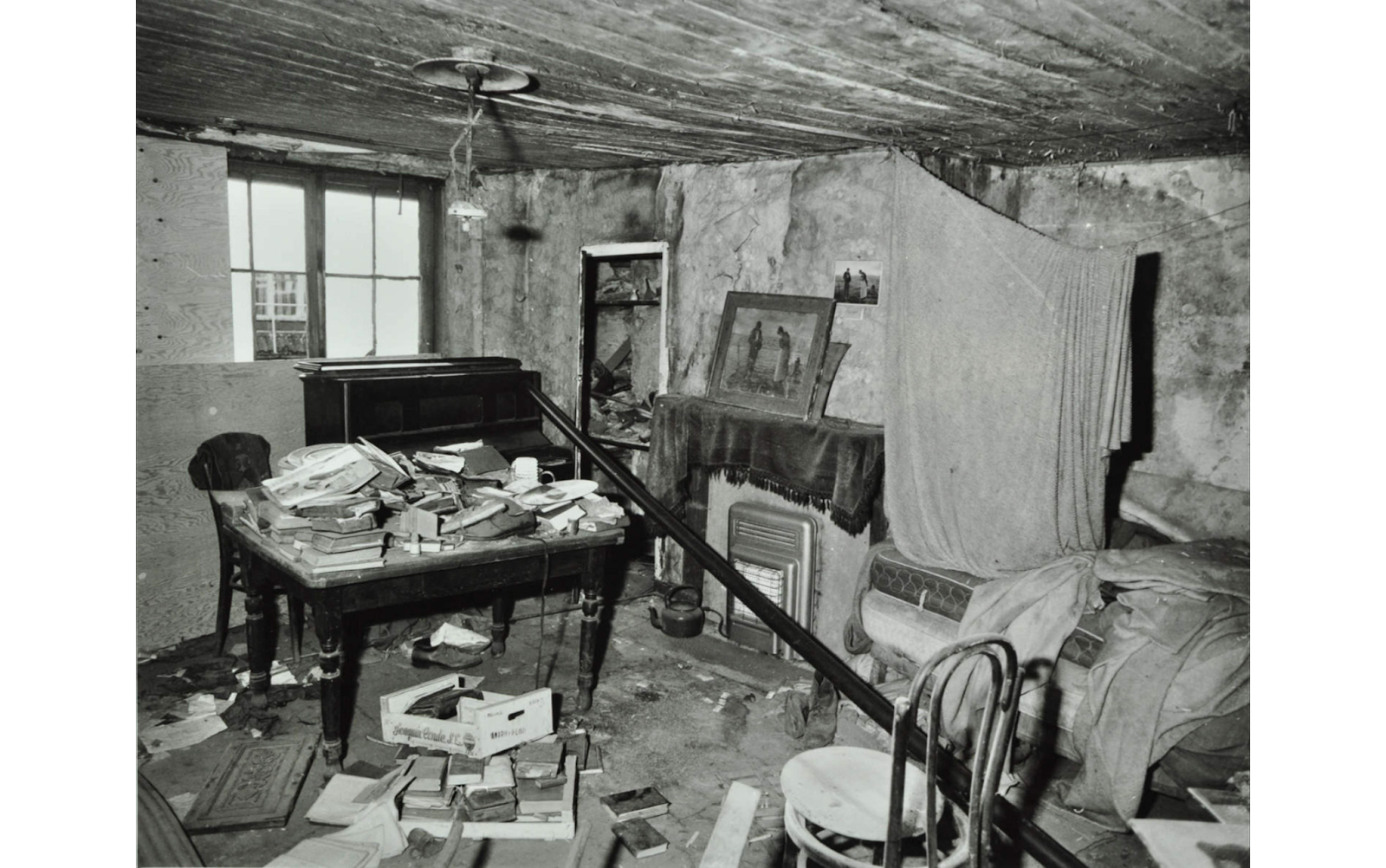
If there’s one synagogue you should try and make a visit to, however, it has to be 19 Princelet Street. Right in the heart of Spitalfields, the building was first built in 1718 and was home to a Huguenot family called the Ogiers. They were, like most of their kind, weavers of silk, something that used to be reflected by a bobbin over the door, which has since mysteriously disappeared. But this makes sense for 19 Princelet Street, which is a place with a kind of ghostly history. It officially became a synagogue in 1870, also serving as a friendly society and religious school to the local community until 1963, when the local congregation merged with the Bethnal Green Synagogue and the building was left in the hands of a caretaker, one David Rodinsky.
It was only years later, in 1983, when the building next door was bought next door by the Spitalfields Housing Trust, that the building became one of note. The synagogue remained, remarkably still intact, but with no trace of Rodinsky. His rooms were found with all his belongings and an unmade bed. The mysterious vanishing became the subject of the book Rodinsky’s Room.The building is still visitable, but only on rare occasions as part of the Museum of Immigration and Diversity. Try and visit if you can and when it’s open. It is a remarkable look at a London that barely exists anymore.
Berghain Hunters
There’s ample evidence that London’s nightlife scene, once so revered for its endless options and rambunctious attitude, is, in fact, alive and well. Perhaps the most promising exhibit came in the form of the autumn opening of Eutopia, a new 4,500-capacity super club which joins the likes of Tottenham’s Printworks-cum-IKEA warehouse affair Drumsheds and Manchester’s Depot Mayfield in the UK’s growing collection of gargantuan clubbing spaces.
Reports from the club’s opening season have been mixed, with praise being heaped onto the organisers for creating a top of the arts multi-room space which has already hosted a diverse range of events, from its queer Halloween spectacular hosted by Howl, a collective most determined to help people get loose, both figuratively (on a dancefloor) and literally (they produce their own brand of lube), and a last-minute day rave from Dance On Arrival.
However, facilities aside, its location seems to present one issue which may be insurmountable for many club goers – its Barking location, beyond the London postcode with essentially no public transport links after midnight, means that you’re looking at an Uber bill guaranteed to be in the triple figures if you live in a postcode with a ‘W’. Eutopia describes itself as ‘an untamed Paradise in Barking Riverside,’ but is paradise actually conceivable in Barking? That remains to be seen.
Meanwhile, those who have been in mourning since the announcement of the closure of Elephant & Castle’s stalwart club Corsica Studios might be in luck, as there have already been murmurings of a new space being acquired nearby, though there’s been no official word from Corsica.
The most shining testament to the prevailing ingenuity and commitment to fun of London’s nightlife scene, however, came in the debut of a new collective entitled Kylie Goes Berghain. The conceit is simple – a night of uninterrupted techno edits of the pint-sized pop princess. The collective is in the midst of a UK-wide marathon, the confoundingly titled ‘KGB Tour’, with its first London edition taking place in The Waiting Room in Stoke Newington at the start of the month. There, in the sold-out basement function room of a north London pub, the spirit of a new kind of KGB was born, populated by the city’s queer intelligentsia, two-stepping to the sounds of The Loco-motion and I Believe In You over thumping club beats, with the volume turned all the way up to near-comically loud levels
A little rough around the edges it may be, this scrappy upstart seemed to be answering a question we’ve long pondered in the early hours of a Saturday night – whatever happened to fun? With a few tweaks, we think this could make for a very worthy addition to the party calendar. Perhaps most pertinently, an upgrade of venue is in order, but once we entered the steamy subterranean black box which exists beneath the pub, however, we found an irresistible slice of absurd hedonism, garnished perfectly with a crowd well and truly up for it.
The KGB Tour has promised to return to pound the streets of London again soon, though if you’re feeling so compelled to join its resistance before then, there are upcoming dates in Bristol and Leeds already announced.
Other nights on our radar include tomorrow night’s Fight Club-themed Riposte. Located in Electrowerkz, a bona fide, the monthly ‘art rave’ prioritises pleasure in its silliest forms. Elsewhere, Section’s weekly livestream events remain a reliable option for those looking for a more low-key affair. These free-to-attend, BYOB gigs take place in the collective’s small but chic space located on Netil Lane, just off London Fields. Since April, Section, founded by the brains which brought you Tech Couture, have hosted names like VTSS, Daniel Avery and Perc, attracting increasingly sizable crowds to the point that they’ve recently had to shift to a raffle system in order to manage attendance. People still want to party.
Haider & Omkara
Film Africa 25 is coming to the BFI and is a rare chance to see some new African cinema on UK screens. Excitingly, their closing night programme on the 23rd features a great looking new film called Katanga: The Dance of the Scorpions, which is an adaptation of Macbeth and takes its name from the short-lived state that broke away from the DRC (which hadn’t yet acquired its ‘D’) in 1960.
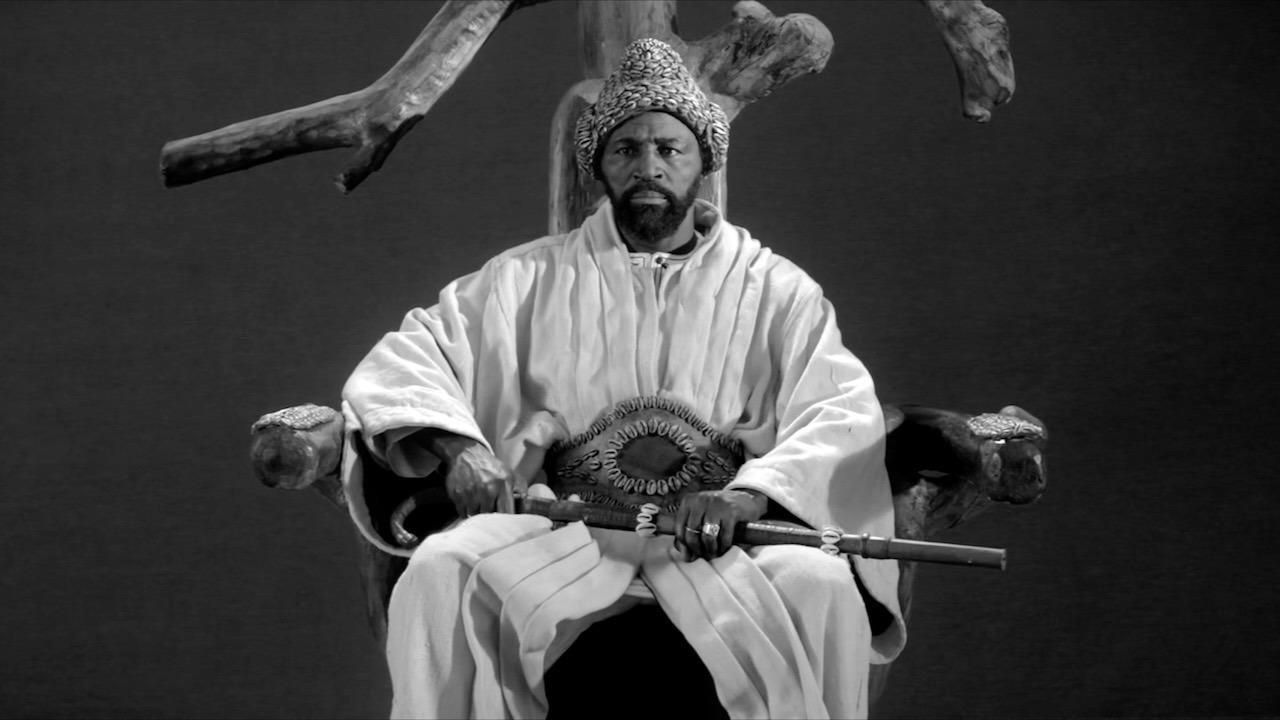
Non-English adaptations of Shakespeare have excellent form, as is probably best proved by Akira Kurosawa’s masterful reworking of the same story in Throne of Blood as well as his version of Lear, called Ran. Shakespeare is rightly revered for his language, but sometimes we can forget how powerful the images and conflicts he created can be. When the text is forced to change, we can get some of the best versions of the bard. This is sure to be worth a watch.
Blink Twice If You Need Help, David
When we saw photographs from the opening of David Hockney’s latest exhibition, Some Very, Very, Very New Paintings Not Yet Shown in Paris at Annely Juda on Hanover Square, we were worried. The artist could be seen sitting in his wheelchair, the waistband of his multicoloured flannel trousers closer to his armpits than his waist, with the wild-eyed expression of an old man who didn’t know where he was.
He’s one of the world’s most expensive living artists, a living genius and is approaching 90; one can’t help but imagine a dealer (this is a commercial show) squeezing paintings out of such an artist, against the interests of his health and wellbeing.
The exhibition’s first room, filled with perspective-collapsed still lifes and domestic scenes, goes some way to quell such suspicions. They are, though painted with a visibly shaky hand, vital and buoyant. Hockney does a great gingham and the shiny oranges that occupy his tables look happy to be there. Though the shifting angles of these paintings certainly don’t, as the exhibition text claims, reflect how humans actually see, they make for a very pleasant and faintly interesting set of images.
The iPad drawings upstairs are predictably bad, but masquerading among them are two small-scale real paintings that might be the best (though least Hockneyish) in the show, depicting ghostly trees that blend into their shadows under harvest moons.
Another of the exhibition’s best works is its only self portrait: a lozenge-shaped image of the charmingly odd-socked artist in his wheelchair sporting a pair of fetching blue cords. As his great-nephew Richard Hockney watches, he seems to write in red paint a title that follows the painting’s perimeter: Richard watching me paint this seated on a chair with big wheels. It’s a tautologous (and, dare we say, slightly senile) painting that has no business being as funny or touching as it is. You may need to see it to understand.
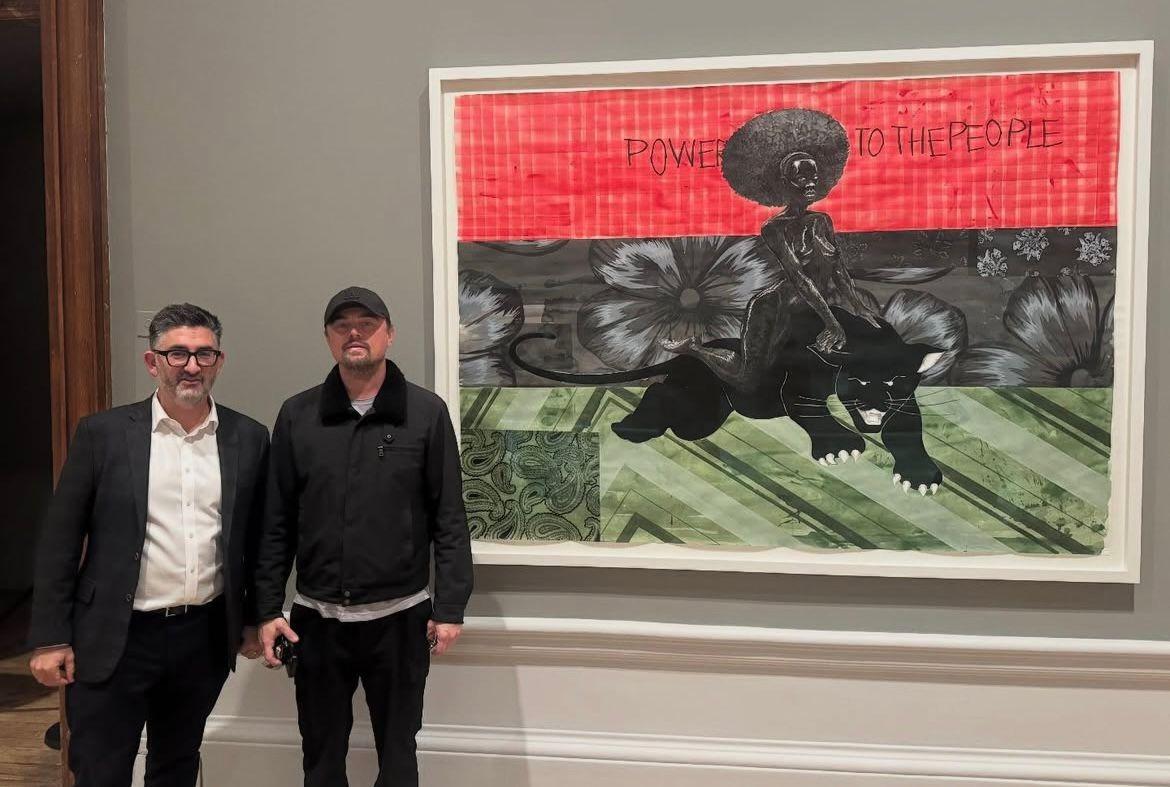
Around the corner at the Royal Academy, Mark Godfrey has learned the second rule of curating a successful show: now that you’ve made a good exhibition, take a lot of photographs of and with celebrities visiting it. Highlights so far include Reese Witherspoon, Leo DiCaprio, Piers Brosnan, Sampha and Little Simz, all of whom appear aside a smiling, bespectacled Godfrey on what is quickly becoming the most thrilling Instagram page in London’s art world. Who will be next?
At any serious level, courting rich and influential people is a part of all visual art jobs. Those who follow institutional paths rather than commercial ones because they’re ‘no good at selling’ are doomed to failure. Most of the art world’s more seasoned starfuckers – Cullinan, Peyton-Jones, de Pury – are sickeningly discreet. We salute Godfrey for scattering some of his crumbs for us.
Get Out
So, you find yourself in Westminster. Don’t panic. Whether it’s because you screwed up alighting on the Jubilee, your aunt from New Zealand wants to see ‘Beeg Bin’ or because you are meeting your Lizard overlords, you almost certainly haven’t chosen to be there of your own accord. The holding pen for freaks and perverts that is the triangular area hemmed in by The Mall, Vauxhall Bridge Road and the River Thames is a notorious desert for almost anything worthwhile.
Are there any redeeming features? Of course, there is the Abbey, duelling with the Tower as the best tourist attraction in the city for Londoners themselves. The coming fortnight is one of the best times to make your annual pilgrimage to the grotesque statuary that bedecks the holiest place in the capital.
Afterwards, you might like to pay a visit to Watts, one of the weirdest shops in London, specialising in intensely detailed custom-made fabric. Frequented by clergy, royalty and people with Liberace’s taste in interior design, it is also the least weird establishment on Tufton Street. Anyone can pop in and watch the fabric makers at work, look at the clerical wear or just deal with the staff who are a mix of beautiful young people and day drinkers.
To Ro or Not To To Ro
Some of you may feel that our theatre coverage has been a little on the serious side. There have been some choice words for the frivolous, and some hefty recommendations: Beckett, Brooks, Kane. We don’t apologise for our love of BBK and yet we are willing to climb down from our lofty stallion. And so, to the West End.
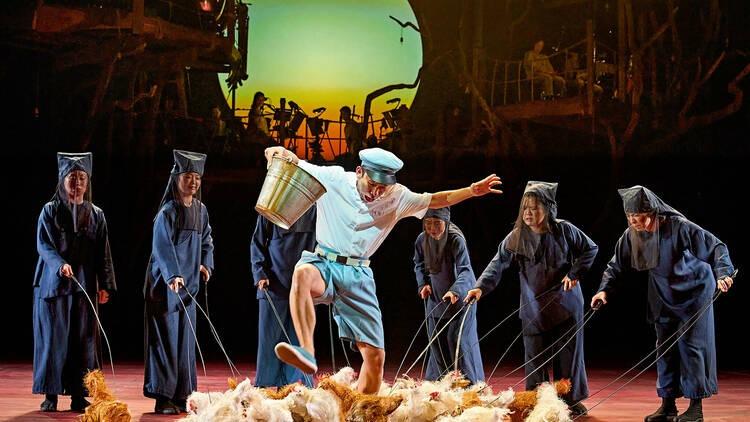
It is certainly the fashion that any good book, film or piece of cultural media will get its West End call-up when the time comes: Harry Potter, Matilda, Mamma Mia, Fawlty Towers, Michael Jackson, Paddington. But for anyone who is a fan of said thing, it’s a nervy moment. Will it be another way to see a great thing or a hastily cobbled together cash in. Such fears coursed through our veins as we made our way to the Gillian Lynne Theatre (formerly the New London Theatre) to see My Neighbour Totoro.
Totoro is a straightforward and objectively adorable film, and something that, if you were raised on it or raised someone on it, was a likely household favourite. But given it involves a giant magical furry creature that can fly, the possibility for theatre naffery is notable. And yet the show is damn good. The puppets are excellent and try as we might to be deeply serious cultural critics, it’s hard not to get excited when a 12-foot behemoth lumbers onto the stage.
Is this the place to find the finest acting in London? Probably not, but there is some lovely live music (Joe Hisaishi is brilliant) and the set is a marvel. The story is also well-paced from the original, the adapting playwright is clearly well within his wheelhouse, given his earlier work adapting the life of Robert J Oppenheimer for the stage a full eight years before Christopher Nolan got his greasy little paws on it. It gets bonus points for not taking itself too seriously as well. Deliberate puppeteering and prop gags are built into the show giving the whole thing a lightness and a playfulness that is spot on.
A special mention here for the chickens. The chickens are easily the best puppets in the whole show. Seriously, go just for the chickens.
That’s that for this week, we hope you enjoyed yourselves – do drop a like or a comment below, and please do let us know how you get on with our tips. We are always very keen to hear from our readers – do get in touch.
We hope you have a lovely weekend. The next outing is in a fortnight hence.
All the best,
TF