Dear Readers,
Good afternoon, and welcome to Capital Letter. The weather is truly frightful, but then we are in London in late autumn. So rather than melt on the sofa with some mutable offerings from the streamers, we encourage you to make use of an umbrella and take part in life in the city. There are a number of genuinely exciting things happening around town, and we are here to tell you about them.
Thank you to everyone who has signed up this newsletter – we now have 2,500 of you signed up, which is lovely to see. Please do keep recommending this mail-out to friends, either in real life, or even better, on social media. Those ‘shout-outs’ really are incredibly useful.
As more people are paying for this mail-out, we can keep expanding our horizons (but not beyond the M25). Our map is now bent double with all the recommendations we’ve listed here, but this treasure chest is only available to paid subscribers, as is our archive.
We’re kicking off with something a bit different today, something possibly quite stupid – a walking tour of London’s clandestine bases.
With My Little Eye
When you think of spying in London, visions are conjured of George Smiley, of the ‘avenue of beeches’ in Hampstead Heath; of dead letter drops and subterfuge among the trees. But these sepia images do not match the reality of the present, when, as we are constantly reminded, the world has never been more dangerous. London, as a global capital, is stuffed with buildings – both hidden and hidden in plain sight – where agents battle the world’s malefactors, and where traces of conflicts past can still be seen.
Our American cousins run their intelligence operations from the moated US Embassy in Vauxhall, undoubtedly one of the most depressing corners of the capital. Anxious staffers are known to send armed guards to neighbouring offices – there’s nothing quite like discussing book jacket options at the Penguin Random House headquarters while MP5-sporting firearms officers mill around the lobby. Five minutes amble over is Terry Farrell’s Ziggurat, the MI6 headquarters made famous by James Bond. One little-known fact is that the HQ has a number of ancillary locations, down to Kennington Lane, and across the river in Pimlico at Bessborough Gardens.
London came under direct attack from the skies for almost a decade of the 20th century, and around Whitehall there are a network of tunnels linking the various service ministries, which a journalist was once able to cycle down in the 1980s. By The Mall is the Admiralty Citadel, described by Winston Churchill as a ‘vast monstrosity which weighs upon the Horse Guards Parade’, and still in use by the Ministry of Defence today.
Older still is the Regent’s Park Barracks, built in 1820, and still in use today. This is where the SAS are based in London under the acronym ‘MOD A Block’, and where rapid responses to terrorist attacks in London are launched. The surrounding council estate is one of the poorest in inner-city London, equipped with a Greggs outlet store, yet only two blocks away is John Nash’s gleaming Grade-1 stucco fantasia, where homes sell for more than £30 million.
You might, if you fancy it, finish your tour at the Russian Trade Delegation’s HQ in Highgate West Hill, long known to the British government as a ‘den of spies’. After Putin’s invasion in 2022, the office is supposedly emptied, but if you walk along Millfield Lane, late at night, you might see some lights in the building – someone is at home. There are other secret bases in London, of course – but we’re not going to mention them here.
The Patron’s Dilemma
Where, and with what discernment, should you be casting your eye towards the theatre over the coming months?
Well, in deciding, there’s a central rule of thumb we’d like to remind you of: if the show is about – or worse ‘inspired’ – by the artist’s life, it might be best to avoid. Top of the hit list on this front is Bryony Kimming’s new piece of naval gazing entitledBog Witch. It ‘explores what happens when ordering things online, drinking booze and coffee, and stuffing your face with Deliveroo no longer brings happiness.’ Who would have thought?
We follow Kimming’s character in a journey to the strange world known as the countryside, where she discovers – after some initial judgement – the quiet value of the simple way of life they lead out there. It is billed as a ‘story not of dropping out… but of plugging back in… that changed absolutely everything for Kimmings.’ Would that revelation came so easily to us mere mortals, but who are we to keep up with the ‘legendary artist’ – a piece of first-rate adjectival debasement – that is Bryony Kimmings.
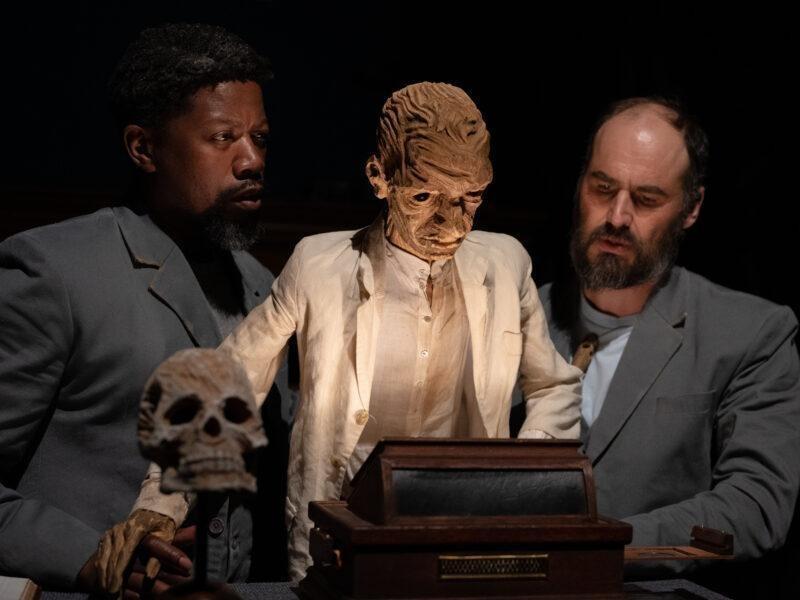
Fortunately there are better boards to be trod. William Kentridge’s beautiful work Faustus in Africa!Is coming to the Coronet Theatre, which we praised in the sixth installment of this newsletter. It’s a brilliant piece of puppetry and storytelling in a glorious theatre – you can watch a well-made trailer here.
The Royal Court have also just announced their 70th anniversary season, worth jumping on given that they have been selling out at a rapid pace. Some potential highlights include Gary Oldman’s turn in Krapp’s Last Tape – a play which already had a fantastic turn at the Barbican courtesy of Stephen Rea – and Tilda Swinton’s reprisal of her role in Man To Man which she first performed in 1988. As with the highly successful revival of 4.48 Psychosis, the original creative team are being brought back as well.
The only concern is a new piece entitled The Afronauts written by Ryan Calais Cameron – coming off the back of his west end hit Retrograde. It’s about the bizarre true story of Zambia’ space programme. The problem is, there is already a play of this name on the same topic, co-created with Circus Zambia. An exciting production, it feels they may have now been eclipsed by a larger theatre and a bigger name in Cameron. We hope this isby pure coincidence, but the optics of it don’t look fantastic.
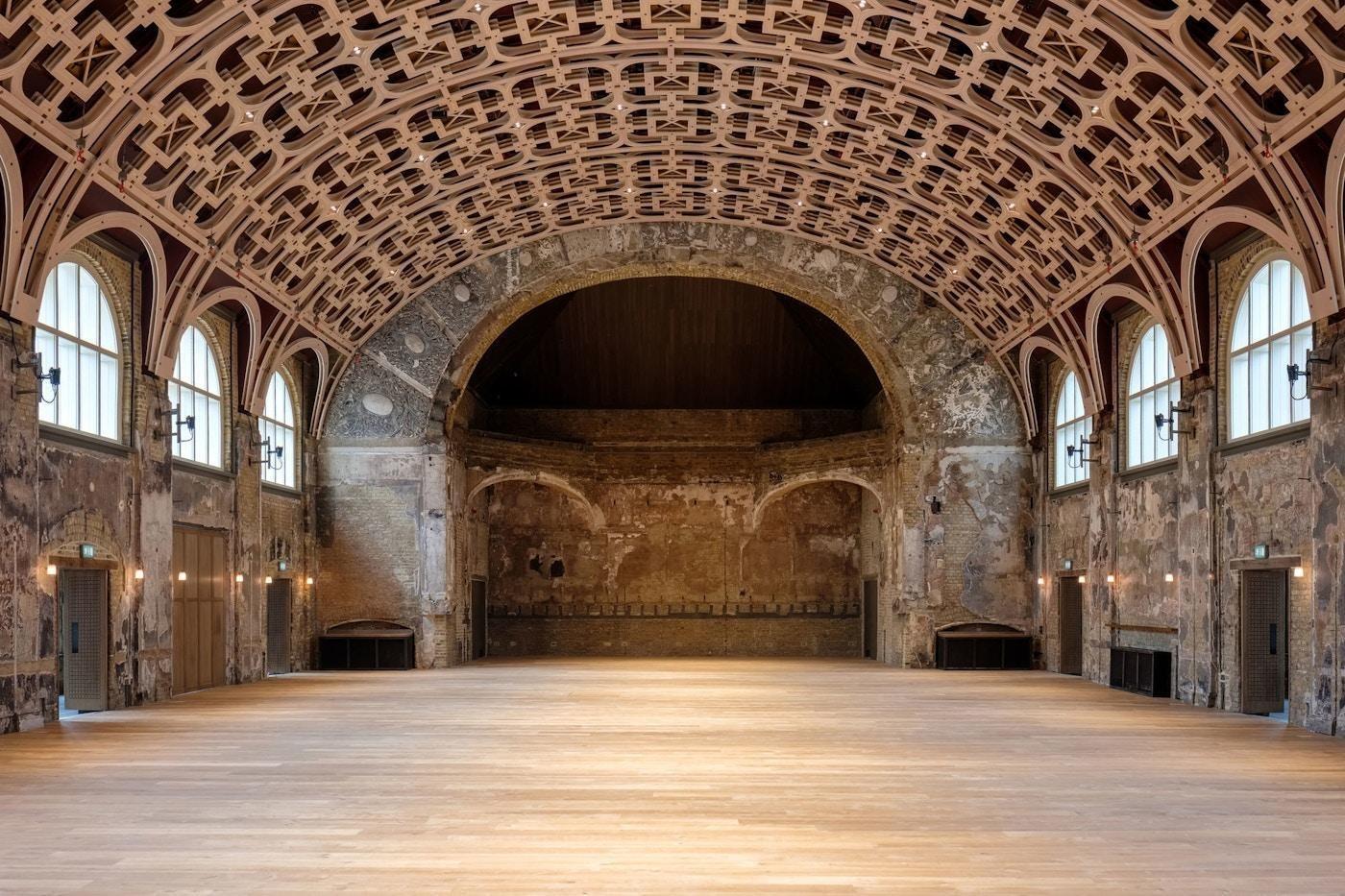
Finally, a place to keep your eye on is Battersea Arts Centre. As Lotte Brundle’s dispatch for us made clear, Battersea is not always a place one wants to be. But the BAC has been a home to some brilliant programming over the years, particularly under the direction of its current Artistic Director Tarek Iskander. Recently it put on a fabulous performance of Radio Live: A New Generation; a live, unscripted interview with two guests from Palestine and Ukraine. It’s a powerful project and a rare piece of programming. They also have an array of live music programming and the building itself, formerly Battersea’s Town Hall and designed by the architect of the Old Bailey, is very beautiful indeed.
Will It Martini?
Full marks to Angela Hartnett, who has launched a ‘nightcap menu’ at her Cafe Murano mini-chain, which has outposts in Covent Garden, Bermondsey and St James’s. After 9pm, there are plates of pasta for £15, and cocktails at £5. Other restauranteurs should follow her example, rather than campaigning for tax exemptions, which risks alienating customers. As was noted in the latest Hardens, the ‘gloomersterism’ of the industry is not matched by the frenetic rate of new openings across the capital.
Let’s Go Full-Bleed
Everyone knows how great MagCulture is. But where else can you go in the capital to pick up top-quality tangible goods, and at bargain prices too? Join Ben Perkins on a day’s tour.
Every month, the paper round. A ritual practiced by zine printers and magazine editors alike – you fill your bag with issues, spend a day visiting your most reliable retailers and try not to spend a week’s wages. Littering record shops, cafes and venues with gig listings has given me a reliable route, and the spots below are amongst my favourites: run by fellow freaks who value physical media, whether it be autonomous, collectable or just plain strange.
I usually start in Deptford, especially if the market – one of London’s seven wonders – is running. Go down Resolution Way to The Shop, discover what tech you desired in 2004 is now collectable by people half your age, and then stay for a discerning selection of PA gear, digital cameras and eclectic records.
A trip up the Windrush line takes me to Hackney Road and a cluster of subcultural picks. Waste!’s shop is saturated with loud images, taking in UK hardcore’s hi-contrast crunch, vintage pulp and the Dreamcast catalogue and splashing it across fashion, skate stuff and zines galore. I tend to keep to the demos on the counter or mags about trash cinema, but there’s all sorts going on in here.
I end up in many record shops on the round - and up east is good for that: down the road from WASTE! Is Crypt of the Wizard, simply the best metal shop in London. Off Brick Lane lies World of Echo, whose esoteric lineup of art punk and experimental discs is just up my street, and across the road from Hackney Central is the wonderful TOME, whose owner Kev takes in interesting records of all genres, but does a roaring trade in reggae sevens and punk cassettes. The best tote bags in the business.
For the best paper, I go back down south. Sometimes via Housmans on Caledonian Road and its corner for radical papers and journals, and the small press section of Gosh! Comics on Berwick Street is a treasure trove. But I always end up in BOOKS, a stacked bookshop round the corner from Bellenden Road. Pete who runs it just always knows where to find an intriguing collection, and I defy you to not find something in there and pay more than a fiver for it. Strongest zine wall for miles around, too. Who needs digital files?
Alright, Tiziano
If you’re hot for – or merely curious about – very good figurative painting by staggeringly young artists, there are two exhibitions in the West End that shouldn’t be missed.
The first, at Maximillian William on Mortimer Street, is a concise show of the late American painter Bob Thompson’s colour-blocked remixes of celestial Old Master paintings from the 1960s. Here, familiar scenes from art history are reduced to their most essential forms and recoloured in surreal and striking hues. On paper, this treatment sounds like a modern-day graphic gimmick; on canvas, it’s anything but. The results, though less realistic than their historical analogues, feel much more human.
Unbelievably, this is Thompson’s first solo in Europe since he died, just 28 years old, in 1966. Though well-loved by the UK’s painting cognoscenti – Peter Doig, Alvaro Barrington and Frank Bowling are all fans – he is criminally underappreciated here. For this exhibition, the eponymous William has borrowed everything from US-based collections; though in a commercial gallery, nothing is for sale. Surely, this exhibition will be the precursor to a museum show in London, a city that Thompson visited multiple times and took great inspiration from. (If you want proof, head down the road to the Wallace Collection, where Titian’s Perseus and Andromeda is a clear blueprint for a work of the same name by Thompson, painted three years after his first visit to our great city.)
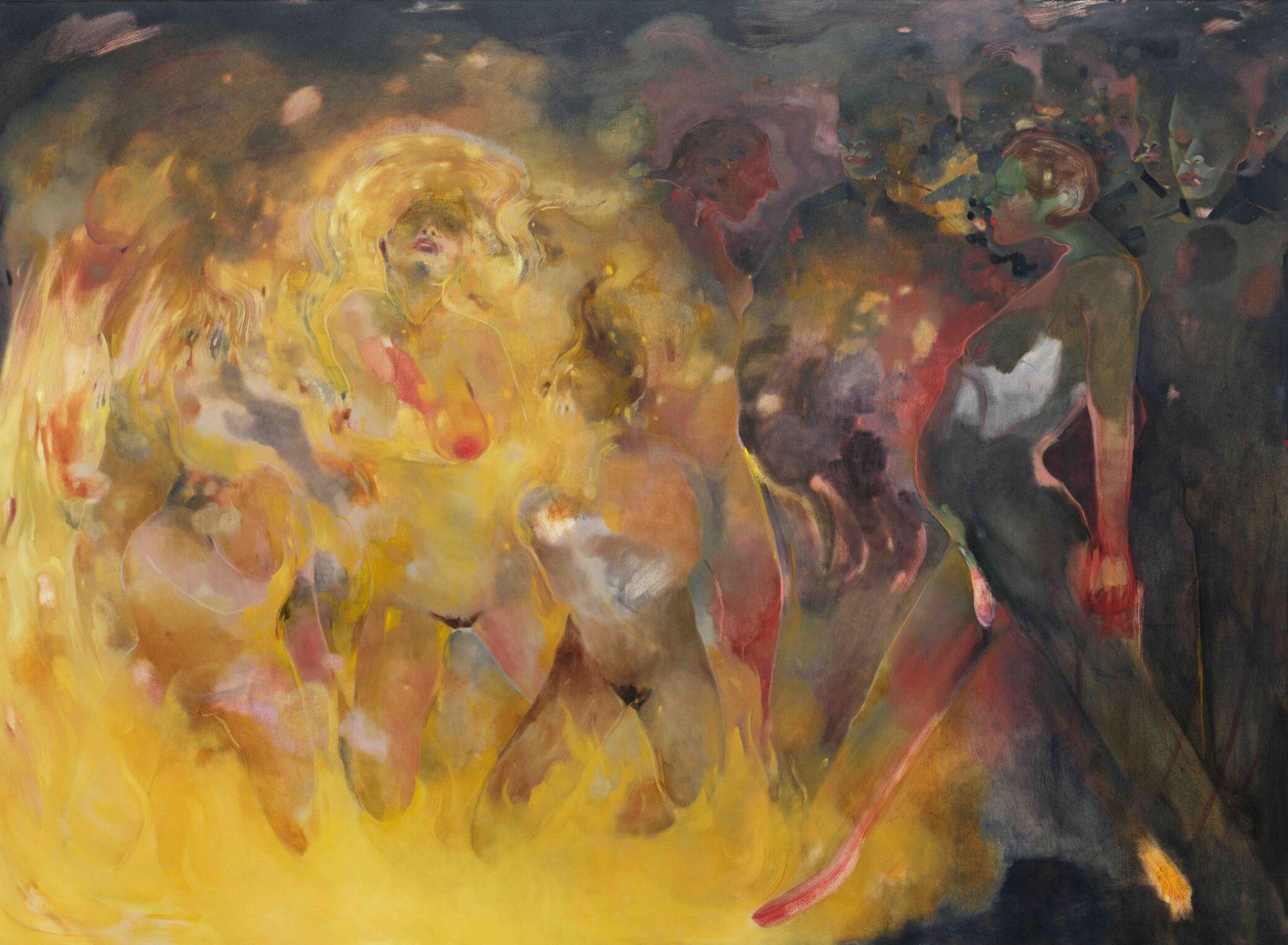
Here’s hoping the Danish painter Eva Helene Pade, also 28 years old, survives long enough to visit her own retrospective. Right now, she’ll have to settle with one of the buzziest shows to open during Frieze, a solo with the Austrian megadealer Thaddaeus Ropac. Displayed on metal supports rather than hung on the walls, Pade’s huge paintings depict smoke-filled, nude bacchanals. Her figures tower above the viewer, their faces obscured by smoke and spotlights. They suck cigarettes, straddle each other’s thighs and carry limp bodies from the dancefloor.
The show is messy and slightly sinister. It’s difficult to know whether you’re witnessing a jolly good time or an evil ritual. The label ‘immersive’ has been appropriated by art writers as a synonym for ‘big’, but Pade’s paintings truly deserve it. They force you into their haggard yet sickeningly sexy world.
Stone Cold Steve Austin
In the heart of Balham, land of brunch, yoga studios, and pram-wielding ‘mamas’, lurks a relic from wilder days south of the river. On the last Sunday of each month, the Bedford pub (just a few doors down from the local JoJo Maman Bébé) throws open its doors to… wrestling. Not tweens scrapping over the final free table at Milk, but real, live, proper wrestling: bodies flying, fans roaring, legends written in sweat and spotlights.
The event is run by the EWE, Elite Wrestling Entertainment, whose roster of fierce men and women know exactly how to put on a show. No more than 120 people cram into this unlikely pit, and the tiny crowd becomes part of the spectacle itself.
After three or four beers, you start to feel the collaborative magic of it all. Gathered around the ring’s edge, the audience transcend their position as mere spectators and become co-authors, shaping the stories of these wrestlers in real time. Chanting ‘1, 2, 3, 4, 5’ as one fighter slams another to the mat, you’re no longer outside the ropes. You’ve become part of the choreography, part of the thrill of the fight.
Wrestling scratches that Sunday itch for good, slightly drunken entertainment - and sometimes it even exceeds those expectations, fulfilling a desire for something deeper.
By the final bell, you’re laughing, cheering, maybe even tearing up a little, and thinking: yes, this is what Sundays were made for – a fight in a gastropub in SW12.
Freezing Chickens in the Dark
In a somewhat bizarre turn of events, international attention has been focused upon the patron of Don Ciccio, an Italian restaurant in Highgate. In a mesmeric huff, Marco Claudio Valente has shuttered his establishment on Hampstead Lane, blaming locals for ‘never supporting us’, before doubling down on his criticism in a series of interviews that have caused much merriment. (For what its worth, a member of our editorial team lived 50 metres from Don Ciccio for three years, and never once went.)
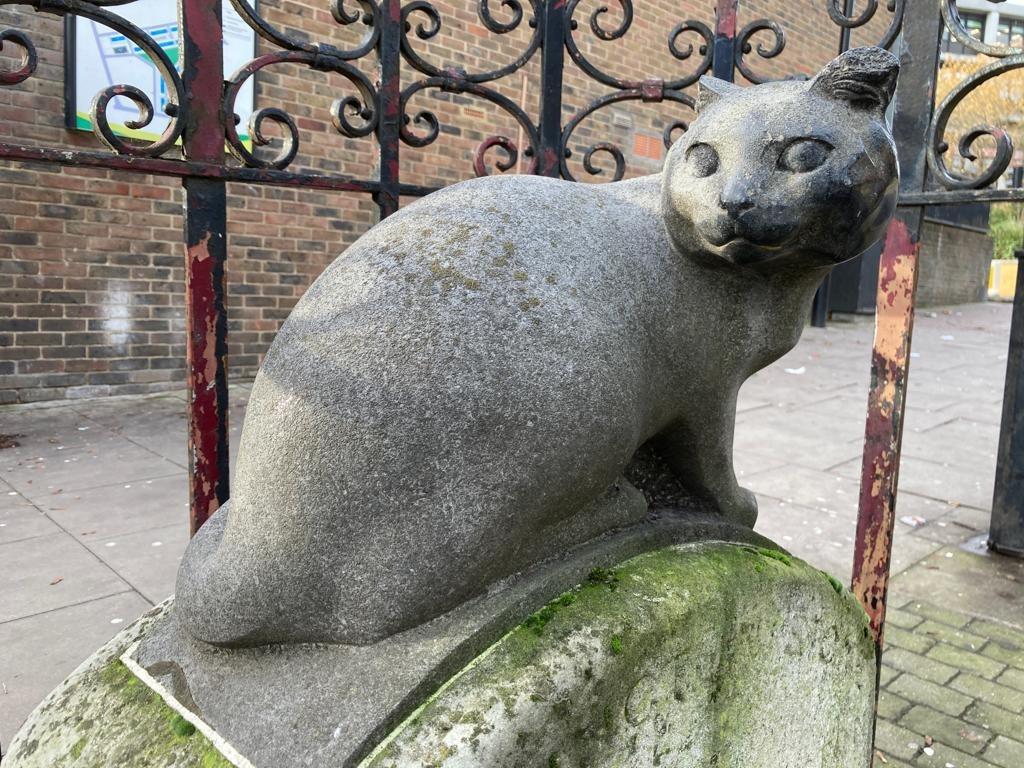
Of all the suburbs that strain for the title of ‘village’, Highgate has one of the most genuine claims. The visitor usually alights at the Cemetery or at the eastern edge of the Heath in the summer, but the heart of the neighbourhood has much to recommend it, especially of an autumn afternoon. Ian Nairn was breezily dismissive of Pond Square, the village green that stands at the highest point in London, and that for centuries marked the entry point to London. In a 200-metre radius around this genteel gravelled plaza stands some of the most interesting domestic architecture in Britain – to the south, Lubetkin’s apartment block, Highpoint 1, the lodestar for any Modern House ultra; to the east, The Grove, a tree-lined street of 17th-century houses, the various inhabitants of which would make for an outstanding coffee table book. Samuel Taylor Coleridge spent over 20 years at No. 2, and is now buried at the church of St Michael’s, which is built on the site of Arundel House, where Francis Bacon died in 1626 after attempting a truly absurd experiment. Next door lives Terry Gilliam, in sublime grandeur. But enough fantasy, skip past Highgate’s many overpriced pubs, all the way down the hill, almost to Archway, and alight at the stone statue of the cat. This is the Whittington Stone, where the aspiring merchant Richard Whittington supposedly heard the ringing Bow Bells, and headed back into London to make his fortune. And, come to think of it, aren’t we all lucky to be in London right now?
There we have it. If you’d like to contribute to this newsletter, please do get in touch with us at editorial@the-fence.com, and do feel free to drop a comment below with a recommendation or just a general note. We do love to hear from our readers. Have a lovely weekend, and we’ll join you in a fortnight.
All the best,
TF