Dear Readers,
Good afternoon, and welcome to Capital Letter, London’s Only Newsletter. We’ve been absolutely delighted to see so many of you writing in to say how much you’ve been enjoying this mail-out, and we’ve been even more pleased to see so many of you become paid subscribers. Please do join the merry throng, as we’ll be making this paywalled – and weekly – soon.

London has a febrile, fantastical energy at the moment, and there is so much to see and do. We’ve curated another buffet of tips for your delectation today, and we’ve also got an extended feature from Joe Bishop and Kieran Morris on the past, present and future of London fine dining.
First up though, here are the best places in London to eavesdrop on top-tier intel.
Did You Hear That?
Okay, here we go: The London Library for tips on which upcoming book is destined for the pulping sheds. Kennington Tandoori for beery, leaky MPs. The King’s Road Boots for ribald royal goss sluiced from old-world Sloanes. Rossella on Highgate Road to witness editors at rest, trying not to talk shop over cappuccinos. The taxi queue by 5 Hertford Street for slobbering tattle from the masters of the universe. Katzenjammers on London Bridge for News Corp disjecta. Any Blank Street Coffee for Gen Alpha’s latest plots and schemes. Chariots Sauna in Vauxhall (now the Pleasuredrome in Waterloo) for naked spies. Lunch at Sweetings in the City for fashionista froth. Boisdale in Belgravia for Faragist oozings. The Rooftop at the Standard for people at parties they aren’t enjoying. The Seven Stars off Chancery Lane for claret-pissed pearlies from jubilant barristers. Breakfast at Maison François for the private equity dons. The smoking room above James J Fox Cigar Merchants for barely lucid life peers. The banya in Canning Town for war stories from every generation of East End crim. The smoking area at the Groucho (still) for the sight of Richard Bacon. For miscellaneous mud-slinging and sundry gossip from some/all of the worlds mentioned above, try The Army & Navy in Dalston, Supermarket of Dreams in Holland Park and the toilets at Quo Vadis – but only after 9pm.
Posh Nosh, M’Gosh!
Shuffling through heavy curtains toward an already pissed-off maître d'. Eight manicured chefs ignoring you in the open kitchen, one of whom stridently rejects the nervous smile-and-wave you offer as you head toward your table. You pull your chair out – it scrapes the slate floor before the waiter stops you, pulls it back further, then awkwardly nudges your seated back as you get your legs under the table. A second waiter gives you a menu. A third explains it. Eight courses pass across the tablecloth in four hours, only two of which are warm. Your pâte de fruit turns to ash in your mouth as you unfurl your bill, given to you in a driftwood box for some reason. If this rings a bell, then you are not alone.
‘I went to a London two-star recently and loathed it,’ says new Financial Times columnist Marina O’Loughlin. ‘Everything we ate tasted and looked nothing like its core ingredient. Clever, I guess. Delicious, not so much.’
Right now, food in London is probably better than it ever has been. After years fighting against what was, in fact, a pretty accurate reputation for culinary misery, the ambient quality of dining in the capital is now very high, from Tooting’s sizzling Peshawar grills and the Latin cantinas on the Old Kent Road, to the thriving, boozy bistronomie scene, led by the unbookable Bouchon Racine and of course, all three of the Noble Rots. There’s plenty of small platesy places, all oscillating wildly in quality and often inverse to their level of hype: for every Casa Fofò or Anglo (RIP) is a Whyte’s or a Planque or a Cadet.
But at the very top of the price range – those rarefied spaces for paypig gluttons like us – there has barely been any movement, any innovation, any uptick in quality in over a decade. London is one of the best food cities in the world, and yet its high-end fine dining falls far behind its rivals in Paris, Barcelona, Tokyo and Copenhagen. Our one-stars cost as much as threes elsewhere and our three-stars cost as much as second-hand cars; and while you can eat very well in The Ledbury (less so in Sketch), you’d never say that their stars burn brighter than others on the continent.
Why does that matter? Because haute cuisine is something that does, or rather, should, stand apart from typical dining. If London was suffering from a paucity of world-class galleries, groundbreaking artists, musicians and designers, we would be more outraged; we’d feel the stasis, the stagnation, and we’d want to do something about it. Right now, in the capital, there is nowhere that lays a serious claim to being one of the best restaurants in the world – not Ikoyi, not Bibendum, not Lyle’s or The Clove Club; not Dinner or Da Terra or whatever ‘Restaurant Story’ is. And if we’re honest, none of them seem like they’re trying to be.
It wasn’t always this way. In the hyper-competitive era of Nico Ladenis and Marco Pierre White, the single-minded pursuit of three stars was charged by a sense of defiance, and a real urge to put two fingers up across the Channel. To Andy Hayler, gourmand par excellence, Harveys, Marco Pierre White’s first restaurant in Wandsworth, still stands alone against the current London three-star set, even 30 years on. ‘I was incredibly impressed with the cooking at Harveys.’
Harveys beckoned diners in their droves – even the ones chucked out for asking for salt – but also attracted a generation of young chefs eager to be forged in the white heat of Marco’s crucible: Ramsay, of course, but also Phil Howard, Sat Bains and Éric Chavot. When Gordon wrested the city’s throne from his mentor at the turn of the millennium, his kitchen bequeathed a sweep of new proteges who still dominate fine dining the city: Clare Smyth, Jason Atherton and Matt Abé, to name but three.
But this era, formative though it was for the chefs who could survive it, was built upon working practices that, for so many reasons, just could not fly today. At the Oak Room, the grand, garlanded successor to Harveys, White had a staffer on brigade whose singular task was toasting brioche: perfectly, and repeatedly, for hours and hours on end. Meanwhile on Royal Hospital Road, when Ramsay would task his staff with cooking for the Chelsea Pensioners, cooks would have to endure a full 24 hours on shift if they’d been working the previous evening, in some cases working through arm injuries picked up on the job.
Now, we’re not saying that restaurants these days have gone soft in comparison – kitchens are still brutal, even if they’re more compliant with health and safety – but Hayler notes that a knowledge gap is opening up, and London restaurants aren’t turning out new talents like they used to. ‘You can say it's about the training, that certainly goes for Japan. Training in Japan is fairly legendary, and you tend to end up with a lot of very, very well-trained chefs. I think that goes for Germany as well, to a degree.’
World-class training costs an obscene amount of money, and so does just about everything else in a fine dining restaurant, especially if they’re aspiring toward the three-star mark, where every detail has to hold up to perpetual scrutiny. Worse still, money worries soon bleed into all aspects of the dining experience if left unchecked: table deposits and pushy sommeliers, the ignominy of getting bumrushed out the door once your 90-minute eating window has expired.
To really nail it, you need a financial superstructure around you: The Ritz can be The Ritz because, well, they’re The Ritz – your £300-per-head meal is subsidised by someone else’s £3,000-per-night stay. Over in Copenhagen, Alchemist enjoys the patronage of Lars Seier Christensen, founder of Saxo Bank, who offered its chef, Rasmus Munk, a blank cheque to build the restaurant of his wildest dreams after eating at Alchemist’s first location over a decade ago. The result – 50 courses across six different rooms, built in a theatre warehouse with several bridges’ worth of steel – costs £500 a head without drinks, and still couldn’t stay open without a generous benefactor eating the losses.
If you don’t have a centuries-old hotel or a Danish billionaire behind you, it’s a harder act to pull off. One trick, known industry-wide but not much outside of it, is to simply stiff your creditors until fortunes change enough to pay them all back, or to tell them to piss off for good. Any time you see a fancy restaurant undergoing extensive renovation, this is what is happening, although they call it ‘chasing the third star’.
But there’s a more existential crisis hovering over London’s haute cuisine, just as there is across other art forms at this phase of the information age: how much further can fine dining really go? ‘There are these restaurants that have moments in time, and people take inspiration from them and then go and do their own thing,’ says Daniel Willis, proprietor of Michelin-starred Luca in Clerkenwell. ‘El Bulli was one, The Fat Duck too, and Noma was the same. I don't think there's been another one since. So who's the next one?’
They’re not in London – or, at least, they’re yet to emerge here. But they could. Nature abhors a vacuum, and right now, the capital’s fine dining scene is a petrified forest begging to be set alight. There has never been a better time for a bright young thing to come about and build something spectacular. El Bulli started out as a beach shack on the Catalan coast; Modena before Massimo was for car pervs and vinegar creeps. So this is, as much as anything else, a gauntlet being thrown out to London at large. Who will put the capital back on the map? Someone, anyone: get out there and do it.
Joe Bishop and Kieran Morris both enjoy eating beyond their means. You will find their restaurant reviews here, intermittently, throughout the year.
Hold the Phone for Sue Tilley
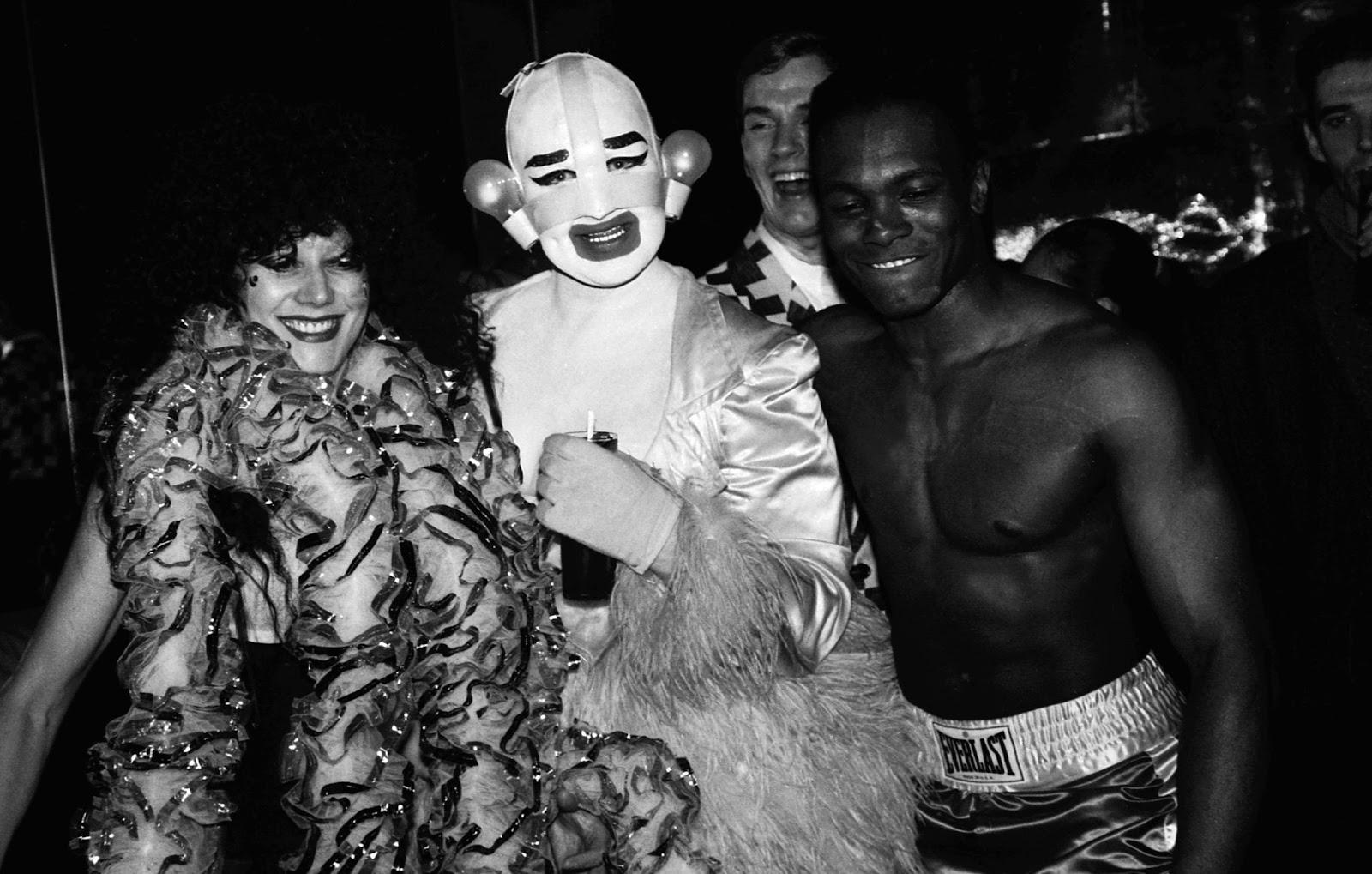
Everyone is raving about the Leigh Bowery exhibition at the Tate Modern. It’s all over your friends' Instagram stories and even the conservative publications are giving the big five stars for the Aussie provocateur with the terrifyingly large dick. We won’t be the first to tell you that you have to go.
But one thing stands out when you walk around the show: how genuinely exciting 1980s London was, teeming with possibility and vibrant with change. Everyone is familiar with 1970s New York; the dirt, the rats, hip hop, disco and punk. Maybe it’s time for a TV series or a film about London, circa 1985, beginning with a night at Taboo.
Plaque Attack
English Heritage’s blue plaque expansion continues to move slowly – which is, in its own way, a good thing. This year, Audrey Hepburn and Marc Bolan are to be commemorated. In an ongoing series, we’re asking friends, readers and contributors to nominate a dead Londoner for the honour. A brief reminder of the rules: the nominee must have died at least 20 years ago, and the building at which they lived or worked must still be extant. For our first outing, Lotte Brundle has nominated Kenneth Peacock Tynan.
Even by the standards of 20th century English writers, Kenneth Tynan was a poor family man: at his daughter’s 21st birthday party, he lamented the absence of his close friend, Princess Margaret, by compelling his daughter to take cocaine with him. Drunken, self-obsessed, preeningly hypocritical, he was also the first person to say ‘fuck’ during a live television broadcast. Railing against the stodginess of 1950s theatre in London, he was integral to the success of John Osborne, Arnold Wesker, Shelagh Delaney and many more. In conjunction with Laurence Olivier, he made the National Theatre a global institution.
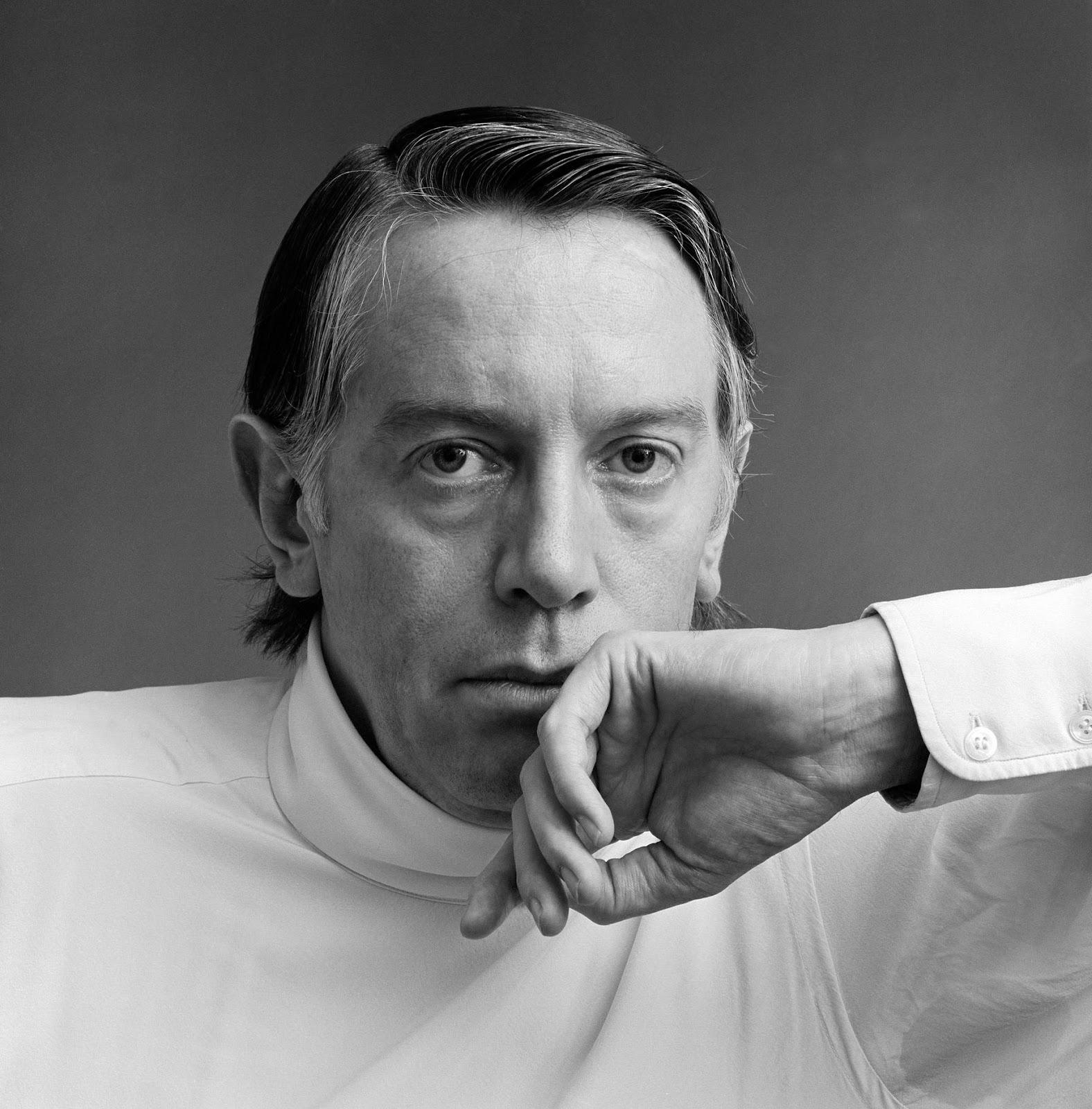
It is impossible to imagine a critic wielding such influence, in any cultural sphere, in today’s London.
While working at the Observer in the early 1960s, he was based in an eight-room flat in Mayfair at 120 Mount Street, now a commercial property servicing a Carolina Herrera store and the Mayfair branch of Knight Frank. After he vacated the building, the new tenant was the infamous art dealer Robert ‘Groovy Bob’ Fraser. It was at these premises that Keith Richards wrote the opening chords to Gimme Shelter, further enmeshing it in rock and roll history. 120 Mount Street is a place buzzing with cultural capital, from mid-century British theatre to the Rolling Stones. It has its red door, but we want a painted plaque.
On Cinema, At The Cinema
As mentioned in our first outing, London has a well-served platter of indie boltholes for the determined cinéaste, so this week we’ve gone through the listings for some recommended reels.
Hot from topping the 2022 Sight & Sound poll of the best movies ever made – a mere 47 years after its release – Jeanne Dielman, 23, quai du Commerce, 1080 Bruxelles is still showing this Saturday and next Tuesday at the BFI Southbank. Chantal Akerman’s majestically restrained portrait of a widowed housewife is the best use of three hours and 21 minutes we can vouch for on this, or any other, weekend. And if that still leaves you gagging for the cream of 1975 cinema, you can also catch Peter Weir’s elusively chilling breakthrough feature Picnic At Hanging Rock tomorrow, Sunday and next Monday and Wednesday.
If you’re very quick on the draw, you might make tonight’s 18.30 showing of Goodbye Horses: The Many Lives of Q. Lazzarus, at Rio Cinema, Dalston. This documentary tenderly unravels the mythos and mystery of Diane Luckey aka Q. Lazzarus, a NYC cab driver whose song Goodbye Horses went on to soundtrack one of The Silence Of The Lambs’ most striking and memorable scenes.
If you’re wondering why you never heard of her afterward, then consider that her sole entry into the pop cultural firmament came about entirely by chance, after she picked up director Jonathan Demme for a fare and passed him a tape when he paid. Three decades on, fortune played the same trick, when documentarian Eva Aridjis found herself in the back of Luckey’s cab and resolved to direct this fascinating survey of Q’s life, work, and the cruel whims of the music business.
Hands-down our pick for the week, however, is On Falling, showing at both the BFI and The Garden Cinema all this week. Laura Careirra’s debut feature is a poignant take on precarious employment, in which a Portuguese woman attempts to make a life for herself through the dehumanising grind of shiftwork in a Scottish warehouse. At once compassionate and merciless, On Falling is an unshowily moving character piece, a searing rebuke to modern capital, and a remarkable new entry to the social realist canon.
Eastward Facing Fun
People often ask: what is the maddest church in London? Of course, it rather depends on your definition of mad. There are obviously those rather malign bodies which tell children they’re possessed by witches or advocate doing horrible things to gay people. But we would not, for a number of reasons, recommend visiting them. If, however, you mean ‘mad’ in a more endearing, eccentric, Church of England sort of way, then there is a stand-out winner: St Peter’s, London Docks.
Built in what was a disease-stricken hotbed of crime and vice, it was the vision of a man called Father Charles Lowder, who had been fired from previous jobs for paying urchins to throw eggs at a churchwarden whom he disliked. Lowder was a key figure in the Oxford Movement, the catholic revival in the Church of England. He deliberately designed the church to accommodate as hyper-ritualistic a service as possible. Bells, smells, beautiful outfits, statues and so on. Put another way, St Peter’s was built for the stage. And drama was laid on, as it was the scene of multiple riots and a cholera epidemic.
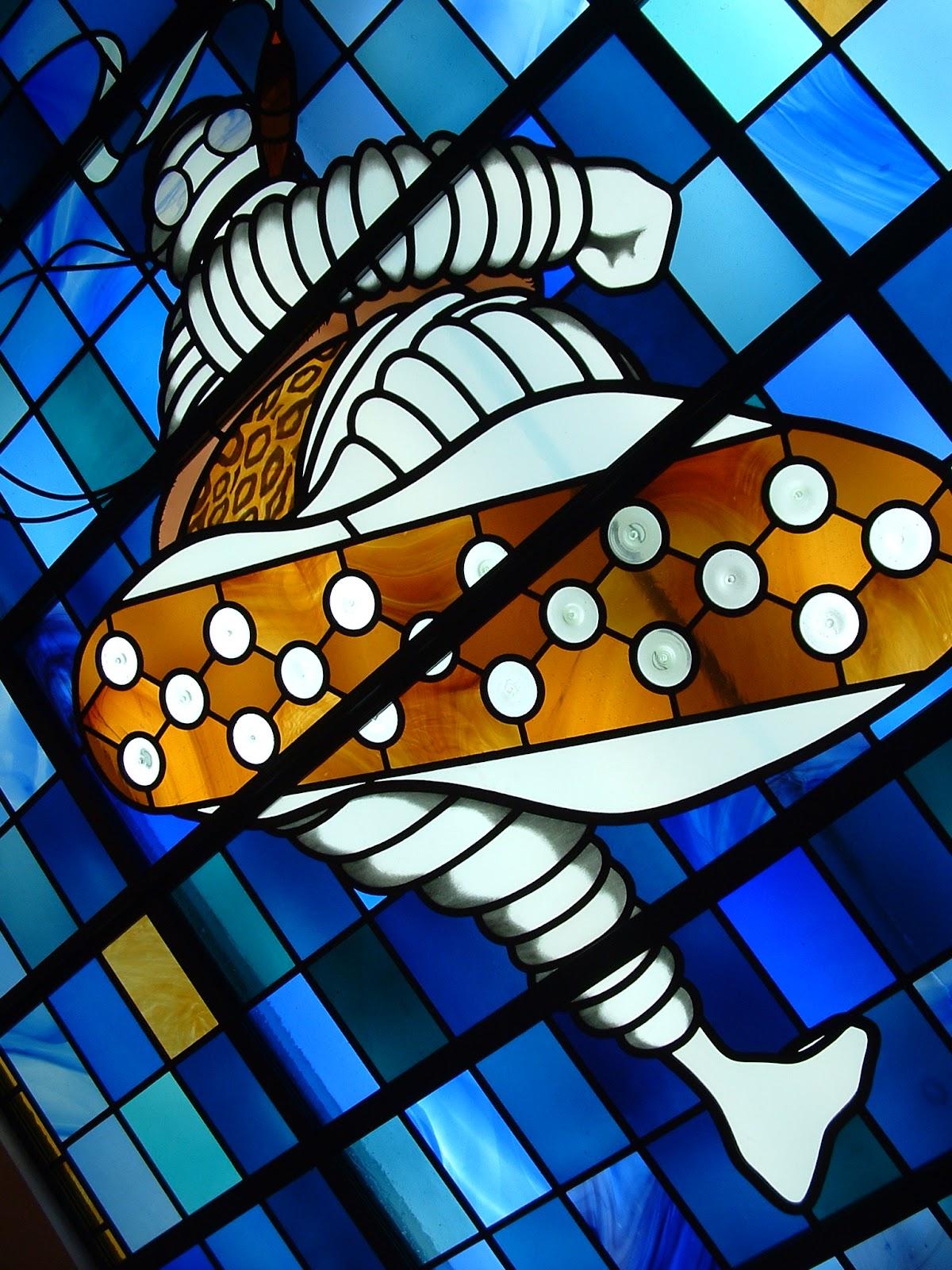
To get there today, the quickest route is the Overground from Wapping station. St Peter’s is accessible through the weird gateway, which is actually the vicarage. The church is often open, though it is best to visit on a Sunday to guarantee entry and to see it in its gloriously mad pomp. The interior is a joy: a collation of clutter and the clinging smell of incense to every item of furniture. The walls are covered in paintings and statues, candle stands take up most of the space, alongside memorials and invocations to prayer. A highlight is the stained glass – the work of 20th-century glass artist Margaret Rope, who replaced the Victorian windows after the Luftwaffe’s renovation in 1941. For all the madness, this is about as authentic as London gets. The congregation are not imports from wealthier parts, but the local people who happen to go there.
All that adds to a very special atmosphere, both in the church and its environs. It is hard to emphasise just how ‘old London’ this place feels. Wapping Green is like the film set of an Ealing comedy, with its towering Victorian social housing, bunting and the sensational Turner’s Old Star pub: a must for a pint, post-church visit. You may even find the vicar there, with an ale. Father Jonathan Beswick is a motorcycle enthusiast and beret-wearer. Here he is dressed as a pirate in the very same pub after a successful ‘Movember’ challenge.
For the feast of All Souls, he sets up a coffin in the middle of the church’s nave and encourages people to go and look in. At the bottom of it is a mirror: the ultimate memento mori. Both Father Jonathan and St Peter’s are true gems of the capital, unheralded, except by their local community.
Did you enjoy that? We hope that you did. You can leave a comment below or email us at editorial@the-fence.com – do let us know how you get on. Do become a paid subscriber if you’re looking forward to the next mail-out, which will be in a fortnight’s time. Lots to look forward to. If you want some help navigating, we’re updating our tips map with every mail-out.
All the best,
TF