Dear Readers,
Good evening and welcome to another Capital Letter, helping you find your north star amid the mizzling London skies.
As this newsletter expands, we would love to have more contributors. If you have any angle, insider knowledge, or passion for a strain of London life do get in touch at editorial@the-fence.com. We’re particularly interested in putting together a few good guides to parts of London. If you fancy yourself well-versed in your local, or ex-local, area, do let us know.
A final reminder that signing up for a paid subscription is well worth stumping up for. You get access to the back catalogue, and you’ll help us keep growing. For a short time, we are letting our Google Map full of our recommendations out from behind the paywall. Get in there now.
This week we have advice on bread products, boujie festivals and bullshit pubs. But we’re kicking off by asking the question: which artwork in London is worth coming back to, time and time again?
Hello, Old Friend
Our arts coverage tends to focus on the conveyor belt of temporary exhibitions. But what of those images and objects deemed worthy of lasting residence within the hallowed halls of our public collections? In this week’s edition, we are recruiting you to join our reconnaissance mission, looking for the best artworks on permanent display in a London institution. We have two nominations in so far.
The criteria are simple: to qualify, a work must be free to access (which eliminates a natural choice, Manet’s A Bar at the Folies-Bergèreat the 12-quid-to-enter Courtauld), not perpetually crowded-around (no Sunflowers) and, of course, on permanent view (disqualifying everything you have read about in this newsletter… so far). A comfortable seat facing the work is not a requirement, but certainly a boon.
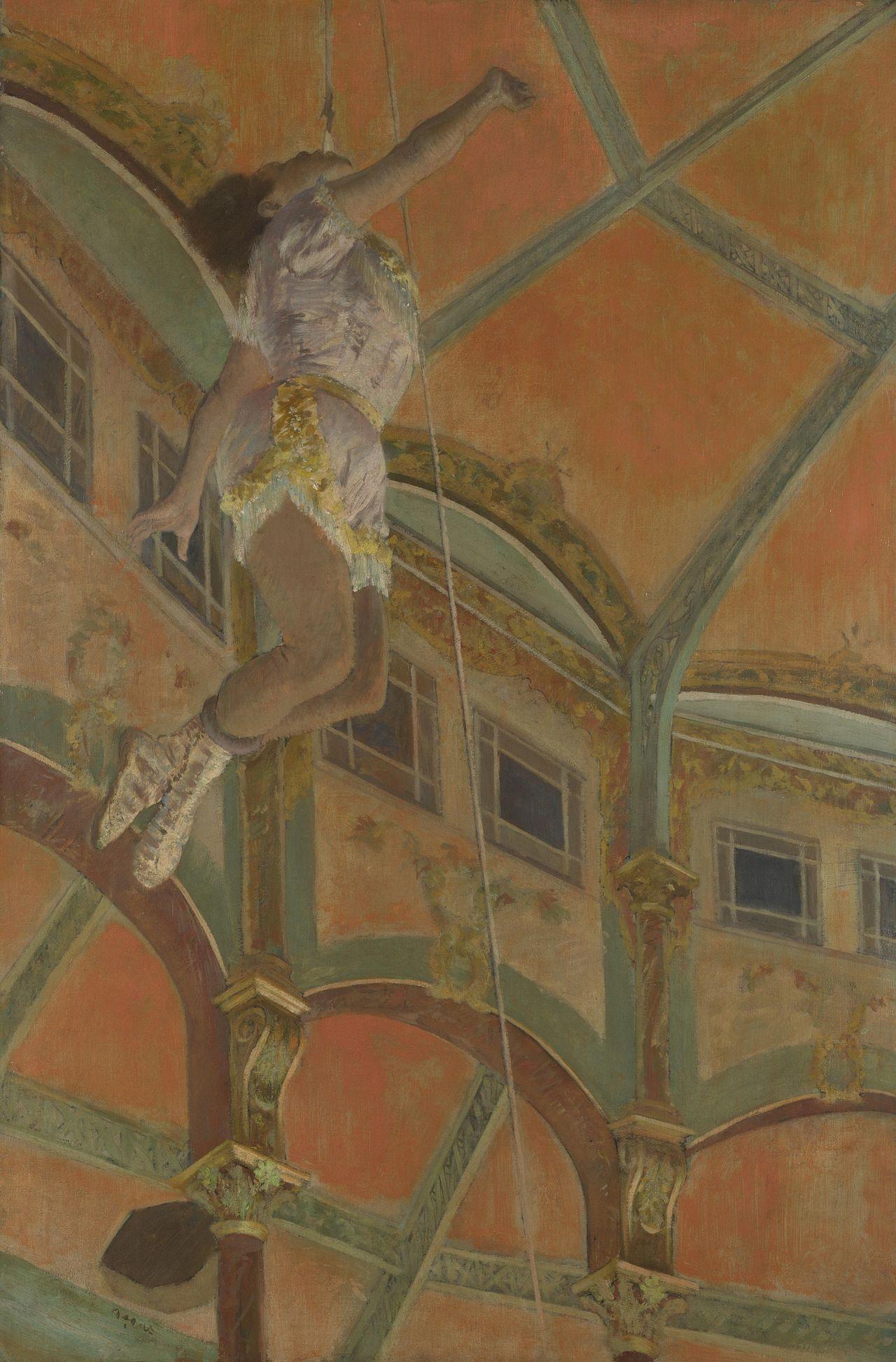
The writer and curator Alayo Akinkugbe pointed us in the direction of Degas’ Miss La La at the Cirque Fernando (1879), a portrait of acrobat Anna Albertine Olga Brown, on show at The National Gallery. ‘She’s holding up the weight of her body by her teeth, clenched to a mouthpiece attached to a rope. It’s one of the rare solo portrayals of a black woman in the collection and I love that she looks like a superhero,’ she said.
The painter Francesca Mollet also directed us to the National, to see Giovanni di Paolo’s tiny, mystifying painting Saint John the Baptist Retiring to the Desert (1454), which is notable for its time-warping double-depiction of the same figure. ‘I return to this painting because within its small scale it creates a universe with so much to look at,’ she told us, ‘The chequerboarding of the fields below the mountains, the skewing of space and scale, the curving horizon, creates another kind of time shift, relating to the elasticity of an experience of time, and is akin to how we truly see and remember; details up close and moments overlapping.’
Returning repeatedly to the same painting, studying its surface cracks and tuning into its deepest resonances, is a romantic idea; sometimes, enough so to stretch credulity. The poets, dreamers and miscellaneous satchel-wearers who claim to do so are often tiresome. But in this economy and with a long winter ahead, we’re willing to give it a try. So please, furnish the comments section with your suggestions and we will round them up in a forthcoming edition.
Below the Bar
Nobody likes pubs more than us. Indeed, we’ve written a very good book about them in case you hadn’t noticed. Pubs are often incredible receptacles of history, with plenty of the capital’s boozers having genuine links to some of the most amazing incidents in our history. Take the Red Lion in Holborn, where the disinterred body of Cromwell lay, or The Blind Beggar where the Krays really did do a bad murder. As we all know, pubs are spheres for bullshit, places where the breeze is shot freely. What winds us up, however, is when the two spheres collide, and pubs try to trade on completely fictitious histories to drum up custom.
Almost all the pubs in Westminster claim that they were regularly frequented by titanic political figures like Churchill or Lloyd George or Ted Heath. Almost all of that is drivel.
It isn’t just Westminster, home of London’s bullshit trade, where this sort of thing happens, however. There are offenders across the city: The Hand and Shears pub on Middle Street makes loud claims to being ‘Grade 1-Listed’ when, alas, it isn’t. The Mayflower in Rotherhithe makes lots of dubious claims about links to the Pilgrim Fathers to lure in unsuspecting Americans to spend £7 on a Peroni. Perhaps most egregiously, The Fitzroy Tavern on Charlotte Street claims to have inspired the name ‘Fitzrovia’, when it is easily provable that both take their names from the surname of the Dukes of Grafton, who built the estate.
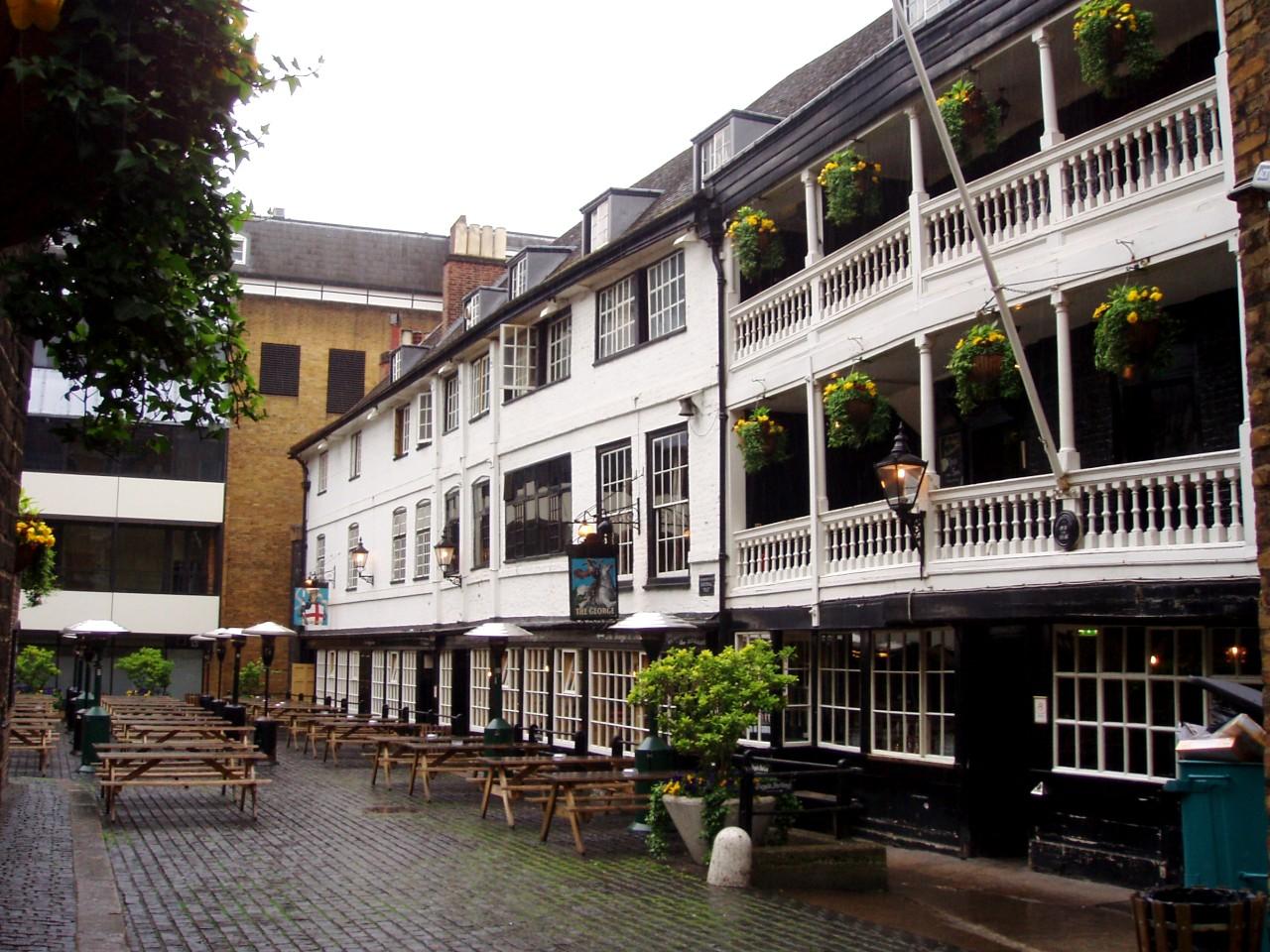
There is of course frenzied debate as to what is the oldest pub in the capital, which is also absurd – it’s definitely The George Inn, the only surviving galleried coaching inn in London.
I’ve Got the Key, I’ve Got the Secret
It’s easy to be cynical about London’s Open House festival, especially when you see the line of Daunts Books tote bag-sporting patrons waiting patiently in line for a tour of Broadcasting House, like a cartoon from The Spectator come vividly to life.
But the festival is a magic thing, both grandiose and local at the same time. The way to enjoy is to not leave your postcode, and using their outstanding map feature, pay visits to three or four things in the immediate neighbourhood, which will probably be completely unremarkable, but will, no doubt, enlarge your feeling for the streets where you live.
It’s also an opportunity, for those of you who like to waste time on Rightmove, to take the temperature of contemporary residential architecture – like this number from Studio Naama, or this majestic residence up in Hampstead which couldn’t be more up our strasse.
Casting Aspersions
Ubiquitous, and seemingly not yet anywhere near sating an infinite public appetite for their audio charms, it’s curious that podcasts are also often – one might say paradoxically – dismissed in the wider culture as something of a punching bag.
Such has been the steady and consistent growth of the medium that the London Podcast Festival has not yet arrived at a time when podcasts weren’t at their biggest. This year’s iteration, its tenth, descends on Kings’ Cross this weekend for dozens of events, workshops and live recordings.
It’s a roster which may seem daunting for the uninitiated, so we’d recommend trying a few more off-the-beaten-audiotrack selections, not least a live recording of Wrestle Me!, Marc Haynes and Pete Donaldson’s joyfully silly wrasslecast and The Beef And Dairy Network Podcast, the #1 comedy show ‘for those involved or just interested in the production of beef animals and dairy herds.’ Go, enjoy, and if you do feel like swearing, do please remember to ask your host if it’s allowed.
If That’s A Beigel, I’m Meshuggah
The beigel has been having a moment across the capital of late, but truth be told, there is a serious lack of quality in the booming bakery scene. One of the key problems is that this new drive is getting its energy from our friends across the Atlantic. Though the humble beigel is originally an Eastern European product, and has been in this country since the late 19th century, it’s regarded now as a New York phenomenon, a result of the prominence and size of the Jewish community there and the power of American venture capital. The result is, however, that the nature of this delicious product has been on the slide.
One of the key differences between the New York drek and the London good stuff comes down to those who are making the beigels. In New York, the bagels are bigger, much bigger, going up to eight ounces, compared to the more traditional two or three. Part of this may well be due to pressures on portion sizes as prices go up and American attitudes towards portion sizes become more standardised. But another key reason is that in the States, bagels are usually hand-rolled by freelancers who are still largely paid not by the hour, but by the bag of flour they get through. As is standard for workers in the US, they are not paid well and so quite sensibly they have taken to expanding the size of their beigel to move through the bag of flour as fast as possible, not least because they will often be working for multiple clients in a day.
It is a great satisfaction – and one that should be trumpeted far more loudly – that one is still able to get a proper beigel in London. Small, crisp outside with a serious, serious chew. The beigel must be able to put up a genuine fight to be of a proper calibre. The places to go are obvious: the Brick Lane shops (they were originally owned by the same people), Rinkoff’s in Whitechapel and Grodzinski’s in Stamford Hill.
Regretfully, the Americans are beginning to dominate the London scene. A prime example would be the new bagel chain B Bagel, which now has 20 shops across the capital. Their bold shop signs pontificate on what is and isn’t a proper bagel, but their products are disappointing, with the bread pallid. Speaking to the staff at their Soho outpost, it is clear that they are not baking on-site.
So if you desire a beigel, make sure to pronounce it correctly and try to avoid anything with an aggressive marketing platform and too many beigel options. If there’s an onion, seeded and rainbow option, you are probably in the wrong place. Seek Jews and you will be rewarded.
Sir Ian McKellen Is Holding a Pistol
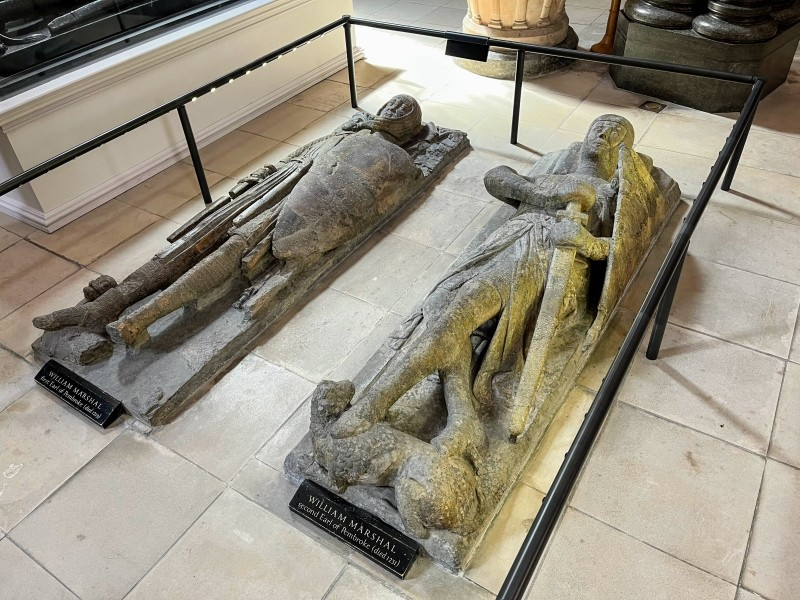
Now, far be it from Capital Letter to suggest that featuring in a Dan Brown novel is cool. The notoriously literarily challenged US wordsmith isn’t normally our go-to place for hot spots and hip recs. However, there is one very obvious exception to this: the Temple Church. Featuring in the Da Vinci Code as a place where spuriously obvious clues are presented on a plate to his protagonists, the Temple Church is, unfortunately, one of the coolest places in London. Firstly, it is because it is one of the oldest. Managing to survive the Great Fire in 1666, it dates from 1185 when it was consecrated by the Patriarch of Jerusalem before the Third Crusade. Despite heavy bombing in World War Two, lots of incredible medieval bits survive, in particular the Templar effigies, as well the tombs of some of the big hitters of English history, like William Marshal. This age means that it all feels a little bit spooky as well, especially as it is remarkably under-visited and you might well be the only person there.
Talking of weird effigies of the past, the Temple Church is doubly interesting for the insight it gives into the wonderful world of the legal profession. The Temple is the private chapel of the Inns of Court, and the barristers and judges use it for all sorts of legal jollities. Ironically, given this background, it was the subject of one of the longest-running unsettled legal cases in British history as to who owned the land around it. Nowadays, it is an oasis of calm on the edge of the city as well as a glimpse into an otherwise hidden and mysterious world. The tube links are good and the pubs nearby – especially The Seven Stars – are excellent. Go this weekend.
That’s that. If you enjoyed it, please recommend it to your friends or on social media, as it’s a real pleasure reaching more readers every fortnight. Drop a like or a comment below, or if you’re feeling extra fancy, join as a paid subscriber. As ever, any correspondence is to be directed to editorial@the-fence.com. Until the next time.
All the best,
TF