Cy Abbott, Travelling Showman, spends summers in the control booth of his fairground ride, called New York. For hours a day, sometimes with his young twins balanced on each knee, he watches customers strap into a fleet of yellow cabs beneath a canopy of disco balls, foam machines, American flags and a spray-painted slogan: ‘The Atmosphere is Here!’ Cy starts his ride slowly, to the baritone of New York, New York. The jingle box switches to Empire State of Mind and he accelerates, whirling the cabs around the carousel. Cy’s father was a Showman. As was his grandfather and great-grandfather. So the business of show business comes naturally. He’ll often take the mic, interrupting Frank Sinatra and Alicia Keys, and shout things like, ‘Put your hands in the air! It’s party time!’
‘When you say to 66 people “scream if you want to go faster!” and they all scream, it makes the hairs stand up on the back of your neck. It’s a noise that you have never heard before in your life,’ Cy tells me. ‘I’m a very enthusiastic showman. I love my job.’ Cy’s brother, Charles, is a Showman too. He travels with a rifle range and some kids’ rides, and he never thought seriously about doing anything else. You don’t choose this job, or way of life, he explains – you’re born into it.
A Showman’s life is shaped by generations of tradition, and the seasons. Traditionally, Showmen earn enough over the summer to sustain themselves during the winter (which they call kipper season). Around Bonfire Night, they return to their yards to rest and repair their rides before hitting the road again for fairground season, opened in February by the King’s Lynn Mart, which has run since Tudor times. For more than a century, the Abbott family yard, their winter quarters, was in an idyllic hamlet called the Vale of Health, tucked into a side of Hampstead Heath. Meaning Cy and Charles have spent a lot of kipper seasons in one of the most exclusive parts of Hampstead; therefore, London – therefore, if you think about it, the world.
Circumferenced by a dilapidated fence, the Abbott yard, known as the North Fairground site, is at the bottom of the Vale of Health, sandwiched between elegant Victorian villas and the sweeping green of the Heath – the mixed bathing pond is a swift 10-minute walk away. Living in Hampstead was incredible, the brothers say. But, as time passed, their yard became unsuitable for their sprawling family and for storing massive rides like New York. So, a few years ago, the Abbotts put their yard up for sale. The ensuing planning battle has a fantastic cast of characters. A clan of Travelling Showmen. A developer in the business of bungalows. A barristered-up coalition of Hampstead societies. Horrified high-society residents equally horrified by the prospect of ‘a group of bungalows masquerading as caravans’.
Opponents viewed plans to put semi-permanent caravans on the site as a developer’s attempt to dodge planning laws, to the detriment of the prized and protected Heath. Obviously, the Abbotts saw the whole debacle differently. It felt like their wealthy neighbours were thwarting their right to benefit from their own property. ‘It sickened us to be honest, in some respects,’ says Charles. ‘It wasn’t just about the money. Obviously the money would have been a factor… But all we wanted to do was move on and better ourselves.’
Roughly 20,000 Travelling Showmen live in the UK, and many families have worked in the business for generations, cultivating a strong and self-contained culture in the process. Showmen travel together and work together. They often marry each other and even have their own language, Paylaree, a combination of Romani and slang. Despite their unique culture and the ancient roots of their industry, Showmen were only recognised as an ethnicity and profession in the 2021 census, following a campaign by the Showmen’s Guild, the body that governs the industry and advocates for Showmen. The guild started life in the 1880s as a protest movement against an ardent Methodist preacher who was on a mission to restrict the movement of itinerant people – a challenge still faced by many Travelling communities today. Showmen don’t identify with Travellers or Gypsies, but they can experience similar types of discrimination. Everyone loves the funfair, but a lot of people don’t want Showmen pitching up near their back gardens.
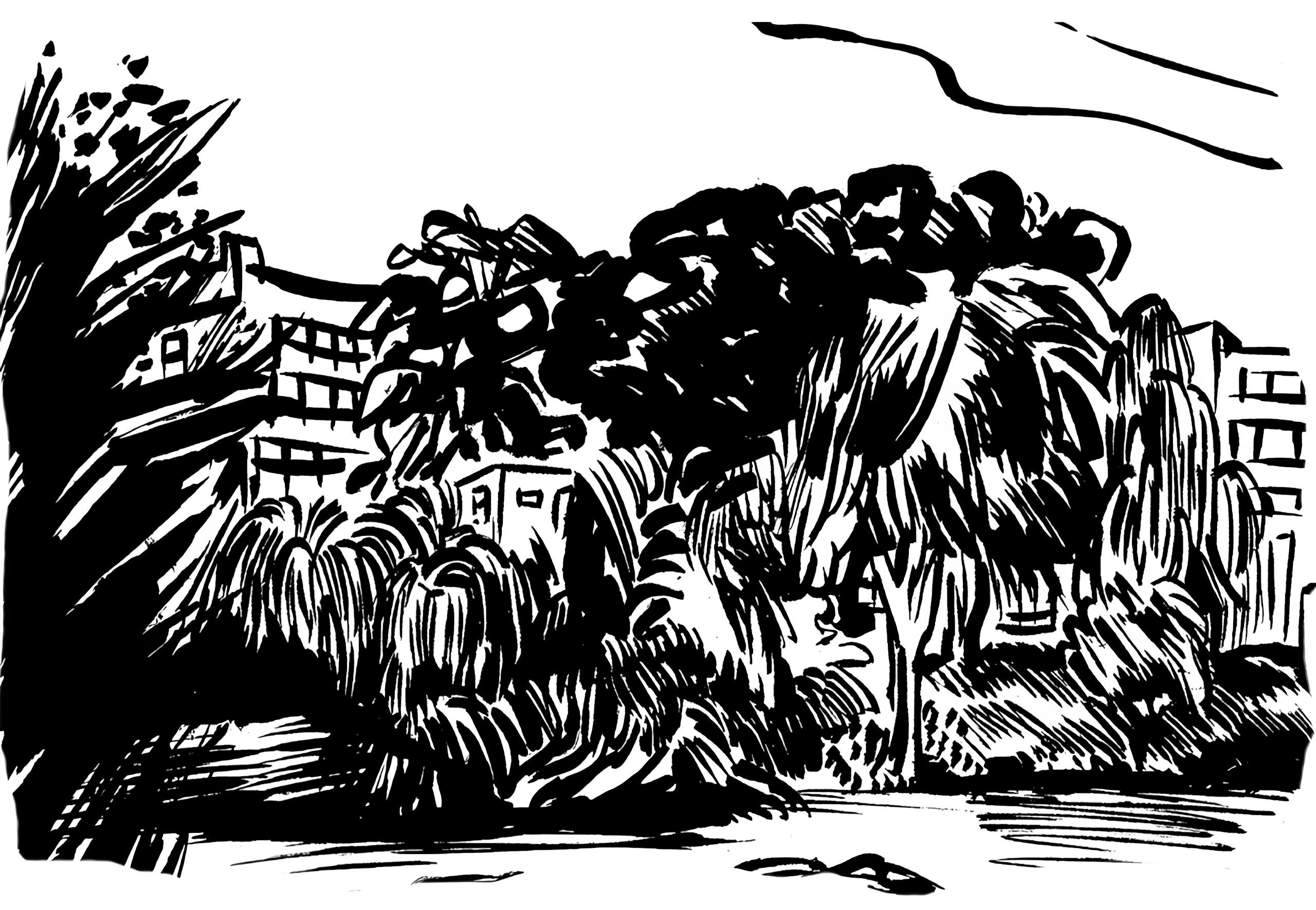
A Showman’s yard in the heart of Hampstead Heath sounds too fantastical to be true. So I went to check it out, climbing through Hampstead until I reached a narrow lane. The sign was draped in a tangle of greenery so it read, just: Health. The Vale of Health is accessible only by this lane and it combines the seclusion of a country village with the cash and cultural clout of the city. Its houses have names (Hillview, Heathhurst) and plaques announce they’ve been lived in by D.H. Lawrence and media baron Lord Northcliffe. The Evening Standard once described the Vale’s residents as looking like readers of the London Review of Books. I’ll update that: they could all be subscribers to The Fence.
The Vale of Health wasn’t always such a coveted postcode. It was actually a malarial marsh that was drained when the Hampstead Water Company dug a big pond. Builders put up some houses and, in a savvy marketing move, the area’s name was changed from Hatches Bottom to the Vale of Health, presumably to entice people to move into these houses, which were overcrowded and one was apparently full of chimney sweeps. A dusting of star power was provided by essayist Leigh Hunt, who lived at the Vale after leaving prison and hosted leading literary figures of the day. Shelley and Byron apparently shared a nearby cottage in the Vale and wrote lines of poetry on its window.