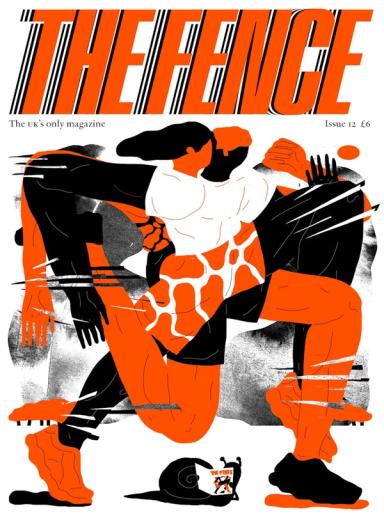
Last year, the most eligible stud in the world died. Euthanised at the age of 23, following a chronic foot injury, Galileo’s death didn’t just disappoint the fans who sent him stacks of letters – it also marked the close of a historic second act.
Galileo was a good racehorse: he ran eight races and won six of them. But it was during retirement that he found real success, siring a stable of champions. Privately negotiated, his stud fee was rumoured to be £500,000 per cover. According to Business Insider, that meant a gallon of his semen was worth £40 million. It was more expensive than liquid lsd, liquid gold, Chanel No. 5. In fact, Galileo’s covering fee crowned elite horse semen as the most expensive liquid in the world.
Horse semen is a big business. Although thoroughbreds crown the sphere of ejaculate economics, there’s plenty of money in other disciplines (dressage, showjumping, pol0) which, unlikeracing, allow artificial insemination. Stallion AI, the Shropshire-based semen pioneers, sell fresh, chilled and cryogenically frozen semen around the globe. Clients thumb a glossy catalogue and choose from rippling stallions with names like Aristo, Cassius III and Je T’aime Flamenco. Selected semen is then packed in containers charged with liquid nitrogen, which maintains its cool for up to 14 days. These containers are sent by standard carriers: dhl, FedEx, ups – look up and you’ll probably see planes carrying horse semen, crossing each other in the sky.
Artificial insemination sounds futuristic but it has a long history. According to myth, its origins trace to 1322, when an Arab sheikh inseminated his mare with semen stolen from a rival’s stallion. The broader scientific consensus is that Lazzaro Spallanzani, an Italian priest and physiologist, became the recognised pioneer in the field in 1870 when he artificially inseminated a spaniel. A century later, the field rapidly accelerated when a merging of science and globalisation meant that money and horses – or just their ejaculate – could move more freely around the world. Horse semen, apparently, became a tantalising proposition. In the 1990s, Italian police seized an illegal racetrack from a mafia boss, Lorenzo Nuvoletta, and discovered he’d also built an artificial insemination lab. Nearly 20 years later, the British police investigated their own case of semen fraud. A senior NHS employee was caught using company funds to buy horse semen, which was imported from top European stud farms and disguised as human sperm for IVF treatment.
Today, people are cashing in more overtly. Darren Blanton (a Texan on Trump’s transition team who was once dubbed the ‘Cowboy Venture Capitalist’ by the Dallas Morning News) claims to own £16 million of frozen semen produced by just one horse. Star Trek actor William Shatner was awarded the horse semen in his last divorce settlement. And, according to the Australian company SuperConcepts, a number of their clients holding ‘self-managed super funds’ have been investing in the product. ‘Frozen semen is more tradeable than bullion because you can sell it as units,’ one of their analysts told the Australian press. ‘Think of it as liquid gold.’
Tullis Matson, founder of Stallion AI, first became aware of the financial and imaginative possibilities offered by horse semen three decades ago during a trip to New Zealand, where artificial insemination was cheaper than transporting horses between the two islands. Matson, who is vertiginously tall with a rim of grey hair, steely sideburns and a thatch of eyebrows that cap an easy grin, didn’t have a scientific background. He didn’t even like science at school. But he did have vision and, also, a useful absence of inhibition. He came home and started experimenting. Storing tools in incubation tanks previously used for breeding chickens, he worked as a skydive videographer on the side. Today, Stallion AI is a slick operation occupying 30 acres of the farm where he grew up and Matson no longer needs a side hustle, but he still skydives. Recently, he was berated by plane officials for concealing a stack of Horse & Hound magazines in his safety bag.
Matson, who estimates he has overseen more than 15,000 equine semen collections, believes stallions perform best if they’re clear-headed. And so the occupants of his yard live by a wellness routine designed to optimise their lucidity, and therefore their libido. ‘When people come here they see it as a hotel-spa, a holiday home for horses,’ says Matson. ‘If stallions are settled they produce good quality product.’
Upon arrival, stallions are tested for infection – pandemics are a huge risk, and disease can be passed through semen. They’re then settled into stables where, via private webcams, owners can observe them lounge in dust-extracted shavings and breathe air circulated by a ventilation system. Diet is closely monitored. Horses eat hay that has been nutritionally tested and moistened in a Haygen HG600 Forage Steamer. Before a covering, some stallions are put on a treadmill-like machine called a horse-walker to loosen their muscles; others relax in a room hung with infrared lights.