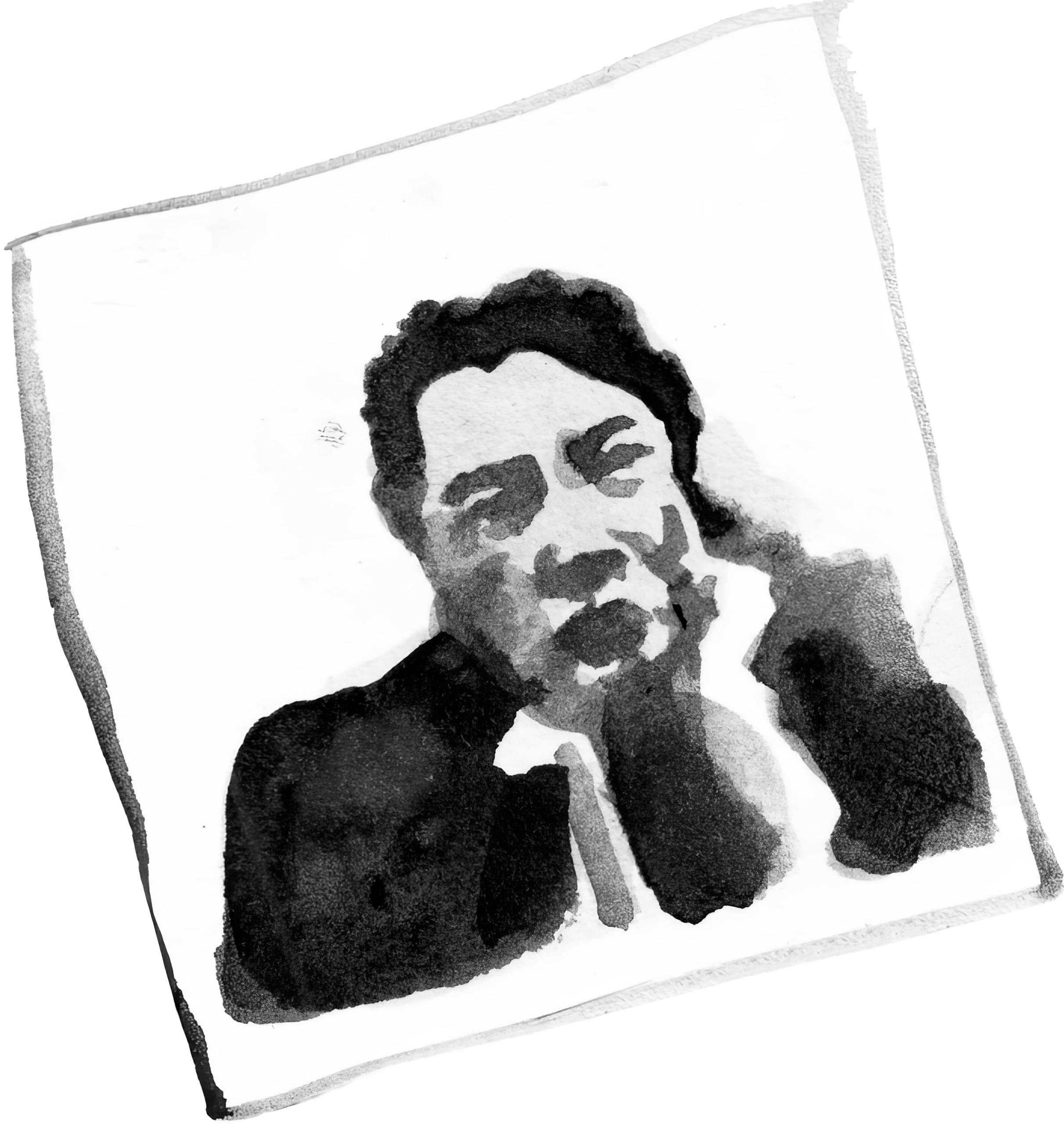
Andy Hayler has ordered a 2017 Chianti Classico. We’re at a restaurant called Villa di Geggiano in Chiswick, a kind of Tuscan Rainforest Café, complete with en-vined wooden veranda, on his recommendation – a recommendation that, given the long pall of his culinary reputation, I was minded to trust. The restaurant is the London outpost of a centuries’ old Tuscan vineyard, which has been bringing ‘superb wines to the UK from the Villa since 1725’. Hayler is, to put it mildly, a wine guy.
He has been writing about food and drink since 1994. When we spoke, he had just completed the meal that will become the two-thousandth review for his website, the charmingly straightforward ‘www.andyhayler.com’. A few decades ago, he co-founded a software company, and still dabbles in the binary art of data management, but, through a sense of privacy or charity, doesn’t go into it much. One thing that is clear is that it affords him to eat and drink wherever he so pleases. While he’s written for the now-defunct Good Food Guide and Elite Traveler, it’s his eponymous blog that quietly sits as the most important, and most independent, repository of restaurant reviews ever crafted.
Hayler, who tells me he eats out at least four times a week, has a refreshingly austere writing style. Most writing about eating, from the gouty auto-fictional prose of Coren, Rayner and Dent to the terse yet weepy postmodernism of transatlantic food essays, is saying, boldly and often unpleasantly, ‘look at how clever I am’. Hayler’s prose, on the other hand, takes on a sage and calming mode. Nothing here is saccharinely Proustian. In Hayler’s reviews, expect to see terms like ‘pleasing’, ‘attractive’ and the subtly excoriating ‘harmless’. Whole paragraph blocks are dedicated to dissecting the avarice of a particular wine list with the studious efficiency of a scholar perusing crispy old papyrus.
‘If you’re writing something for the newspaper, the objective is to sell column inches with entertaining copy,’ he tells me. ‘I’m not as good as an A.A. Gill ever was, in terms of writing, and I wouldn’t ever pretend I was any sort of fantastic prose master. I’m not trying to throw in a load of stuff about my journey to the restaurant and the trendy people on the table to the left.’
Hayler’s calling card is his ratings system, which is out of 20. It is simultaneously opaque and arbitrary – like all numerical rating systems – and intuitively understandable. Most places seem to fall in a 14–16 bracket; good but not mindblowing. From 17 on is where we get into the premier league. His most beloved establishment, the restaurant at The Ritz (which he has, at time of writing, reviewed 44 times), holds firm at 18/20. To exceed this would place a restaurant in Hayler’s personal pantheon.
When Noma, the de facto ‘best restaurant in the world’, announced its closure at the start of the year, the Guardian asked if we were witnessing ‘the death of fine dining’. The mind-bending cost of keeping an operation like Noma open meant that even a restaurant with a waiting list as long as the Domesday Book, and a £400 tasting menu, could no longer keep the wheels on the road. Noma cut no corners on ingredients, but, as Hayler tells me, that’s not the case for everyone.
‘In London, even at multi-star restaurants, you’ll see some very ordinary quality ingredients. If there’s a caviar supplier, it won’t be the best caviar. If it’s a scallop, it’ll be a smaller scallop. If it’s a turbot, it’ll be two kilograms instead of eight kilograms. It just goes on and on and on.’
Given the vastness of his dining experience, he’s something of an expert in all things produce and plonk. He holds a level three WSET award in wines: a level, he tells me, higher than many sommeliers are trained to. He gets quite animated about the relative quality of cabbages and caviar – his culinary bullshit detector is incredibly finely tuned.