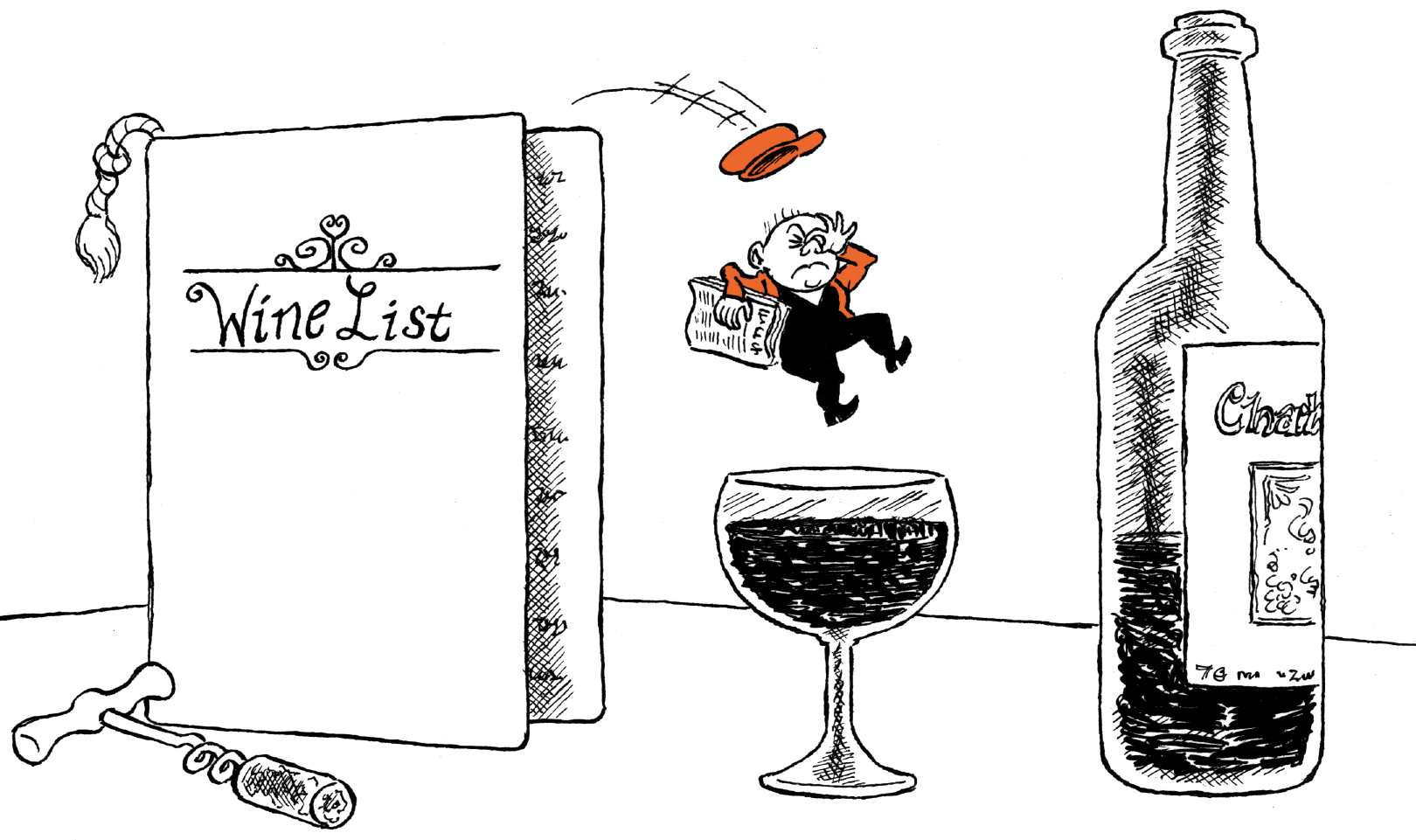

Even for a monumental wine bore like me, being presented with a strange wine list can be stressful. What should I order? Am I going to look cheap? And how the hell do you pronounce Pernand-Vergelesses? It’s funny because this doesn’t happen at a pub with wide selections of beer or whisky. Or indeed a lavish cheese counter.
People get upset about wine in a way they don’t with other drinks. I remember having a blazing row with the waitress at a now-closed Spanish restaurant in London when I asked for an ice bucket to chill a bottle of Rioja which was semi-mulled, having been stored near the kitchen. Red wine! Ice bucket! This man must be insane, she thought. At which point she called the manager. Things got so tense that I thought she was going to call the police or the men in white coats.
So that readers of The Fence might avoid such embarrassing incidents, I have put together a foolproof guide to ordering wine when out. Cut it out and keep it in your wallet so you can surreptitiously refer to it under the table.
Food in pubs has improved immeasurably in recent years, though often the wines haven’t kept up. Now, you could ask the staff for a recommendation, but this isn’t as straightforward as it may at first seem. I ate at a West Country pub with gastro pretensions a few years ago. You know the kind of place: ten local gins behind the bar, square plates, roast beef served vertically on a Yorkshire pudding MasterChef-style, but when I asked the young waitress about one of the bottles she replied, ‘Oooh, they don’t let us try the wines.’
In such places, it’s normally a risk to go with something that looks interesting or unusual, especially if you’re with company. But don’t do that. Remember: everyone likes Rioja or malbec or South African chardonnay. Just order those – you can’t go wrong. Or just have a bloody pint.
But what do you do if there’s no such reliable fallbacks on the menu? What if you’ve strayed into a natural wine bar? There’s an easy way to spot such places: mismatched wooden furniture, chalkboards and staff – male and female – sporting nose rings. Oh, and you won’t have heard of any of the wines on the list.
When ‘natural’ wines first started appearing ten years ago, I was generally positive about them. Wine made without added sugar, enzymes, yeast, minimal sulphur and oak influence, how could I resist? But such wines run the gamut from gorgeously pure to undrinkably rough. Widening the definition for what can acceptably be sold as wine means that it can sometimes be hard to tell if the wine is meant to actually taste like that.
I was told a story about an elderly American gentleman ordering wine in a restaurant. He took a sniff of the wine and sent the bottle back. The waiter told him that as a natural wine, it was meant to be like that. The usual argument ensued until, at his wit’s end, the American pointed to the back of the bottle where it said ‘imported by Kermit Lynch’ and said to the upstart waiter, ‘I’m Kermit Lynch and I’ve been drinking this wine since before you were born, and I say there’s something wrong with it.’ If only Kermit Lynch was always on hand at such times!