Two years ago, I went on a date with a man called Ben*, who worked in insurance, by mistake. His online dating profile had said he was an underwriter, and I was about to begin a graduate scheme as a subeditor. I put two and two together and got five: ‘under’ and ‘sub’ not being dissimilar; ditto ‘writer’ and ‘editor’. I naively assumed that Ben was in a similar role. It is only when he started yabbering away about risk estimation and broker relationships that I realised how wrong I had been. He gallantly insisted on paying for all of our cocktails, but there was no second date. Ben was, however, the only underwriter I had ever met, and hence when I came to write about the insurance business, I sent him another text. My hypothesis: that insurance is the last unreformed industry in London.
I wasn’t exactly expecting a reply to my out-of-the-blue request to catch up, except perhaps a ‘who?’ or a ‘please fuck off’, so I was pleasantly surprised when a message from Ben popped up on my phone. ‘I don’t work as one anymore, does that still make the cut?’ It did.
One of the largest sectors in the world, insurance’s epicentre is London, particularly in the Lloyd’s market, located on Lime Street in that magical Richard Rogers tower. The UK market isn’t limited to Lloyds, but it is the megalodon of risk analysis. The business at hand generally involves insuring large commercial risks for Fortune 500 companies and commercial airliners. To get an idea of the scale of things, it was through Lloyd’s that David Beckham’s legs and feet were famously insured for £100 million in 2006. An underwriter’s role is to assess applications and decide whether to insure a person (or just their legs) or a company. They work a lot with brokers – insurance agents who help their clients to find cover at the best price – and they drink with plenty of them too.
London’s working culture has changed immensely during my lifetime. The bankers have been relieved of their bacchanalian Christmas parties and limitless expense accounts. Media mavens no longer rack up four figures on a table for two on the company plastic. Publishing dons can only stretch to a bottle of prosecco if a book hits the Sunday Times bestseller list. But in the world of insurance, the working day is largely unchanged since Tony Blair first slid into Downing Street.
Unlike many of the victims of the cult of WFH, insurance workers still tend to carry out much of their business face-to-face. As one observer puts it: ‘The industry is run on alcohol. The best stand I ever saw at an insurance conference was one giving out free bacon butties on the morning of the final day.’
The industry is old-fashioned in more ways than one. It only allowed women to become underwriters in the 1970s and is still largely dominated by men. Plenty of them are gentlemanly, like Ben, willing to use their hard-earned insurance pounds to fund a woman’s negroni rampage on a first date in a classy Bermondsey bar. However, Barbara Schonhofer, an industry headhunter, told Bloomberg in 2019: ‘I don’t know a single woman who hasn’t been harassed in one form or another in the London market.’ Dame Inga Beale, the first female chief executive of Lloyd’s, banned lunchtime drinking among her staff in 2017. Her successor, John Neal, went a step further and outlawed anyone from entering the market under the influence of alcohol. One Under Lime, the bar below Lloyd’s, stopped selling alcohol until after 5pm as a response. Pubs in the nearby Leadenhall Market stayed rammed on weekday lunchtimes.
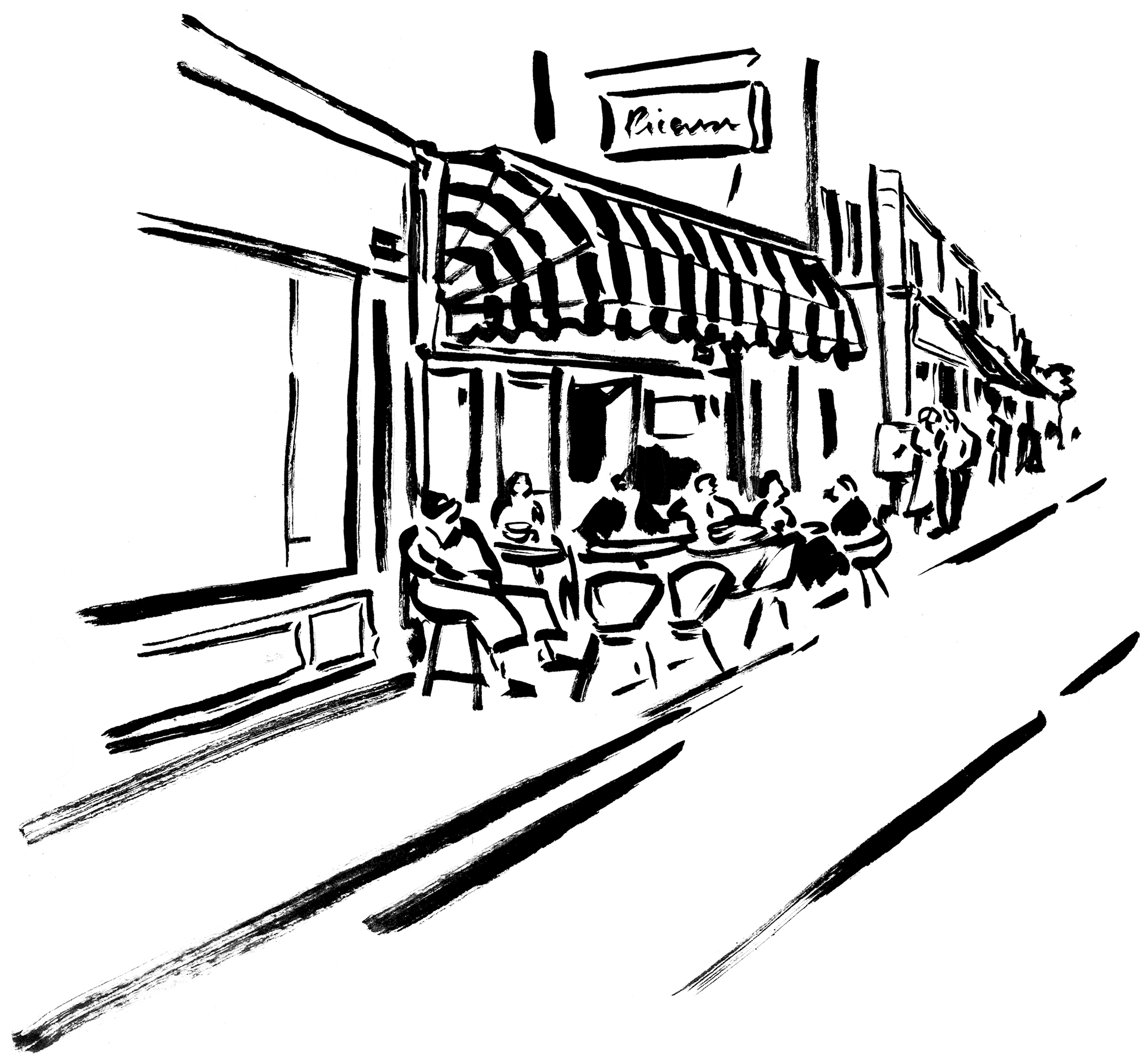
It’s a wet Monday night in February, and I am at The Lamb Tavern, right in the middle of Leadenhall Market. It is bouncing. Quarter-zip-clad and guffawing underwriters surround me. ‘If you do what I do, this is where you get most of your business done,’ one middle-aged man leaning languorously against a railing outside booms to his acquaintance as I slip by. Inside, I count roughly 40 people. Among us are three women. One is the bartender, one is me. I overhear snippets of conversation about ‘business transformation’ and ‘driving a hard bargain.’ At 6:30pm a glass is accidentally smashed, and the female bartender scurries around the feet of the large group of men, which contains the culprit, sweeping up the glass. As she does, they loudly discuss their preferred type of golf clubs.
I visit the next day too – a Tuesday lunchtime – and the pub is even busier than the night before. Suited men are downing bevvies with carefree abandon, and laughing together as a leather shoe shiner works away nearby. It is like a scene from a bygone age. I ask the bartender whether lots of people come here from work. ‘Yes,’ he answers, laughing. ‘They’re my main clientele.’