London nightlife, they tell you, is dying on its arse. Soho has lost its lustre – there are currently 45 pubs located within its once-sleazy trapezoid, and five of them are Simmons Bars. Unless you’re a member of a club, your after-hours options in Soho are limited to a couple of very mid-tier basement venues that spiritually belong in Leicester Square, all backpackers and 2003 chart hits. To the east, Shoreditch is now nothing more than the gakked-up pied-à-terre of Essex; an immaculate, infantile expanse of Barrios, Brewdogs and adult ball pits. In Peckham, south-east London’s gentrification battleground du jour, they shut down Canavans, did up the Nag’s Head, and opened more rooftop bars and austere cocktail cantinas than the whole of Lower Manhattan combined. Mayfair is monotonous. The South Bank plays it safe. But, look north, and there is still one place worth getting sozzled in. On the periphery of the capital’s inner core, as the boroughs of Islington and Camden intersect, you’ll find a drinking district where the pipes are pumping and the saturnalia of old London still clings on: King’s Cross.
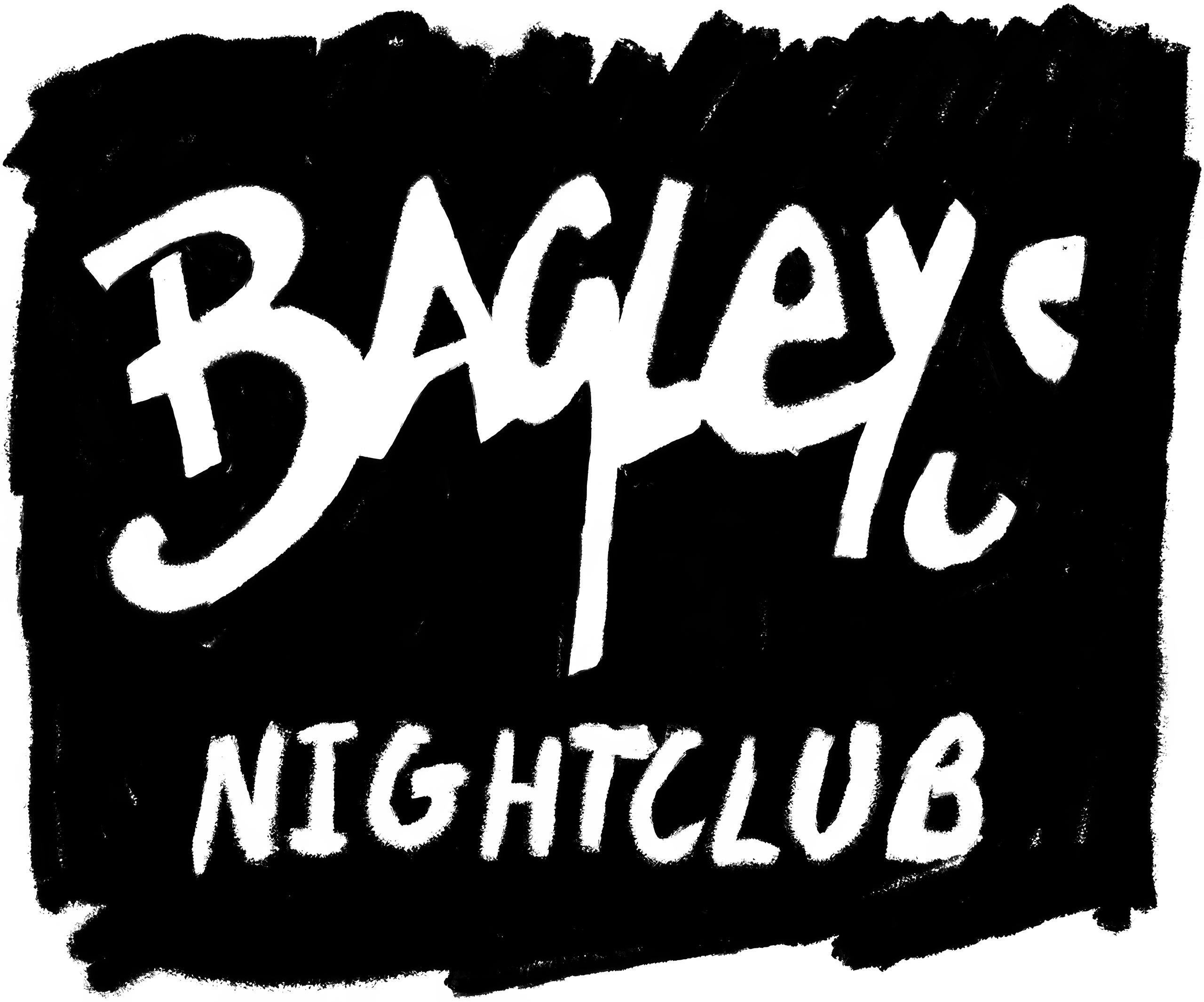
King’s Cross used to be known as Battle Bridge. Supposedly Boudicea, Queen of the Iceni, valiantly fought her final fight against the Romans here in AD 61, on the marshy banks of the River Fleet. As London expanded outwards many hundreds of years later, the area developed an iniquitous reputation: pollution, prostitution and crime plagued its streets following the construction of the Euston Road in 1756. In 1830, in a bid to clean up Battle Bridge’s image, a monument to the recently deceased King George IV was erected, complete with a police station built into the bottom. The dead royal’s cenotaph was unfathomably ugly. Cheaply constructed, this ridiculous octagonal structure lasted only 15 years before it was unceremoniously pulled down – replaced by what is today a branch of Five Guys. But the name ‘King’s Cross’ stuck, even if the efforts to spruce the place up failed. By the end of the 20th century the sex workers and drug addiction remained, but most of the industry – coal, gas, goods transportation – had moved out; banished downriver or out into the edgelands. In their place came the pingers. For a certain generation of brain-damaged dreamers, King’s Cross is part of the promised land: Bagley’s, The Cross, Egg, The Key, Canvas, Scala. Doves and Mitzis. 2-step and hardcore. The melancholic beauty of York Way as the sun finally comes up. What beautiful proof of God everyone thought it was.
Today, the warehouse that housed Bagley’s is a Copenhagenesque shopping centre. York Way has seven burger joints. But there is still a grit to King’s Cross and the surrounding area; still undoubtedly a bacchanalian edge that marks it out from the rest of Zone 1. For the seventh time, The Fence wanted to send me on a boozy mission to find something out about the state of the nation’s drinking. I considered the plight of the Iron Duke in Great Yarmouth. I considered, briefly, a weird weekend trip to the Isle of Man.
But I wanted to try and find out exactly what makes a good night out in London, and why King’s Cross for me comes out right at the top. So I decided to dust off my latex Ian Nairn mask and dictionary of architectural terms, and started thinking about our grand evening out in the district of the two termini.
I wanted to ease myself – and a ragtag bunch of hastily assembled piss artists – into the tempo of King’s Cross slowly, with a few ambrosial halves in some of its many public houses. The sudden closure in September of McGlynn’s, the charming, carpeted Irish pub beloved by boozehounds and Central Saint Martins students alike, may have caused a shockwave through the pintman community, but there is still a very generous amount of fantastic boozers knocking around. The Dolphin, The Skinners, The Cock, The Boot, King Charles I, Millers, The Lincoln Arms, Somers Town Coffee House, The Queen’s Head, The Northumberland Arms – can any other area of London boast a collection of pubs this good within a five minute walk from one another?
Whistles wetted with the mellow fizz of a few continental lagers, we were to then grab a cocktail. There are, despite what the purists say, many other very good boozing options beyond the public house even if, as a nation, we don’t generally tend to do The Bar as well as our cousins across the pond – the measures here are too miserly; the prices too high; the ambience too try-hard. That being said, King’s Cross comes as close as anywhere in the capital, with a number of excellent places to get a gin martini – from the colonial luxury of the Gothic Bar to Sweeties, the seventies-inspired cocktail lounge located on the tenth floor of The Standard hotel. The Standard arrived here midway through 2019, a refurb of borough architect Sydney Cook’s magnificent 1974 Camden Town Hall extension, and today acts as a direct comparison to an aspect of the old King’s Cross that still somehow exists: those strange, off-brand hotels that make up much of Argyll Square and the surrounding streets.
Just as with other anachronistic Old London areas like Paddington and Gloucester Road, it’s pleasing to see weirdly low-budget places with evocative names (European Hotel, Carlton Hotel, Excelsior Hotel) still surviving in a city that’s becoming increasingly homogenised. Like chemists, launderettes and average Italian restaurants, the independent hotel stuck in the 1970s is a part of London’s cityscape that seems impervious to redevelopment.
After a few cocktails, we were to cap off our night at one of the many late venues of King’s Cross. Critics of London’s ‘night time economy’ maintain that there’s nothing to do after a certain hour. King’s Cross has three places open until 2am. There are seven establishments locally that stay open until it’s gone 3am, ranging from basement cocktail endeavours to three-story bar-cum-clubs. And then, of course, there’s Egg. But I had my eye on a drunken fumble up Pentonville Road, to a place where it’s perennially 2006: The Lexington, which on weekends is open until 4am.