
If London is to be rather generously defined as everything inside the M25, then there are plenty of uncanny or unusual places within its 117-mile perimeter. There’s the Dorsetine village of Harmondsworth, where grand 17th-century halls and homes border the Colnbrook Immigration Removal Centre, and the near-constant rumble of traffic from Heathrow fills the air.
There’s the beach at Brent Cross, a weird slice of Southend in the shadow of the North Circular. There’s Croydon. But travel downriver and you’ll find landscapes truly unlike any other. Over the years, the city has pushed out east what it doesn’t want to see or sniff, with the Thames beyond Barking now blighted by pumping stations, sewage treatment works and rows upon rows of intermodal shipping containers.
So when The Fence asked me to pick a pub for my next lager-fuelled dispatch, I thought instantly of one place. The home of Dracula, the darts and the Dartford Crossing. Yes, that’s right – Purfleet. Or Purfleet-on-Thames, as the locals would prefer you to call it now; the Stainesian suffix coming in 2020 in a hopeful bid to bring a genteel air to the Essex border town.
But what really attracted me to Purfleet was a lack of refinement that no quaint name change could ever alter. It’s a place that seems both utterly dead and a hive of activity all at once. Yes, there’s the Lakeside shopping monolith over the other side of the A282, but in the town itself there are just two small convenience stores, one kebab shop, a hotel and a pub, The Fleet. The rest of Purfleet is dominated by industry: Jewson, Esso, Unilever.
I wanted to find out what it’s like to drink in a place that, despite being only 28 minutes by train from Fenchurch Street, is a fully functioning international shipping port. Other than a smattering of coiled cul-de-sacs, this is a place of conglomerates, cargo and massive car parks. And with all that comes transience, one of boozing’s most alluring bedfellows. So, on a crisp Saturday afternoon, we convened symbolically at an old friend of The Fence, The Spotted Dog in Barking and, after two pints of very acceptable Guinness, took a c2c along the Thames towards the end of London.
When you step out of the train station at Purfleet, the first thing you notice is the ruins of an Indian restaurant. It’s an arresting sight: a rotting wooden shack with tatty asphalt roof, long since graffitied by the best of Thurrock’s youthful malcontents and half-swallowed up by buddleia and bramble. Soon, you notice that it’s not the only decay in the village – over the road is Aislies, a pebble-dashed newsagent that hasn’t seen the Sun in at least 15 years.
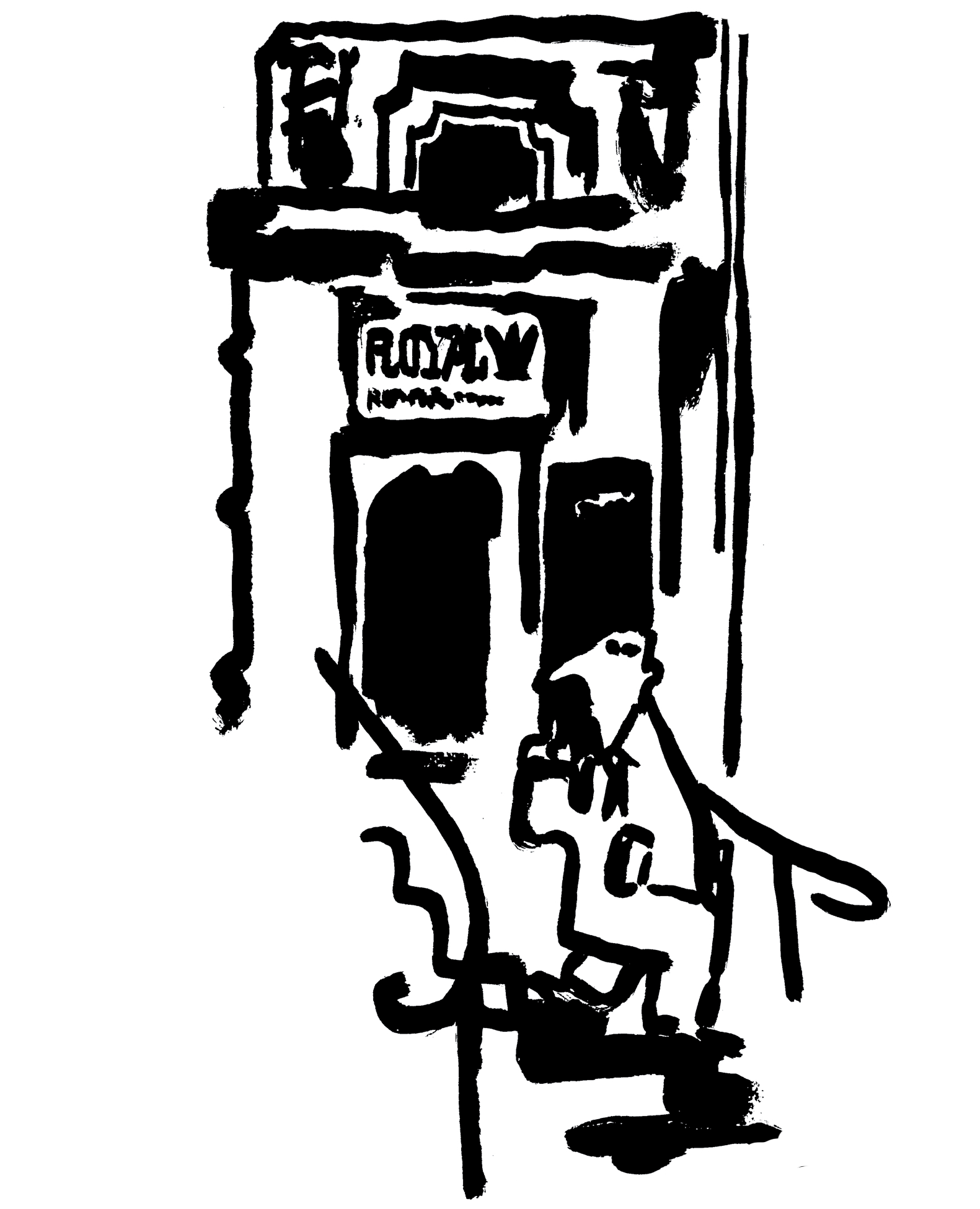
Opposite the faded grandeur of the Royal Hotel there’s a fin de siècle cottage kitted out with the latest battleship grey Sitex security screens. I’d heard whispers that somewhere, hidden behind the pewter-coloured palisades and tall wooden panels that line much of the town’s westerly roads, lay the remains of an 18th-century chapel, built by the beer baron Samuel Whitbread on the site of an ancient chalk pit as a place for his quarry workers to pray. I thought that this would be a prescient location to start a Purfleet pub crawl, given that Whitbread & Co. once owned many of your favourite London pubs (and today still operate the A-road eateries Brewers Fayre and Beefeater), but every route into the pit was inaccessible to all but the boldest of UrbExers. No matter – there was a Thames path to traverse, and I figured that there was probably only about an hour or so left of sunlight anyway before darkness and our destiny of Tequila Rose shots at The Fleet.
To get on to the riverside walk you first have to squeeze through an inauspicious gap in some steel fencing. The land you’re about to enter, the construction hoarding nearby tells you, has been acquired. Thurrock Council have big plans for Purfleet: a £1 billion regeneration project that will transform the town into ‘a desirable riverside destination’, which rather downplays its current standing. If you build it, they will come – or so the council hopes.