People only write about comedy panel shows when they’ve got an axe to grind. Some people still believe that Have I Got News For You bears sole responsibility for the Boris Johnson premiership, while ‘lefty comics’ have provided endless ammunition for the Daily Mail. Frankie Boyle’s 2008 quip about the Queen being ‘so old, [her] pussy is haunted’ was cited in debates around standards at the BBC; if the original is not to your taste, the clip of Emily Maitlis deadpanning the line – twice – to an ashen-faced DG Mark Thompson on Newsnight is a guaranteed laugh.
I have more than a passing interest here. For over 15 years, comedy panel shows were my bread and butter. As a TV producer, I’ve made, developed or piloted panel shows about the internet, sitcoms, music, trivia, swearing, teenagers and dating – the latter hosted, naturally, by Eamonn Holmes. My name appears at the end of 24 episodes of Channel 4’s festive juggernaut The Big Fat Quiz of the Year.
The panel show has its antecedents in Radio 4 quizzes and shows like Call My Bluff, but the modern form solved a vexing problem in the post-variety age: finding something for comedians to do in a TV studio beyond a stand-up routine. They are Britain’s answer to US late-night formats where stand-up comedy masquerades as a different genre: the Americans aped the chatshow, we requisitioned the gameshow.
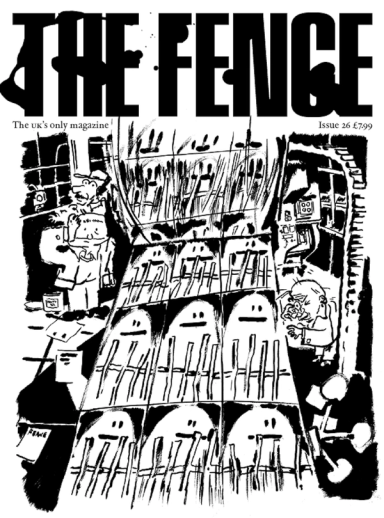
My early career breaks were in junior roles on 2000s panel shows, many of which I find a tough watch now. The tone was often mean-spirited and cynical. We regarded ourselves as satirists, but were anecdotally aware that our core audience included 14-year-old boys who’d quote the rude bits at school the next day. Prior to The Fence, the only publication to register an interest in how panel shows were made was Nuts, who dispatched a correspondent to shadow us in the Mock the Week studio.
The shows mirrored this audience in predictable ways. A newspaper ran the numbers in 2017, and found 48 episodes of Mock the Week with entirely male line-ups. The BBC had already taken the step of insisting on at least one female guest on every panel show in 2014, but this mandatory woman did not have to be a comedian – over on Channel 4’s 8 Out of 10 Cats, the likes of Kelly Osbourne, Jade Goody or Jamelia were the sole female presence against six male comics. Many female and non-white comics were rightly irked, but even among white men, the bookings favoured a narrow pool of slick performers delivering rapid-fire takes on, say, footage from the Liberal Democrat conference. Character comics, musical acts and those with more discursive styles were out in the cold.
Many assume this slickness means panel shows are scripted. They’re not: the host has a script prepared by producers and gag writers, but for everyone else it’s trial and error, leading to gruelling record-to-broadcast ratios. A 30-minute show often involves a 90-minute studio record; Big Fat Quiz takes four-and-a-half hours to produce 90 minutes of material.
The artifice is in the edit, which is less about selecting highlights and more about sheer compression. Timings are tweaked, digressions trimmed, sentences reconstructed, laughs bolstered, until everything gleams. The perfect panel show conjures an airless hysteria, the sense that everyone rocked up and was on for the duration, like the best dinner party you’ve ever been to. B-roll is mined for shots of the performers laughing to add conviviality; a regular on one show forbade producers from using footage that implied they had laughed at another comedian’s jokes if they had not done so in the studio.
The proliferation of panel shows is often attributed to cheapness. In their heyday, they commanded a healthy six-figure budget per episode; more affordable than a sitcom, but still a considerable outlay for a genre that, unlike sitcom, had a negligible repeat window, virtually non-existent foreign or DVD sales and whose IP was too localised and idiosyncratic for the international market. In fact, a weekly topical panel show is now prohibitively expensive for most broadcasters, leaving HIGNFY as the sole survivor in a field that once included 8 Out of 10 Cats, Mock the Week, You Have Been Watching and more.