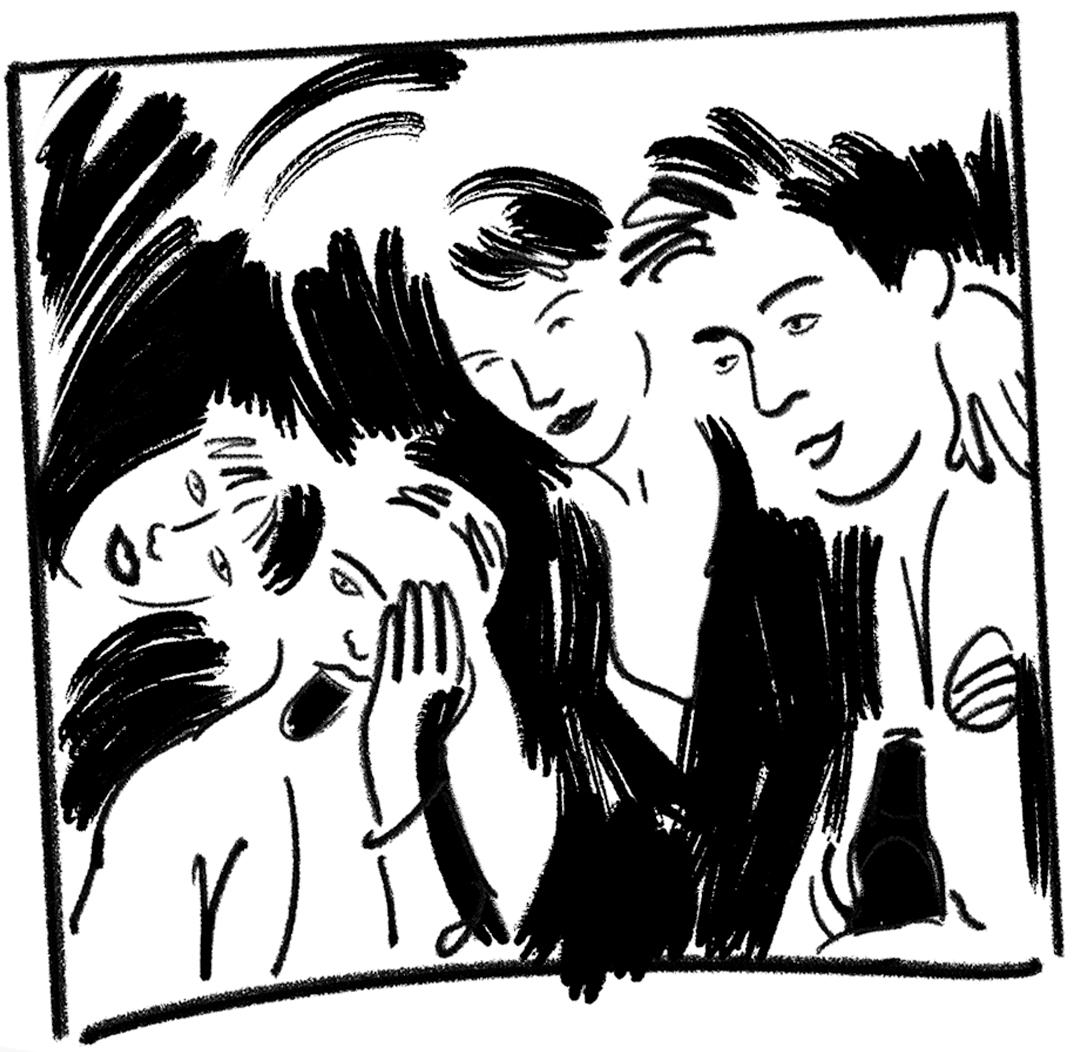
At a private members’ club in west London, some of the most televised faces in the country are gathering for a party. In walk Emily Maitlis and Kirsty Wark, television executives and editors of top news shows, all mingling and schmoozing at the Frontline Club. It’s a favourite dive among hacks. ‘A place for foreign correspondents to compare bullet holes and war stories,’ says one. ‘It’s absolutely heaving in here,’ says one producer. ‘It’s taken me ten minutes to get from one side to the other.’ The occasion: a leaving do for Kirsty Wark, a long-serving anchor of Newsnight, and the programme’s veteran diplomatic editor, Mark Urban. More than an adieu to a pair of colleagues, it has the feeling of a wake for the entire TV news industry.
It’s hard to imagine now, but television news once had the pull and influence that the internet enjoys today: moving pictures from around the world, beamed directly into our homes! It was the thing to be in, if you were lucky enough, a job that had a certain old-world cachet, like being an airline pilot or a diplomat or the Prime Minister.
Launched more than 40 years ago, Newsnight quickly pulled in UK viewers for news and current affairs programming. There were only three terrestrial television channels back then, and Newsnight ran investigations, long films about foreign affairs and the arts, and live political interviews. After round upon round of budget cuts at BBC News, Newsnight earlier this year became a zombified and unfrequented chatshow. I should declare an interest: I was a correspondent on the programme for 17 years before I was made redundant. It was a chastening reminder of how fickle this business is.
The news presenter used to be a God-like figure of authority and gravitas. Every generation had its own newscaster. Younger audiences have grown up with Jon Snow at Channel 4, the BBC’s Fiona Bruce or Sky’s Kay Burley. The fall of primetime personalities including Martin Bashir, who bagged his interview with Diana using ‘deceitful methods’, and more recently, Huw Edwards, is greeted with a numb shock, a collective question over how trusted figures could let us down so badly.
At first, I had no intention of joining this club, of becoming a TV correspondent. I wanted to write, and the medium seemed hostile to words. At least newspapers – another creaking legacy medium – dealt in sentences and paragraphs. To be honest, I was put off by the flashy lights and the panstick of TV news. It all seemed a bit garish. But I became a producer at a TV station after losing out on a Fleet Street reporting job to someone who had previously worked for the same station: perhaps here was the route I needed to follow.
Those pre-internet, pre-smartphone days were the carriage age of my profession. It was all so civilised that we practically wore buttonholes and twirled parasols. On my first TV news shoot, I was taken aside by a senior producer who told me that my priority – over and above powerful pictures and yes, yes, telling the story – was organising a nice spot of lunch for the crew. He handed me the Michelin guide. In those days the crew was like a repertory company, a travelling court: cameraman, soundman, sparks, PA, plus a couple of producers and a presenter. They were all counting on me for a decent nosebag.
Later, I was sent to cover a pollution spill in the south-west. We were billeted at a country hotel, some distance from the scene. At breakfast, I started to tell the crew urgent instructions about the story. The cameraman held up his hand, not unkindly. Swallowing his kedgeree, he explained that the hotel had been booked because it boasted a bracingly demanding golf course, designed by an Open champion. Dabbing his lips on a napkin, he went on that he hadn’t put his clubs in the back of the Volvo for nothing. He and his soundman, with whom he was paired for life, would play nine holes while I cooled my heels in the lounge. Only then would they devote themselves untiringly to the story.
In the studio everyone deferred to the presenters, but in the field the crews were kings. Semi-skilled lads who had trained as electricians, they couldn’t believe their luck to be working in the well-paid, tightly unionised concern that TV news was in its heyday. At the height of the Troubles in Northern Ireland, some TV crews were spending so much time in Belfast that one or two of them had steady girlfriends there, even raising second families. One cameraman bought a rolling farm in the Home Counties on expenses. But they also slept in hotel rooms where glass had been blown out by IRA bombs and replaced with chipboard that flapped like sailcloth. They walked towards parades, burning cars, riots – standing up, eye clamped to the viewfinder, unmissable and defenceless.