To most, Tony Blair is still ‘the Prime Minister of the Nineties’, that very cool decade where everything was possible and things could only, and sometimes even did, get better. But Blair was only in power for the last quarter of that decade, his reign very much the ash of the 1990s fag.
As for ‘Cool Britannia’, well, that was a marketing fad dreamt up by a Conservative MP, Virginia Bottomley, and promulgated by an American magazine editor (but a very cool American magazine editor whom we admire enormously). And as for the notion of the ‘long 90s’ – beloved by podcasters everywhere – don’t get us started on that particular slice of fancy.
When it comes to thinking about the Blair Years, it’s best to take things chronologically: from May 1997, when he entered Downing Street – to June 2007, when he was booted out by his Granita dining companion, Gordon Brown.
This may have been the era of the ‘ladette’ and ‘girl power’, but it was also an epoch of astonishing bad blokery, in which a number of terminal rotters achieved a prominence that would have been impossible at any other time. Presided over by the man himself, Anthony Charles Lynton Blair, that self-declared ‘pretty straight kind of guy’, and a bad bloke in a quotidian sense – flirting with his friend Rupert’s wife, pretending to like football – but also a bad bloke in his own personal way – declaring war on Iraq, demolishing civil liberties and advising dictators for endless millions.
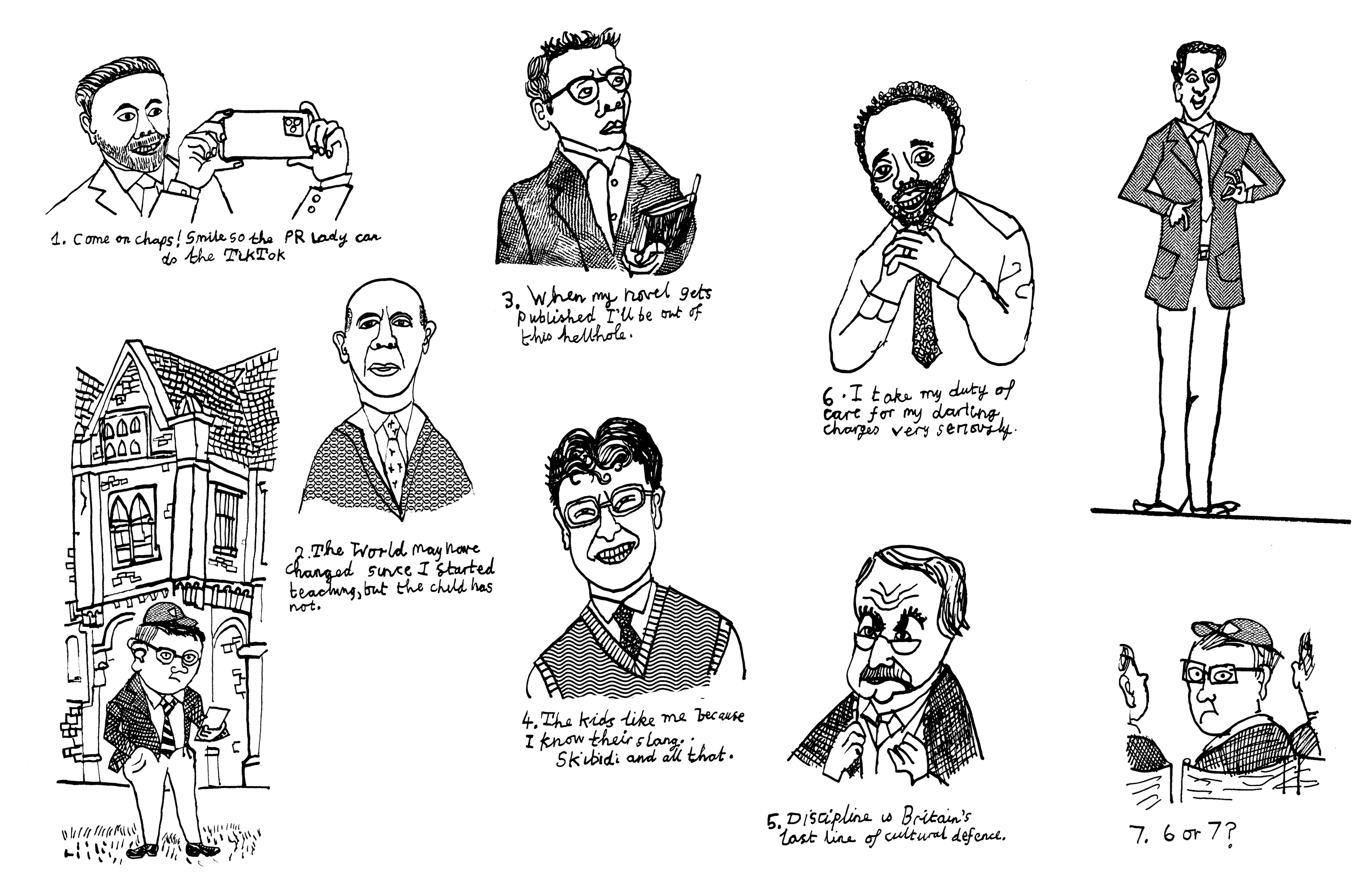
Here, we’ve inverted the crass categorisation of ‘Blair’s Babes’ to bring you Blair’s Blokes: the fruitiest and funkiest exemplars of masculinity in a Britain that only seemed like yesterday. The Fence, and friends, commemorate the fellas who could only have emerged in the Age of Tony.
Damien Hirst
, by Francesca Gavin
Damien Hirst and Tony Blair both flourished in the late-90s landscape of marketing and PR. They were both princes of puff. From the day of his graduation from Goldsmiths, Hirst established himself as the artist-impresario of his generation, organising group shows like Freeze. His work was exciting, irreverent, shocking, disgusting and visceral. Charles Saatchi became his biggest collector. In 1995, he won the Turner Prize (then less of a big deal). It was the exhibition Sensation at the Royal Academy in 1997 that changed everything – the same year Blair came to power. It brought together artworks full of cocks, blood, sex, violence and a fuck-you attitude in a space known for tasteful Monet blockbusters. Sensation made Britain feel rebellious with Hirst as its biggest name. For the first time, being an artist was like being a pop star.
Hirst, like Blair, flirted with pop. He directed the video for Blur’s Country House – a collaboration one imagines emerged from a drunken, coke-fuelled night at the Groucho. He formed the band Fat Les with Keith Allen and Blur’s Alex James, then released the dire football anthem Vindaloo. Yet like lad mags and Wonderbras, Hirst’s new-yob shine began to fade. He became the darling of bankers lining up to eat at his restaurant, Pharmacy. His dot and spin paintings were superficial, mechanical products for an eager market. He became known for his ability to play the exploding art market more than making art. By 2003, he reportedly had a fortune of £35 million. By the time his diamond skull For the Love of God was exhibited in 2007 – when Blair lost the election – Hirst was almost an art joke. All headline and no meaning. He was now the establishment.