Exit Brentford station through the car park, take the wooded path through the biscuit-coloured gated developments of Gibsons Place, then climb the stairs. The flyover beckons. This is, not in the American sense, flyover country – here, the M4 dominates, its roar incessant and its fat corroded piers tearing the Great West Road in two. As a Prime Ministerial training ground, the scene is about as unlikely as they come – and yet, from 1992 to 1994, this was Andy Burnham’s world.
Here, among the car dealerships, tile showrooms and corrugated industrial units, was the Baltic Centre, home of Baltic Publishing, producer of a small family of trade magazines including Container Management, Passenger Rail Management and, the jewel in its crown, Tank World. If this sounds like a publication Mark Corrigan would read, think again: these were not military tanks, but industrial tank containers transporting liquids and gases.
It was in January 1992, by Burnham’s own account, that he moved to London to work here as an editorial assistant, equipped with a 2:1 from Fitzwilliam College, Cambridge, and some unpaid reporting experience on Manchester’s Middleton Guardian. For an English literature graduate with a head full of Philip Larkin and Tony Harrison, Tank World was decidedly without poetry; but, to Cantabrigians of a creative bent, the magazine was a lifeline. ‘I liked to recruit people who were probably slightly more intelligent than me,’ says Patrick Hicks, founder of Baltic Publishing. ‘So I used to put an advertisement in the Cambridge University careers’ newsletter.’
‘People I had studied alongside at Cambridge were waltzing into placements at the Times, the Guardian and the BBC,’ wrote Burnham in 2024. Tank World must have felt purgatorial in comparison. The site retains its desolate air. The Baltic Centre was razed in 1996, but photos suggest a match between its brick columns and what is now STOREX Self Storage. The rest of the complex is occupied by Premier Inn London Brentford; the neighbouring Alfa Laval tower, which presided over the scene, is now a derelict shell, popular with urban explorers.
‘It was deeply unglamorous, I think it would be fair to say,’ says Tank World alumna Eleanor Mills, founder of NOON and former editorial director of the Sunday Times. Burnham, who had risen to staff writer, hired her as an editorial assistant in 1993; she was an Oxonian, from the other place. ‘It was right on the M4,’ she says, recalling the Baltic Centre. ‘When you’re coming along the elevated bit that goes out to Heathrow, it was right there. The Esso garage was underneath the flyover, so it was always a bit dark.’ Mills describes the offices as a ‘warren’, with no sofas or anything on the wall bar the odd magazine cover. ‘I’d never seen myself working in Brentford on Tank World Magazine, and I don’t think Andy had either.’
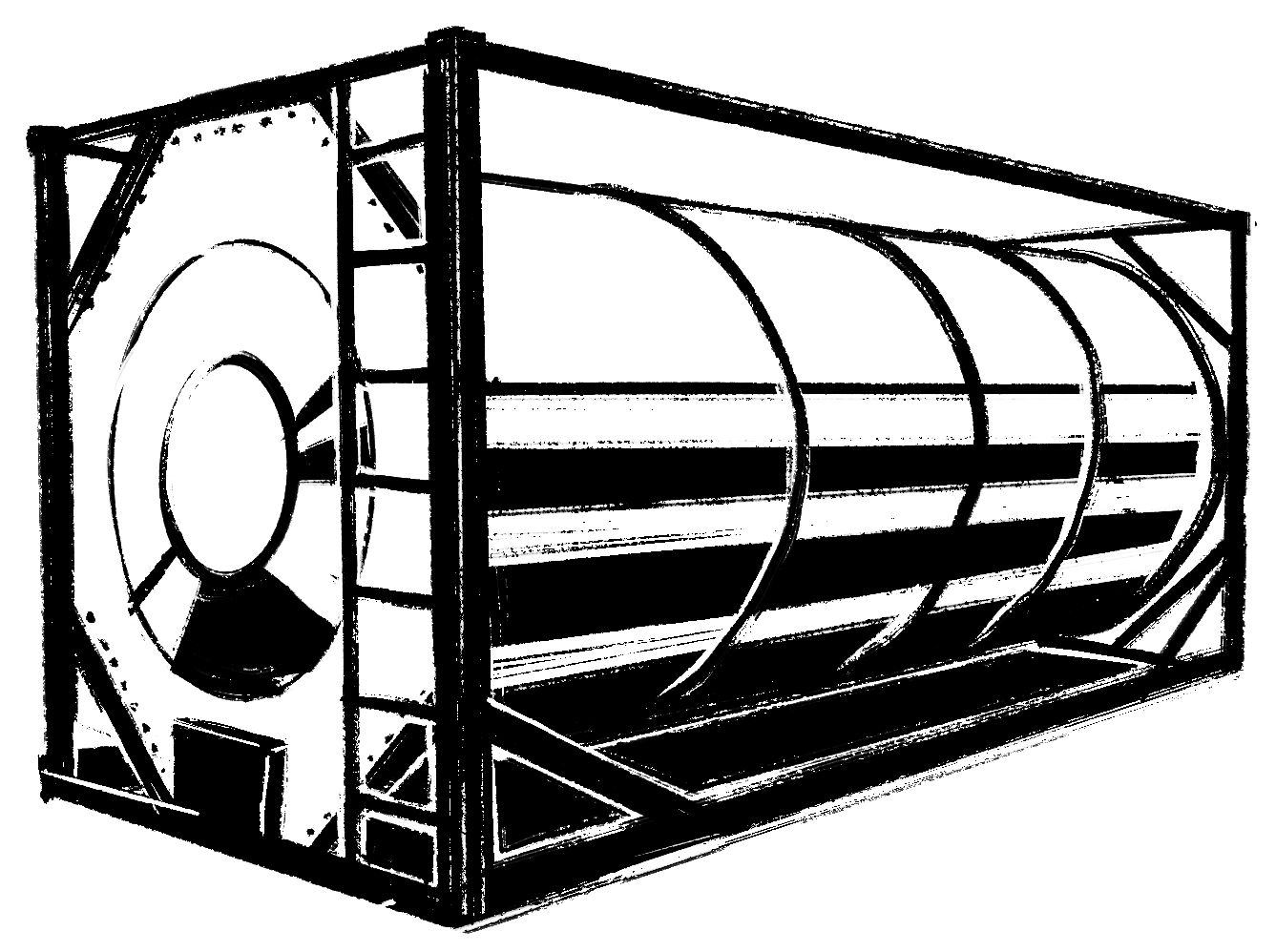
The eponymous tank was a stainless-steel cylindrical vessel, essential for transporting bulk liquids by road, rail and sea. When Burnham started, the publication was called Tank Container World; from the June/July 1992 issue, it became Tank World, reflecting an expansion of the magazine’s editorial scope ‘to cover not only the international tank container industry, but also the road tanker, tank truck, rail tank and IBC [intermediate bulk container] industries around the world’. A day might be spent rewriting press releases; a sample article touts a Dutch firm, CKT, for launching ‘an innovative new design for the neckring of a tank container manlid’. Alternatively, journalists might ‘ring some random person in a Swedish tank container factory and ask them about the tank container they were making’. There was always ‘some excitement’, Mills recalls, when a gas tank container came whizzing by on the flyover. ‘Hey, that’s the thing that we were writing about last week!’
Amid the everyday grind – the nadir for Mills was writing 2,500 words about ‘gratings’ (slip-resistant protective panels) – there was camaraderie. ‘We were all skint,’ Mills says of her milieu, and her friendship with Burnham was a bond of the young and financially pressed. They would buy lunch from the Esso opposite (‘a cheese sandwich, or maybe salt-and-vinegar crisps if it was a really great day’); for a treat, they would go to the New Inn pub, with its ‘thick bread’ sandwiches and piles of crisps that came with them. (‘We thought it was a great boon that we didn’t have to buy our own crisps.’)
Theirs was an odd-couple pairing: ‘I came from a very Champagne socialist kind of hinterland and he was very much a working-class boy from the north.’ This resulted in a lot of teasing. Burnham would ‘take the piss out of me for being posh,’ Mills says, and for her party-going. ‘I was very sociable.’ If she were invited to two parties in one night, she’d say something like, ‘it’s such a nightmare being so booked up’. ‘He just thought that was hilarious. He’d say, “E.M., E.M. It’s such a nightmare being so booked up”’. Mills, for her part, would tease him for his ‘incredible eyelashes’ and ask him how much mascara he had been applying that morning.
Both Mills and Burnham were active in the Labour Party, which gave their conversations a moral underpinning. ‘I think where we really bonded was that we both felt that there were a lot of people who weren’t being given a kind of fair crack of the whip.’ Burnham being one of them: Mills felt he was ‘mouldering’. ‘I thought he was too good for Tank World, basically.’ Mills proved to be Burnham’s ticket out of Tank World, helping to secure him a job as parliamentary researcher to her stepmother, Tessa Jowell.
Burnham’s private sector experience makes him unusual in a Cabinet dominated by public sector lifers. (Of the other outliers, the most interesting is Anneliese Midgley, Britpop veteran and former publicist for Pulp.) In Mills’ view, the job has instilled in him a humility. ‘I don’t think he takes anything for granted.’
What if Mills had never come along? While she couldn’t stick it out at Tank World for more than six months, Burnham, she says, was ‘quite into it’; he especially enjoyed going to trade conferences in places like Rotterdam. ‘I don’t think he was chafing about it as much as I was.’ Hicks told me that, before the future Prime Minister’s departure, he was in the process of offering him deputy editor, which gives rise to a wonderful thought experiment. Andy Burnham: not King of the North, but King of Intermodal Bulk Transportation.