I’m a deeply sentimental and nostalgic creature, so Naples was always going to do it for me. It took less than half a day of a week-long solo trip last June for the city to have totally captured my affections. The sentimentality, the light, the baked-in drama to completing the most mundane of everyday tasks: it all seemed too perfect to be true.
That first night, I’d taken myself to the Spanish Quarter without much of a plan. I’d heard about the Maradona mural daubed on a block of flats in the dense, warren-like city centre neighbourhood. The great man, the city’s secular saint, is depicted at the very peak of his powers, clad in a sky-blue Napoli kit, his dense, tousled, jet-black hair caught in an invisible breeze. The mural, one of countless likenesses across the city, was painted in 1990, not long after the second of two unprecedented Serie A titles indebted to his genius.
For many Neapolitans, these half-mythical glories felt a very long way away in the summer of 2022. Over the week, I did what I always try to do in any new city: I drank and did my best to befriend some locals. My ambitions were easily sated. That first night brought me into contact with Georgio, a lifelong season-ticket holder in his early thirties, and his friends at a bar in Vomero, an area as close as the city does to haughtiness. Yes, it was fair, he told me over our beers, to say the club was going to shit. Much of the team’s heart and trusted quality had either been sold off to the Premier League, in Kalidou Koulibaily’s case, or aged to the point of no return, or at least the Turkish Süper Lig and MLS, for Dries Mertens and club captain Lorenzo Insigne, respectively.
As for Aurelio De Laurentiis, Napoli’s long-time megalomaniac owner, it seemed as if the man was beginning to lose his grip on reality. After a solid third place finish under the tutelage of Luciano Spalletti, a respected if nomadic manager, various stalwarts had been replaced by a cadre of supposedly promising youngsters and Serie A journeymen. No, it wasn’t optimism Georgio or his friends were feeling. Not that it mattered all that much. Supporting Napoli, he told me, wasn’t meant to be easy and certainly never for the faint of heart.
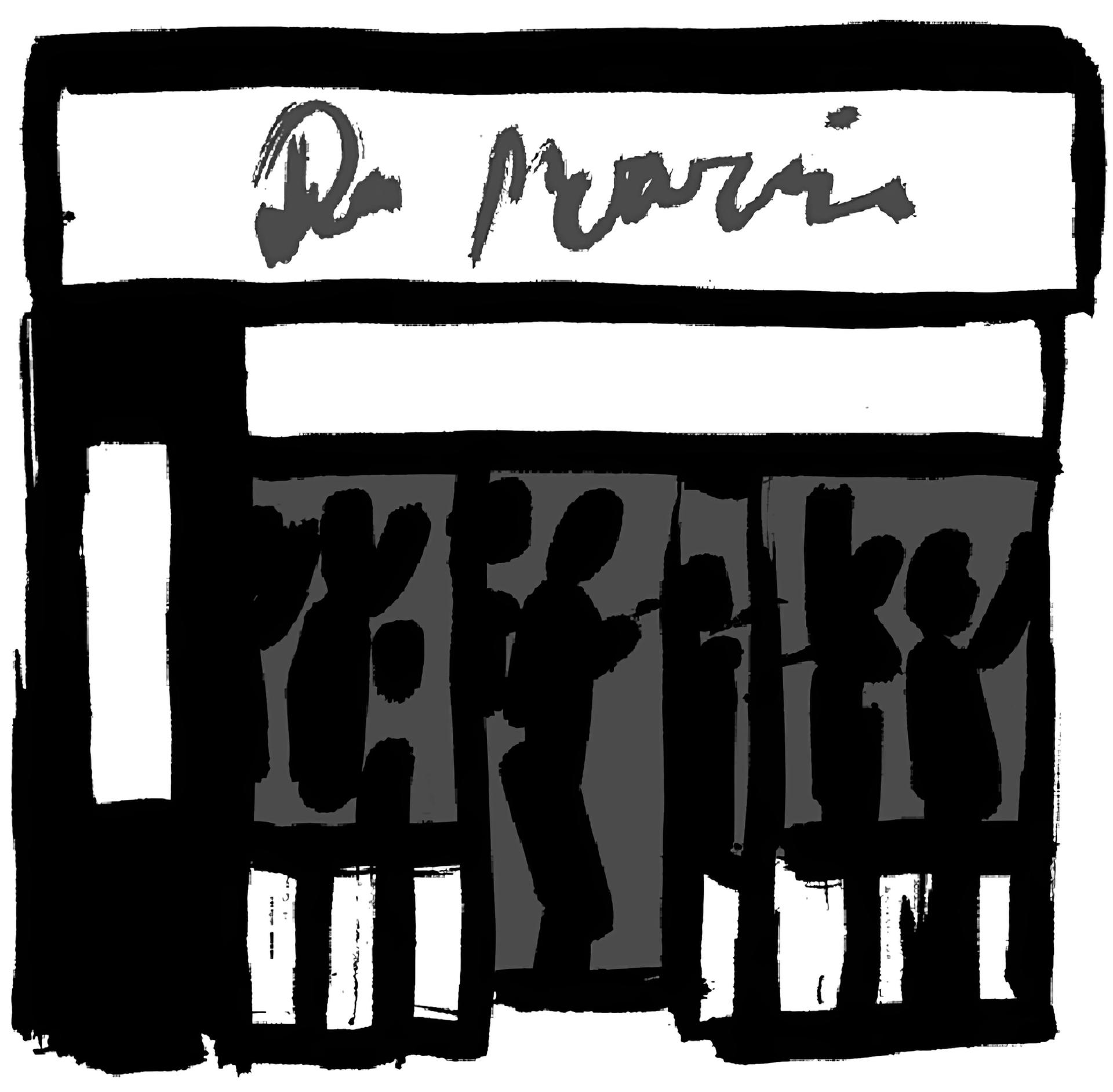
May 3, 2023 saw a bright, blustery afternoon in London. It was quiet when I’d arrived at Da Maria, Notting Hill Gate’s tiny and much beloved Neapolitan trattoria. The restaurant has been here since 1980, when husband and wife Pasquale and Maria Ruocco settled in the city. It was a simple enough idea. Excellent, inexpensive home cooking, good wine and easy conviviality: the kind of humane London institution never quite far enough away from the risk of disappearance. For decades, it has been an anchor for hundreds of Neapolitans in temporary exile, or simply just on holiday, in Britain. When Dries Mertens’s parents dropped by during a visit to London in the mid-2010s, they arrived at Da Maria laden with signed photos and a signed shirt, which still hangs proudly on display.
Over the last decade, they’ve also shown every single Napoli game on TV, accompanied by Pasquale’s and his regulars’ voluble cheerleading. But this was something else: the day before a young, thrillingly dominant side finally returned the league title to Naples for the first time in more than 30 years. Over a coffee at the half-deserted restaurant, 28-year-old Luciano, the youngest Ruocco son, was relieved. ‘It’s been the ongoing wait. We’ve almost got there so many times over the years. We’ve been the Tottenham of Italy,’ he laughed. ‘My dad, my brother, they’ve all seen us win it before, but I was too young. Finally, it’s our time.’
Not even the most passionately deluded fan could have predicted what came next after the 2022 summer of discontent. At a squad presentation event, one fan had even screamed in Spalletti’s face that he had to ‘wake up’. The new signings inspired little confidence. Young Georgian playmaker Khvicha Kvaratskhelia, centre-back Kim Min-jae from Fenerbahçe and support striker Giacomo Raspadori were considered players for the future, not the present. While the rangy Nigerian forward Victor Osimhen had endured a promising first season, his durability in serious question.
Something inexplicable, however, had clicked in pre-season. The league campaign began at a ludicrous pace. In the 17 games between August and the December World Cup, Napoli won 15 and drew just two. This was no lucky streak. Not only were Napoli winning, they were ragdolling teams with a potent brand of high-octane attacking football. Kvaratskhelia, with his unkempt mop of hair and mesmerising, if idiosyncratic, dribbling; Osimhen, with unerring finishing and canny link-up play; the unflappable Kim at the back: each came as a revelation, alongside their more experienced or previously heralded teammates.