This was it. Simone Lee* had scanned her ticket and passed through the turnstiles. She and a group of 40 fans had been police-taped together and shepherded towards the empty stadium, shuffling as fast as possible without breaking into a run. As they passed the food stands, the vendors cheered. ‘The staff said that if anyone pushed or ran, they would kick us out,’ says Lee, 34. ‘At one point, people started surging and the guy yelled like a drill sergeant.’
Lee had been queuing since 5am to see Taylor Swift perform at Edinburgh’s Murrayfield Stadium (she had arrived at 8pm the night before but been turned away by venue security). Now, though, she could see the target of this whole operation, a queuer’s holy grail: the barricade closest to the stage where, in a few hours, she would be almost within touching distance of Swift. ‘I was almost vibrating with anxiety and anticipation,’ says Lee. ‘About 15 metres from the barrier, they dropped the tape. Everyone just ran.’
For almost every major concert with a dedicated, youthful fanbase, there is a queue. Queues can start days in advance and are not for the faint-hearted. Last February, fans of The 1975 camped for two days in freezing temperatures outside Glasgow’s OVO Hydro. Hardier still, a group of Argentinian fans reportedly camped for five months outside the 85,000-seat Estadio Monumental for Swift’s Eras Tour in 2023, each committing to a minimum of 140 hours in their tent.
The preparation resembles an Everest expedition: tents, warm clothes, sleeping bags, energy gels. Lee, for example, packed a day’s worth of food and water, suncream, ponchos, blankets, collapsible fisherman’s stools and friendship bracelet kits. All of these were stashed in a nearby Airbnb two hours before entering the arena. As with Everest, some never make it. Seven-time queuer Jazi Barnes says that at a recent concert, a girl next to her passed out from dehydration. One girl, says Lee, queued for two full days for Olivia Rodrigo at O2 Brixton, starting across the road because she wasn’t allowed outside the venue, only to faint before the support act finished.
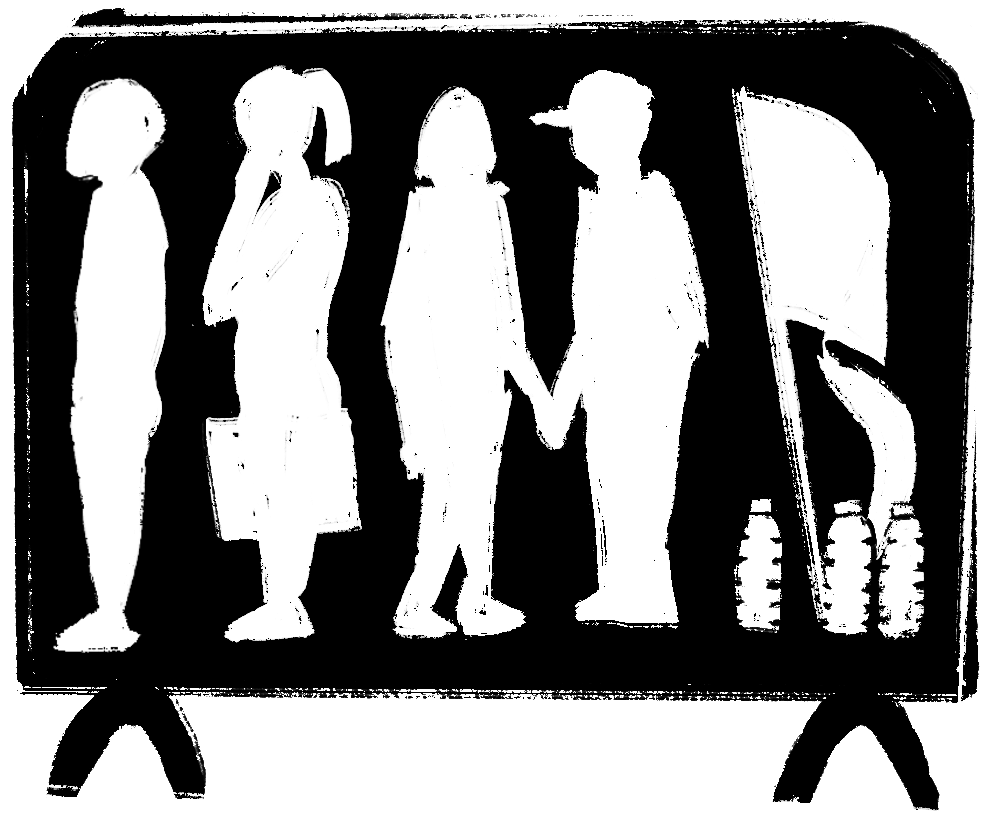
For queuers, huddled on pavements up and down the country, a sense of camaraderie often blossoms. Fans might play games, listen to music, exchange friendship bracelets or connect over their favourite artists. 17-year-old Connie Matthews, for example, met one of her closest friends in a concert queue, and they have queued together since. ‘People are weirdly nice to each other. Some were handing out ice lollies and others were going round with bags to collect rubbish,’ says Lee. ‘The queuing experience is always fun,’ Barnes, 17, agrees. ‘It goes by very quickly.’
Unfortunately, some commitments, like work or school, are inescapable. A Taylor Swift fan in Cincinnati went viral after doing interviews with a blanket over her head because she’d pulled a sickie at work. Others find more inventive solutions. ‘There are people that set up whole home offices,’ says queuer Amy Willow. ‘They brought pop-up tables, webcams and headsets, taking business calls. There was a lady who was properly well-dressed on the top half. It was insane.’
What makes these queues different from the ten mile-long line for the Queen’s coffin, say, or Wimbledon’s ‘most civilised queue in the world’, is the way they are managed. These queues are self-governed, with their own bureaucracy, laws and justice systems. Often these are more sophisticated than the venue’s own, leaving security staff with no choice but to cooperate. ‘They clearly see that it’s hard to stop people from doing it, so the way to keep large numbers of intense fans calm is just to buy into the system,’ says Lee.
The first person to arrive – number one – is always the queue’s leader. New queuers are allocated a number, either with a sharpie on the hand or a club-style wristband, and their details are logged on to a register to prevent forgeries. The lower the number, the more respect a queuer will command. This system is religiously enforced, not just by the organisers but by the queuers themselves, who are incentivised to protect their own position. Leaders, says Lee, are often superfans with ‘high-level’ queue experience and a ‘sort of maternal or paternal demeanour, like it’s their queue and they will look after you and set the tone’. Some develop a taste for it. When Lee queued for Olivia Rodrigo, she was told that the organiser had run the previous day’s queue, seen the concert and simply stayed on to manage the queue for the following night.