
‘So many memories and so little worth remembering, and in front of me – a long, long road without a goal…’
—Ivan Turgenev, Fathers and Sons
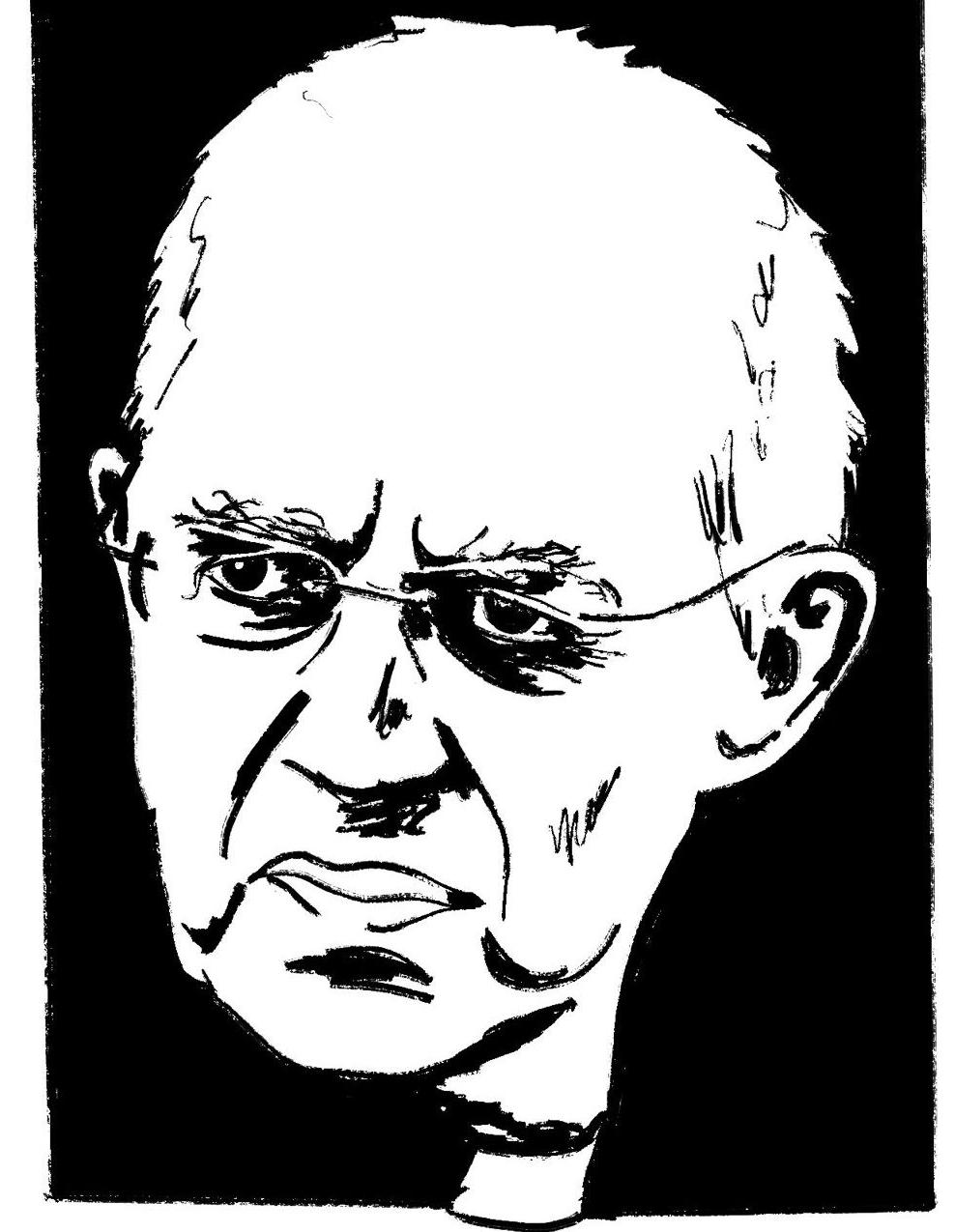
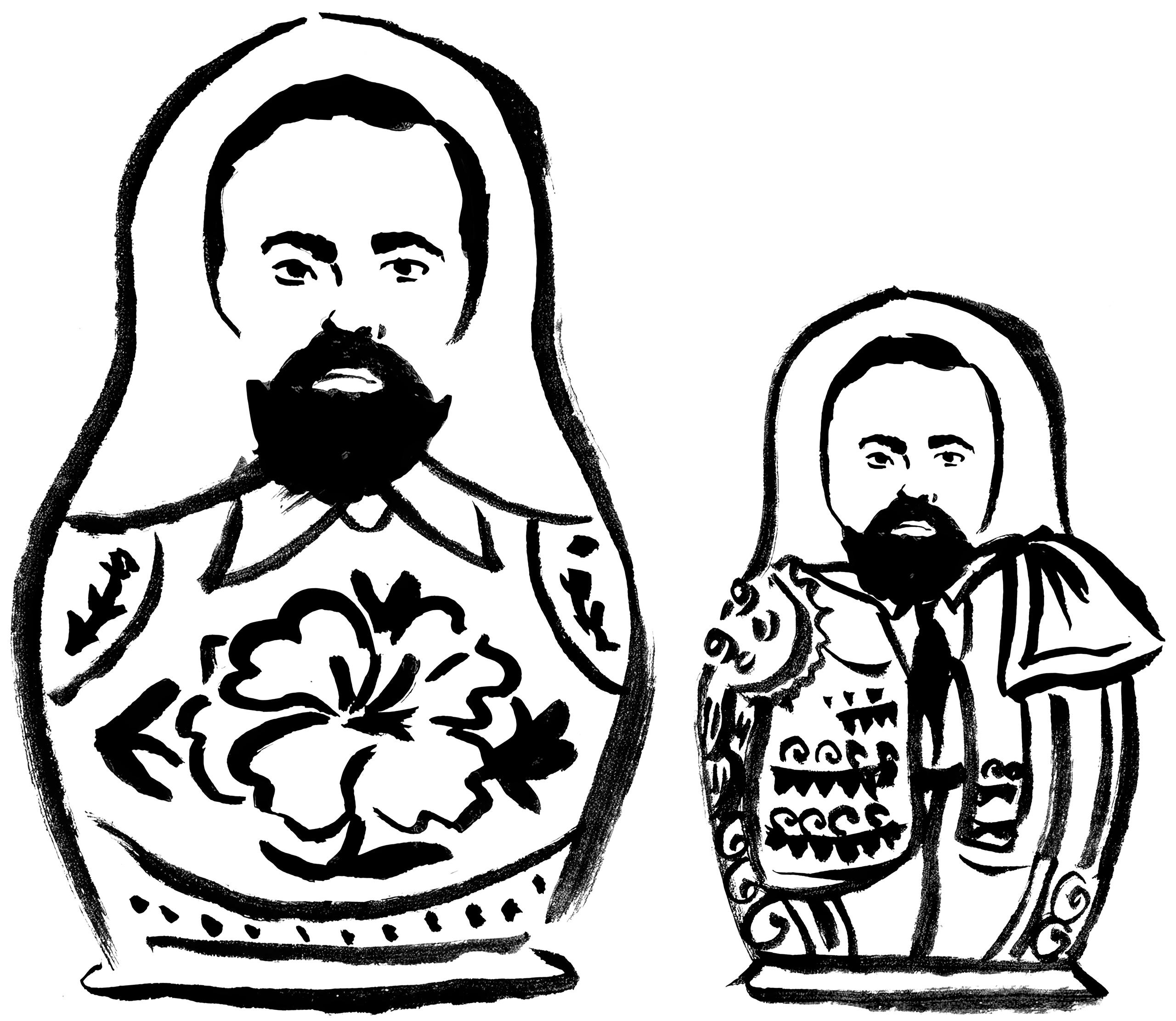
You might measure Evgeny Lebedev by the blast radius of his life, which, as it happens, is extremely wide. He’s employed hundreds of people, owns properties from Umbria to Hampton Court and controls two British newspapers. You might also take stock of his interests. Evgeny loves elephants and, like an elephant, he has an inscrutable memory as well as an outsized presence that is all too conveniently ignored. A holistic account of Evgeny’s story – which encompasses the KGB, the Spice Girls, Spanish matadors and the House of Lords – has been attempted many times. However, there is not simply one Evgeny. Instead there is an overlapping sequence of Evgenies (Evgenii), each one straining to envelop the rest. We’ve decided to proceed through this Russian nesting doll layer by layer, beginning at the centre, with a small child incubated at the heart of the Soviet state, speeding towards the end of history.
evgeny, son of alexander
Evgeny Alexandrovich Lebedev is, more than anything else, the son of his father, Alexander Yevgenievich Lebedev: a former KGB agent. Alexander became an oligarch after the collapse of the Soviet Union, which he used to his advantage, taking over a Russian bank with shares in Gazprom, Russia’s state oil and gas company.
Evgeny’s early years were spent down the road from the Kremlin, living in a comprehensively bugged apartment block reserved for important Soviets. Nikita Khrushchev was a neighbour when his parents moved in and Evgeny remembers a geriatric Vyacheslav Molotov fumbling his way down its lofty, pink corridors. Before his father became rich, the Lebedevs lived relatively humbly. He recalls his mother spending hours queueing for basic goods and his father driving a spluttering Lada. Both his grandmothers wept when Stalin died. His first holiday was to the ‘radioactive wasteland of Chernobyl’, where Evgeny watched his grandfather, an accomplished biologist, shoot a duck, check it with a Geiger counter and prepare it for dinner.
Evgeny moved to London at the age of eight when his father was assigned to do ‘economic monitoring’ for the KGB at the Soviet Embassy. The Lebedevs took up residence at Earls Terrace, Kensington, and Evgeny was sent to a Church of England primary and later the ‘socialist Eton’, Holland Park School. During this time, Evgeny recalls that he had no idea about his father’s profession; when asked, Alexander insisted he was a diplomat. This persisted until an 11-year-old Evgeny discovered his father’s medals tucked away inside a drawer. Nonetheless, he carried the secret ‘with pride’.
It was around this point that Lebedev Senior began to amass extravagant wealth. Alexander once called himself a ‘financial Mozart’, but, in truth, his insider connections put him in the best possible position to benefit from the 1990s firesale of the Russian state. After that, the Lebedevs began their new lives: Alexander as a billionaire, and Evgeny, who was sent to boarding school in Mill Hill, became London’s ‘billion heir’.
Alexander is a smart man. You don’t get a position in the KGB’s foreign intelligence services without being a smart man. And although Evgeny has certain smart attributes, he’s not his dad. Bearing his capabilities in mind, we doubt he could have achieved what his father achieved, accruing billions by making the right deals, at the right time, with the right people. If put in terms of Russian literature (terms Evgeny would likely prefer) his intelligence seems more akin to the effective guilelessness of Prince Myshkin.
However, that’s not to say Alexander didn’t also benefit from his son. Putin once claimed that there was ‘no such thing as a former KGB agent’. Alexander managed to convince Britain otherwise, something that would’ve been much more challenging without another less suspicious-looking Lebedev – one that had become naturalised to the British establishment.