Strange to recall, but for 20 years from the early 1980s, a short, grinning, bearded mischief-maker dominated the ITV prime-time schedules. Jeremy Beadle developed, produced and co-presented Game for a Laugh, a format built around practical jokes and stunts, in which ‘the public were the stars’.
Game for a Laugh was a success, running from 1981–85 and spawning the Cilla Black-fronted Surprise Surprise as a spin-off. But Beadle’s solo endeavour, Beadle’s About, which ran for ten years from 1986, was even bigger. For this show, members of the public volunteered their loved ones to be filmed by secret cameras, while their cars were destroyed, or an alien invasion staged on their lawn. At the climax of the drama, a disguised Beadle would arrive on the scene and pull back the curtain. Beadle’s About drew a peak audience of 15 million. To top that, in 1990, he came up with You’ve Been Framed, which ran continuously until 2022.
There’s a version of TV history that would read these formats as the seedbed for much of what followed, from Balls of Steel to Jackass. Game for a Laugh looks quaint compared to the psychological and physical challenges we watch now, and access to YouTube has made candid camera shows redundant. But Beadle understood before most producers that we all want our 15 minutes of fame.
I grew up with these programmes, and loved Beadle’s puckish sense of mischief. He didn’t look like anyone else on TV. He’d been born with Poland syndrome, a rare disorder which meant his right hand was underdeveloped. He was a ball of energy, and wore medallions and flashy suits. His popularity curdled, however, as the tabloids turned on him in the time-honoured British manner. ‘The fact that people don’t like me has nothing at all to do with me,’ Beadle once remarked. ‘It’s because they feel guilty about laughing at the practical jokes I play. So they transfer their guilt on to me.’
By the dawn of the new millennium, I’d transferred my affections to a different type of prankster. The dramaturg and actor Ken Campbell was notorious for his multifarious capers, including a spoof letter campaign purporting to originate with Trevor Nunn, then director of the Royal Shakespeare Company, announcing that it would be changing its name to the Royal Dickens Company. I hunted down his spoken-word performances, both live and recorded. Campbell delivered monologues on the brilliance of Jackie Chan’s acting talents, and proposed the adoption as a world language of the pidgin spoken on the Pacific island of Vanuatu. To demonstrate his point, he translated Macbeth into it. ‘I’m not mad,’ he frequently stated, ‘I’ve just read different books.’ And the motherlode of such books led back to Beadle.
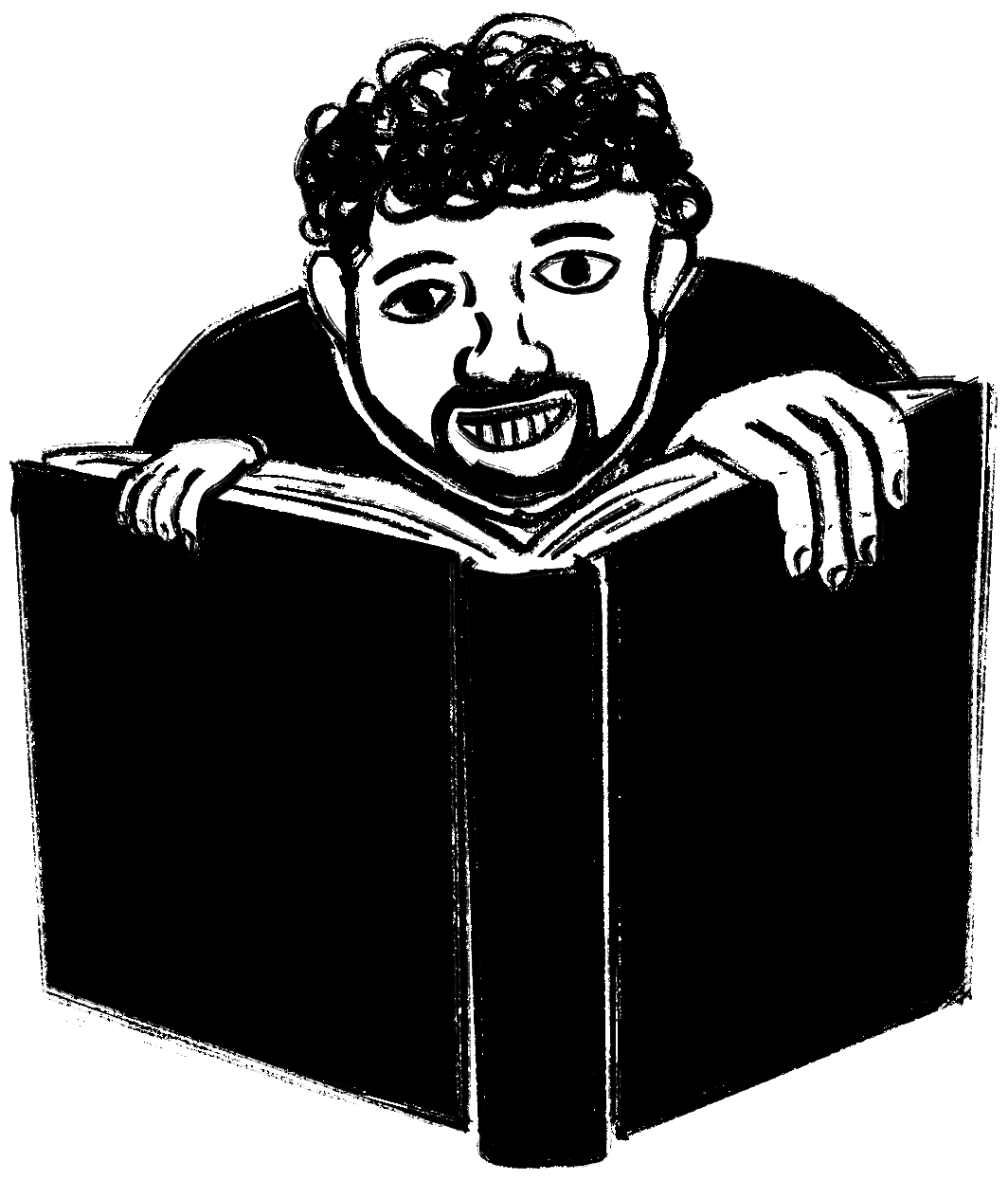
Time and again in his spoken-word pieces Campbell referred to ‘an incredible library’ to which he had access. This library, he told Ian Macmillan on Radio 3 in 2007, ‘was nothing like a usual library, which is 90% the usual stuff, but an immense library of the peculiar’. Campbell named this singular book hoard the Beadlean, after its collector.
Campbell told McMillan’s listeners that he had first met Jeremy Beadle in the late 60s. Both were then players on the fringes of the counterculture, Campbell as an actor and director, Beadle as an editor charged with launching the Manchester edition of Time Out (the late Time Out founder Tony Elliott remembered first meeting Beadle in late 1969: ‘The door flew open and this person somersaulted into the room, literally did a forward roll. He stood up, clutched his balls – that was a very characteristic gesture – and coughed, and introduced himself.’)
Campbell had been seeking copies of the out-of-print works of Charles Hoy Fort, the compiler of tales of inexplicable phenomena after whom the magazine the Fortean Times is named. He’d tried all the second-hand bookshops in London to no avail. A couple of days later, ‘a cheery young man’ arrived at his front door and gifted him a copy of Fort’s collected works. That man was Beadle. (Allegedly. This may have been a bit of myth-making.)