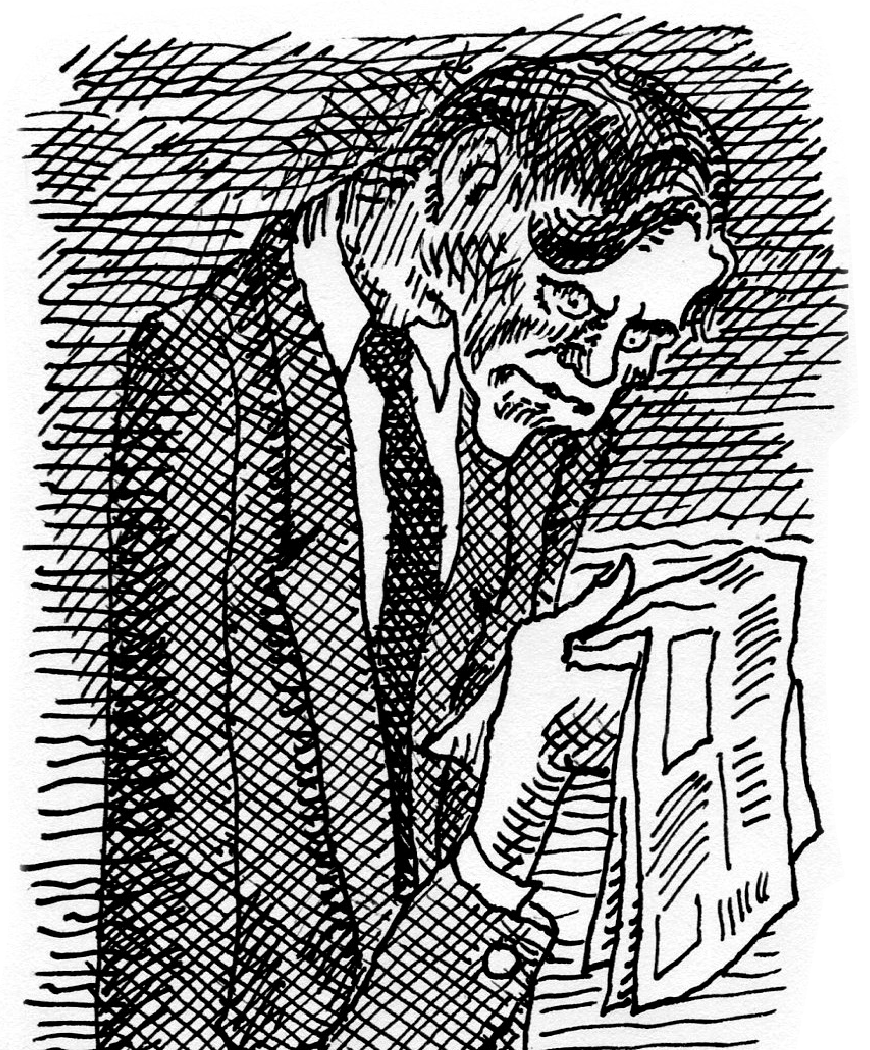
Did you know you can buy goblins from the internet? I don’t mean toy goblins. I mean real goblins. Actual supernatural bringers of chaos. Obviously I decided I wanted to buy one as soon as I learnt of this fact. I needed the right excuse, though, as my instinct was that goblins are like a dinner at a fancy restaurant, a big television or a sex toy: there’s still a sense that buying one just for yourself is a little self-indulgent. If, however, you can dress up a goblin (or a fancy dinner or a big telly or a sex toy) as a considered gift for somebody else, then that’s a completely different matter. Earlier this year my girlfriend’s birthday was coming up and, while I had taken various hints about gifts, I nursed a suspicion that wouldn’t go away. What she really wanted was a goblin.
Some context. I was obsessed with goblins. Before tweens were talking about ‘goblin mode’, I spent a period in the mid-1990s – when I was, in fairness, a child – stoically convinced that a patch of sparse and ugly woodland near my grandmother’s house was inhabited by actual, living and breathing goblins. Mostly I think I liked the formulation of the word. (There is something particularly pleasing, onomatopoeic even, about its pair of syllables.) Slowly though, as with so many other parts of childhood, I left goblins behind.
However, a spell spent teaching in Africa a few years ago re-acquainted me with goblins. And specifically their online availability. The students and faculty I worked with were from South Africa, Zimbabwe, Eswatini and Mozambique. The business of teaching and socialising was conducted in every language going: isiZulu, isiXhosa, Shona, Afrikaans, English, Ndebele and numerous others. Cultural difference was the norm, but one thing united all staff and students: Zimbabwe had a goblin obsession.
Some viewed it relatively seriously, expressing a belief in the tokoloshe – the water sprites found across traditional beliefs in Bantu-speaking cultures. Others dismissed it as another sign of Zimbabwe’s continued reputation as the ‘sick man’ of the region. Why blame structural problems when you can blame goblins? A cursory look at headlines in Zimbabwe’s press confirmed that goblins were a routine scourge of the nation’s infrastructure:
‘Goblins Force School To Close’
‘Clinic Shuts After Goblins Haunt Nurses’
‘Goblin Causes Police Station Evacuation’
Goblins are also, it seems, responsible for other, more personally sensitive disruptions to life: