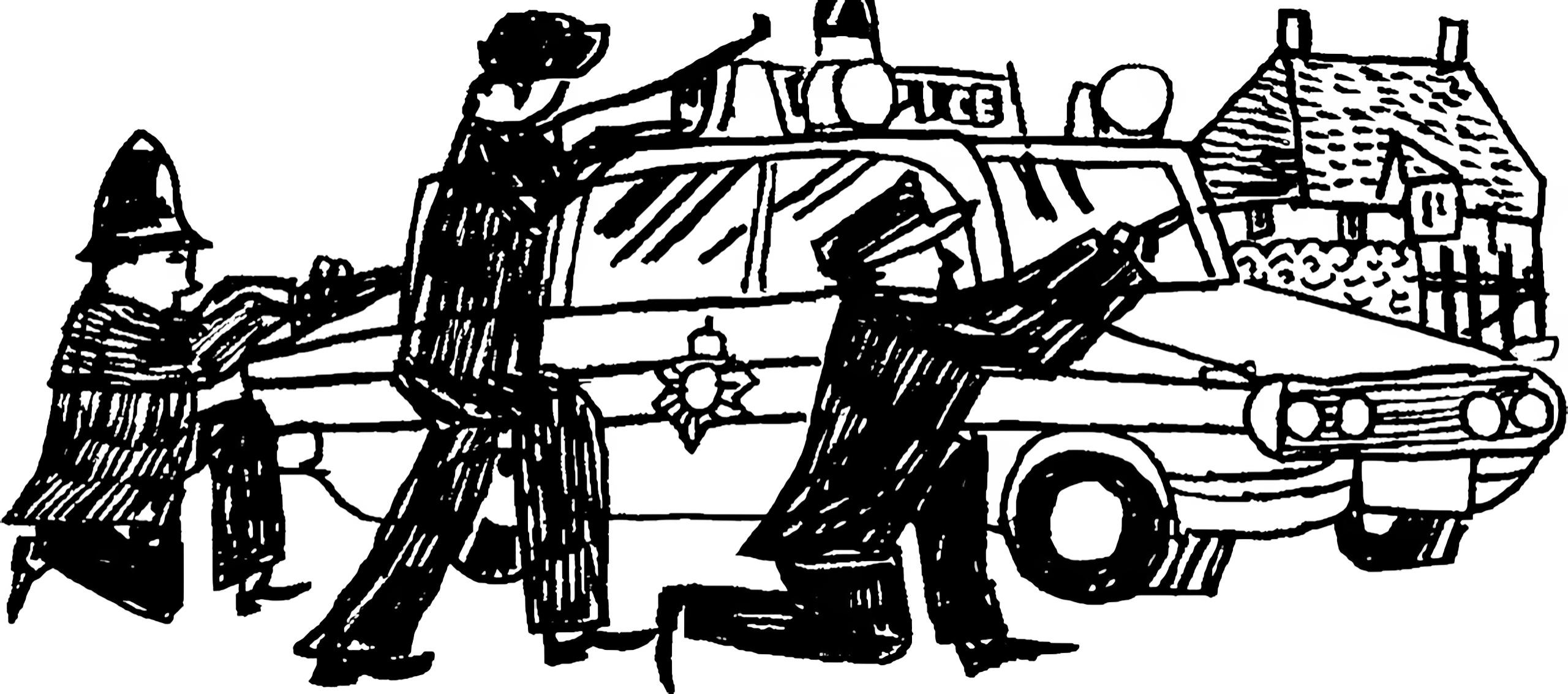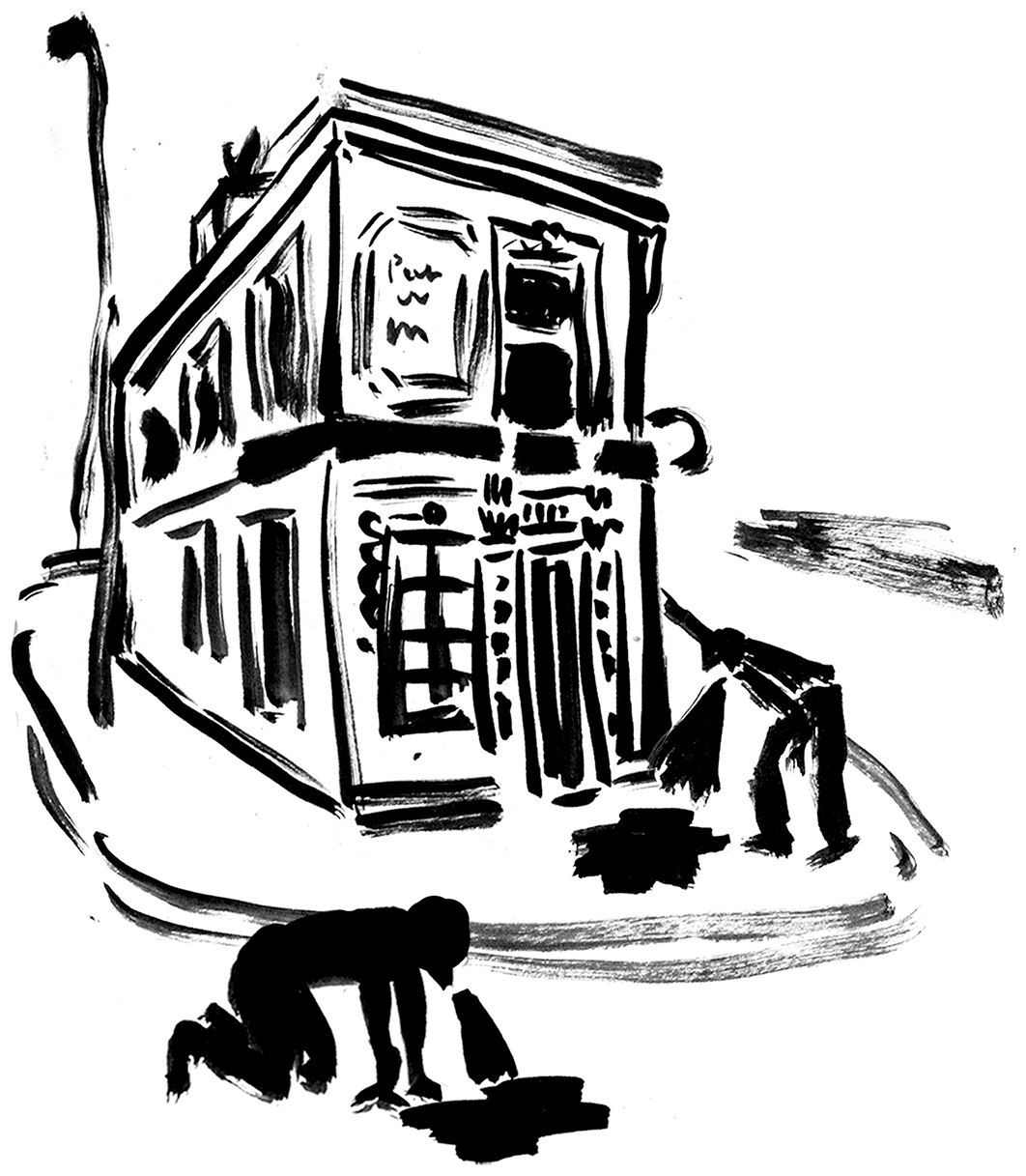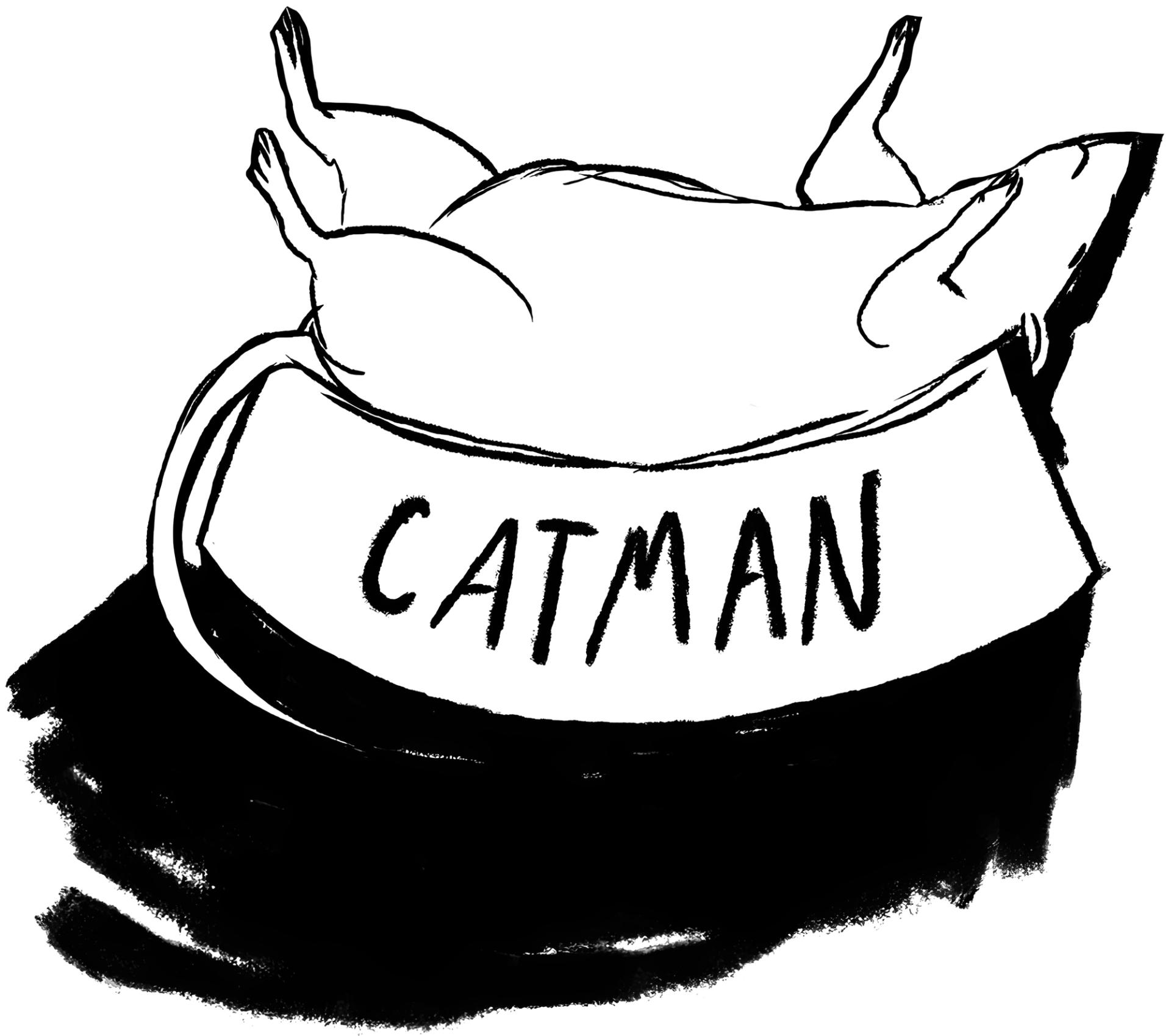
It’s April 2007, and in a quiet corner of the internet, a video is uploaded to YouTube, a site still in its infancy. In its shaky, pixelated images we see a man with an oil-blackened face lying prone on the ground in blue workwear overalls. ‘Where’s the rat?’, the cameraman asks, and as if on cue, the man picks up a dead-looking rodent before placing it carefully between his teeth. This, we are told, is the legendary Catman of Greenock.
The 2007 footage sparked an online bogeyman frenzy, with the most popular explainer video made by, of all people, shit-poster and failed UKIP party candidate ‘Count Dankula’, he of pug-Nazi-salute infamy. By 2015 a Facebook page had been created in the Catman’s name, where people posted selfies, Catman-themed Hallowe’en costumes and memes.
In the seventies, long before the story fledged into an amorphous urban legend, numerous locals attest to having grown quite used to seeing a man eking out a living in a concrete pipe in a wooded area off Scott’s Lane. He crawled, had a distinctive coating of grease or oil on his face, and sported a scar on the top of his head. His habit of looking after a clowder of feral felines earned him the sobriquet.
Many say he was a Russian sailor who abandoned a ship docked in Greenock harbour due to poor mental health and fighting with other crew members. Whether true or not, the sailor story has a ring of credibility: Greenock had been a major port up until the seventies. Shipyards also kept cats to control the local rodent population, and certain yards were said to employ someone to look after a team of maritime mousers. The Catman emerged just as the town’s shipbuilding industry began its inexorable decline. With the vestiges of its naval history still lingering, I took a trip to Greenock to find out if the Catman was really real.
I’m standing in a B&M car park in the town centre, waiting for a storyteller named Paul Bristow to arrive. He pulls up and waves me over to his car. He shakes my hand as I jump in, and soon we’re chuckling as he tells me that young people recognise him in the local Tesco’s as the ‘Catman guy’ from the various documentaries he’s appeared in.
Paul parks up just off Scott’s Lane, the juncture between the city centre and the East End, to trace part of the old route he used to take to his granny’s flat as a child. The lane is all razor wire and corrugated iron, broken bottles and smashed concrete on cobbles. There’s no sign of the concrete pipe, just a bosky hinterland between the road and a bus garage. There’s something peculiar about recognising such a nondescript location from its digital likeness, as if this were just another tourist attraction.
‘He was genuinely real, I’m not making that up – lots of people, including myself, saw him when we were growing up in the eighties,’ Paul explains.
We get back in the car and scoot past decladded high rises, old sugar warehouses, palatial townhouses and the looming Clydeport crane.