It had been some years since I’d last seen my friend, George. At school we were close, but he got kicked out a couple of weeks before our final term ended for fighting with one of the science teachers. When I got in touch with him, he told me that he didn’t really know all that much about the free party scene. It was sort of on the periphery of the stuff that he’s into, but he could probably, he thought, point me in the right direction.
When I get to the bar, George is standing there on the phone, having an animated conversation about a party in Germany. He is trying, he explains when he hangs up, to get a float to Berlin for Love Parade. The paperwork is proving difficult.
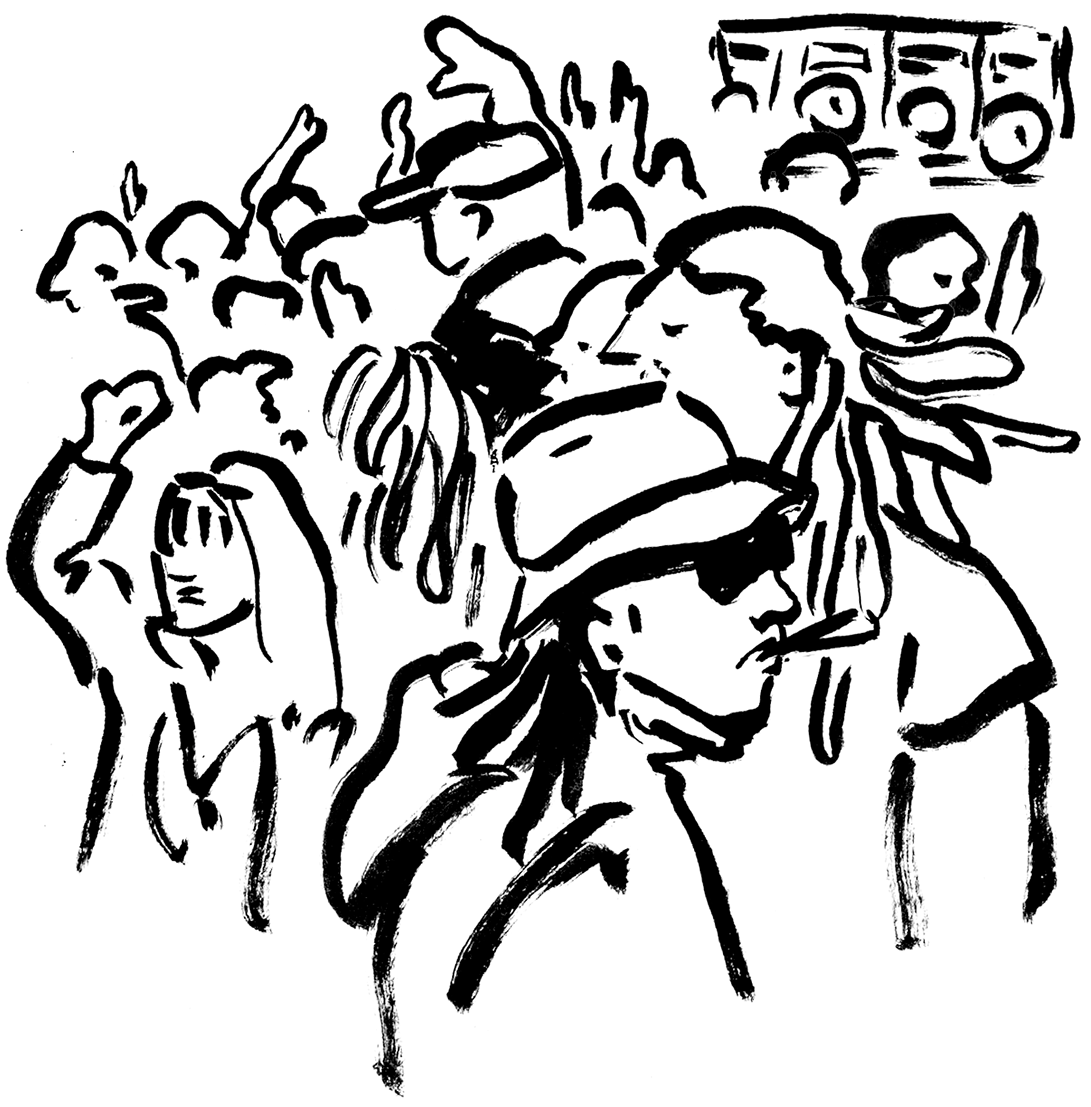
We order chicken, and when our food comes, George explains that what we’re seeing as a result of all these clubs being closed is a huge rise in illegal raves, in the woods and fields, and squat parties. ‘It’s only gonna become more and more of a problem and the government will wake up one day and realise, ‘Oh my God. We’ve got this huge issue on our hands again.’
In the 1990s, after the Criminal Justice Act effectively banned raves, the authorities started to feel like they had control. The act gave the police the ability to remove ‘persons on land in the open air’, listening to music ‘played during the night’, which is ‘wholly or predominantly characterised by the emission of a succession of repetitive beats’. Although free parties never went away, the police, as a result of the act, gained far greater powers to stop parties like the Castlemorton Free Festival, which happened in late May 1992 and which was attended by some 40,000.
The thing about the party, according to George, is that it’s an almost organic thing that can’t be killed. What you end up with instead is a kind of strange fragmented scene that gets driven underground. Part of that is that DJs don’t make any money, but he also reckons that squat parties, which are one of the consequences of losing venues, can be pretty dangerous. Free parties in the countryside, he adds vaguely, are pretty safe, but ‘in London in the squat party scene, you got a lot of grooming going on. Like child prostitution and really dark horrible stuff. Kids find these places, these parties, and they get exposed to these worlds.’
After lunch, we lie outside on sun loungers, and George tells me there is one guy he knows of who has links to the free party scene, a guy called DJ Fu.
It takes me a while to track Fu down – for much of the summer, he says, when I finally do get him, he was in Africa, DJing out in the desert. He says he’ll speak because I’m a mate of ‘Georgie boy’ but at the same time, he’d rather not because as it happens, there are five books he’s thinking of writing himself and he doesn’t want to give all his stories away. What he’s sitting on, he tells me, is ‘bestseller stuff ’, and what he’s after is ‘a major publishing deal’.
In the 2000s, he was in a gang that raided 19 cannabis factories. ‘Listen brother,’ he tells me twice, ‘it’s not fiction.’ Some years after that, he flew to Cyprus, where they took over a radio station. ‘That story,’ he assures me, ‘would sell like wildfire.’