For the last three years, the revival of a very British musical subculture has been gaining momentum among the suburbs around Heathrow Airport. On a Friday evening once a month, a cohort of skanking revellers gather at a clubhouse sandwiched between two parks beside the trickling waters of Yeading Brook in Hayes, and listen and move to the layered sounds of dub reggae. ‘Come. Respect the music, respect the message, respect the people. Uplift yourself,’ grins overseer DJ Kullar of Roots Youths Records, a veteran of the UK reggae scene who grew up off nearby Southall Broadway. ‘And in the morning, you’re gonna wake up feeling motivated, with a spring in your step. You’re going to change your day. You might even change your life. Sometimes this music is that motivating, I’m telling you.’
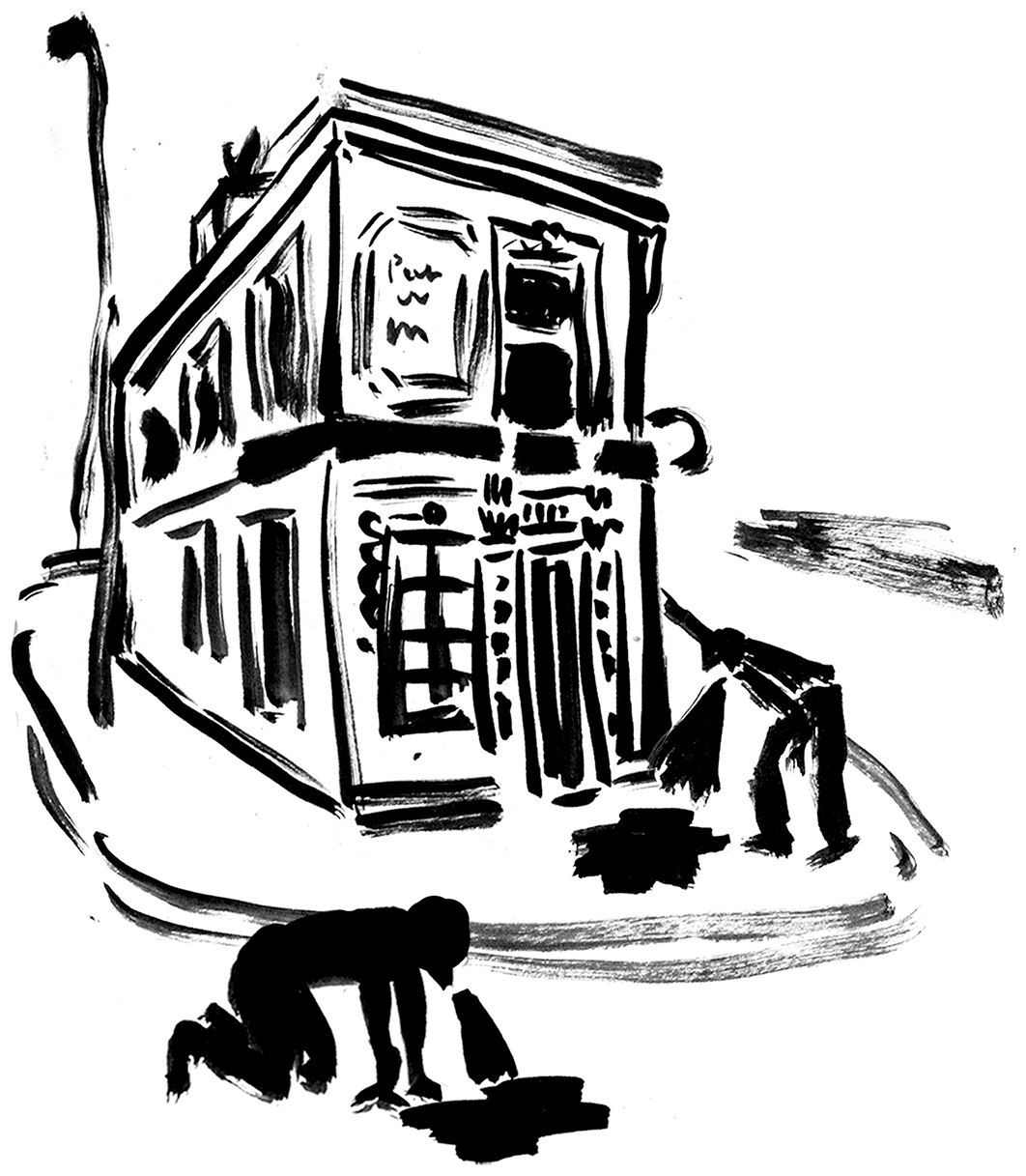
In the daytime, before the dance begins, Kullar arrives with other operators to set up. The main room is cleared, the pool table is covered and the dartboard hanging from the wall is accompanied by posters of Emperor Haile Selassie I, the Rastafarian flag depicting the crowned lion of Judah against stripes of green, yellow and red, and the community platform label of West London Dub Club. Mixing boards, turntables, subwoofers and speaker boxes made from birch plywood are carried indoors and piled to the ceiling. Staff stock the bar while vendors heat up plates of homemade Ital and Punjabi food. The window shutters are closed, creating darkness within. Then, from 6pm until late, as BMWs and Mercedes fill the car park outside, where smokers rest on the picnic tables and soothe their eardrums in the breeze beneath the trees, bass lines reign supreme, shaking the squat building like a shack in a storm.
I attended my first dance at Brook House FC on 2 June 2023. Just weeks before, the legendary producer and sound system controller Jah Shaka, widely regarded as the father of UK dub, had passed away at the age of 75. He played hundreds of times across the decades in Southall, amassing a loyal following among the town’s patchwork population. In a tribute to his legacy, a pair of locals called Taranvir and Rana of Vedic Roots, another sound system formed in Southall, played a seven-hour set as the floor before them filled up with people coming to pay their respects.
The music’s ribcage-shattering bass, cyclical drum patterns and ricocheting vocals about justice and freedom created a hypnotic, transcendent atmosphere. I belonged to a crowd of more than 100 people – young, old, black, white, Asian, dreadlocked, turbaned, men and women – swaying in unison, raising gun fingers, slapping the walls, dog-whistling and stomping feet in heady communion.
‘For as long as I’ve known Kullar, he’s been on the hunt for a venue. Brook House has brought back that sense of a dub community. It’s a blessing,’ explains Rana. ‘There is no judgment, no animosity,’ adds Taranvir. ‘You can come, listen to positive, educational music, feel the uplifting vibes, and some pressure – warm, natural pressure.’
Punjab, the land of five tributaries that flow down from glaciers in the Himalayas to join the mighty Indus River, was brutally partitioned in August 1947. Ten months later, the HMT Empire Windrush docked at Tilbury in Essex, having sailed across the Atlantic from the West Indies. For the next few decades, in synchronicity, thousands of south Asians and black Caribbeans laid down roots in Britain, labouring in foundries, meeting patients in the newly founded NHS, and keeping the cogs of public transport turning.
As mass migration filtered into Southall, the area gained a global reputation as the nucleus of western Punjabi life, while also becoming home to a community of Jamaicans fanning out from more storied inner-city areas like Brixton and Notting Hill. Bound by life on the margins of society and the capital, black and brown locals organised in pubs, taught themselves self-defence and formed advocacy groups like the Southall Youth Movement and Southall Black Sisters in response to racist discrimination.
Meanwhile, the civil rights movement progressed in the US and reggae music exploded from Jamaica, catching fire across the world. In the UK, dub – a subgenre that strips reggae back to its drums and bass, cuts up vocals and adds sound effects like echoes and reverbs – soon became the soundtrack to the marches of political resistance in Margaret Thatcher’s Britain. Sound systems commanded a safe space for the black community to connect and let loose, but they were also a way to bring working-class people of all backgrounds together, spreading messages of hope, resilience and unity.