Dear Readers,
Good afternoon and welcome to Off The Fence, a newsletter that revels in the month of May. Do remember that this mail-out is cooked fresh to order every week; we are not spamming your inbox, so do make sure that your email is not going into that dread folder.
When we find the time, we might ‘collab’ with some enterprising vineyard making English sparkling wine for our quarterly prize for the best photo of the magazine out and about, but for now, the winner takes home a bottle of Bollinger for their efforts, which really is needlessly generous on our part.
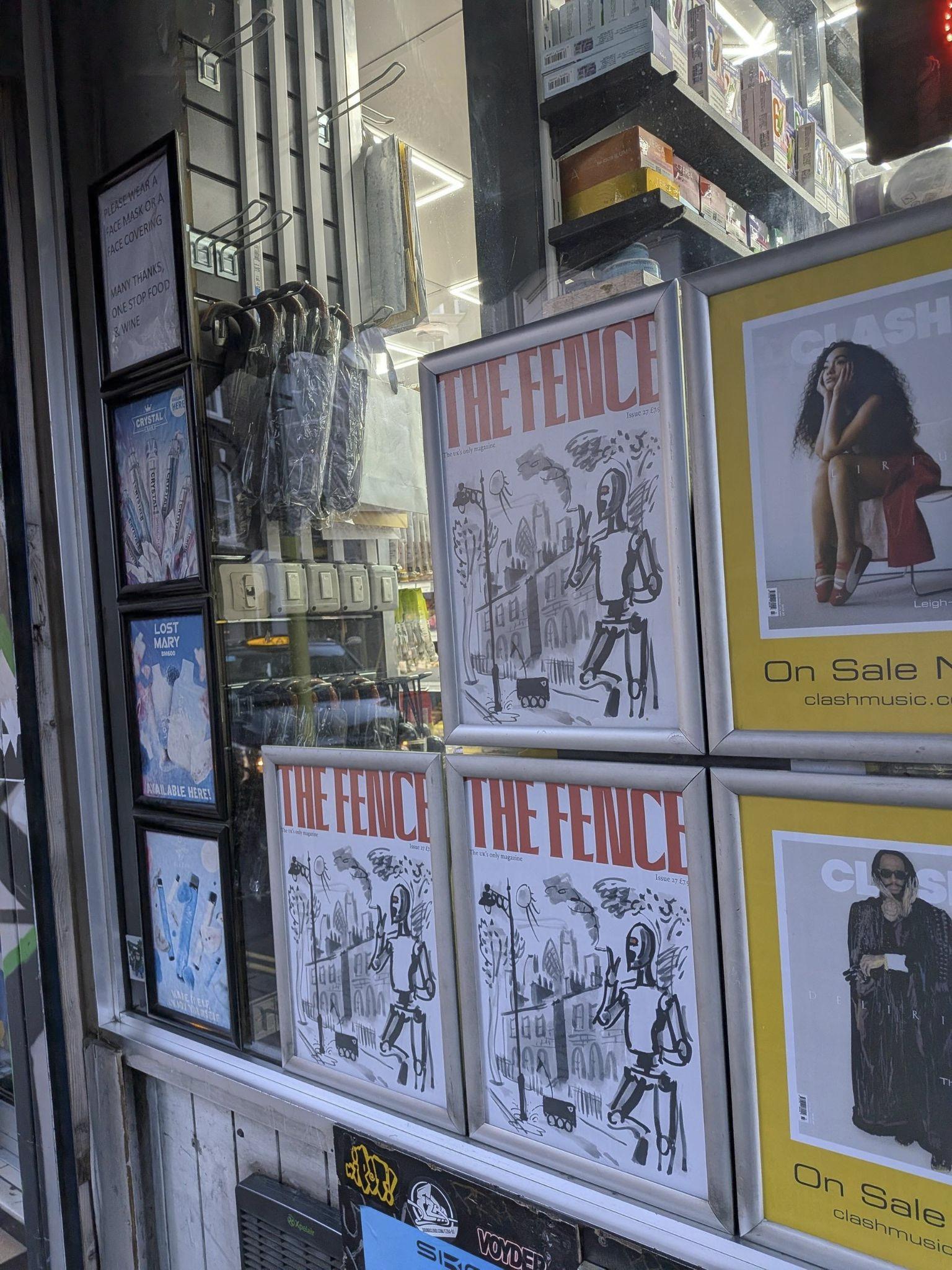
The competition for Issue 27’s champagne is positively electric. The magazine has been spotted near a nudist beach in Barmouth, punting alongside the Cherwell, paying tribute to London’s best kebab shop, enjoying the sunshine in Milan, alongside some cut-price Haribo at Paddington Station; it’s been spotted next to some deeply questionable characters in north London, with a friendly horse, achieving praise from the wonderful Marina O’Loughlin, napping with a very handsome cat and preparing to take Colditz Castle. At the moment there is also a bit of a TF festival all over Soho as the magazine is plastered outside a number of select venues, which really is a pleasure to see.
This is the fastest-selling issue ever – but we are still at a bit of a key juncture where we need as many of you as possible to subscribe, as that is how we keep the show on the road. A subscription to the print magazine remains agreeably affordable, but if you’d like to sign up for a year, and are currently at school or university and would like a discount code, do drop an email to the editor at cb@the-fence.com and we will indulge you there.
Elsewhere, Capital Letter, our London-centred newsletter, continues to grow, recently topping 3,000 wonderful subscribers. Its latest outing has a reviewette of Simpson-in-the-Strand and The Macbeth among other treats. For now, however, we turn ourselves to the coming of spring.
J.I.T.G Means P.A.R.T.Y
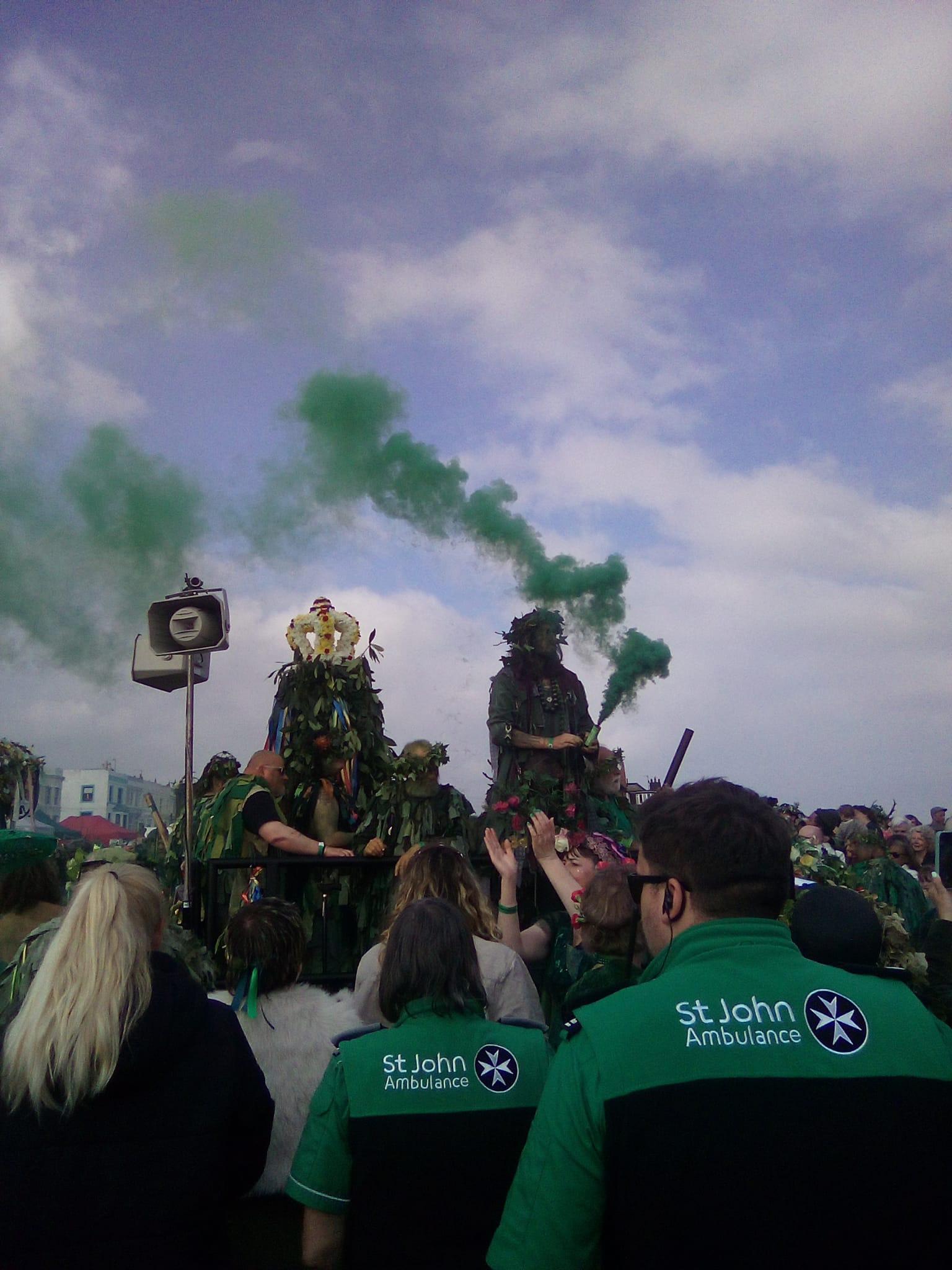
The May Day bank holiday has been officially rung in, we hope your hangovers are treating you gently. We made the trip down to ‘The birthplace of British motor racing’ and home to the May Day processions of Jack in the Green. We were there for the latter, a traditional May Day celebration that got going in the late 18th century. It had a number of dips and revivals over the years, with a small Deptford procession happening each year. The Hastings affair is the real deal, however, having been rebirthed in 1983 and growing stronger every year.
This year’s festivities were, as usual, a feast for the senses and a treat for any practised people watcher. What is it, for example, that leads one to become a committed morris dancer? Who makes all their costumes? Just how many pints has that elderly chap dressed as a shrub had for breakfast?
What was notable to us, however, was the way this event evidences that extensive presence of hippies, young and old, who flocked in their many thousands. There are those sporting their ‘83 original tour merch and ZZ Top beards in a positively Ottoman attempt to assert their elder status. But they are matched in number and perhaps surpassed in energy by a younger, queer tranche of folk-lovers. Whatever form they take, though, the British hippie is very far from dying out, and Hastings’ West Hill was heaving with them and their ways, which, it turns out, make for a very good party. The costumes were excellent, and the traditional ‘slaying of the Jack’ was quite a sight to behold, a kind of soft-core version of The Wicker Man. As the flurry of torn and thrown leaves died down and the hills cleared, the fete’s announcer reminded everyone to ‘count the number of children you have left and compare it with the number you arrived with’ before pointing the many proponents of gentle parenting to the found children tent.
The procession’s growing popularity also speaks to Hastings’ post-lockdown popularity as a London satellite state, with more and more disaffected capital dwellers heading down to the seaside. One can easily see the appeal for those interested in leaving the madness of London behind while simultaneously wanting to avoid living in Brighton. It has, however, produced a degree of local tensions, which in turn have given us our favourite acronym for the week: FILTH (Failed In London Try Hastings).
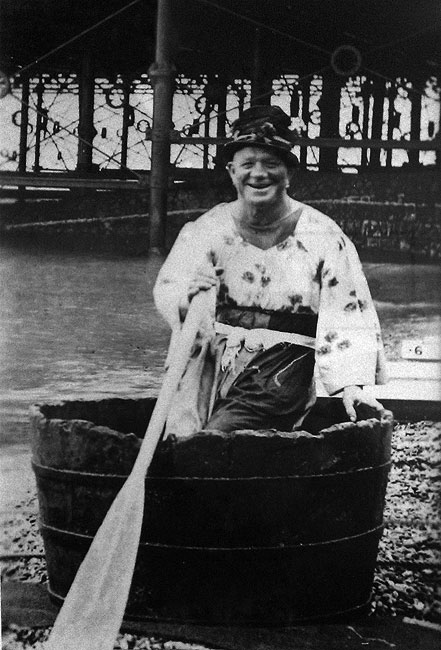
All the same, we can’t help but recommend these festivities to the forward-planning among you, not least for the phenomenal fisherman’s museum, which is possibly the nation’s best collection of stonking old-timey names including Alfred ‘Biddy’ Stonham AKA The Tub Man, who used to perform acrobatic tricks in the harbour on his paddle-driven tub.
Executive Tier
One of the greatest team efforts that The Fence have ever run is now available on the website for you all to enjoy. Our Cringe Century lists the 26 most embarrassing moments of the British 21st century, and it features Alistair Campbell, David Moyes, ‘Captain Tom’, Victoria Beckham, Meghan Markle, Lady Hale and more. Read the whole thing here, and do let us know if we missed something out…
Losing Your Grace
Many issues animate the editorial team of this magazine, and one of them is the futurity of sheep farming in the south-east of Ireland. So in the current dispute between the estate of Lismore Castle – owned by the Cavendishes – and their tenant farmers, we are very much Team Tenant. In this interview, Thomas Fitzgerald, whose family have been herding sheep in the Knockmealdowns since the 1600s, talks about how he won’t be able to continue to farm with the proposed rent hikes.
The Cavendish family, headed by the Duke of Devonshire, own Chatsworth in Derbyshire, one of the world’s greatest private art collections, and are reputedly worth just under a billion pounds. Recently, in a bid to restore the cascade at Chatsworth, they received £4.5 million from the National Heritage Lottery Fund (i.e. the taxpayer).
The heir to estate, the Earl of Burlington, is now overseeing negotiations with the Fitzgeralds and the other sheep farmers. Burlington is obviously a political animal – he has permitted women to become members of Pratt’s and even did an Instagram grid post in the heady days of 2020 for Black Lives Matter. But does he think that his tenants’ lives matter? We will be watching this story closely.
RooneyMania
Tim McGrabhann’s short story about one young man’s encounters with a generationally singular writer from Issue 27 is here. Mari Kealy is the most successful graduate of her and Jerome’s creative writing masters at a certain Dublin university, where ‘Dissenters not easily dismissed as pale, male and stale could only be considered bitter or jealous, since nobody who knew her had a bad word to say about her: and nor did Jerome, not even after she’d told him he’d have to leave.’ It’s a magnificent piece of writing which we really do commend to you all, but it really is best appreciated in print form.
Purchase A Tactile Marvel Here
Radical Young Woman
Certain publications are entering ragebait territory with their coverage of ‘political’ young women. Our own coverage of radical young women is, by contrast, very subtle and totally watertight. Bertie Brandes started it all in Issue 24 with gusto: ‘The very concept of a femcel (especially one with my face) is far too regularly derided and invalidated.’ She has a point. Why ladle dreary concern for young women when we could all just relax and take a sunnier view? There is so much to be optimistic about. As Bertie says, ‘femcel sits between incel (involuntarily celibate) and volcel (voluntarily celibate), existing as it does in a class of its own. That class being made up of judgemental and indecisive, not to mention phenomenally dressed, lithe and soaking wet women.’
Down to Earth
This week Kemi Badenoch made yet another shrewd observation. She noted that Nigel Farage was not ‘down to earth’ following the news that he failed to declare a £5m donation that he received before becoming an MP. For reasons that remain unlikely to be clarified, political donors and donations never seem to go to plan. No one understands the business better than Henry Dyer, who in Issue 22 wrote a speculative guide identifying which Tory donor successfully campaigned for the grouse-shooting exemption baked into the COVID-19 ‘rule of six’ distancing guidelines. Henry put his bets on the then-Queen Elizabeth. ‘Here’s something a lot of people don’t really know about the Monarch: she fucking loves shooting. Like some sort of mad fictional scientist, she has a secret farm of Labradors which she breeds away from prying eyes on her Sandringham Estate.’ It’s a convincing line of reasoning, but perhaps you know something he didn’t. Do write in with any further intel.
Pablo’s Hippos
The tale of Colombia’s hippo population is a well-known classic. For those who are unaware, the animal is entirely non-native there but was first brought over by Pablo Escobar in 1981 for his private menagerie, which is the kind of strategic decision-making that made him such a household name.
When Pablo was finally brought down, his hippos proved a challenge. As a phenomenally dangerous animal, the authorities decided it would be too tricky to capture them, so they just decided to leave them be. After all, there were only four of them. Well, a few years later, they escaped from the private zoo, and suddenly there were 16 hippos in Colombia. Then in 2014 they were counted again and wow, look at there were suddenly 40 of them, how droll! There are now over 200.
Fortunately, they have not proved too deadly to local people, but their ecological footprint is far from neutral as an invasive species. Many efforts have been made to control them, including ambitious plans of chemical sterilisation. But the newest – and silliest – proposition comes from none other than the incredibly rich Ambani family. Anant, son of the family’s patriarch Mukesh Ambani, has apparently taken a liking to the lumbering beasts and wants to bring 80 of them to his private animal sanctuary in Gujarat, which is already some 150,000 creatures strong, and features a jacuzzi for elephants, among other things.
Three-hour Mum
Lots of people are pretending to be cross this week because Emma Grede, the woman who started a jeans company with Khloe Kardashian, has described herself as a ‘three-hour mum’, meaning that she only spends three hours with her children. There are several important stones left unturned in this story. The most crucial is that no one seems to be asking what time frame those three hours are spread across. The people want clarity with the numbers. Also important – why has this person suddenly emerged as a lifestyle guru, when her defining role was being a sort of ghost-business-partner to a minor cultural figure? The outrage will all blow over soon, but while it’s in the in-tray, let’s take it as an opportunity to return to Tanjil Rashid’s short story in Issue 24 about a pair of parents-to-be. There’s no discussion of the number of hours spent with the baby, but there could have been. The conceptual link is strong for those invested in connection.
In Case You Missed It
The story of the New York gallerist associated with Roy Cohn, who tortured young men.
Muhammad Ali drops in on the set of The Sopranos.
Trainspottingis being made into a musical.
Ed Caesar’s piece on Jonathan Swift’s last joke is a delight from start to finish.
Courtside pictures of James Goldstein are nightmare fuel.
And Finally
A wonderful new update to the BBC Archive has been made, with a new episode of Man Alive following the arrival of a young woman in a 1965 flat share.
‘Girls. Tall girls, short girls, fat girls, thin girls, ugly girls and pretty girls. Tarts and floozies, nymphomaniacs and gangsters’ moles. And nice girls, respectable girls, upper-middle-class girls with good manners and impeccable accents,’ goes the opening voiceover. He does not clarify which of the categories the documentary subjects slot into.
Instead, the film follows four girls living in an ‘unloved’ patch of North Kensington, who, ‘like most girls,’ are said to ‘shuttle between dull work and an equally dull private life.’ We see scenes from home, on the street and at work, each one carefully made up and studiedly casual in her performance of a typical day. One of the best moments is the interview that leads to the adoption of the final member of the flat, involving discussion of mealtimes and the hushed wonder at the fact of having enough hot water to fill consecutive baths for all four girls. ‘Marvellous,’ nods the new girl. There is something so marvellous about the programme that it has somehow captured everyone’s imagination. We asked several people if they had seen it and was told by one young woman, simply, ‘Yes, I took screenshots on my iPad for haircut inspiration’.
The women are shown funnelling toward the ultimate goal of marriage, speaking to one another and to their lacklustre boyfriends in strangely sedate, muted tones. Bleak as it now seems, there’s something oddly fascinating, even faintly appealing, about it. Aspirational might be too strong, but it certainly compares favourably with some other uploads from the archive. A particularly bad example is an interview about the arrival of the podcast in 2004, described as being ‘enjoyed by a growing number of internet enthusiasts’, which, 22 years later, describes every single one of us.
https://www.youtube.com/watch?v=EpBjKXQun7k
That is that for this week.
We look forward to joining you soon. Do remember that all pitches go to editorial@the-fence.com and everything else goes to support@the-fence.com. Chris Martin’s great-great-grandfather invented British Summer Time.
All the best,
TF