A short story that concerns a successful Millennial Irish author.
Jerome turned up for his shift by the ticket machine at Heuston Station and Mustafa, the security guard, was there already, using the top of the machine as a table from which to eat his breakfast of Centra croissant and Spar Americano.
‘How’s tricks, Mustafa?’ said Jerome, and toasted him with a bottle of Benylin. He had a cold coming. Ten days of hanging about angling for change would do that to you. He had a bit of a grace period going at the gaff where he was staying. But with its owner due back on the weekend, that grace period was frayed now down to its final thin lattice of fabric, requiring of Jerome drastic, asky measures. At his feet, the dog wagged his tail so hard his haunches and arse shook, skittering his nails on the tiles.
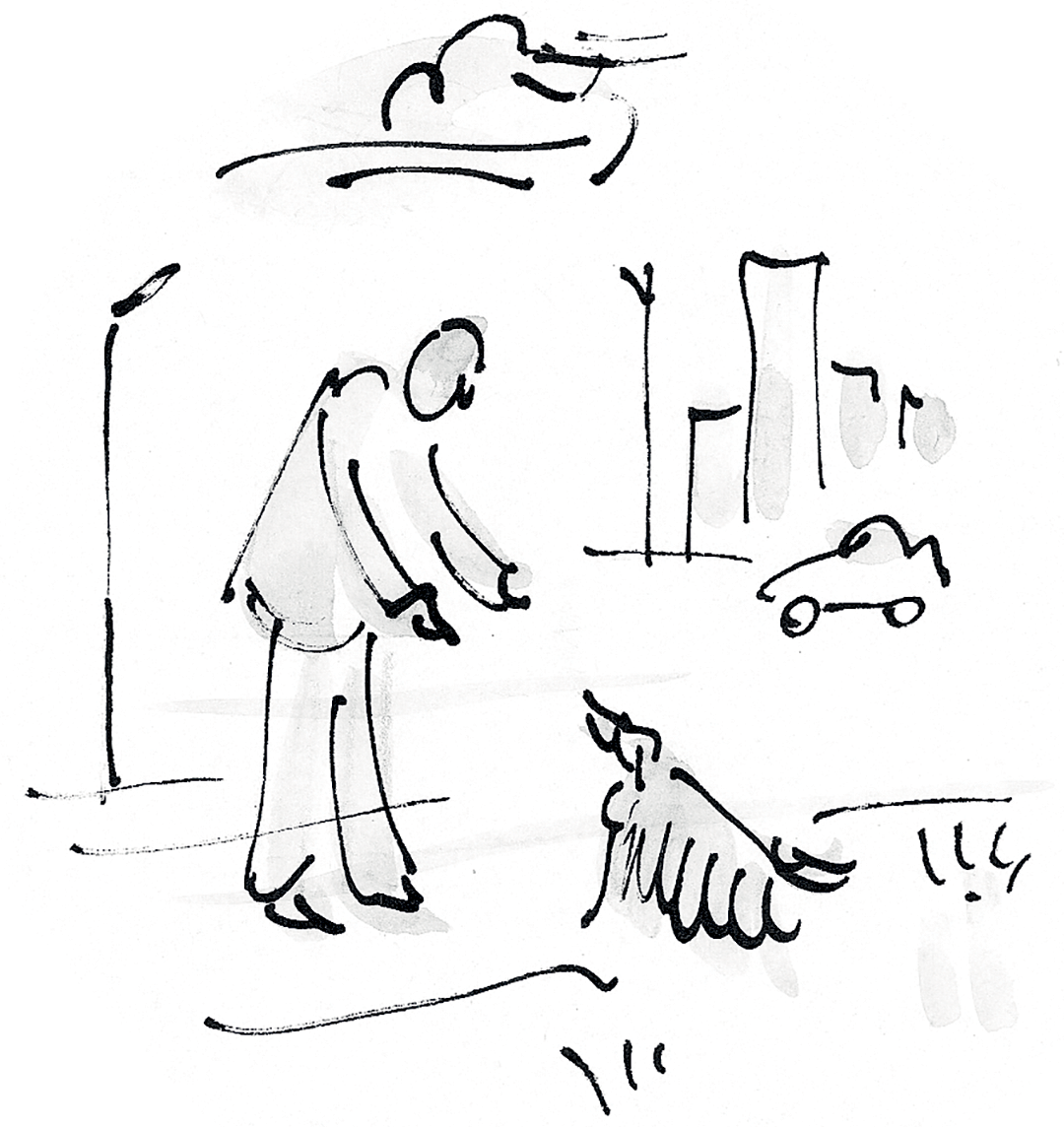
Mustafa looked at Jerome sidelong and said, ‘They are bad.’ He looked down at the dog. ‘Hello, little man.’ He stooped to pat the dog’s head. He was a fuzzy yoke, the dog. His name was Niall. He had bear-like ears and a greyed muzzle whose moustaches had nevertheless retained their russet-caramel hue. The same was true of the long, ratted hair of his body and the spray of his tail. On his wee head, the hair would nearly pass for neat, in falling curtains like a boyband member, or Kurt Cobain on his cleaner days. But the most salient element of the dog’s lid was his amber eyes: their knowing, banked glow to them, making them seem ominously goat-like.
Mustafa was either immune to this eldritch quality, or else didn’t notice, because he was such a unit, his hand twice the size of the dog’s brittle skull. He was gentle with the little scut, though, and giggled as Niall the dog’s tongue licked out to caress his palm.
‘He is smiling. He likes me so much,’ said Mustafa, his native French softening the ‘ch’ to a mushy hush.
‘Can a dog smile?’ said Jerome. ‘Does a dog have lips?’
‘I do not think,’ said Mustafa, ‘that a white man even has lips.’ He waggled his fingers, making a target for the dog to swing his nails at.
A customer was nearing the machine – two, in fact, a harried-looking mother and a young boy of about six, coming across the blood-lit rink of the forecourt.
‘Showtime,’ said Mustafa, and tipped an index finger to his eyebrow in goodbye to Jerome.
‘Hiya,’ the mother said to Jerome, looking askance at him.
‘You need a hand with that?’ said Jerome, and reached to poke the screen.
‘I’ve done this before,’ she said. She wore Birkenstocks and dungarees over a striped T-shirt.
‘Are you using cash or card?’ said Jerome.
‘Oh, Jesus,’ said the mother. ‘One of these.’
‘It’s not what it looks like,’ said Jerome. ‘I’m late for a wedding. I got mugged.’
‘On a Monday morning?’ said the mother. She stabbed the screen with her index finger.
‘And the dog?’ said the kid.
‘Don’t talk to him, Kostas,’ said the mother, her attention fully on the machine.
‘You told me to be friendlier!’ said Kostas, who looked to be about six.
‘And the dog what?’ said Jerome, scratching at the inner fold of his elbows.
‘Is the dog going to the wedding?’ said Kostas. He had a matt yellow raincoat on, over a striped T-shirt that matched his mother’s. It was a bit Wes Anderson.
‘Obviously,’ said Jerome.
‘Then you need money for the dog,’ said Kostas, as Niall the dog leapt and scrabbled at the knees of his jeans with his nails. Kostas giggled and tried to pet Niall but the dog had slid back down. Niall sneezed.
The mother shook her head as the machine whirred and gritted and spat out two tickets.
‘Well, OK, I didn’t get mugged,’ said Jerome. ‘And there’s no wedding. But I did just get made homeless.’
The mother looked up at him then and goggled and said, ‘Jerome?’
‘Oh, no,’ said Jerome, and now the shoulder-length wavy hair and owlish designer glasses upon the worn-nib bump of her nose converged, became recognisable. Amazing what a haircut and new frames did to a face: they’d done their master’s together, not even that long ago. Her book had come out and all. He’d made it to the launch. It’d been the day he’d lost his job.
‘Hiya, Milena,’ he managed.
‘But what on Earth,’ said Milena, knuckles on her hips. She sounded aggrieved still, but no longer aggrieved at him, so much as whatever situation had propelled himself into this. ‘Were you not living with … ’ She jerked her head over at the Easons, at the pyramid of glossy indigo hardbacks on the NEW RELEASES SPECIAL OFFER table nearest the window. The name on the cover belonged to Mari Kealy, the most successful graduate of their creative writing master’s: and yes, successful was the word, rather than some hedging euphemism like acclaimed or well-regarded; she had become a phenomenon, becoming famous-famous and rich-rich, not just writer-rich, writer-famous. Adaptations, critical adorations, best-selling translations – she had it all. Those dissenters not easily dismissed as pale, male and stale could only be considered bitter or jealous, since nobody who knew her had a bad word to say about her: and nor did Jerome, not even after she’d told him he’d have to leave.
‘Well, not with, strictly,’ said Jerome. ‘So much as in her gaff. Her spare gaff, like.’
‘And now?’
He scratched the back of his neck, felt the fishhook of a grimace printing itself in one cheek. ‘Ah, it was a precarious enough aul arrangement in fairness now.’ Not that he was bitter: at least, not specifically bitter; there was room for only one big Irish name per generation. Seamus Heaney had chewed through his parents’ and grandparents’ psychic forestry, and chugged it all out as the Nobel-scented smoke of his legacy; now Jerome’s present (and no doubt future, since she was five years younger than him) gurgled into the ducts that fed Mari Kealy’s fiction, freeing him from the need to give a shit about any of the issues of the day, any of the political landscape – any of the stuff he had in his head, even, since she had all that covered, or else would get to it in the novels she milled out punctually every 18 months to two years. Five she had now, with no indication that she’d stint anytime soon.
She was the real thing in that regard, to be fair to her; days when she stayed in Dublin he’d watch her go at it hard, clatter the laptop in great early-morning fits – then halt, make the paragraphs big, squint at the black clean set of them on the empty white, and finick, tap, dab, chisel, till the raw inner utterances she’d typed took on an obsidian, typo-less shine. All he could do was watch and wait, and get out a little squizz in biro on a notebook whose half-gone-to-shit cover eventually had gone fully to shit and shed all its pages, pulled apart by the draught of her terrible fluency, which awed him the way a river in spate did. All he could do was bow to the wave that drowned him, enjoy the foil-ripple of light spangling the surface as down he went.
Milena pulled round her rucksack and mooched Kostas out of the way of the queue so a lad in a duffel coat could use the machine.
‘If it’s too good to be true’ – Jerome stepped aside as well – ‘then it probably is.’
‘Isn’t she married? Now, I mean.’ During the master’s, Mari had been dating a talk-radio star. He’d come home to find him there at 3pm in his pyjamas, arm around her, holding her upraised hand, while a repeat of The Simpsons played on the boxy telly that’d come with the campus apartment. After he soured on her, she published an exposé concerning their unequal power dynamic in a small but well-regarded literary review. The scandal had smouldered to a blaze that took him out altogether, and landed her with a book deal. The novel had been ready to go, though – you couldn’t fault her there.
‘Ah, yeah,’ said Jerome. ‘He’s pretty sound, though; they’re lucky they have each other.’
‘Think he’s the lucky one. Ching-ching.’ Then Milena shook her head, said, ‘Sorry, that was crass.’
‘And you?’ said Jerome. ‘Writing?’
‘Always,’ said Milena, with a shrug. ‘It’s that rat thing. You chew and you chew so the teeth don’t grow through your brain.’
‘Is that not rabbits?’
‘Don’t think so. You? Writing?’
‘The teeth have gone through my brain,’ said Jerome, and Milena didn’t hide her grimace in a laugh fast enough. Not that he minded: his own book during the master’s was about a substitute goalie at a mid-level Premier League club. So many people asked him if it was influenced by Peter Handke that he’d begun to just say, ‘Yeah, sure,’ even though it was nothing like that; there were no stakes in his substitute goalie book, no plot and no stakes and no real character, just the sub goalie walking around London unrecognised and having a nice time, because he was getting 70 grand a week. He’d made the sub goalie clever, so that these walks could become philosophical ruminations on history and capital, which the goalie, like Jerome, conflated into the same thing.
‘Well, look, a break from it doesn’t hurt, either, in fairness. Also.’ He watched Milena take a red wallet out of the rucksack and unclip the front of it. A 50 that looked ironed emerged. Jerome could smell the goldeny cleanliness of it. The leap of relief he felt in his chest disgusted him.
‘Ah, she is, yeah,’ said Jerome. ‘But they’re selling the Dublin gaff. Like it’s just it’s the pied à terre and it’s kiddo o’clock and she’s that NYU job waiting so.’ He flapped his hands. ‘No hard feelings.’
Milena’s eyes went big. ‘You can’t blame them, in a way,’ she said. ‘But, in another, you absolutely can.’ She watched to see if Kostas was looking or not. He was down on his hunkers. With a wee squeal he received Niall into his arms. Milena passed Jerome the 50 and he mumbled a quick, ‘you sure?’ as he pocketed it inside his jacket.
‘Don’t worry about it.’
With the edge of her thumb she scratched under her lower lip, frowning a little. ‘And where are you going to go?’
The underside of his chin was itching him, but if he scratched, a snow of dandruff would fleck the lapels of his wedding suit. His instinct was to say ‘the Ma’s’, but she was back in Pat’s, where she went when her moods slipped, cut slits out of things, made her rage-weep on forecourts. ‘That’s still TBA,’ he said. ‘But we’ll figure it out.’
‘The way things are, you know,’ said Milena, ‘it seems rough.’ She looked down to where Kostas was watching Niall caper about.
‘Good, isn’t he,’ said Jerome.
‘He’s a sweetie,’ Milena said, beaming down at Niall. ‘And that’s as a cat person.’
‘Yeah,’ said Jerome. He heard the glow in his own voice. This was not to say that Niall hadn’t his eldritch aspects. Where he had come from, for instance, was a complex thing to unknot. He hadn’t quite always been there, and he hadn’t quite been inherited, either, but over time the scraps doled out to the dog those mornings when Jerome came down to find him curled on the doorstep grew into sliced pan bought and dunked in milk and left waiting in a steel bowl. From there it seemed cruel to leave him outside: the mourning lambency of those eyes of his, the guilt he’d feel, the haunt in it – impossible to refuse. As to the name Niall: well, it was on a metal disc around his neck
The speaker boomed with a recorded voice announcing a platform.
‘We’d better get rolling,’ said Milena, and reshouldered her bag. ‘This dog’ll have me hypnotised and I’ll miss our train. Come on, Kostas.’
‘OK,’ said Kostas, and got up, feathering between his fingers the wee mohawk that his stroking had formed atop Niall’s dome.
‘Where youse headed?’ said Jerome.
‘Galway,’ said Milena. ‘Just this festival.’
‘Oh, right. I think she’s at that actually.’
‘She is, yes.’ Milena held up the sleeve of Kostas’s Puffa so he could put it on.
‘Put in a good word, would you?’ said Jerome, and added a laugh, because Milena’s forehead had taken on a pinched crease of worry.
‘Good to see you, Jerome,’ she said, and bumped her cold cheek against his. ‘Send us a text, would you? If you need anything.’
‘Oh, I will, yeah,’ he said.
‘Bye,’ said Kostas, waving to Niall, then, remembering Jerome, canted his head back without interrupting the movement of his hand. He watched them beep through the automated turnstile and head for a different platform to the one just announced. Niall watched them, too, till they mounted the train. Then he looked at Jerome, who wobbled the lead like it was a pair of reins and said, ‘Giddy up, young fella.’ 50 quid was more than he’d get if he stood there the full day. There was zero point letting his fingers go any more numb above the second knuckle, so he crossed the concourse, back out the door, and touched his index finger to his eyebrow as he drew level with Mustafa, who turned his palm up at the sky and gave a quizzical backward nod.
‘Dropped scratchcard,’ said Jerome. ‘All Cash. Pure luck.’
‘Thanks to the God,’ said Mustafa, and clasped his hands. ‘Take care, my G.’
‘You too, habibi,’ said Jerome, and a big strafe of wind whipped his lips and chased Niall’s pelt into brief quiffs. He sneezed and wagged his tail. The one thing Niall enjoyed more than wind was sneezing. Wind must have been loaded with psychedelic levels of information for the wee fella, Jerome thought, as they crossed the road and began up the slope past IMMA and towards the entry to Pat’s: an acid-drop, perhaps, or equivalent, Jerome thought, to get a gust of wind like that blow up your muzzle and into the billion fine-tuned nostril hairs, although to be fair the glee with which Niall hared around the garden on blowy days suggested more the vein-shivering elations of MDMA.
He was let pass by security with no show of ID, because Mick was on duty and they talked Xbox the odd time. Mick was a prepper. He viewed both Xbox and the alternate-weekend bouts of paintball that he took his son on as practice for what lay ahead. But he was left wing about it, he said, because it wasn’t immigrants he was scared of, he said, without specifying who it was he was scared of.
Mizzle prickled his cheeks. He could see his Ma smoking beneath the eave of her unit. She’d done well before this flame-out: one of the longest intervals he’d known since they’d begun, around the time of her father’s death. The first time he’d driven any distance at all was the night of Liverpool v. Olympiakos, when he’d heard a screech – that was the only word, screech – from upstairs. He’d legged it out to find her sitting on the landing, knees hugged to her chest with one arm, the fingers to the hand of the other picking her lip, as she shook her head, looked past him, and said, ‘Oh, love, I’m not able to handle this at all, at all. Be a hero and get in the Corolla, would you?’ Since then she’d been in and out with such frequency that she called her unit the executive suite, and indeed appeared to be installed in the exact same one every time.
‘Howiye, Ma?’ he said, as he and Niall drew near.
‘Mirabile dictu,’ she said. ‘I’d take a shower today.’
‘Oh, Ma,’ he said. ‘You look better than you feel.’
‘I look like a ghoul.’ She eased her cheek out for him to kiss. ‘It’s not your normal day.’ The normal day was Tuesday. He’d take her out the coast with Niall on the DART, her in her leopard-print coat, him in his red velvet jacket, the dog swapping laps till they were out in the raw wind.
‘Ah, yeah, bit of an unforeseenness,’ he said, and flattened the tails of his suit jacket along his arse to lean against the sill beside her. He robbed a Silk Cut Silver from the pack. ‘Just transpired there. May have to be moving home for a spell.’
She watched him light up and said, ‘What are you after doing?’
‘Nothing,’ he said, and shot smoke out the side of his mouth, away from her. ‘Just you haven’t a key, have you?’ He could hear his voice gone cottony with the smoke. ‘For the house.’
‘Snakes and Ladders,’ said his Ma, rootling in her pocket. ‘Longest python’s right at the top of the board.’ With difficulty and dark-rimmed nails she worked a key from its ring. ‘Back you slide, back to zero.’ She held out the key.
‘There’s no square zero,’ he said, and took the key.
‘I know that, love,’ she said. ‘You’re not even on the board.’
‘I understand that now, Ma, yep,’ he said, and kissed the top of her head. The hair was feathery and creased from the pillow. The peace of the place allowed her to have lie-ins here, she said, but Jerome knew she was just on Risperdal. He waggled the key by the shaft till the ring-fasten rattled. ‘Thanks for this, though. I’ll see you at home.’
‘If they ever let me out,’ she said. He watched a tension come into and leave her cheeks as she clenched and unclenched her teeth. ‘You ever see a man die?’
‘Ah, Ma.’
‘They’re letting us die,’ she said. ‘If they’re not killing us. The doctor looks sick. He has his cheeks gone right in. His eyes look out from a place of kindness, goodness, decency. But his cheeks all caved in like Christ sucking the bamboo and the vinegar sponge,’ she pronounced, then gave Niall a hard look and said, ‘He looked like he was witnessing his own conception in the next life is what he looked like. That’s what happens to men when they die, you know. They get pornographic visions so intensely arousing as to pull them back into the world. That’s how they lure you back.’
‘What do women witness, then?’ said Jerome.
His mother shook her head and said, ‘Nothing. Only the carnage. Well, I passed out then, from the shock, and when I woke up I was sure I’d died already and railed at them for offering a dead woman breakfast, the eejits, could they get no order right.’ She put her hand to her forehead. ‘Apparently it’s normal, or at least a side effect.’ She pointed in the door, at the fuggy dimness of her room. ‘But this is why I need you. I have a loose washer in the sink driving me mad.’
‘Oh, Ma, but, well, you don’t think maintenance couldn’t …’ he began.
‘Well, I’m persona non grata, as I said to you,’ she folded her hands in her lap. ‘On account of I howled at them today.’
‘I think they have to let you howl at them, Ma,’ he said.
‘I suppose they are trained for it. So – no more Tuesdays with Mammy then? Never mind.’ She patted him on the side and said, ‘We’ll see you’, then bent to squoosh Niall’s woolly face between her hands. He didn’t leap or dance his back feet. He merely peered at her, orange-eyed, with a spookiness definite enough for her to go, ‘What’s the matter with this lad today?’
‘Cold, I’d say,’ said Jerome, and rubbed his hands. A purple mottling had come upon them. ‘And speaking of. We’d better shift.’
His Ma nodded, kissed the palm of her hand, and flapped her fingertips against the heel of it.
‘Bye,’ she said flatly, and he turned his back on her, left her to smoke alone in the undulant green nowhere of the hospital grounds, taking little sips from the Benylin bottle, and a feeling in his stomach like a bowling ball had gone cratering through the floor of it, leaving raggy edges blowing in the draught of the fall.
The walk back to what had once been home took him past the deconsecrated church that had once been work, and it was on the grass verge outside that Niall, with an uncanny timing that bordered for Jerome upon the spiteful, decided he must conduct his morning evacuation.
‘’Sake,’ said Jerome, watching as Niall’s haunches drew tremblingly inwards and his tail began to tick rapidly up and down. Niall licked his lips and Jerome saw no guilt in his eyes. Shaking his head, Jerome looked away, eyes seeking for the window of the self-publishing house that, in its slow folding, had taken his job first.
‘But fundamentally,’ his boss, Garrett, had said, on the day of his shitcanning, ‘we’re all disposable.’
‘Fungible,’ grinned Steve, the Paul Weller-haired graphic designer, his hands behind his head.
‘I want to be next,’ said Garrett, retucking his shirt, failing to notice that its not having a lower button shut was the reason for his discomfort. He was a big, wobbly-bodied man perpetually in a half-delirium owingto the sleeping patterns of his and his wife’s newborn. ‘I could do more bottle-heating.’
‘We can swap,’ said Jerome, putting his Marx-Engels-Lenin mug into his satchel. It was the only thing of his he’d brought to the office.
‘Sorry,’ said Garrett, remembering.
Steve, scratching his paunch, winked at Jerome and said, ‘Chin up, brother. You’ll get more on the dole.’
This had turned out not to be true, but the firing did lead him to the gaff he had until that day occupied.
Bemoaning his case to Mari and her husband, Tad, in the pub after a workshop, he’d watched Tad revolve the pebbly base of his sparkling water on the table and spread the other hand towards Mari. The word for what her face did then was, he had noticed, with a little sag of disappointment, moue: although in fairness, he conceded, you can only remain so down to earth a million sales in.
‘We’ve a spare house,’ she said to him, lowering her chin to her spread palm. ‘If you need it.’
‘While you get on your feet again,’ said Tad, all beaming, pinkish, American masculinity. It was easy to laugh at him, of course, but that raw-boned heap of a man had come in handy, next day, when Jerome had texted notice to his landlord, set his phone to flight mode, and hefted all three rucksacks’ worth of his stuff into Tad’s Saab.
Ruminatively, Jerome chewed the flesh of his inner cheek, having washed another slug of Benylin around his molars, and watched Niall finish up.
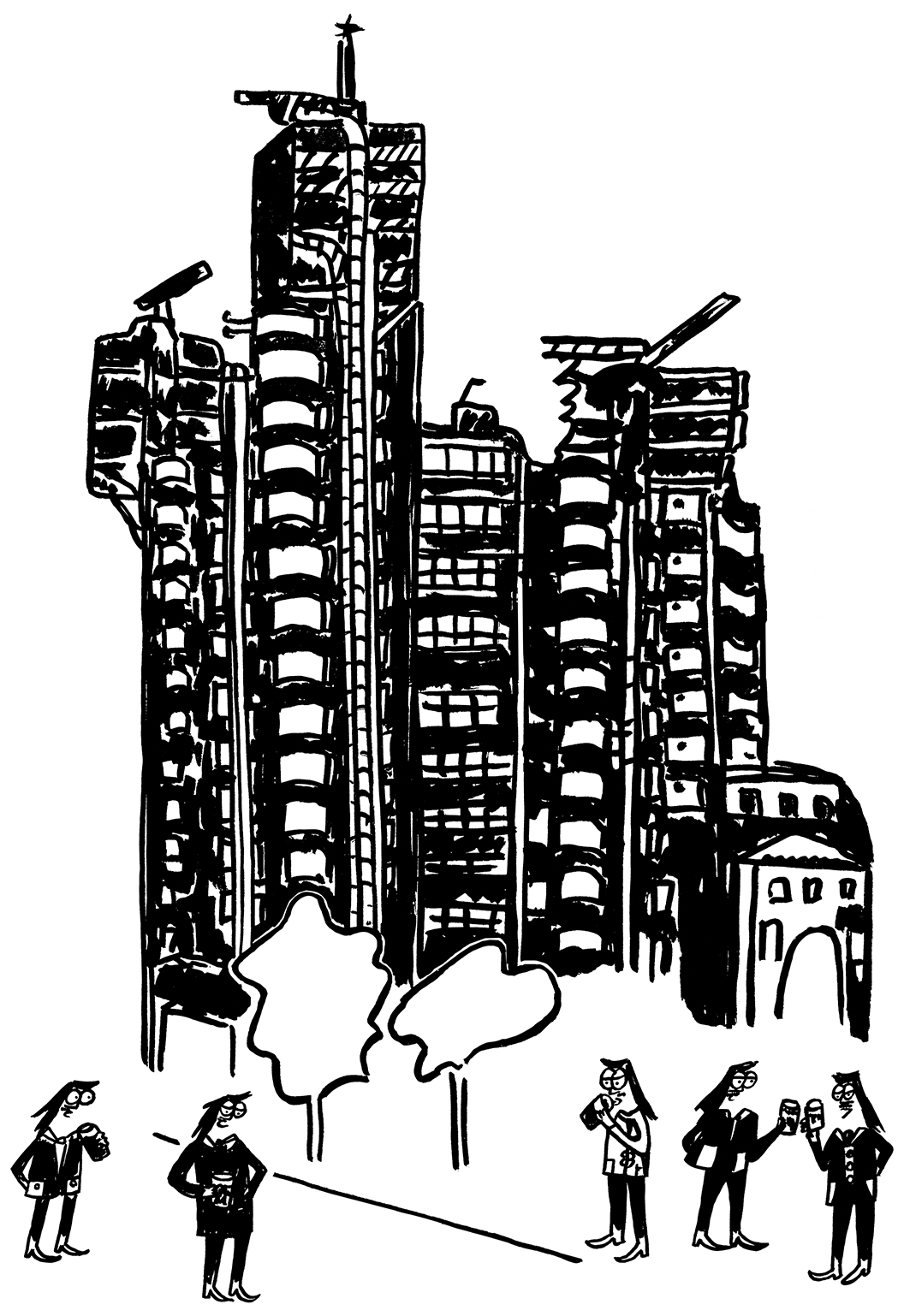
‘Good lad,’ he said, as Niall kicked up shreds of grass with his nails. The sky had a freakish, glowy thing going on above them, even though it was entirely colourless. Even Niall was entranced. The foggy nothing of it made Jerome think of pulped pages, the look of the world after everything worth saying or thinking or writing had been gotten down and forgotten. There was a Zen tradition, one of the Yanks in their master’s had said, whereby sky and emptiness were the same word: enough for Noura, whose Da was from Japan, to allow a sceptical grimace across her face. But even if that cod-etymology was bullshit, Jerome looked up at the white air and wondered both if the Yank had chanced on some deeper truth frequency by total accident, and if Niall was seeing something similar. Jerome stared at the dog’s eyes and saw the pupil appear vertical for a moment: but then he saw the shape sway in the orange of the iris, and realised Niall was staring up at a large girder, corseted in wire, as it turned above a milling gaggle of helmeted workers.
Jerome stared with Niall at the site, and he took a long contemplative belt of the Benylin. The supervisor turned, saw him there, and Jerome fled, bringing the dog with him, his top lip coated all granular with Benylin.
A 50 didn’t go far in Dublin: he bought his toastie and Smithwick’s with the Laser card. The numbers on the card machine pecked a divot of flesh from inside his chest. He’d miss living at Mari’s. He’d never seen his bank account so robust, the skinny ones and threes propped up in the lagging of no-rent – not fattening, no, but at least thinning slower than usual.
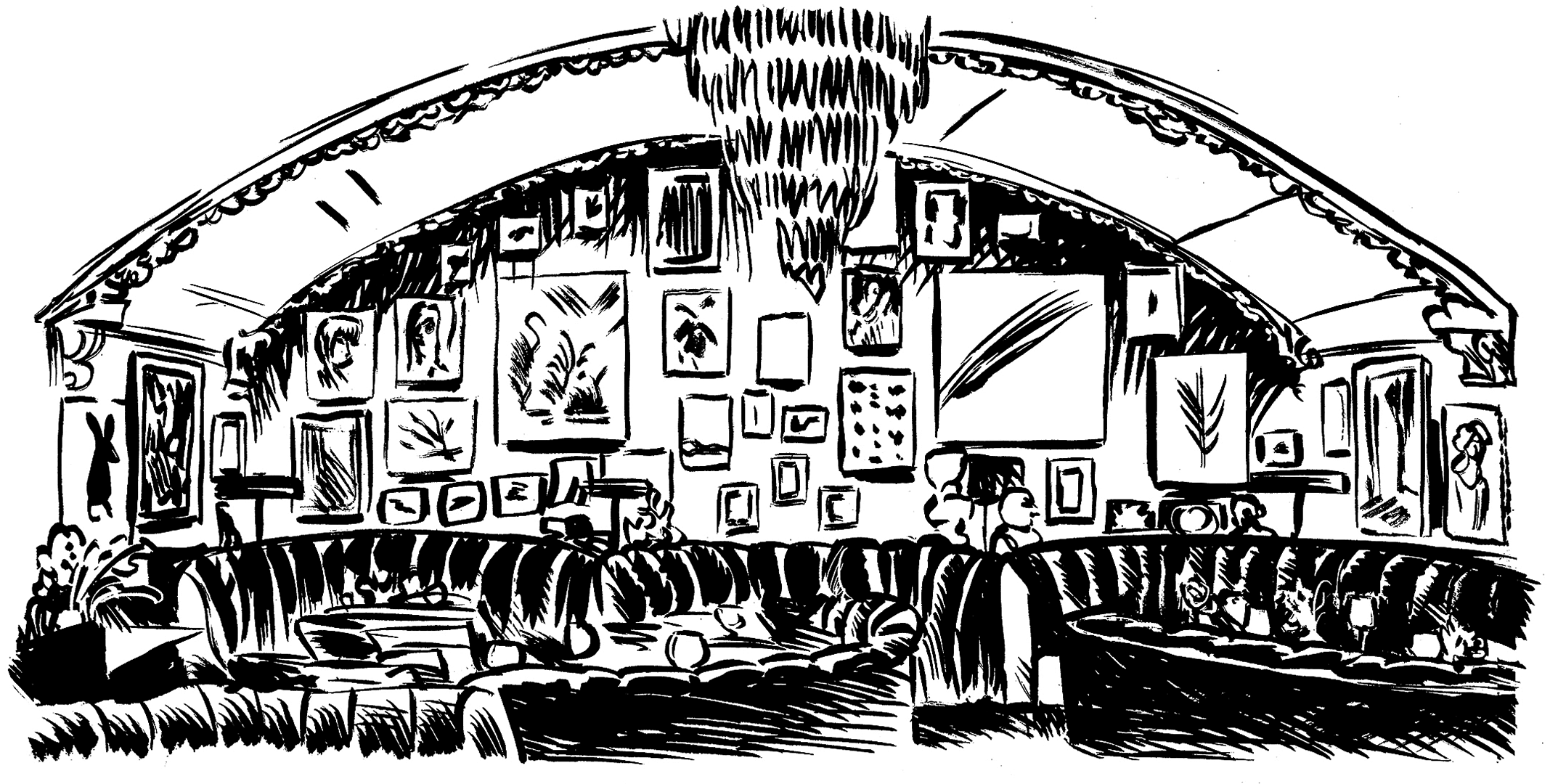
Jerome was not a drinking man, so the trembly elation of an empty-stomach pint left him beatific there on the leather banquette closest the window, rolling his fingers over the grommets as the sun spilled down through the window. Niall slopped up water from the bowl the bartender had laid. Jerome beamed down at him, arms out, and awaited his toastie. Then his phone buzzed, he took it from his pocket, and he saw the word Hiya beside the name Mari.
All good? she texted.
He let the cursor blink for a second. The anger geysered up in him but he shook his head and wrote back, Yeh, sound.
Cool cool, came the reply. So we’re up like. Earlier than planned?
OK.
And so, you know, just.
Whenever’s good?
To get the stuff out?
He leaned forward, elbows on his knees, holding the phone in both hands. A flabby sigh whickered out through his lips.
By like what time?
Sixish?
There’s a train to Kilkenny half six so, he texted one-handed, while unscrewing the cap of the Benylin. Already he could see it, feel it: him dismounting under the night’s split-coal glitter, the cold snaking his knuckles, the long slog through town, a wheelie bag robbed from Mari making his shoulder feel fibred, like the pulled pork of his impending toastie, all the way to the edge of town where his Ma’s gaff was – the howling void of the cemetery road, the greenlit condensation coating the glass of the Virgin Mary’s coffin of light, right there above the gate and the wall of roughcast stone.
Figure that works for you?
Jerome drained off the Benylin then gulleted fully three-quarters of his pint in a single swoop of motion that scoured the cough-syrup cloy from his mouth and made his veins sing and tingle. He appended a thumb to Mari’s message then laid his phone face down on the table. By the time his toastie arrived his hunger was gone, his guts knotted and soaked, sheets balled and tangled in a washing machine. He just stared at it with arms folded, and then, feeling Niall’s keen cut into him, leaned forward and fed the first triangular slice into the champing motion of his jaws.
‘Careful, now, that has relish on it,’ he said, hearing Niall’s teeth click against each other. He skulled the Smithwick’s down to its dregs and regarded the foamribs adhering to the inner curve of the glass. Another would be alright, he thought, even if it’d be past his limit for drinking alone – although, that being said, to shotgun a decent strength of a Belgian, say eight percent, would be like drinking four cans at a go. He’d have a putrid head on him then getting the train, though, and there were the bags to pack, too. But then a second Smithwick’s clunked down on the table. He looked up.
‘I didn’t,’ he said to the bartender, and she said, ‘You didn’t, no – she did,’ with a nod over at the building-site supervisor, who had removed her helmet, and was working her fingers into her tight, salt-and-pepper curls. She blew out a tired breath and hailed him with one hand.
‘Are you sure?’ said Jerome, but he was already lifting the pint.
‘Yes, yes,’ said the supervisor, and flapped a hand at him. ‘I gave you the death look. Bad on me. I thought you were another man.’
‘An ex?’
She shook her head and pressed the backs of her fingers to a cup of tea that was more of a bowl.
‘Worse,’ she said. ‘My ex’s friend. He introduced us. Why I’m here.’ Her accent floated all over the place: Italy, maybe Portugal, plus a bit of posh England in how she said here almost as hee-ya.
‘In Ireland?’ he said.
She shook her head and said, ‘In my job. I make luxury hotels. I got into this because I meet him. Architect. Influences me. We met in Berlin. How he ended was so odd. So odd. Invited me to this other place, to fly in. He gave me such instructions: go to the apartment, his friend’s apartment, there would be food ready, waiting. So heat the food, eat the food, and dress in the waiting clothes. A kimono. Louboutins.’
‘Damn,’ said Jerome, trying not to think how she’d look in them.
She raised her shoulder and put out her bottom lip and said, ‘Well, I was young, then, you know, so I go, in any case, and I do everything. He has laid this path of jewels to the bed: not expensive ones, but OK, it’s nice. They rested on rose petals. He was German so I forgave the lapse in taste: he was trying to be romantic the best he could. I lit a few scented candles. I heated up my food. I ate. I uncorked a bottle. I waited. I waited. I waited. I got through the full bottle. Then the doorbell: showtime, at last. And I went to the door and it’s the neighbour with a message saying, “Sorry, he’s been delayed in Vienna.” Bastard. OK. Last straw. The cheating, fine. Because he travels a lot – he has a girlfriend in Paris, another in Vienna, another in Bucharest, another in Kyiv. But he doesn’t fuck any of them. What he gets off on is the insult, you see. To make me wear Louboutins and do a no-show. But to do this to me you can go fuck yourself.’ She stroked her index fingers along the underside of her chin in a gesture of disgust.
‘And so?’ said the bartender.
‘And so I destroy the place,’ said the supervisor, then asked her, ‘You ever destroy a place?’
‘I want to sometimes,’ said the bartender. ‘My boyfriend has a katana and when he’s an arsehole I want to pull it out and flitter the fucking curtains with it.’
The supervisor wagged her finger and said, ‘No. Is bad ergonomics. Watch. You get some glass bottles. Fizzy water in glass bottles. And you throw them at glass objects – mirrors, windows, cabinets if you have.’
‘Do you shake the bottles first?’ Jerome asked.
‘You throw a bottle at a wall you have shaken the bottle,’ said the supervisor.
‘Fair,’ said the bartender.
‘They are good bombs,’ she said. ‘And chairs, too: it’s classic, a chair, but it works. Because four legs.’ She held her fingers up. ‘I can smash once, and say, This is for your Viennese girl, and smash again, say, This is for your Bucharest girl, smash again, say, This is for your Paris girl, smash again, say This is for your Kyiv girl.’ She blew on her tea and said, ‘And he had a lot of chairs.’ She drank, then looked towards Jerome and said, ‘Please, don’t despise me for the story.’ She cracked her knuckles. ‘I just thought you were the friend who’d introduced us. How was I to go over and apologise and so on with the girder I’m watching. Please enjoy your pint.’
She made a turning motion of her hand, palm up, and gave a little bow as she dismounted the stool. Niall rattled over to her, tail a whipping charcoal blur, and she stooped to give his mohawk a feathery pinch, uttering kindnesses in a French-sounding language Jerome couldn’t identify, then she put her helmet on and said, ‘Goodbye, you three,’ and was gone.
The bartender looked over at Jerome and nodded and said, ‘You write any of that down?’
Jerome got to his feet, the folded triangle of toastie doing gluey rounds in his gob. He chewed. A sensation which was either very hot or very cold ran laps in his veins. He did up the buttons of his jacket, still chewing. Once, at Mari’s, failing to find videos of a pornstar he’d jacked to, Jerome had gone Googling, found she’d given up porn, got her implants removed, started a wellness blog about going born-again Christian, but in an oblique, crunchily Buddhist way, writing about an epiphany had while watching two terrapins shag.
I realised, she said, that Christ consciousness is no one thing. It’s the universal mind of God itself. The surface area of my body burned itself off, and a layered wave of connectedness to my surroundings swept me away, revealing that the world was a large-scale detailed energy-graph drawn in pure love, with my awareness but one peak among the many sine-waves. We are made of love! Jerome knew what she meant. His skin rippled, foil over a lighter, and lifted clear of him, making him one with the immense shiver of anger that constituted the world, of which he was but one ripple.
‘Write it down?’ said Jerome, swallowing the dry wad of toastie, his voice a trembly velvet. ‘Now why would I do that? Why write anything down? What would that do for me? What would that do for anyone?’
‘Definitely stealing that thing with the fizzy water bottles,’ said the bartender, not hearing him. ‘We’ve a rake of big Sanny Pells here.’ She jerked her thumb back behind her. ‘They’re getting pegged at the wall one of these days I swear to God.’
Jerome fingered the edge of the 50 in his jacket pocket. The rage-shiver shook, wobbled, steadied. Its heat and light made the guts in his skinbag feel glowily visible. He wondered if his guts were even uglier than other people’s. Probably they were. He looked down at Niall, who looked back up at him. The pupils had definitely gone vertical: it was no accident of the light.
‘What do you reckon?’ he said to Niall, who wagged his tail, and then he said, ‘Right so,’ and addressed himself to the bartender, and put the wheedle in his voice, ‘I give you 50 quid and how many big bottles could you give me, do you reckon? Give a lad a price break?’
Niall knew his cue by the whine in Jerome’s voice. And he was a good lad, Niall. Jerome watched him rattle across the floor on his wee nails, sit at the feet of the bartender, his head back, his tail going 90 mph, amber eyes lambent with mournfulness, with need, with pity, with the pity of it all.
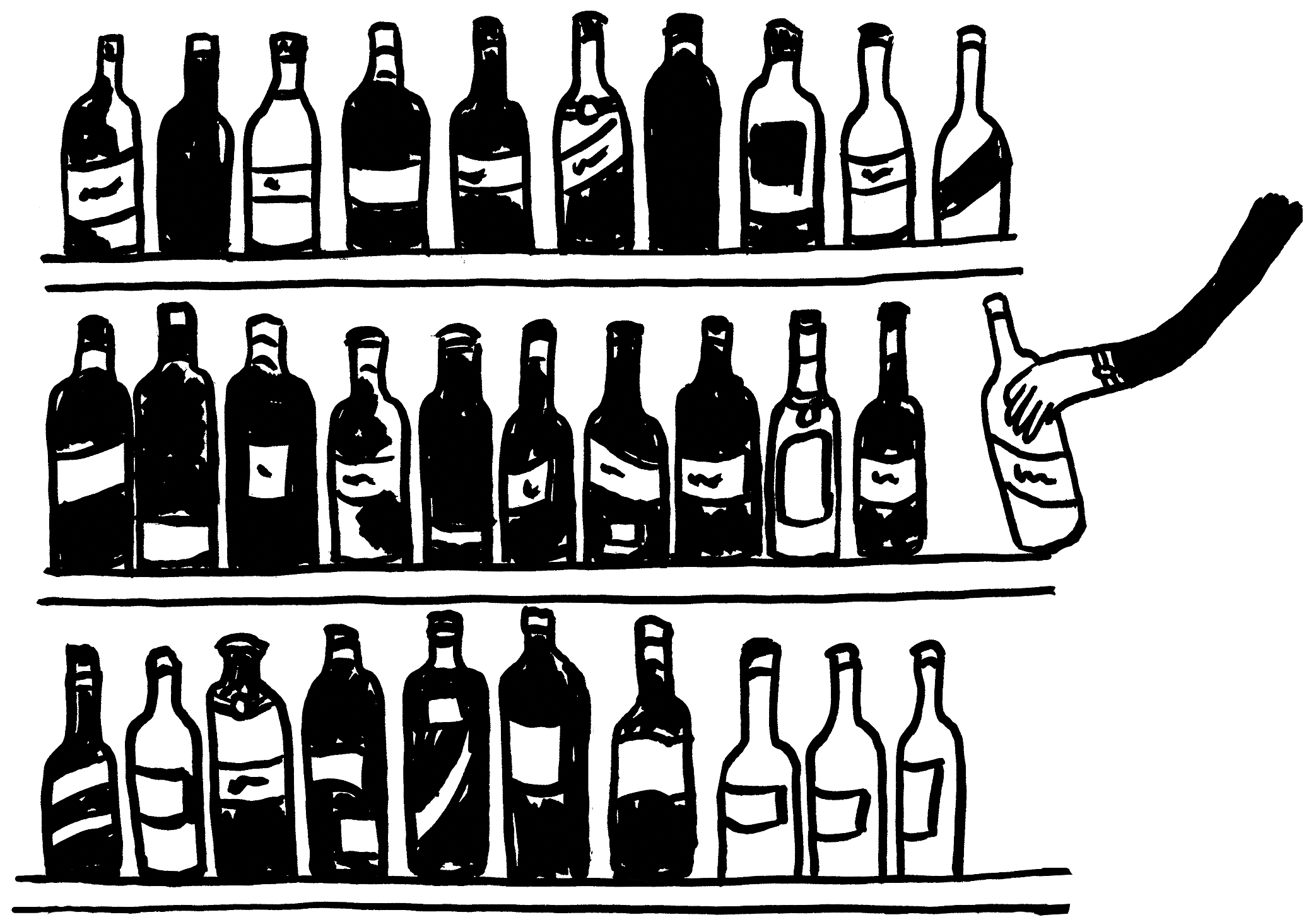
She even gave him a carrier bag, the bartender did; the bottles slid clinking against one another, made him think of missiles in a silo. When he got in the first thing he did was flake one against the screen door at the back. The building supervisor had been right: they did go off like bombs – the thoom of its bursting made Niall bark and flee, skittering, apparently shamefaced at his own reaction, all the way to the short stem of the L-shaped couch, where he cowered, shivering, peering up at Jerome, wagging his tail and licking his lips. But Jerome wasn’t looking at Niall: he was watching the great cock’s-comb of fizz snorkeling out everywhere, bubbles guzzling over the glass spilled across the tiles. His body filled with those bubbles, that fizz. He was all ebullition all over. There was no name for his emotion; he was lost in a lit-up feeling that was all sensation, the way he did when he could still take yokes and not get anxiety after. The second bottle he hefted gently, feeling the cool weight of it in his palm, while he scanned the room, looking for a worthy target, and then he let fly at the plasma telly he had never been able to get to sync up with the Man United streams on his laptop. Sparks hopped from the plug and he jumped, fixing to run, thinking he might cause a fire, but nothing happened except Niall pattered his nails on the couch, as though he thought the madness was done – but no, a glass cabinet followed, and then the coffee table, and then he was out of ammo. Jerome picked carefully through the beach of shards. The thicker ones still had tatters of label stuck to them; others still looked bottle-shaped – the rest, though, were tiny winking flinders that’d cut the soles of bare feet to ribbons. For a moment he saw Mari wince, suck in a breath, cry out, red unlacing from her skin, and he pushed it away and lifted the first of the chairs, swinging it by the back against the red, eye-shaped light of the fridge, and felt the crunch of the legs snapping so wettish and bone-like that he had to stop, take off his coat, steady himself against the back of the second chair. Niall whimpered and made to leap but he shouted at him, ‘Don’t, you fucker!’ thinking of the wee pads of his feet.
Sweat had his shirt and jacket stuck to his back. Through the mellow settle of gardenias and sandalwood was braided the rankness of his pores, and the semi-liquefied sting of the shite souring in his bowels. He could get another two chairs totalled maybe, then see, if he hadn’t shat himself, how to rectify that situation. He welted one against the teak coffee table, which had only been dented by his assault with the bottles, but only a few more scuffs and scrapes appeared, even as the bared heartwood showed in one and then another and then a third until the last legs, which, cratered to nothing, fell in a heap on the drifts of soaked glass. Niall had by now given up all hope of remonstrating and had rested his chin on his paws, dolefulness in the whites of his eyes.
‘I’ll only be a few minutes, Jesus, would you relax yourself,’ said Jerome, his voice sounding to him like the scrake of a coal-shovel, trembly and high and aggressive. He stripped off his shirt and clopped in his boots across to collect a second chair, which he cratered to laths against the coffee table. Still the teak glowed under the Edison bulbs. Still the oval of it was unbowed. Under the lights it was the colour of the pages between Mari Kealy’s indigo hardcover, pages that piled up and up, unstoppable, imperturbable. He couldn’t look at it anymore. He picked it up by the legs and hauled it around, lifting with all his might, and watched rather than felt it whip from his grip and straight into the floor-to-ceiling drinks cabinet, loaded with souvenir bottles from Hong Kong, Sweden, Oaxaca, Nicaragua, Kyoto, all of them clattering now, shelf through shelf, to deluge a clearish drink-tide over the floors, darkening the toeboxes of his Adidases, making him step back and back, thinking to himself, I’ve destroyed an altar, I’ve destroyed an altar. The exhilarating cut of the spilled drink on the air gave him another spurt of energy inside; he crossed the floor to the magnetised knife-block and selected from it a 200-millimetre scalloped gyuto that he had hitherto used for nothing fancier than crushing some organic garlic or flaying a shallot, as much a waste of the luxury around him as anything else had been, and the spur of this regret sent him up the stairs, tossing the knife from hand to hand. As he passed, Niall lifted his head from his paws, an almost baleful sadness showing in the whites of his eyes. His tail no longer beat the cushion. ‘You’re alright, you’re alright,’ said Jerome crossly, and Niall hunched in on himself again. Jerome clumped up the stairs, shaking his head.
Upstairs, he went into the bedroom he’d passed out in only the once, because the pillow didn’t smell like her, it just smelled like cleanness, and the thought of that disappointment was enough to make him whip a great ‘Z’ across the crimson of the bedsheets, a deep rip that felt like he’d unzipped his own chest. Fabric bled up from beneath, around the edges of the cut, and he stepped back, let the knife fall, heard it thud and twang, wobbling back and forth in the floorboards. ‘Look what you made me do,’ he said, backing from the room, hands up, warding off nothing. ‘Look what you made me do.’