Dear Readers,
Good afternoon and welcome back to Off The Fence, a newsletter with its nose to the grindstone. The Easter Bunny truly did visit over the bank holiday: the first copies of Issue 27 are here, and we’re launching the issue on Thursday, and subscribers will be getting their copies on Friday.
Of course, now 27 is manifest, we begin to lay its successor on the chopping block, so do send your choicest cuts and viands to us on editorial@the-fence.com and remember that our guide remains in its usual spot.
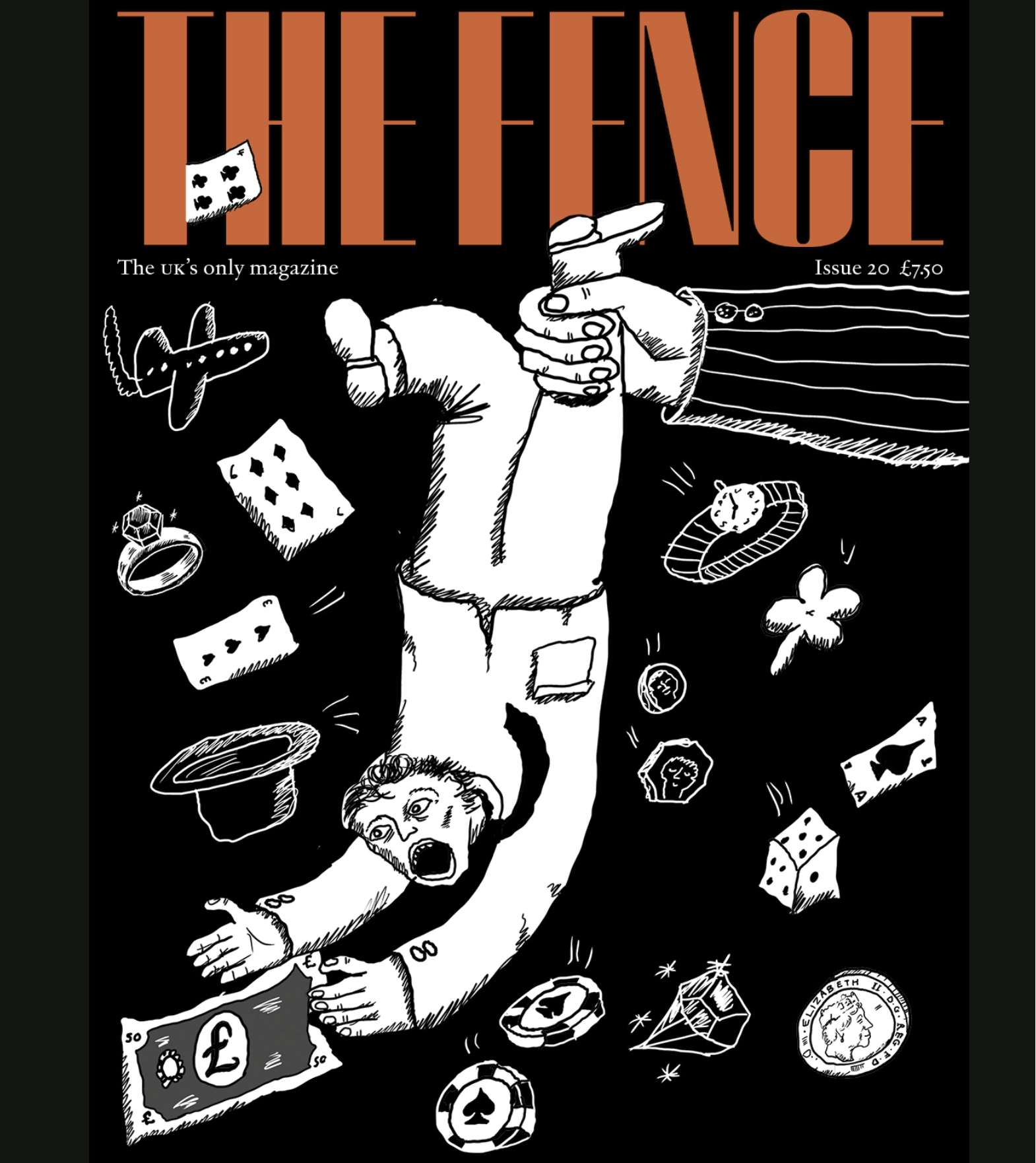
Today, we’ve got an interview with Patrick Radden Keefe, whose new book, London Falling, is launching tomorrow. To see we’re excited would be something of an understatement. The original magazine piece, published in the New Yorker, proved such an inspiration to us that we published a ‘London Noir’ issue in the summer of 2024, which you can get a flavour of with Clive Martin’s walkabout feature ‘West End Confidential’. That issue has now sold out, but everyone who subscribes to The Fence’s print magazine today will receive a complimentary digital copy of Issue 20.
Let’s get on with it – here’s Patrick in conversation with the editor, Charlie Baker.
From Dorchester to Deptford
London Falling is, it goes without saying, a masterpiece. A novelistic study of parenthood, a portrait of the Anglo-Jewry, a fine-drawn sketch of teenage braggadocio, it also has perhaps the finest work of non-fiction about the London criminal classes, a milieu best known for their cinematic representations in Sexy Beast, The Long Good Friday and the various guilty pleasures that Guy Ritchie proffers.
The book tracks how a privately educated 19-year-old, Zac Brettler, came to be found dead on the bank of the River Thames, outside the luxury Vauxhall flat where a certain Verender Sharma had been in residence.
Sharma was a legendary ‘face’ in the London underworld, known as ‘Indian Dave’, a prolific extortionist and nightclub security ‘consultant’, who had been credibly linked to at least one homicide. He had, over the decades, worked alongside many of the country’s most infamous villains, all with nicknames straight from central casting – Gary ‘Tyson’ Nelson; Micky McAvoy, Dave ‘Muscles’ King and Andy ‘the Cornerman’ Baker (no relation).
Speaking to Keefe last week, I was fascinated to understand how he managed to penetrate the dark, dangerous London underworld.
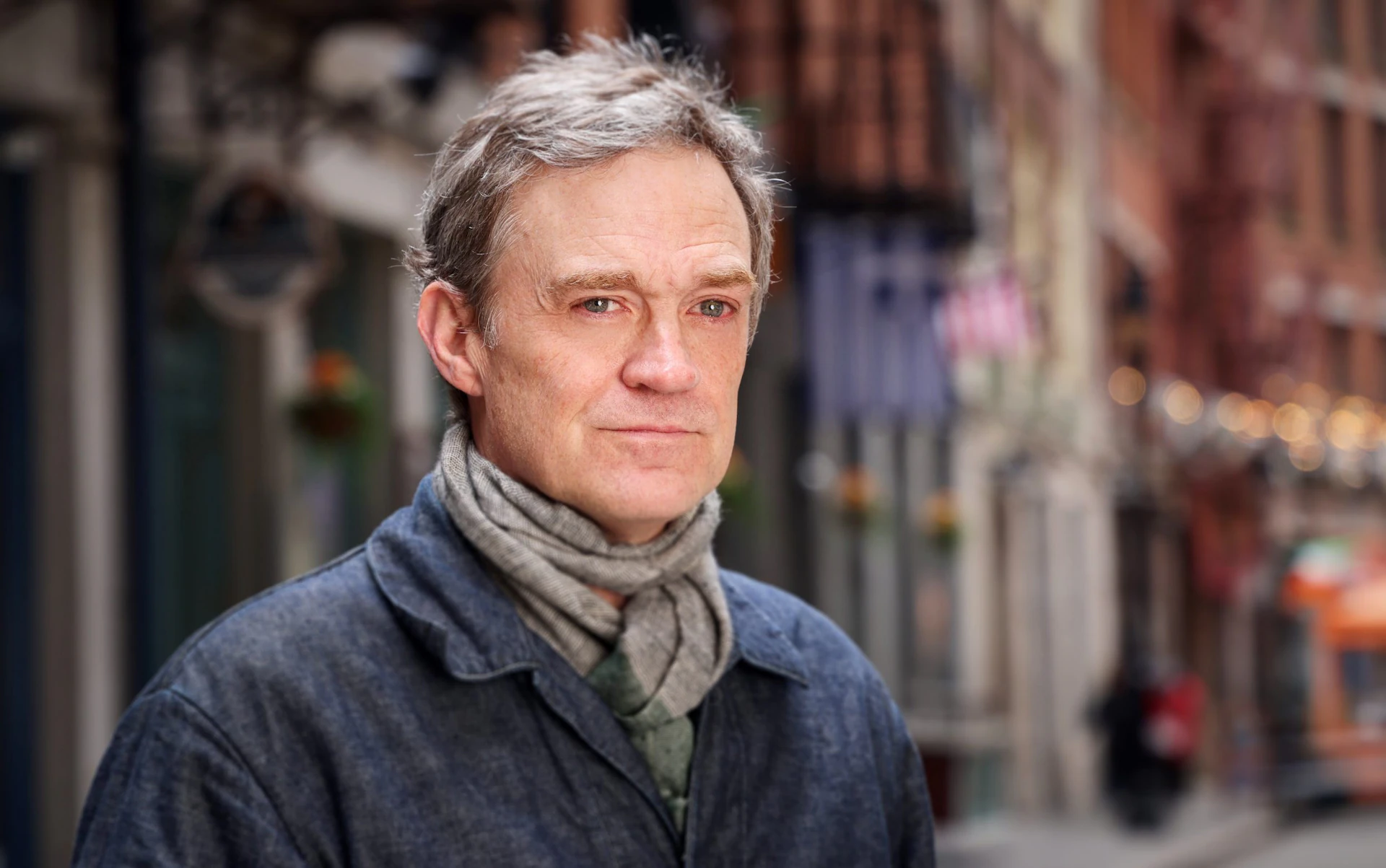
It wasn’t easy to speak to fellow scribblers. ‘Apart from Michael Gillard, whose newsletter I subscribe to, and the late Duncan Campbell – the loveliest guy – there weren’t many journalists with the connections and expertise.’
And the police weren’t particularly helpful either, with Keefe speaking to 30 serving and former officers, hoping to find some copper for whom Sharma was a ‘white whale’, the one who got away, but that just wasn’t the case.
What made the difference was court reports, specifically relating to David ‘Muscles’ King, who was murdered, overwhelmingly likely on Sharma’s commission, in October 2003. In a process that took months, Keefe finally received PDFs of transcripts from a separate trial, which helped establish that Sharma had got the nod for the King assassination from none other than Mickey McAvoy, one of the architects of the Brinks Mat robbery of 1983.
The tabloids have been reporting on this story for over four decades, so it’s an astonishing scoop for Keefe to land, and one of the big reveals of the book.
Over visits to the UK over the last two years, Keefe interviewed many of Sharma’s fellow criminals, including the terrifying Andy Baker, who, among other ventures, was involved with running the door at Embargo, a Chelsea nightclub known for hosting Prince Harry and others over the years. As Keefe says, ‘There’s a fascinating intertwining between the licit and the illicit worlds in London. We’d like to think of these worlds as very discreet, but they intermingle the whole time.’
When the New Yorker long read dropped in February 2024, there was considerable consternation in the UK press about why the story had hitherto gone unreported. Why this happened – and how Keefe came to the story – are well-covered in the book, but there was one ripple in the British mediascape that the book details for the first time.
The former BBC investigative reporter, John Sweeney, had in his possession a photo of Zac’s corpse on the riverbank, which he broadcast to his 250,000 followers on Twitter the very day that the article was published. Zac’s father, Matthew Brettler, asked Sweeney to take it down, but he was refused, with the veteran hack replying that ‘it was now in the public domain.’ (Sweeney deleted the photo and apologised.)
American journalism is much better-resourced, with publications paying much more money and giving more space and time for features to be reported in-depth. What advice is there for young British journalists looking to score their first big byline?
Keefe advises that you attend inquests, ‘which are reserved for deaths that are unexplained or unnatural. You’re not always going to get a good story, but it’s a good place to start.’
Any other tips? What other London worlds are under-reported? Real estate, Keefe says. ‘There’s good stuff being done there, but there is space for more. You could take Ed Caesar’s approach to his Witanhurst piece. Start with a mysterious property that people are coming in and out of – and you’ve got a premise for a story.’
We look forward to seeing many of you loitering outside a gloomy north London mansion soon, and we trust that you will buy a copy of London Falling.
You can follow Charlie on Twitter here.
Our Man in Moscow
There’s a cracking read in the LRB on Christopher Steele, the former spy and author of the dodgy dossier about Donald Trump. Within the piece, Steele’s various ‘assertions’ and peripatetic business career are made to seem rather less sturdy than the Democratic Party was led to believe when they commissioned the infamous report. Within the business intelligence community in London, Steele’s reputation has been in freefall for years.
Steele’s lust for lucre is not exactly news to those of us working in the content mines. The former MI6 officer was approached for brief comment on a media project recently, and his representative mooted a four-figure sum to the production team. When this offer was countered, his agent replied: ‘Please. Christopher has school fees to pay.’
The Body of Christ Is a Labubu
In the meantime, the reading whistle can be whetted with Tommy Gilhooly’s latest venture into Soho, where he speaks to young people discovering God, published online this week. Fascinatingly, a lot of them are a lot more hardcore than their elders (or at least their millennials), going for the full kneeling and wafer-on-the-stuck-out-tongue shebang.
It digs into the strange world of the Challoner Club, ‘CatholicTok’ and the young Catholics who are pro-Benedict (yes, that’s right pro) and anti-Francis. It’s a great read and another reminder, if you need it, that Alex Christian is a phenomenal illustrator.

SAS SOS
Meanwhile, following news that Australia’s most-decorated living soldier has been charged with alleged war crimes in Afghanistan, we look back into the TF archive to coverage in Issue 5 of the Special Air Service (SAS). In Issue 5, we published an article written by a former Major about the troubling freedoms permitted to soldiers in the SAS. As described by the anonymous author, SAS recruits have ‘passed “selection” and [are] able to munch girders and slaughter enemies while opining on lacunae in Kant’s moral reasoning.’
The end of that piece commended Australian special forces commander Major Graham Adam Findlay for noting the damage done by ‘self-righteous entitled pricks who believed that the rules of the regular army did not apply to them.’ Would that his words had come sooner and been better heeded.
You can read the full piece here.
Up on Pendle Hill
Longtime readers will recall that in December of 2020, we raised more than £10,000 for St Matthew’s Church in Burnley, after a memorable appeal on the BBC from the vicar, Father Alex Frost.
Last week, a member of the editorial team was in Burnley, and stopped in to see Fr Alex. While St Matthew’s is flourishing, has the town recovered? Sadly, Father Alex believes that things have got worse, and is particularly worried about the pernicious influence of ketamine on Burnley’s young.
Do put away your preconceptions on the subject, and have a read of this article here, and this podcast, to delve in further. What is regarded as a fashionable party drug in the capital is having a devastating effect elsewhere.
It was a delight to see Father Alex again, seen here above the town.

In Case You Missed It
The lore-dropping art of Irish mothers.
The latest update on the stellar work of the Japanese ambassador to Jamaica.
A very Telegraph-coded listicle: the best church in each English county.
On that note, here is our editor-at-large, the Reverend Fergus Butler-Gallie, discussing the growing religious energy in Britain’s body politic with Jonathan Sumption and Tom Holland, hosted by the Spectator’s Lara Prendergast.
And Finally
We recently had the pleasure of watching a rather wonderful documentary – narrated by Laurie Anderson – about the female pioneers in electronic music called Sisters with Transistors. You can watch the trailer, to pique your interest, here. Two figures stood out in our minds and we’ve spent all week just itching to tell people about them. What a happy chance that the sign-off to this newsletter is so well disposed.
The first of these is Wendy Carlos, a true trailblazer and individual in many ways. She was very early to the rise of electronic music. She studied music composition at Colombia and soon found herself fascinated with it, assisting Leonard Bernstein in an evening of electronic music and soon after meeting one Robert Moog, the man who gave his name to the synthesiser that proved a huge leap forward for the artform. You can see her demonstrating how to use it here.
https://www.youtube.com/watch?v=4SBDH5uhs4Q
But Carlos is much more than just a composer. She is, for example, a successful photographer of solar eclipses, whose work has been published several times by NASA. She also underwent, and later openly discussed, her gender transition, which began around 1968 under the personal care of Harry Benjamin, the author of the seminal work The Transsexual Phenomenon was the first to treat transness as something to do with how the body functions, rather than as a psychological issue.
She later spoke about these experiences, and many others, in an interview with Playboy– whose published some actually quite phenomenal writing at the time – but for years afterwards she was much shyer about public appearances. Indeed, one method she used to disguise her transition were the striking, and entirely fake, sideburns she sports in the above video. Carlos would also win one of the stranger lawsuits we’ve come across related to the topic – Scottish artist Momus wrote a song called Walter Carlos which included these lyrics:
And when travelling through time is possible
Wendy can enter a wormhole
And go back to the future to marry Walter
A few baroque summers earlier
A couple of models of Moog back in time
Carlos sued him, and ended up winning a $30,000 out of court settlement. Momus would make up the money by offering to write 30 custom songs for people, at a grand a pop.
The other figure is Wiltshire’s own Daphne Oram, a co-founder of the legendary BBC Radiophonic Workshop that, in better times, provided us with such classics as the Doctor Who theme tune and all the sumptuous sound effects in the Hitchhiker’s Guide to the Galaxy. Oram herself was behind the electronic parts of the Dr No soundtrack, though she was never credited for the work. There’s a great bit of archive footage of her explaining how she sees electronic music, and if that isn’t enough, there was a whole radio documentary about her titled Wee Have Also Sound Houses. Happy listening folks.
https://www.youtube.com/watch?v=yMvP-cxjPpo
That’s it, the last newsletter released under the powerful aegis of Issue 26. 27 beckons: ominous, imposing and carrying jokes about Penelope Wilton. We are all very, very excited. There’s not much else to say except to hit you emails akimbo at the death: it’s editorial@the-fence.com and support@the-fence.com. Their functions are deeply eponymous. Simon Bolívar was buried in a borrowed shirt.
All the best,
TF