Dear Readers,
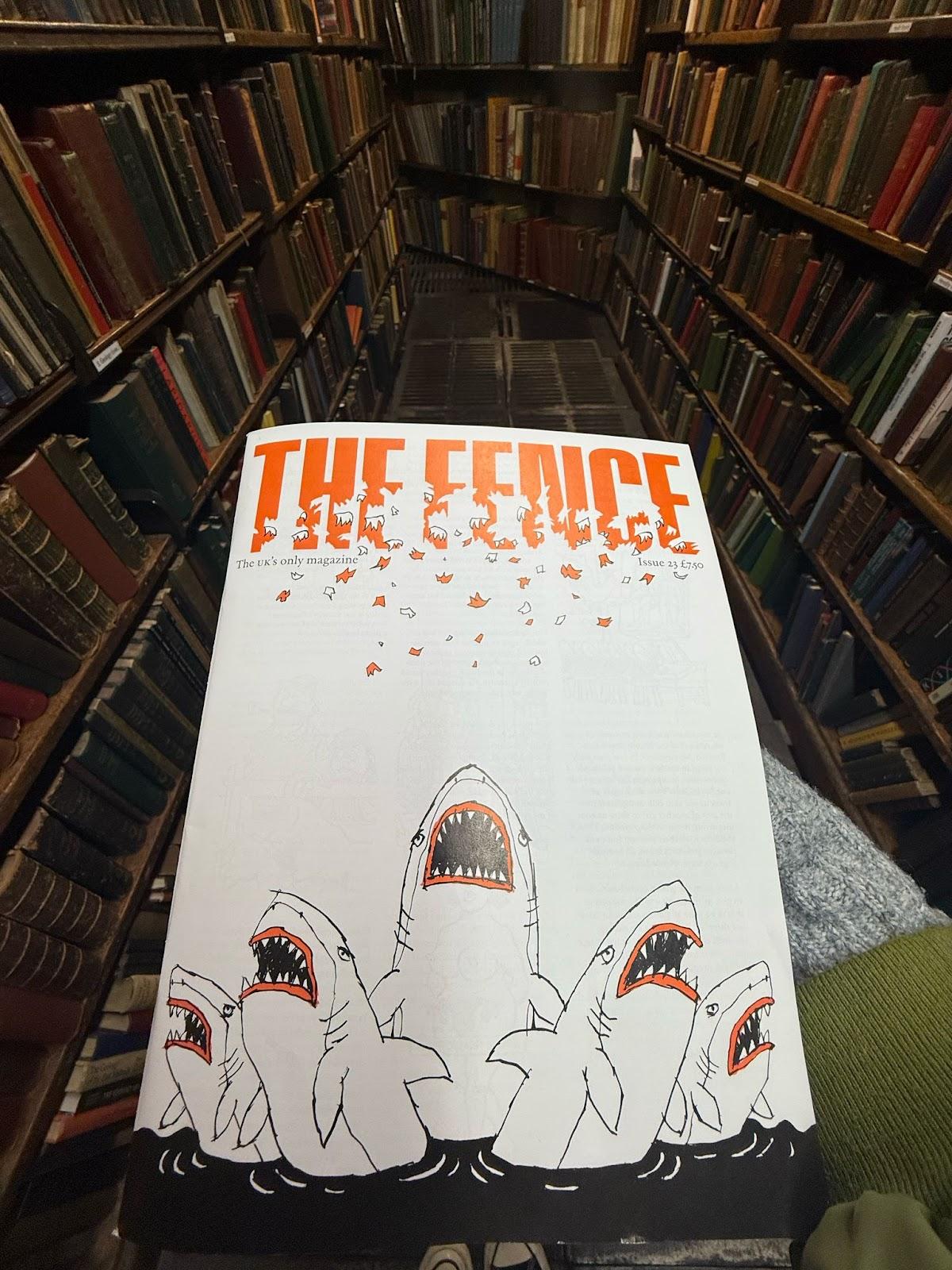
Good afternoon, and welcome to Off The Fence, a newsletter that arrives on a Tuesday. Issue 23 should be landing on doormats imminently, and is available to buy from our website and these retail stores. For a short while longer, we are going to have 20 percent off all subscriptions with the code SPRING20 that’s print, digital or both at the checkout. Gorge yourself while you still can.
Today, we’re leading with a piece from Angus Walker. The 2005 killing of Jean Charles De Menezes still sticks in the craw of the nation’s psyche. For the last 20 years, Angus has been covering the case, and there are still a series of outstanding questions.
A Morning in July
The image taken from a camera at Stockwell tube station shows a man wearing a denim jacket walking towards the ticket barriers. This is the day after the failed 21/7 bombings on the tube, just over a fortnight after the 7/7 bombings.
The man in the image was Jean Charles De Menezes, a Brazilian, living in London, on his way to work. Today, the image of De Menezes, unaware of the devastation that will come after, is seared into our collective memory. Just minutes later, those same CCTV cameras will pick up other images that are also seared into memory, of frantic armed police in plain clothes, steaming into the station, leaping the barriers in hot pursuit.
At the time, officers believed that Jean Charles was a terrorist target. Before the train he has just sat in has left the station, they will shoot him seven times in the head. He was innocent.
It was a tube station I knew well. At the time, I was a reporter working for ITV News, and I also lived in Stockwell. The shooting was very much on my ‘patch’ and covering the story became all-consuming and increasingly chaotic. On the day, I called a Home Office contact. They told me Jean Charles had been wearing a bulky coat. That was false.
In the weeks, months and then years afterwards, I would take the same journey, through the same tube station. The barrage of misinformation still remains with me.
This month, Disney+ is dropping a new drama based on the events of that day. All stories require new disclosure to move the narrative on. In Jean Charles’ case, what happened is as frozen as the video stills of his last steps. Despite acres of airtime, the truth is there’s a lot we have never seen and never will; vital footage is missing, and that means what actually happened is disputed to this day.
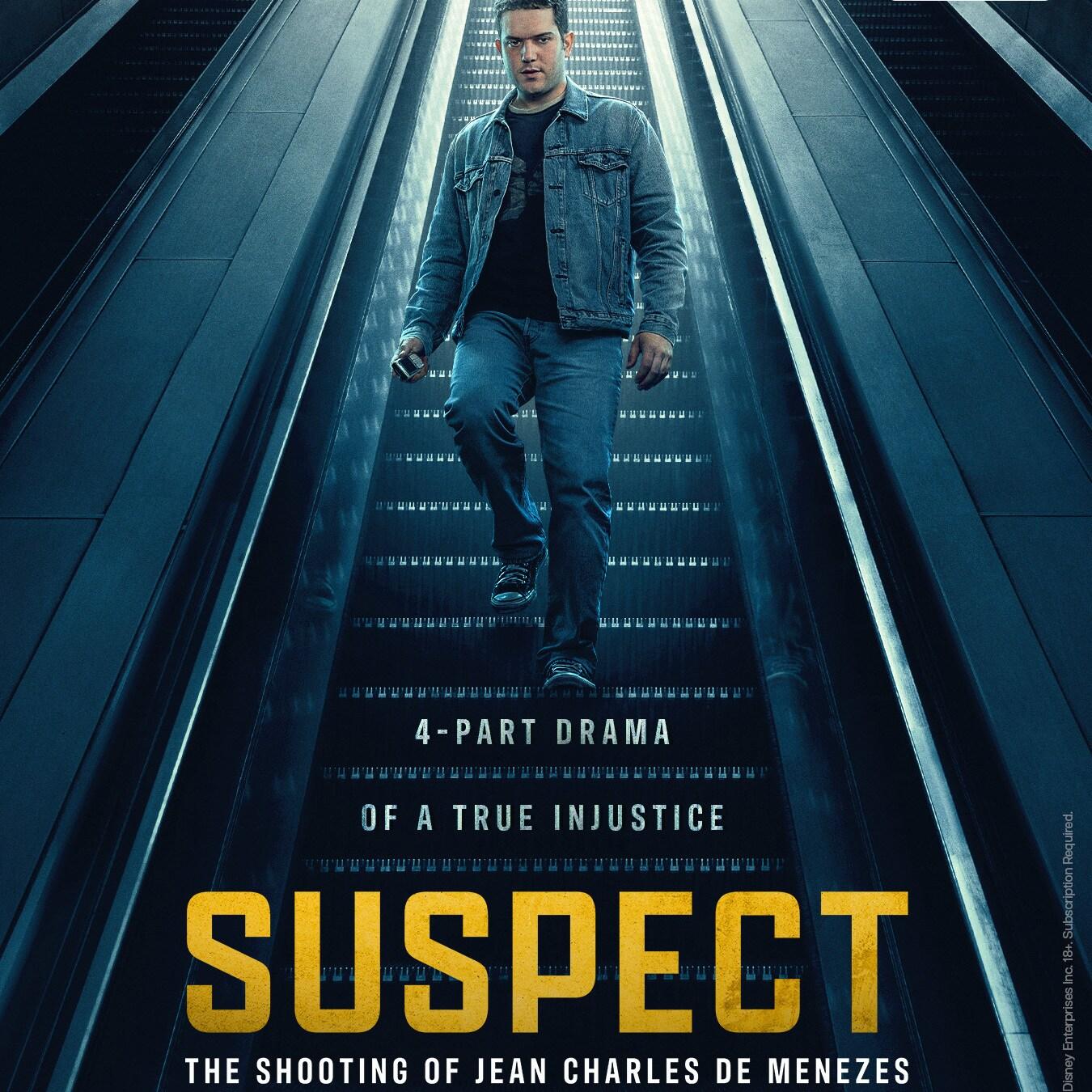
We know that Jean Charles happened to live at an address linked to one of the men wanted for the failed suicide bombings the day before.
Surveillance officers, staking out the address of their terrorist suspect, watched as Jean Charles left for work that morning. Was this their man? They couldn’t be sure.
One of them had been peeing into a bottle in the back of a van when he walked past, so hadn’t been ‘eyes on’ at a crucial moment.
Undercover officers then followed him as he got onto a bus. At Brixton, he got off and then back on again, the tube was closed, the officers misinterpreted the move as ‘counter surveillance’. He was unknowingly walking into a police ambush, completely oblivious that he had been confused for a wanted terrorist.
What followed his death was the police allowing the drip, drip of suspicion around Jean Charles to fester, unchallenged by the facts in their possession, a sort of ‘no smoke without gunfire’ strategy to cloud the public perception of their rushed and reckless operation.
Early on, a leak of the initial police watchdog report was a huge ITV News scoop. It exposed the fact that the Met police had been in no rush to admit that Jean Charles was innocent.
Two years later, in 2007, at the Old Bailey, the Met Police, as an organisation, was charged with breaching Health and Safety laws. In the absence of an individual defendant and because space was limited, I was made to sit, along with other journalists, in the dock in Court Number One. It was an unusual vantage point for a trial that felt like it was mostly a chore for the police. I would catch the eye of a senior officer in the Old Bailey corridor and you could sense the embarrassment that they were somehow ‘getting away with it’ via a legal but bureaucratic process.
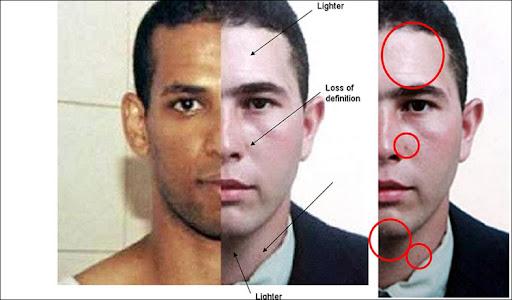
At one point, the Met’s defence team produced a composite photo, half Jean Charles’s face, half the face of the terrorist they had been hunting, in an attempt to convince the jury that mistaken identification had been an easy error to make. The jurors didn’t buy it and the Met was fined £175,000.
Then the inquest, a year later. The venue was the Oval cricket ground. At a venue for a sport with so many arcane rules, it felt like the outcome was predetermined.
The coroner instructed the jury that they were not allowed to deliver an ‘unlawful killing’ verdict; so the result was an ‘open’ verdict. Notably, the jurors rejected police claims that officers had shouted a warning before opening fire. To this day, the police stick to their version of events. Family and friends of Jean Charles, attending the inquest, wore t-shirts with messages aimed at the jury. ‘Your right to decide’, they read.
For the De Menezes family, the truth is still not known because three crucial pieces of CCTV, central to disputed claims about how and why Jean Charles was killed, were missing.
The missing video would have shown the armed officers arriving at speed onto the tube platform, police running into the carriage and, most importantly, their actions inside the carriage. As the Independent Police Complaints Commission (IPCC) highlighted in its first report Stockwell One: ‘There has been extensive reporting in the media of concerns about the lack of CCTV evidence on the Northern line platform and the Northern line train. In view of the fact that so much evidence was obtained from CCTV images for both the 7/7 incidents and the 21/7 attempted explosions, ‘this is a cause for concern.’
Did they challenge Jean Charles, the man whom the undercover officers, still sitting close by, pointed at? Did Jean Charles, as one of the officers who shot him insists to this day that he did, stand up and walk towards them with arms pointing towards them? Or did Jean Charles simply stay in his seat, confused by the sudden appearance of plain-clothed armed men, who instantly hold him down and shoot him? Because that’s what every other passenger in the carriage says happened. These conflicting accounts from police and passengers could be cleared up instantly by the missing carriage video.
Two five-minute time gaps were also discovered in the video that had captured Jean Charles’s bus journey to the tube. The video from the bus may have shown just how close the surveillance officers following Jean Charles were – close enough to see he was not wearing a bulky jacket on that summer’s day and not carrying a rucksack.
The official reason given in evidence for the missing CCTV from Stockwell tube platform was that the cable feeding the camera footage from eight cameras back to the video recorder had been ‘stood on’, causing it to break.
The tape for 22 July 2005, contained a silver screen with the text ‘No Signal’. The video recorder had been ‘disconnected or broken.’ The carriage video didn’t exist because ‘...the hard drives were missing from the train… because they had been removed after the 7/7 bombings,’ according to the IPCC’s report. There was no record of any replacement. The two sections of the bus video were missing because the ‘rubber feet’ on the hard drive recording unit did not sufficiently reduce vibrations, which can cause problems with the recording.
Remarkably, only those sections which would have shown the most contested tragic moments are missing. Yet at the time, the IPCC concluded ‘...that no CCTV material has been destroyed and there is no evidence of a cover-up to withhold this evidence from the investigation.’
This year we will see the images of Jean Charles’s last few minutes alive time and time again on TV and in newspapers to mark the 20th anniversary of his death. Yet two differing accounts of an innocent man’s final seconds remain. Either he was challenged by armed officers but then stood up and walked towards them with arms outstretched; leading them to believe that this suspected terrorist might be attempting to detonate a bomb, or he was sitting in his seat, oblivious that he was the target of a disastrous undercover counter-terror operation until armed men bundled on top of him with no warning and the bullets entered his brain. Which was it? Without the missing CCTV, we will never know – not for sure.
You can follow Angus on Twitter here.
What Katie Did
Those years when London hummed sketchily to a jangly guitar beat are now known by the youngsters as the ‘indie sleaze’ era.
Katie Lewis was at the epicentre of the scene: lead singer of The Vincent Fiasco, friends with Gordon Raphael and lovers with one Pete Doherty, who even wrote a song about her.
It’s an opiate-smudged memoir of a time that still looms large in our collective cultural memory. Read it here.
Scunthorpe, Revisited
Do you remember the runaway success of the series, Crap Towns? Sold buckets of books. In this excellent piece, Adam Steiner speaks to the men behind it, and ponders the legacy of it all.
From the Cradle to the Gravy
James Ramsden’s newsletter, Sunday Sauce, is a wonderful culinary mail-out that will inspire your weekends in the kitchen as a family, as a couple, or even cooking elaborate meals for yourself. The recipes are fantastic, and the prose is crisp and golden – have a look at these two outings here and here and you can sign up right here. Savour and enjoy, we can’t recommend it enough.
Police in Helicopter
Are you looking to waste the rest of the day? Then have a gander at this absolute barnstormer of a Wikipedia list, very possibly the best we’ve encountered in years.
In Case You Missed It
Róisín Lanigan asks whether the tidal wave of Saudi sportswashing may soon see snooker trading The Crucible for The Kingdom.
FT’s Paul Caruana Galizia on the downfall of Naomi Campbell’s charity empire, and the deceit and betrayals she blames for its demise.
Astra Taylor and Naomi Klein on The Rise of End Times Fascism
100 years after the release of the Great American Novel™, Wesley Lowery asks: was Jay Gatsby black?
The price of cheese v the price of vehicles, per pound.
And Finally
It shouldn’t really be possible for YouTube climbing videos to be so thrilling. Their impact, after all, depends on you gazing at the images flickering on a six-inch flat plane held in your own hand, and momentarily mistaking them for real life vistas of unimaginable scale. Nevertheless, their vertiginous effects remain captivating, and we have long had our favourites.
Take this queasy classic from the archive, depicting the first summit of Pakistan’s Trango Tower in 1993.
https://www.youtube.com/watch?v=LfCFhKMoKVk
Or the nauseous death-begging antics of these parkour ponces in Dubai.
https://www.youtube.com/watch?v=A5l24ASyqTk
More recently, however, we discovered this charming addition to the canon, in which Norwegian rock climber Magnus Midtbø took to the slopes with Free Solo supremo Alex Honnold for a day of sauntering with relative ease through the outcrops of the Nevada wilderness.
https://www.youtube.com/watch?v=-JY1P8YDNrU
This wasn’t their first rodeo – they had another, equally chatty and occasionally terrifying day together in 2022 – but it showcases the skill, will, and death-defying chill of mountain climbing - simultaneously at its most tense, and relaxed. Our hosts are also an unexpectedly delightful pairing, with Midtbø’s open-hearted and cautious humility, the perfect foil for Honnold’s generous surf-bro warmth. If you were looking to model a more positive version of modern masculinity, then look no further. Dudes, as the kids say, rock.
That was that, do remember to subscribe with the code SPRING20 for 20 percent off a subscription. We might join you later this week if the mood suits. There has never been a recorded instance of a congenitally blind person developing schizophrenia, and nobody knows why.
Do get in touch with us at support@the-fence.com if you’d like to chat.
All the best,
TF