Freud, in his flawed but helpful Jokes and Their Relation to the Unconscious (part of a three-way tie with The Protestant Work Ethic and The House of Mirth for best book of 1905), suggests that laughter expresses pent-up mental energy in three different ways. The first kind of laughter vents energy that would otherwise have been used to repress the very emotions a joke plays upon. So, when we belly laugh at a sex joke, we’re off-gassing energy that we might otherwise be using to conceal our libido. In the second situation, which Freud calls the comic, we laugh to express energy that might otherwise be used in thinking, like when we seesomething baffling: an expensively clad teenager gyrating in front of the Trevi Fountain long enough for his friend to capture fifteen TikTok-able seconds, for example, or an animated paperclip lounging in the corner of our Word document—and, instead of trying to make sense of why they’re moving the way they do, we just laugh it off. In the final scenario, which he calls humor, our laughter expresses the energy that would have gone into feeling, say, pity when a story turns out to be funny rather than sad. When we hear the punch line, ‘the expenditure on the pity, which was already prepared, becomes unutilisable and we laugh it off.’
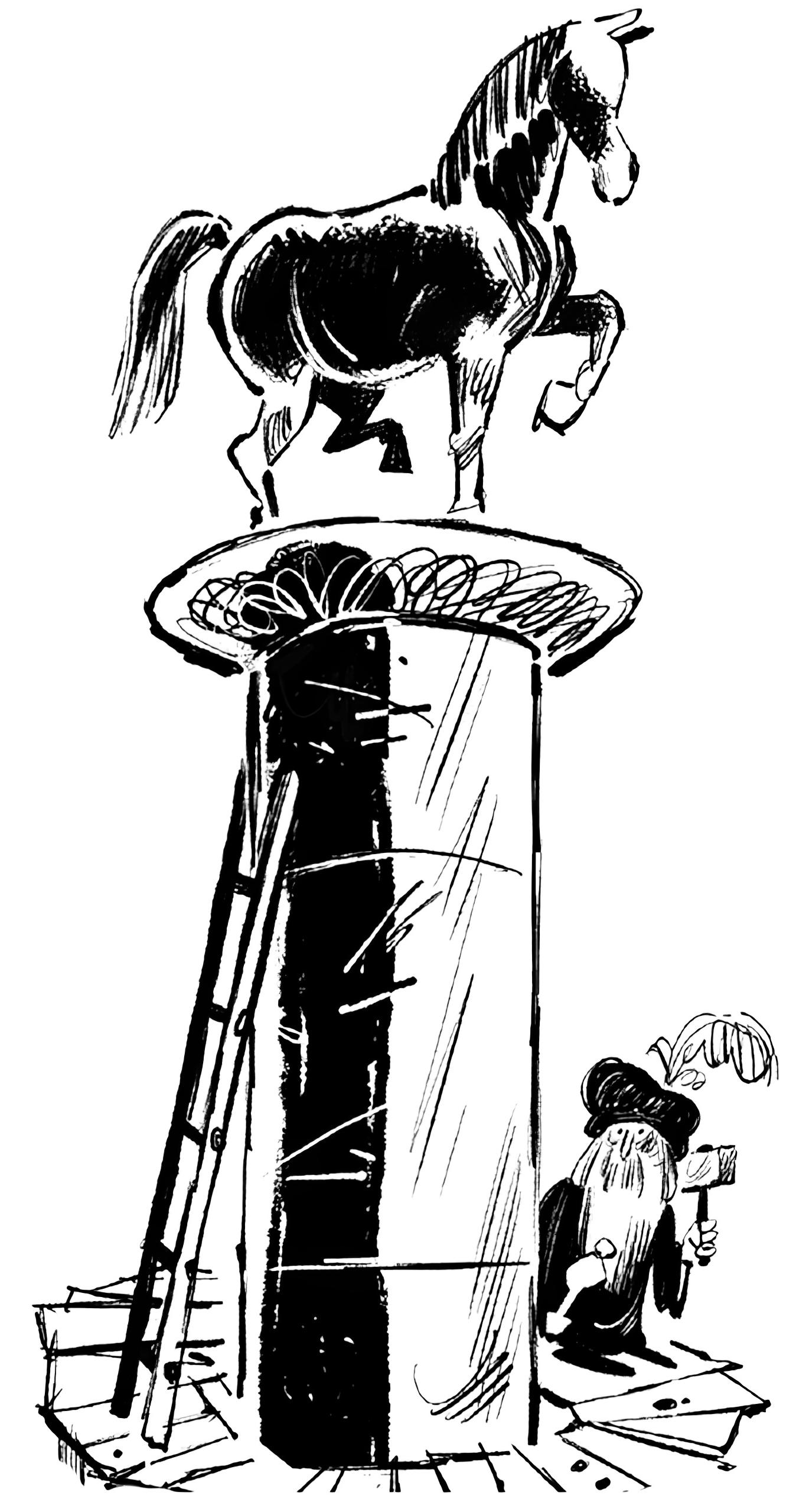
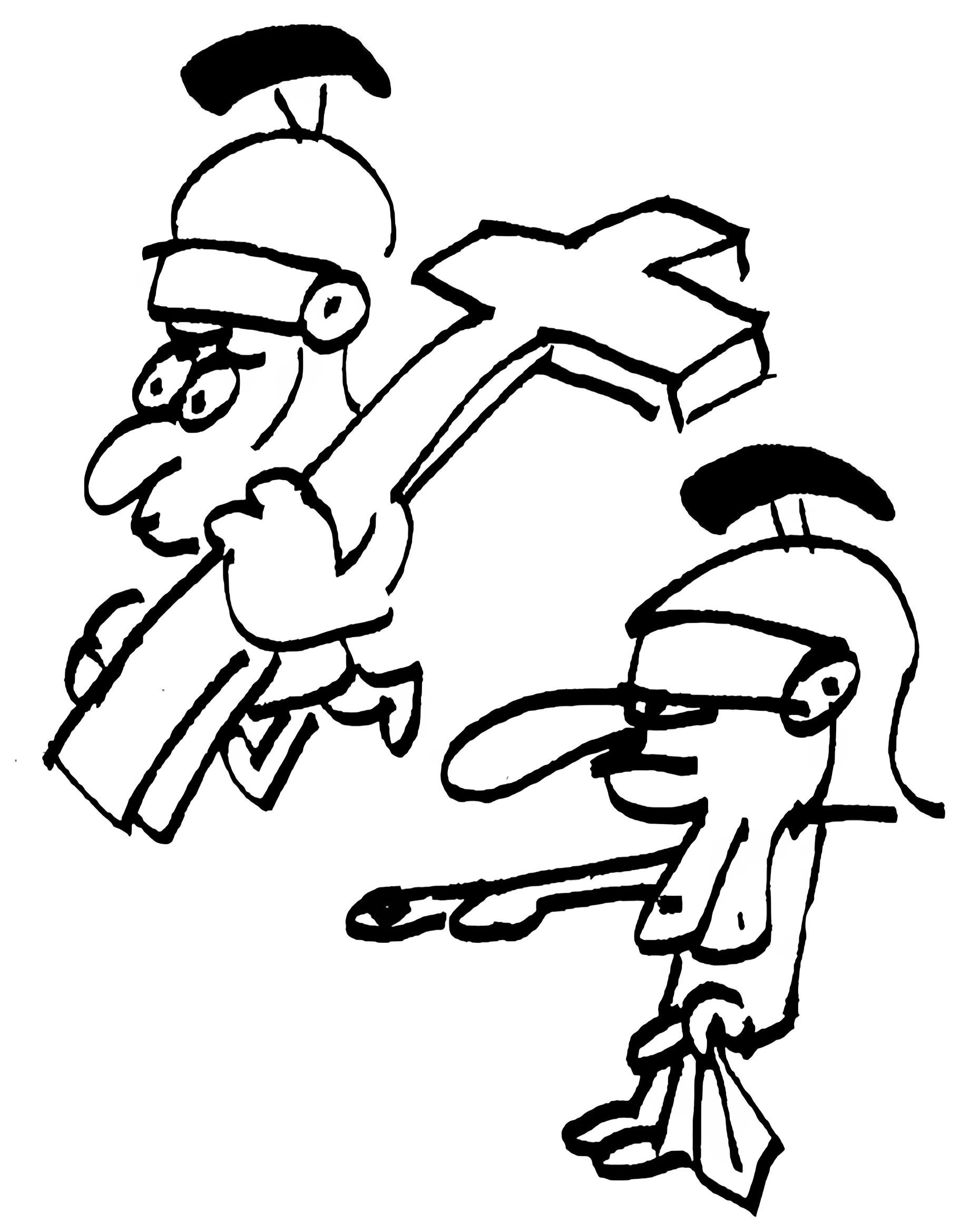
According to Freud’s hydraulic theory, then, when I laugh at perhaps the best scene in the Life of Brian – when Brian paints the ungrammatical Romanes eunt domus (which should be Romani, ite domum, or ‘Romans, go home!’) on a statue of Pontius Pilate and some centurions come up to correct his Latin, totally overlooking the fact that they’re vandalising a statue of the governor – what I’m really expressing (with a bit of argumentative slack) is anxiety that Brian will get a vicious punishment from a sword-bearing Latin instructor whose tone and air are all too familiar to me. I get to laugh at an alienated version of my own suffering, letting off a little bit of steam that might otherwise have exploded in something as rash as, I don’t know, ceasing to study Latin.
The ancient world wasn’t exactly a funny place, and the study of the classics is, if anything, less funny. If you’re like me, and you came to it later than the mole-eyed private school boys who can recite The Iliad soup to nuts, you’re always too anxious – and too serious – for jokes. The overwhelming affect of a classics seminar is shame and then stress. Or maybe stress and then shame. The classical mask of the comic actor – the one with the Michael Jackson smile – doesn’t exactly look like it’s having a good time.
This psychological approach to laughter is a modern invention, one that we can trace to the eighteenth century. In the ancient world there is no such thing as humour. Humours were (or are, if that’s your thing) biochemicals in the body whose mixture determines our mood. It wasn’t really until the eighteenth century that the word began to take on something of its modern sense.
Before that, though, there was just laughter: the primary way of saying ‘funny’ in Greek is geloios and in Latin ridiculus; both mean ‘laughable’. (In case you’re wondering how else to say ‘funny’ in Latin, Quintilian gives six different kinds: urbanitas (sophistication), venustas (charm), facetus (witty, with a certain polished elegance), the jocus or joke (the opposite of serious), dicacitas (‘sneering’, or, as Fontaine translates here, ‘being a jerk’), and, last but not least, salsus, literally salty or ‘zesty’.) And by and large the ancients were against it.
Plato banned most jokes from his Republic because people have the annoying habit of laughing at things that should be serious, like the gods. Aristotle admitted that laughter was an important part of conversation, but like Plato he considered it an antisocial expression of scorn, ‘educated insolence’, as he says in the Rhetoric. ‘Most people enjoy amusement and jesting more than they should’, he writes in the Ethics. ‘A jest is a kind of mockery, and lawgivers forbid some kinds of mockery – perhaps they ought to have forbidden some kinds of jesting’. Not to be outdone, the Stoics were even less laugh-positive. ‘Let not your laughter be loud, frequent, or unrestrained’, Epictetus intoned. He is said never to have laughed, not once. But there were some exceptions, like the philosopher Chrysippus. Diogenes Laertius records that the philosopher, watching a donkey munch up all his figs, told his elderly servant to bring the ass some wine to wash them down. He subsequently died of laughter at his own joke. (I think it’s safe to say that we’re in a lower-risk category.)
For the ancients, laughter wasn’t so much a mystery to be pondered as a problem to be solved, and a force to be mastered. It makes sense, then, that the longest surviving treatments of joking in the ancient world – gathered and freshly translated by Michael Fontaine in How To Tell A Joke – come in books about rhetoric: Cicero’s consideration of persuasion in On the Ideal Orator (written in the ’50s BCE) and Quintilian’s rhetorical manual, The Education of the Orator, (which came out a bit more than a century later, around 95 CE).
Cicero’s treatment of laughter in Book II of On the Ideal Orator begins like a joke: Mark Antony (not that one), Julius Caesar (also not that one) and a guy called walk into a bar – or what Fontaine, in a swing and a miss, translates as a ‘discourse-motel’ – to take a break from the hard going of the previous book’s conversation. Antony asks Caesar to share his secret to being funny and ‘often wicked effective’, in Fontaine’s eyebrow-raising Boston rendering of saepe (‘often’). The central question is whether jokery is an ars, a craft or skill governed by teachable, learnable rules, or whether being funny depends on some innate capacity.