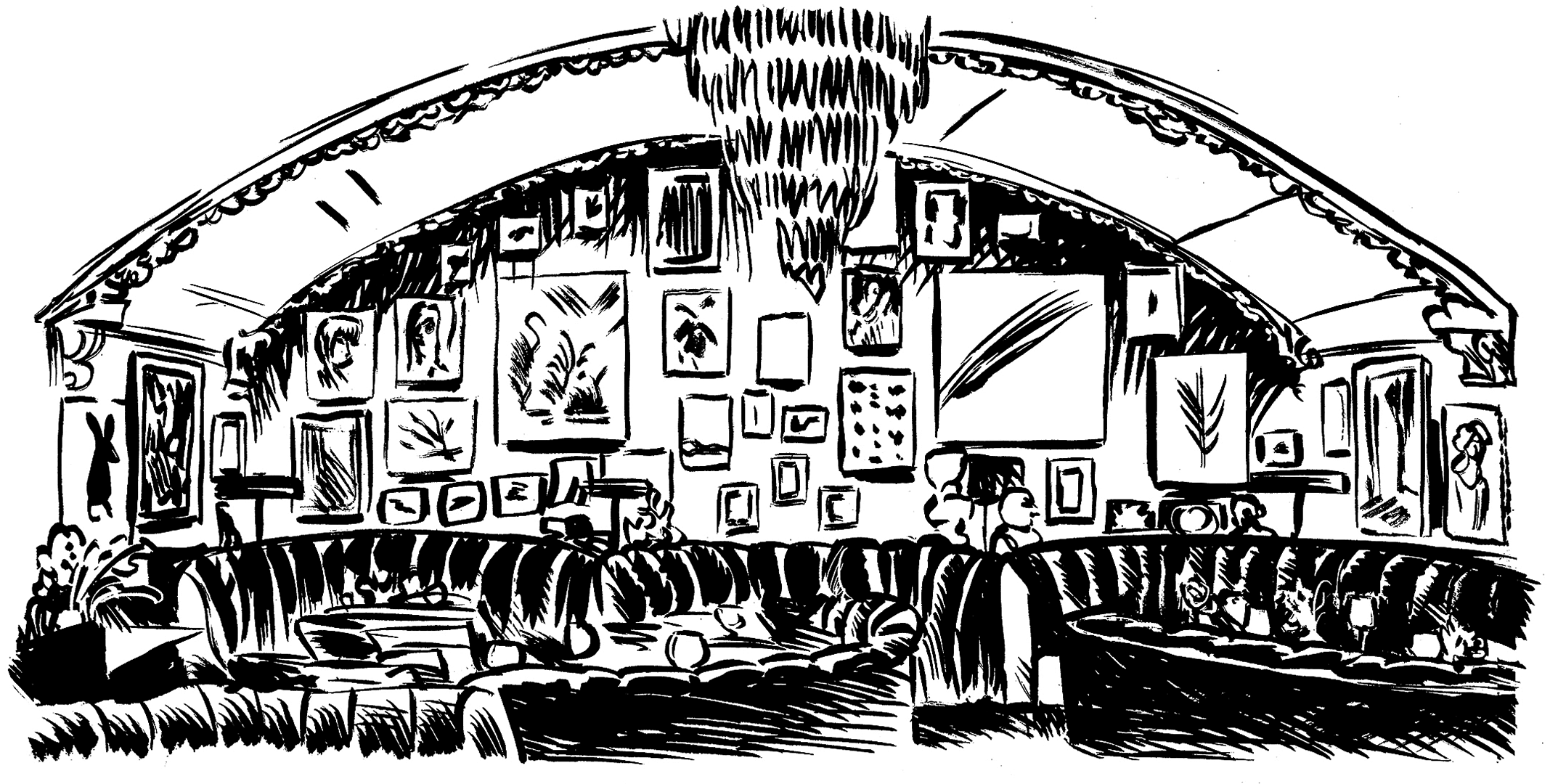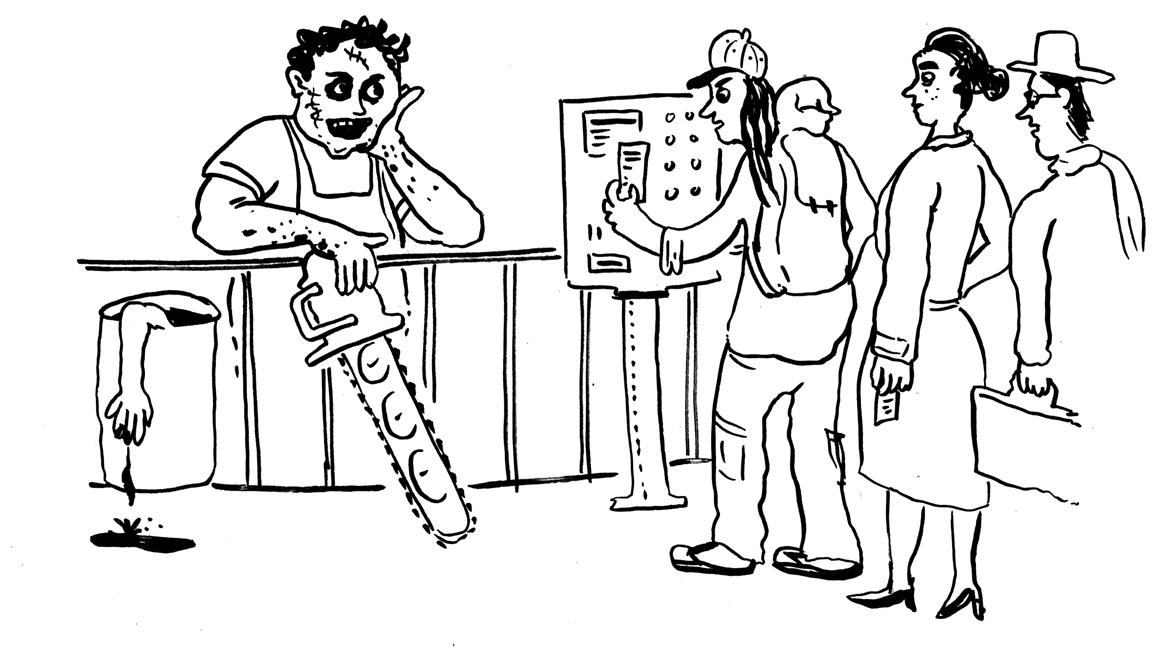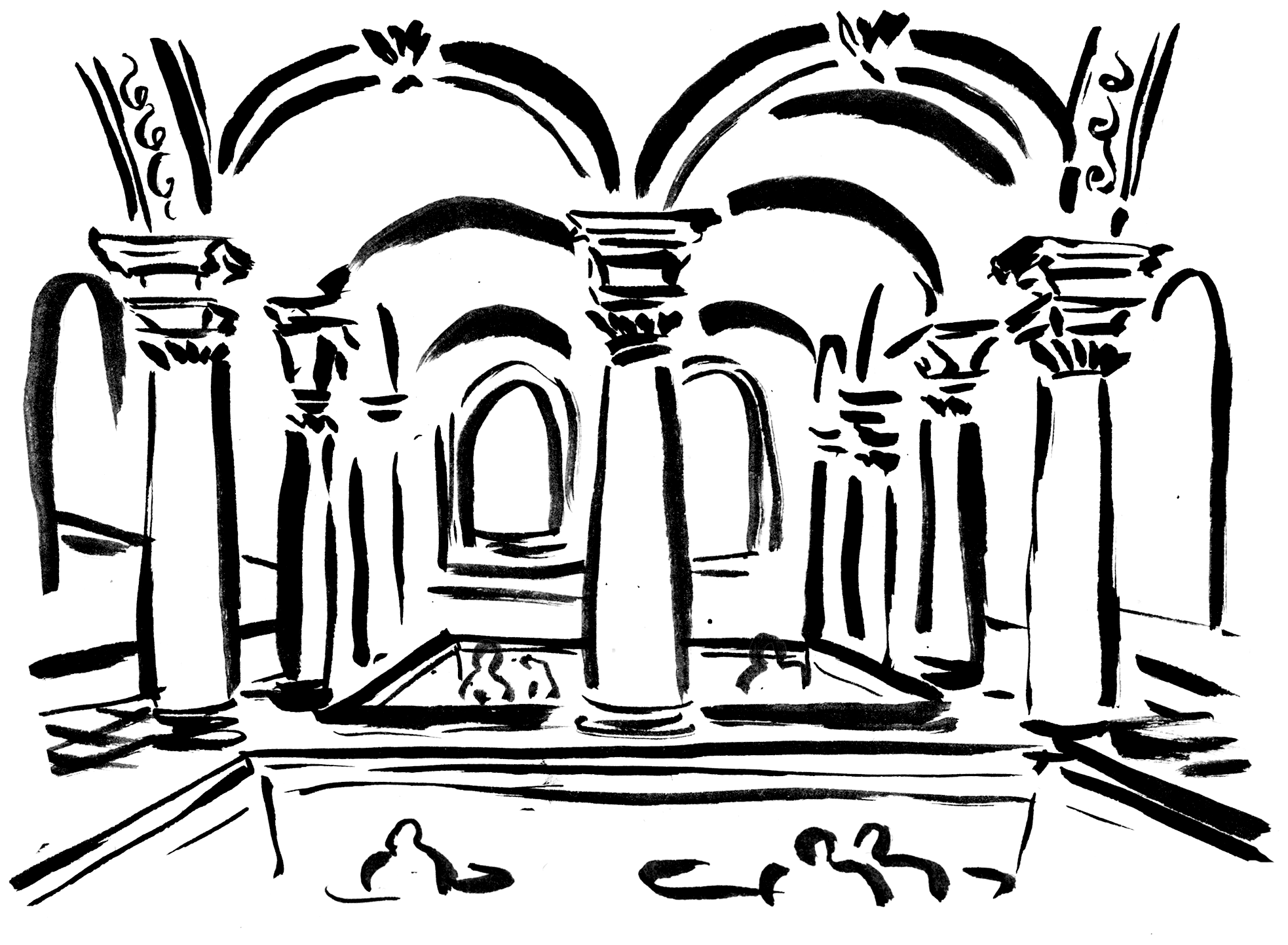
‘It’s the heart of London you know’, I find myself telling people who don’t care. They edge away along sofas, anxious about the quality of my small talk. I press on: ‘They measure all London distances from there I believe.’ I sometimes continue with ‘Go on, tell me where you think the centre of London is.’ It has become a bit of a hobbyhorse of mine, I’ll admit.
More than that, Charing Cross has become an awkward friend. Why this freakish obsession? Recently, I have gotten to know the place intimately. I don’t mean I’m shagging a mainline railway terminus but that I am there regularly, and see the place at special times and in colourful hues and from all different angles.
For a year or so, I was reverse commuting out of Charing Cross Station early most mornings. Consequently, the place is in my head. The run of stations that I hear announced there pleases me, for no particular reason. I intone them randomly in the shower or on the tube – ‘Wye, Chilham, Chartham’– mimicking the particular inflections of the automated voice who broadcasts them out.
The station gets its name from the original Charing Cross – the funerary monument to Eleanor of Castile built by a grieving Edward I. Its original location, the place from where distances to central London are measured, was slightly to the west, where the statue of Charles I is now. However, such is the synonymity of the name with the station that there is now a fume-stained Victorian replica in its forecourt. Until a recent restoration, bits kept falling off, imperilling the cabbies who smoke beneath it.
In 1864 the railway arrived, in 1905 a roof collapsed, in 1927 a murdered woman was found in a trunk in the station locker room, and in the Second World War, a parachute mine dropped in on platform 4. There have been multiple attempts to officially move the centre of London – to Marble Arch, to City Hall, to a cartographically more satisfying patch of anonymous land near Temple – but none have succeeded. Today, London’s centre remains at shabby Charing Cross.
What does London’s heart (which it is, just to remind you) tell us about the city’s body? The Globalization and World Cities Research Network ranks every global conurbation based on their soft power, financial power, presence of global institutions, and so on and so forth. London remains, with New York, one of the only two cities on Earth ranked as ‘Alpha ++’. Does that ring true at Charing Cross? The question is not so much an exercise in measuring human geography or financial clout: it’s more like a cardiology report.
The lack of natural light in the main concourse gives the space an eerie timelessness. Charing Cross at 06:55 feels much as it does at 16:55 or 23:55: like an airport lounge but with Edwardian décor and facilities, which, in many ways, is exactly what it is.
It is quieter though, when the city awakes. True, it’s normally a quiet feeling station, only getting crowded during one of its regular spates of unexplained cancellations. Its pub, The Beer House, has been shut since before COVID. One of its last reviews on TripAdvisor claims that the ‘only responsive member of staff there’ was the fruit machine. It is not the only boarded-up premise on the concourse. Even Burger King has beaten a melancholy retreat: the pigeons now peck at old fag ends and thin air. WH Smith and Boots cling on – as they inevitably will even after a nuclear holocaust – so too, mysteriously, does Hotel Chocolat.