The realm of Fabergé today is a world of ancien régime whimsy drenched in oil and gas fortunes. Once sought after by old money in search of enchantment, the bejewelled eggs and stone-carved animals once favoured by the Romanovs have been absorbed into the legal battles and personal feuds of Russia’s energy and tech tycoons. In the background, though, still hums a venerable network of dealers and hobbyists who make a living from the exacting work of proving that a piece of jewellery is the real deal. Last January, a London-based art dealer, Andre Ruzhnikov, alleged on his blog that the recent exhibition at the Hermitage Museum in St Petersburg, ‘Fabergé – Jeweller to the Imperial Court,’ contained numerous forgeries. Some fakes, he said, were ‘brand new or made in the last few years’.
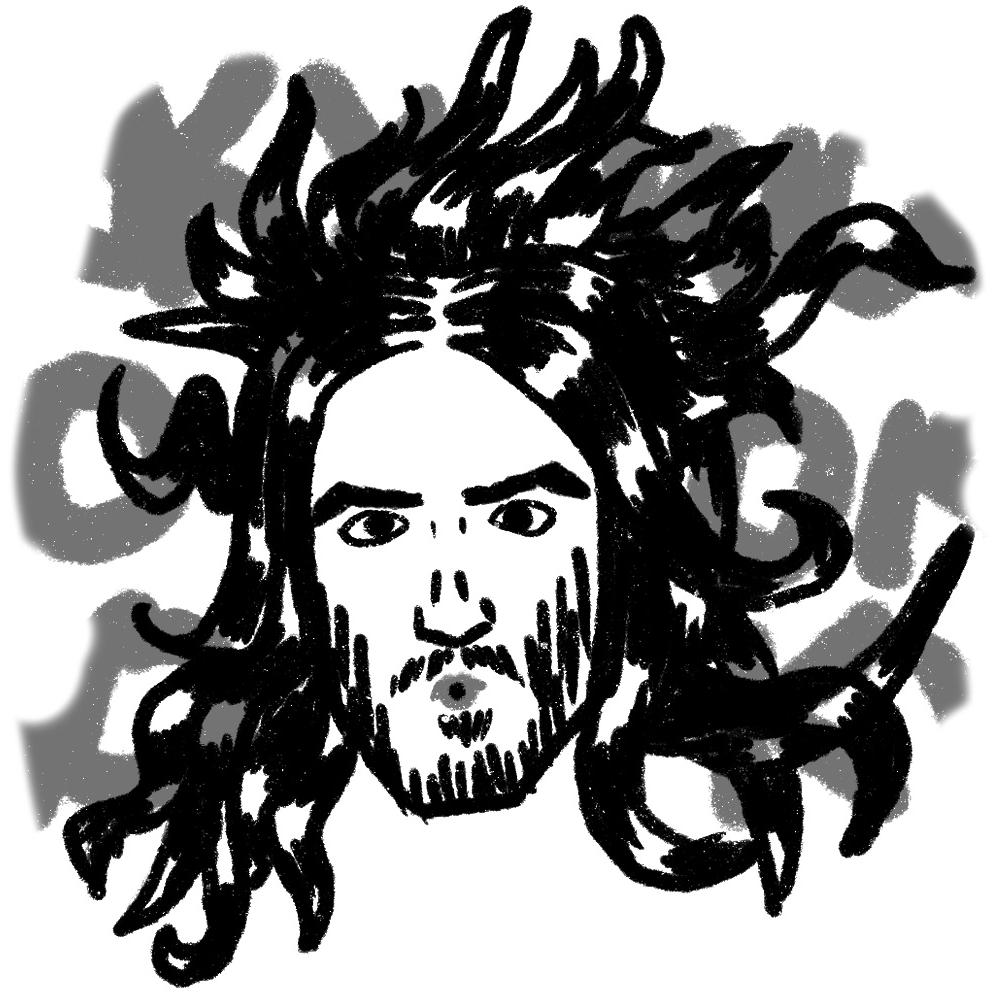
Ruzhnikov’s blog has been causing trouble in the Russian art world for a while. Matching connoisseurship with cutesy photoshops and puerile jibes, he alleged that Alexander Ivanov, a wealthy art collector, had purchased relatively cheap items at London auction houses that were not marked ‘Fabergé’ but had, with the assistance of Mikhail Piotrovsky – the director of the Hermitage – ended up in the exhibition. ‘How has this shambles come to pass?’ wrote Ruzhnikov. ‘Maybe I’m missing something. Maybe there’s something we’re not meant to know.’ Accompanying Ruzhnikov’s allegations are illustrations: an image of Piotrovsky (the son of Boris, the late archaeologist and previous Hermitage director; the father of Boris, who some say is next in line) with a psychedelic tie-dye filter and a third eye. Ivanov’s face gets all stretched out onto Peter Jackson’s Gollum. ‘Mikhail Piotrovsky must be mad,’ Ruzhnikov later blogged. ‘Did someone spike his morning vodka with a dash of novichok?’
Eventually, the world’s second-largest museum could no longer bear the steady stream of mockery out of ‘www.ruzhnikhov.com/news’. A press conference was organised to set things straight. And so Ivanov, at a seat at the distant end of a wooden table in a panelled room inside the museum, launched into an hour-and-a-half-long monologue, which veered between defending the Fabergé exhibition, to which he had lent items from his personal collection, which he keeps in a German spa town, and a bizarre tirade against his detractors. ‘Ruzhnikov has committed a crime punishable by a lengthy prison sentence in the United States,’ he said, ‘Don’t let him think he can sit things out in London and that nothing will happen. He’ll be taken to America with cuffs slapped on him’.
Born in Moscow, Ruzhnikov wanted nothing more than to get out of Russia, but he needed something to do in the West. In 1968, he sold his first Orthodox icon for $80 to an English foreign correspondent, sneaking out of the reporter’s apartment afterwards with the dollar bills slipped in his shoe in case he happened to be stopped by the KGB. He continued to sell art, building a career as an icon dealer, and finally left the Soviet Union with his English wife in the 1970s: they went first to Oxford, where, on his second day there, the choice of meat behind the counter in a butcher’s precipitated a near-breakdown, encouraging Ruzhnikov to then move to Silicon Valley, his suitcase loaded with smuggled icons.
Ruzhnikov’s career really took off, though, once he started working with Viktor Vekselberg, an oil and tech billionaire and one of Russia’s most influential oligarchs. Vekselberg has long cultivated close ties in the West. He met with Obama and Bush Jr, donated to the Clinton Foundation and Stanford. In 2017, he showed up at Trump’s swearing-in ceremony. Around the same time, a company with links to Vekselberg supposedly transferred half a million dollars into a company account controlled by Trump’s personal lawyer, Michael Cohen, who had previously used that account to pay $130,000 to Stormy Daniels, the adult film star who claimed she had slept with Trump (which Trump denied). A lawyer for the company denied that Vekselberg had anything to do with the payments. Vekselberg, however, was interrogated as part of Robert Mueller’s Russian interference investigation. He claimed he had nothing to hide, and he was not mentioned in the eventual report, but the oligarch – who has a house in Connecticut, substantial us assets, American children – found himself on the us sanctions list. He has said that this is unfair, and has instructed lawyers to challenge his inclusion.
Vekselberg desperately, desperately loves Fabergé eggs. He once went head-to-head in the courts of the British Virgin Islands with the boss of the world’s largest mining company, Brian Gilbertson of bhp, over the rights to the brand (he lost). In the 1990s, following the explosion of the Russian art market, his quest was to hunt down as many as he could find of the 52 Easter eggs that Carl Fabergé crafted for the Tsars and their families between 1885 and 1917, and return them to the fatherland. Carl Fabergé presented annual Easter eggs to the Russian royal family almost up until their execution.
Following the Revolution, the eggs were confiscated by the Bolsheviks, and they lay forgotten until they were discovered under Stalin, with many being sold overseas to raise funds for Russian industry. With Ruzhnikov and another Fabergé expert, Vladimir Voronchenko, Vekselberg started a foundation, called ‘The Link of Times’ (the awkward name makes sense in Russian, Ruzhnikov assured me), to track down and purchase the eggs. Their coup came in 2004, when Ruzhnikov masterminded the purchase of nine Imperial Eggs from the Forbes family for an undisclosed sum, likely to be around $100 million.
Vekselberg’s eggs are now on display a few hundred metres down Nevski Prospekt from the Hermitage in the Fabergé Museum. The museum was founded by Vekselberg for the purpose of displaying the eggs gathered with Ruzhnikov’s help, but Ruzhnikov has never actually visited the Fabergé Museum. Several years ago, he was forced to sell a number of his own Fabergé items to the oligarch to finance his divorce. It would be simply too painful, Ruzhnikov told me, to see them locked behind glass in Vekselberg’s institution. Vekselberg, thanks to Ruzhnikov, now sits atop the largest egg collection in the world. His Fabergé nest is finer even than the Kremlin’s own. But Vekselberg, whose collection is unmatched, has many would-be-rival egg men. Ivanov is one of them.