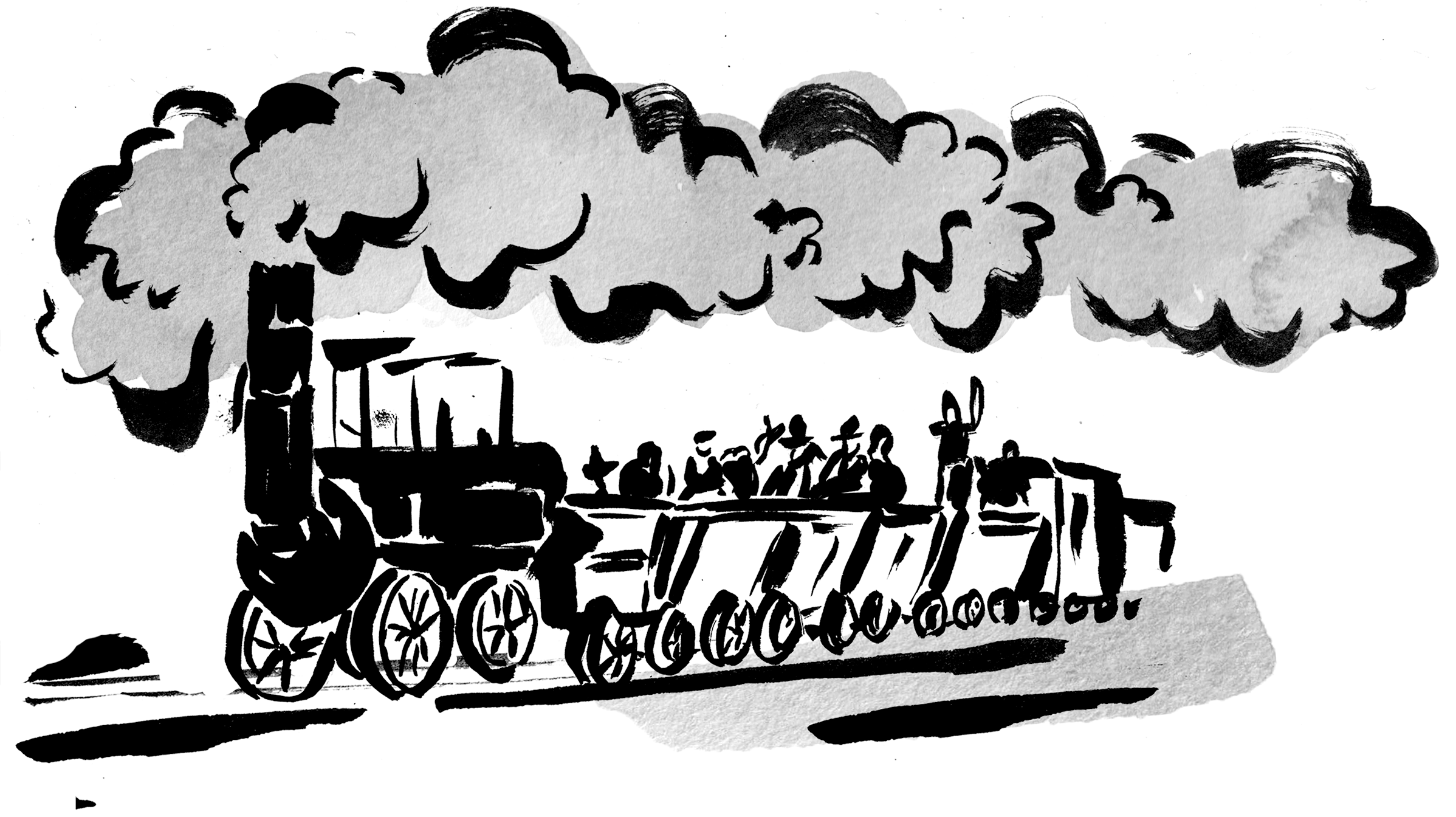
In early June, I travelled to County Durham to meet a mechanical wonder, up there with the printing press, the lightbulb and penicillin. Originally dubbed Active, later renamed Locomotion No. 1, at first glance she doesn’t look very avant-garde, more antic and unlikely. Barrel-bodied and pugnacious – umbrage on wheels.
Built in 1825 by ‘father of railways’ George Stephenson, Locomotion was the first steam locomotive to pull a passenger-carrying train on a public line, the Stockton and Darlington Railway. If it looks a bit Heath Robinson today, that’s because it was a hybrid machine – part-pump, part-dynamo, a high-pressure haulier, part-dray horse, part-dragon; all utility.
A spectacular success, the engine was a sensation. She arguably birthed a new age, inspiring a technological sea change akin to the space race; progress so rapid and prodigious that Locomotion was a relic within five years.
By the time you’re reading this, all being well, a replica of Locomotion will have run along as much of the Stockton and Darlington Railway, as still exists, as part of the bicentennial celebrations of her first journey.
In preparation for that once-in-a-lifetime jaunt, tomorrow she’ll lead a test train the 16 miles between Stanhope and Bishop Auckland and I’ve been invited along.
When I first visit the shed where Locomotion lives, she is in the process of being fired up by three volunteers – although that’s perhaps too energetic a description of three boiler-suited men who are hand-feeding coal briquettes into the firebox to gently warm the engine and get a bit of pressure up ahead of time. It’s an unhurried, good-humoured process with as much time spent laughing as making steam.
But interweaved with the banter is a touching respect and affection for the machine simmering before them. One of the engineers responsible for repairing the locomotive makes the point that, to travel behind it in 1825, ‘to see it go past, even’, would have been comparable to witnessing the Saturn V rocket blast off. For all that, he described it as ‘more like alchemy than engineering’.
‘And it is like those Apollo missions inasmuch as it’s all stripped back, arrowed towards that one aim. That was getting to the moon and back, this was changing the face of transporting materials and people in bulk, at speed. So you’ve got all the working essentials on show: no cladding, insulation or bodywork; no comfort. The driver’s up there on that running board, side on to the direction of travel. The fireman’s down here, feeding the fire. It’s a dangerous setup but it’s amazing how much they got right. Everything else followed from this.’