There’s a building on Earlsfort Terrace, central Dublin, that you would walk past hundreds of times without ever noticing. It’s a rectangular structure built from warm-hued red-and-yellow bricks, 40 metres long with a steep, gabled roof. In place of windows there are blank recessed panels, as if to emphasise the inscrutability of what goes on inside. The building’s divided by a sliver of car park from the north wing of a neoclassical pile, once the headquarters of University College Dublin (UCD), which today houses the National Concert Hall. Round the corner lies Iveagh House, now Ireland’s Department of Foreign Affairs.
Visiting the city this summer, I gazed at this strange building from across the street. Nobody went in and nobody came out. Civil servants hurried past, clutching warmed-over deli wraps from a nearby sandwich shop. Hiding in plain sight, the last real tennis court on the island of Ireland escaped all notice. Although it hasn’t seen play for more than 80 years, the Irish Real Tennis Association (IRTA) are fighting to restore it.
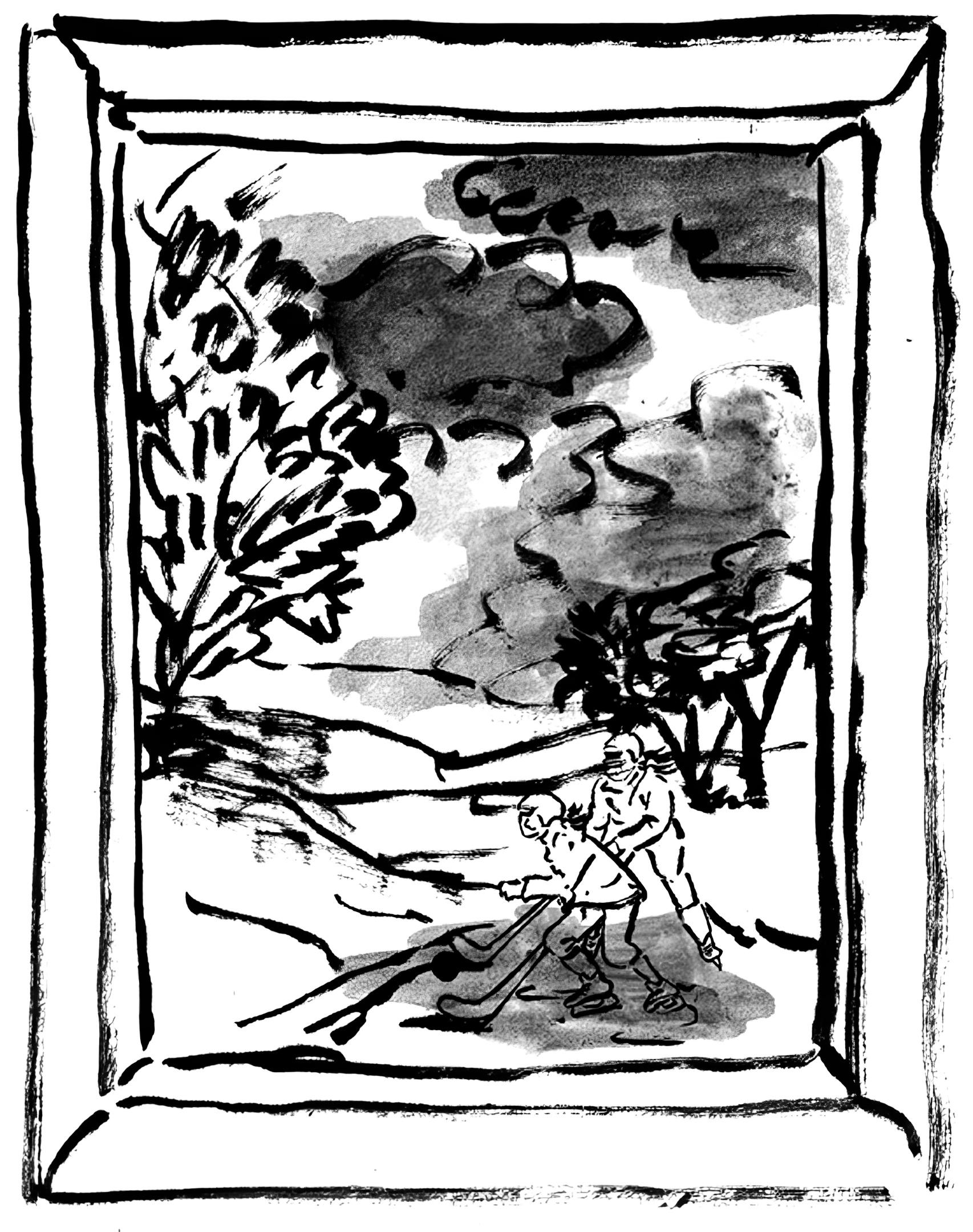
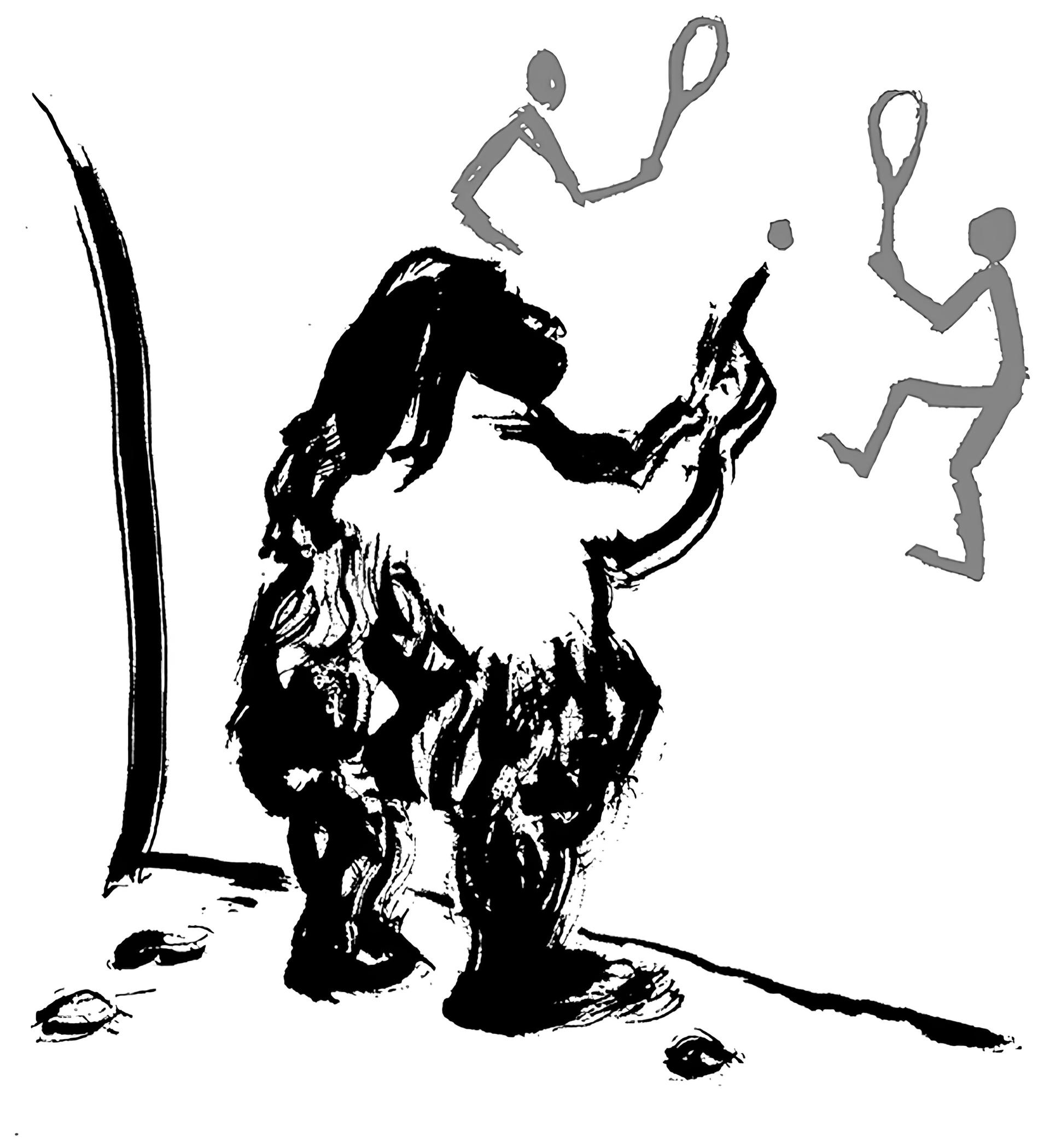
Real tennis is the ancestor of the globally popular game played enthusiastically by Novak Djokovic, Venus Williams and the now-retired David Cameron. It’s the first racquet sport from which all others derive, originating in the marketplaces of medieval Europe. Rallies take place across a net, but the walls are also in play, and the asymmetrical court includes a litany of strange features: there’s a sloping roof (the ‘penthouse’), covering a row of netted galleries; a horizontal grid of coloured ‘chase lines’ painted across the floor; and a sunken box (the ‘grille’) in the far corner which, if you can hit it, resounds with a sickening, satisfying crunch. Today, about 50 courts are playable – more than half in England, with a handful in the US, France and Australia.
In recent decades, real tennis has experienced a revival. What was once the preserve of public schoolboys and retired colonels has opened out to the broader world of racqueteers, appealing to squash and ‘lawn tennis’ players with its technical and tactical intricacy. Men and women play together, and most English courts have become breezier and less stuffy than golf clubs. The game attracts eccentrics and creates obsessives.
Real tennis once flourished in Dublin: there were several courts around Winetavern Street, described in a pearl-clutching article of 1755 as ‘seminaries of vice and idleness’. The court on Earlsfort Terrace was commissioned by Edward Guinness, stout tycoon and philanthropist, later first Earl of Iveagh. It opened in 1885 and five years later hosted the world championship. But in the twentieth century the game declined. Certain sports acquired new cultural associations in modern Ireland, especially after independence in 1922. Until 1971, members of the Gaelic Athletic Association were forbidden from playing or even watching any ‘imported’ sport. The court passed into the control of UCD; it was a gym, then an examination hall, then a laboratory.
Earlsfort Terrace is the only real tennis court on the Irish mainland. Yet there is, amazingly, another court in the Republic of Ireland – on Lambay Island, two miles off the Dublin coast, east of Portrane. Since 1904, Lambay has belonged to the Baring family; the fifteenth-century Lambay Castle became one of their family seats. Cecil Baring, Baron Revelstoke, commissioned Edwin Lutyens to design an extension, and in 1922, an outdoor real tennis court was built on the western shore. Like Earlsfort Terrace, it hasn’t seen regular play for decades, but it retains its original and unusual shape: two sloping sets of galleries, of sturdy concrete, run either side, while other courts have just the one. Shamrocks, carved into the wall, mark the chase lines.
Having inherited the barony in 2012, Alex Baring aimed to renovate his family seat as a luxury bohemian haven, complete with recording studio. He also hoped to restore the court, so that visiting enthusiasts might play matches while albums were mastered next door. (Rock and real tennis might seem an odd mix, but Johnny Borrell, still the Razorlight frontman, is reportedly a keen fan, and has been spotted on court in Paris.)
Baring’s plans haven’t yet come to fruition, though the island now produces whiskey and runs weekend retreats. Red-necked wallabies, which the family introduced in the 1950s, roam free. It’s difficult to envisage this off-grid court as a viable base for the country’s real tennis players, though the image of a mishit ball landing in the Irish Sea is undoubtedly an enticing one.